Why Does My Dehumidifier Fill Up So Quickly?
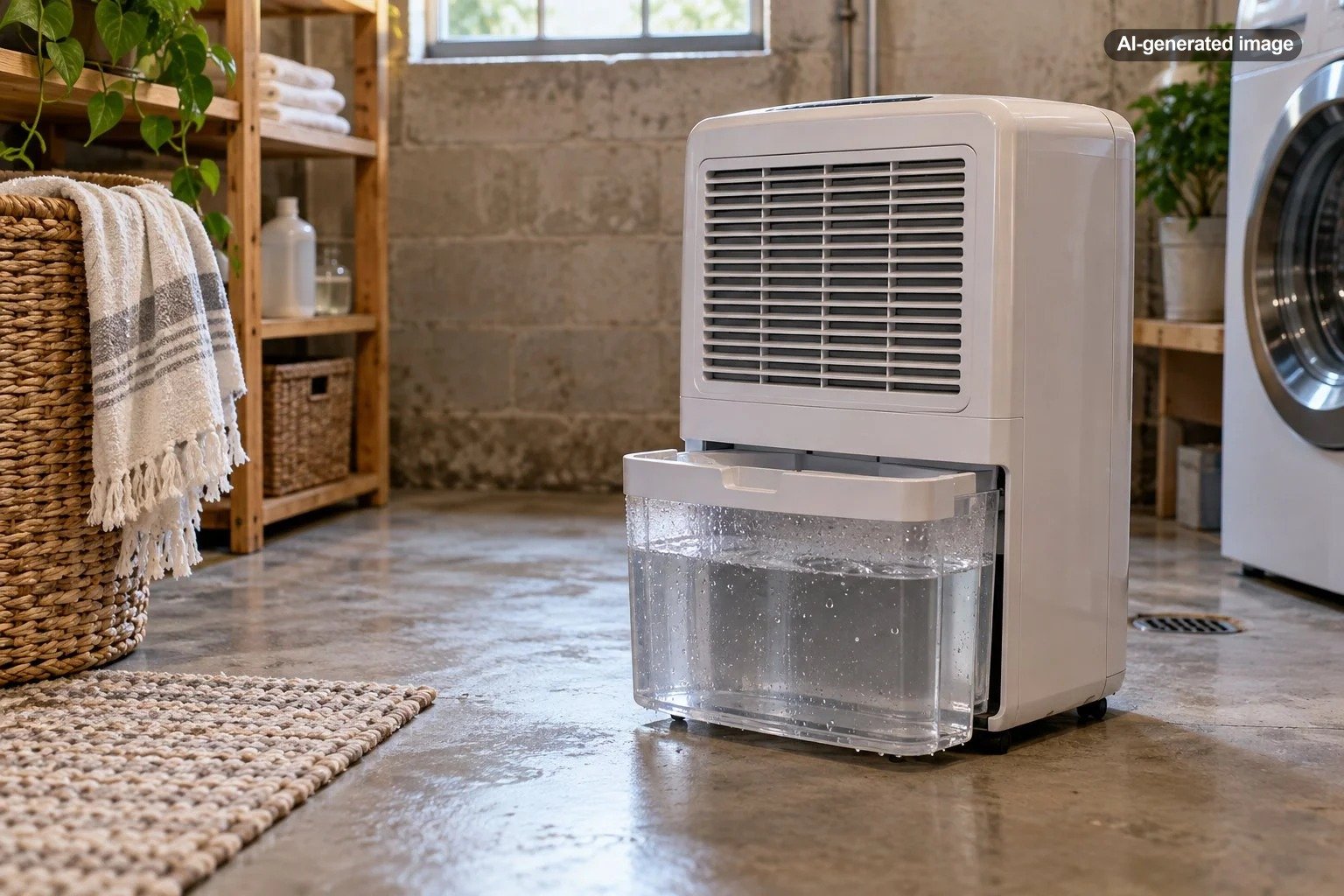
If your dehumidifier seems to fill its water bucket almost as soon as you empty it, the most likely explanation is that your indoor air contains a substantial amount of moisture. A dehumidifier collects water vapor from the air, so a rapidly filling tank often means the appliance is doing its job. However, persistently high humidity can also indicate inadequate ventilation, incoming outdoor moisture, or a hidden water problem.
The important question is not simply how quickly the bucket fills. It is whether your dehumidifier is successfully lowering the room’s humidity and whether that humidity stays under control.
Is It Normal for a Dehumidifier to Fill Up Every Day?
Yes. A portable dehumidifier can fill its collection bucket daily, or even more frequently, when operating in a particularly humid space. This is especially common during the first few days of operation, when the appliance is removing accumulated moisture from the room and its contents.
A basement that has been damp for weeks, for example, may contain moisture not only in the air but also in exposed concrete, stored cardboard, rugs, and furnishings. As the dehumidifier dries the air, additional moisture can evaporate from those materials.
The bucket may therefore fill repeatedly before the room settles into a more stable humidity range.
There is another important distinction: water removal capacity is not the same as bucket capacity. A dehumidifier’s rated capacity describes how much moisture it can remove over a specified period under standardized testing conditions. Its collection bucket may hold considerably less water.
For example, a hypothetical unit capable of removing 30 pints of moisture per day might have a collection bucket holding only 10 pints. Under sufficiently humid conditions, that bucket could require several emptyings in one day. Actual performance depends on temperature, humidity, and operating conditions.
Frequent emptying alone does not establish that something is wrong.
Seven Reasons Your Dehumidifier Fills Up So Quickly
1. Outdoor Humidity Is Extremely High
Warm, humid weather is one of the most common reasons a dehumidifier collects water quickly. Outdoor moisture can enter through open windows, exterior doors, ventilation openings, and ordinary air leakage around the building envelope.
This is especially relevant in Florida, coastal communities, and other regions with prolonged humid seasons.
Even an air-conditioned home can experience elevated indoor humidity when moist outdoor air enters faster than the cooling system and dehumidifier can remove it.
If your dehumidifier works harder on rainy days or during humid summer weather, outdoor conditions may be contributing substantially.
2. The Room Contains Stored Moisture
Basements, crawl-space-adjacent rooms, and areas with concrete floors can retain substantial moisture. Concrete and other porous materials may release moisture into the surrounding air when conditions favor evaporation.
Stored fabrics, cardboard boxes, upholstered furniture, and carpeting can also absorb moisture during humid periods and release it as the air dries.
This helps explain why a newly installed dehumidifier may initially collect more water than expected.
However, moisture returning continuously through a foundation wall or floor is different from a room gradually drying after a humid spell. Persistent dampness deserves investigation.
3. Everyday Household Activities Add Moisture
Ordinary activities introduce water vapor into indoor air. The amount varies with household size, ventilation, and how often those activities occur.
- Hot showers release moisture into bathrooms and adjoining rooms.
- Cooking, boiling water, and dishwashing add humidity.
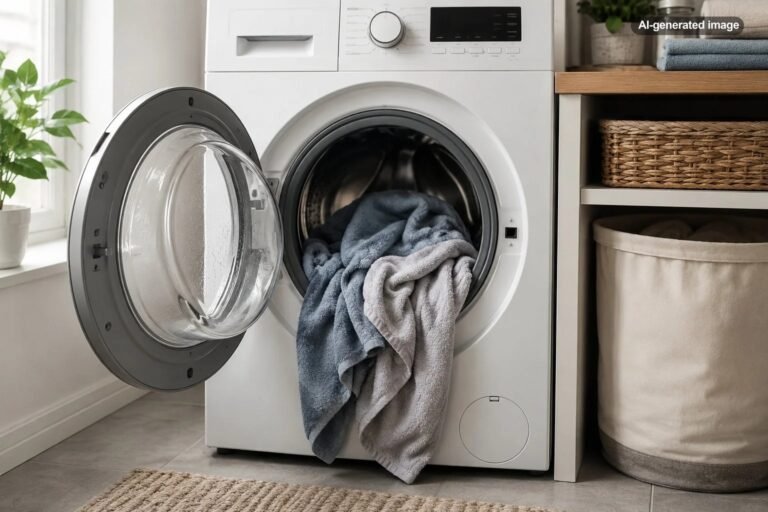
- Drying laundry indoors introduces water vapor as clothing dries.
- Unvented or improperly vented clothes dryers can contribute significant moisture.
- Humidifiers may operate unnecessarily or at excessively high settings.
- Wet floors, recently cleaned carpets, and damp household materials release moisture while drying.
If the dehumidifier is positioned near a laundry area or bathroom, it may collect moisture generated elsewhere in the home as humid air circulates.
4. The Collection Bucket Is Relatively Small
Some dehumidifiers have collection buckets that are small relative to their water-removal capacity. This makes them easier to carry and empty, but it also means more frequent trips to the sink.
A rapidly filling bucket can therefore be more of a convenience problem than a humidity problem.
Check your owner’s manual for the bucket capacity and rated moisture-removal capacity. These are separate measurements and should not be confused.
5. Your Humidity Setting Is Too Low
If the dehumidifier is set to maintain unusually dry air, it may continue removing moisture long after the room feels comfortable.
The U.S. Environmental Protection Agency recommends keeping indoor relative humidity below 60 percent, ideally between 30 and 50 percent when possible.
For many households, a setting around 45 to 50 percent is a reasonable starting point, provided the space does not have special moisture-control requirements.
Setting the appliance much lower can increase its operating time without addressing the real source of humidity.
Use a separate hygrometer to check actual conditions rather than relying exclusively on the number displayed by the appliance.
6. Moist Air Keeps Entering the Room
A dehumidifier works best when it is not constantly competing with a fresh supply of humid air.
Frequently opened basement doors, poorly sealed exterior openings, and open windows can introduce more moisture than the machine can comfortably manage.
The same can happen when humid air moves from an adjacent crawl space, utility area, or unfinished section of a building.
Check whether the room has an obvious connection to a damp adjoining space. Close exterior windows during humid weather and inspect accessible doors and seals for visible gaps.
Do not block ventilation openings required by heating equipment, combustion appliances, or building systems. Those conditions should be evaluated by a qualified professional.
7. There Is a Hidden Moisture Problem
Occasionally, a dehumidifier fills quickly because water is entering the building through a leak or moisture intrusion.
Possible sources include plumbing leaks, foundation seepage, roof or window leaks, poorly directed exterior drainage, and condensation around cold pipes or HVAC equipment.
These problems are not always accompanied by obvious standing water.
A persistently damp patch of flooring, peeling paint, musty odor, or recurring condensation may provide the first clue.
Dehumidification helps manage the resulting moisture, but it cannot correct the underlying defect.
How to Tell Whether the Water Collection Is Normal
The most useful approach is to measure humidity and observe how it changes over time.
Try this simple humidity check
- Measure the room. Place a separate hygrometer in the area, away from direct airflow, windows, and moisture-producing appliances.
- Record the starting humidity. Note the relative humidity, room temperature, and dehumidifier setting.
- Check the collection bucket. Empty and reinstall it correctly, then note when you did so.
- Observe the trend. Check humidity periodically over the next day or two while maintaining reasonably consistent room conditions.
- Look for patterns. Compare the readings with rainfall, laundry use, showering, HVAC operation, and outdoor humidity.
If humidity begins high, gradually falls toward your selected target, and remains manageable, the machine is probably removing an accumulated moisture load.
If the bucket keeps filling while measured humidity stays consistently elevated, the room may have an ongoing source of moisture or the dehumidifier may lack sufficient capacity for the conditions.
A sudden change in water collection, particularly when paired with new stains or dampness, deserves closer attention than a stable pattern during a humid season.
What Different Filling Patterns Can Tell You
| What you notice | Possible explanation | What to check next |
|---|---|---|
| Bucket fills rapidly during the first few days | Accumulated moisture in air and materials | Whether humidity steadily decreases |
| Bucket fills faster after rain | Outdoor humidity or water intrusion | Window seals, basement walls, and drainage |
| Bucket fills after laundry or showers | Household moisture production | Dryer venting and exhaust fans |
| Bucket fills frequently but humidity stays near target | Normal moisture removal combined with limited bucket capacity | Bucket size and drainage options |
| Bucket fills continuously and humidity remains high | Persistent moisture source or inadequate capacity | Leaks, airflow, room conditions, and equipment sizing |
These patterns are clues rather than definitive diagnoses. Different homes can produce similar symptoms for different reasons.
How to Keep Your Dehumidifier From Filling So Fast
Reduce Moisture Before It Reaches the Machine
Reducing humidity at its source is usually more effective than relying on a portable appliance alone.
Use bathroom exhaust fans when showering and allow them to continue operating afterward as appropriate. Vent clothes dryers outdoors according to their installation requirements. Use kitchen exhaust ventilation when cooking produces substantial steam.
Close windows during humid weather, especially when outdoor air contains more moisture than indoor air.
If your basement experiences water intrusion, address drainage and building-envelope problems instead of expecting continuous dehumidification to compensate indefinitely.
Choose a Realistic Humidity Target
Start with a humidity setting around 45 to 50 percent and verify the result with an independent hygrometer.
Avoid assuming that a lower setting is automatically better. Unnecessarily aggressive dehumidification can increase operating time, electrical consumption, and the frequency of bucket emptying.
Keep the target appropriate for the room and investigate any persistent dampness rather than trying to overcome it solely by lowering the setting.
Maintain Airflow Around the Appliance
Make sure the dehumidifier has the clearances specified in its owner’s manual. Avoid placing storage boxes, curtains, or furniture directly against air intakes and outlets.
Inspect and clean the filter according to the manufacturer’s instructions. Restricted airflow can compromise moisture-removal performance.
Room temperature also matters. ENERGY STAR notes that frost can develop on some dehumidifiers’ coils in cooler spaces, reducing their ability to remove moisture. If the room regularly falls below 65 degrees Fahrenheit, consult the manufacturer’s specified operating-temperature range and consider a model designed for cooler conditions.
Consider Continuous Drainage
If humidity is controlled but emptying the bucket has become a daily chore, continuous drainage may solve the inconvenience.
Many portable units provide a connection for a drain hose. When properly configured, collected water can travel to a suitable drain instead of accumulating in the removable bucket.
Affiliate disclosure: CraneManor.com may earn a commission when you purchase through links on this page. This does not affect the price you pay. Learn more.
For homeowners considering a larger portable machine, a dehumidifier with a continuous-drain option can be worth considering when the room has an appropriate drainage arrangement.
However, not every location permits gravity drainage. The hose must follow the unit manufacturer’s instructions, and a suitable condensate pump may be required when water must travel upward. Improper routing can lead to leaks or overflow.
When a Quickly Filling Dehumidifier Is a Warning Sign
High water collection is not automatically alarming. However, certain accompanying conditions suggest that the building deserves more attention.
Visible mold or persistent moisture damage should not be treated as merely a reason to purchase a larger appliance. The source needs to be identified and corrected.
For widespread mold, recurring water intrusion, unexplained wet building materials, or suspected hidden plumbing problems, contact an appropriately qualified professional. If water is near electrical equipment or outlets, avoid contact and seek qualified assistance.
Should You Buy a Bigger Dehumidifier?
Not necessarily. A larger dehumidifier may remove more moisture under suitable operating conditions, but it will not solve an ongoing leak or eliminate the need for proper ventilation.
Consider additional capacity when your current unit is operating as intended, room conditions are within its specified range, accessible filters and airflow paths are clear, and humidity still remains above the desired level despite efforts to reduce incoming moisture.
Compare models using their current rated water-removal capacity in pints per day, not simply marketing claims about square footage. Room size matters, but dampness severity, temperature, airflow, and incoming moisture can be equally important.
Also evaluate bucket capacity, drainage arrangements, available floor space, operating noise, and energy efficiency. A higher-capacity machine may be more practical in a persistently humid basement, while a smaller unit may be perfectly adequate for an enclosed bedroom with occasional humidity spikes.
Frequently Asked Questions
Why does my dehumidifier fill up overnight?
Humidity may remain high overnight because of outdoor conditions, stored moisture, air leakage, or an ongoing moisture source. A small collection bucket can also fill quickly when the appliance runs for several uninterrupted hours. Measure humidity before and after operation to see whether conditions are improving.
Does a full dehumidifier bucket mean my house has a leak?
No. A full bucket simply means the machine has collected water from the air. Frequent collection can be normal in humid weather. However, persistent high humidity combined with wet surfaces, stains, or unexplained dampness warrants further investigation.
Will a dehumidifier eventually stop collecting water?
It may collect less water as humidity falls, but it can continue cycling whenever moisture enters the space or the measured humidity rises above the selected target. Many models automatically pause moisture removal once the set point is reached.
Can I leave my dehumidifier running all day?
Many models are designed for extended automatic operation, but follow the specific manufacturer’s instructions. Keep air openings unobstructed, maintain the filter, install the bucket correctly, and use only approved drainage arrangements. Do not operate damaged equipment or ignore unusual electrical symptoms.
What humidity should I aim for at home?
The EPA recommends maintaining indoor relative humidity below 60 percent, ideally between 30 and 50 percent when possible. A target near 50 percent is a practical starting point for many homes. Monitor actual readings and adjust appropriately for your conditions.
The Bottom Line
A dehumidifier that fills quickly is often a sign that it is removing substantial moisture, not that it is malfunctioning. Humid weather, stored moisture, household activities, and a relatively small water bucket can all explain frequent emptying.
The best way to distinguish normal performance from a potential moisture problem is to measure the room’s humidity and observe whether it improves. If the air reaches a reasonable target and stays there, continuous drainage may be the simplest improvement. If humidity remains high or visible dampness keeps returning, focus on identifying and correcting the moisture source.
The goal is not an empty bucket. It is a home where moisture stays under control.