
Why Does My Washing Machine Make Towels Smell Worse?
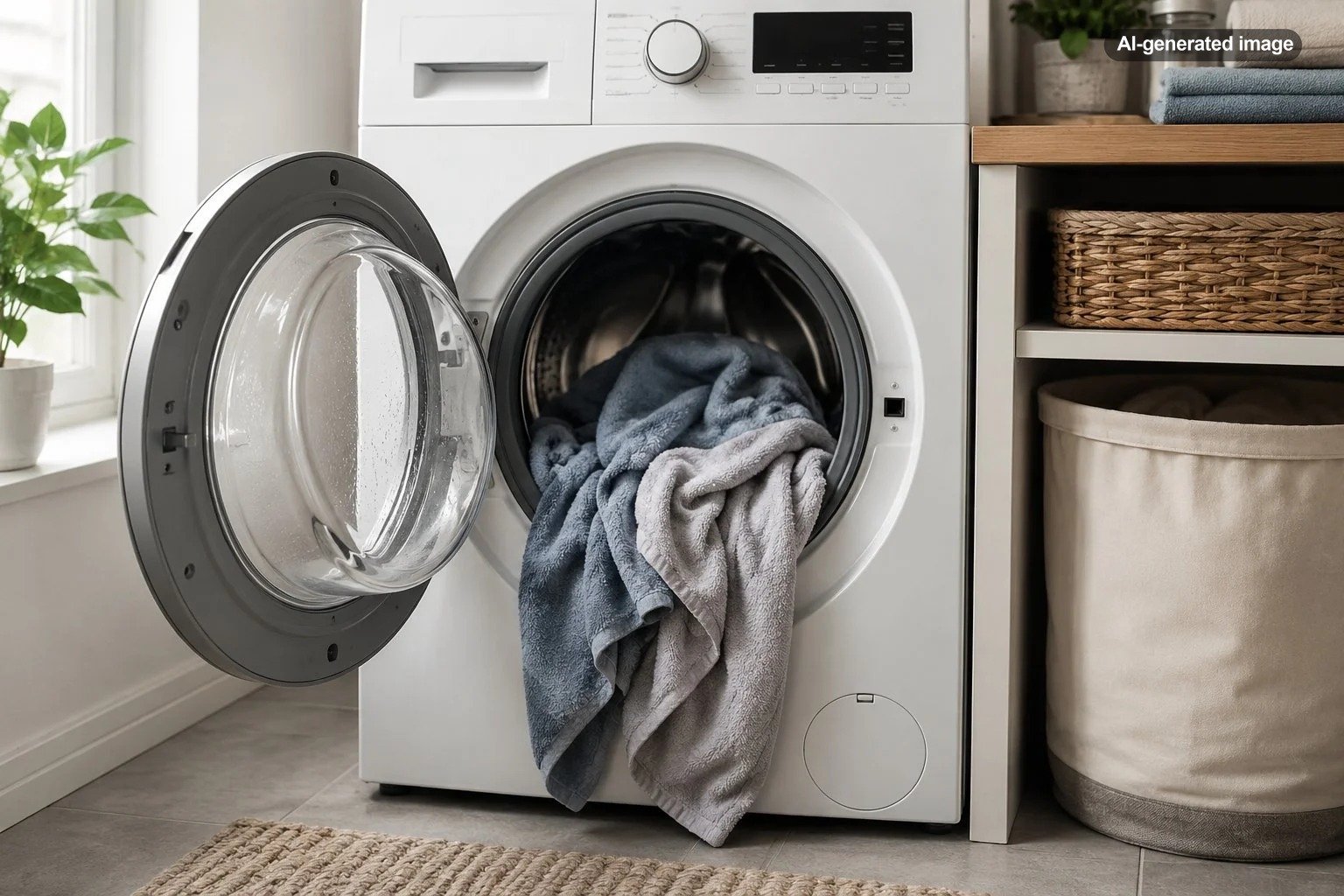
If your towels go into the washing machine smelling merely used and come out smelling noticeably worse, the washer may be contributing to the problem. The most common causes are trapped moisture, detergent or fabric-softener residue, an overloaded wash, towels sitting wet for too long, or buildup inside parts of the machine that stay damp between cycles.
Towels are especially good at revealing laundry problems because their thick loops hold water, body oils, detergent, and residue more readily than many lightweight fabrics. A washer can therefore appear to clean ordinary clothing perfectly well while leaving bath towels with a stubborn sour or musty smell.
Why a washing machine can make towels smell worse
A washing machine repeatedly handles water, detergent, fabric soils, lint, and damp textiles. Residue can accumulate in the drum, dispensers, seals, and other areas depending on the machine’s design. Whirlpool notes that detergent and other residue inside a washer can contribute to musty odors, while moisture left in a front-load washer can create conditions where unpleasant smells develop.
That matters because fresh water and detergent are circulating through the same machine during the next load. If the washer itself smells stale when empty, it is reasonable to investigate the machine before blaming the towels.
Too much detergent can work against you
Using more detergent does not necessarily produce cleaner towels. Excess product can be harder to rinse away, particularly in a high-efficiency machine or a densely packed load. Residue can remain on fabric and inside the washer, creating a film that holds soils and odor rather than removing them cleanly.
The practical approach is simple: use the detergent type appropriate for your washer and follow the detergent and appliance instructions rather than automatically adding an extra splash for a dirty load. If you have gradually increased the dose because towels smell, reducing it may be more productive than adding still more.
Fabric softener can add another layer of residue
Liquid fabric softener is designed to leave material behind on fibers. That can make textiles feel different, but repeated use may be counterproductive when the problem is already a towel that seems coated, difficult to rinse, or reluctant to smell completely clean. Before replacing the towels, try laundering several loads without softener and see whether the problem improves.
Wet towels sitting still can develop odor quickly
Even a well-maintained washer cannot help much if a finished load remains wet in the drum for an extended period. Whirlpool and Maytag both advise removing wet laundry promptly because damp textiles left sitting can develop unwanted odors.
This is particularly noticeable with towels. A thin shirt may dry relatively quickly after being forgotten for a short period, while several heavy bath towels remain densely wet. If the odor is strongest when you occasionally forget a finished load but absent when towels are transferred immediately, timing is probably part of the problem.
An overloaded washer may not rinse towels effectively
Towels need room to move through the wash and rinse process. Packing the drum tightly can make it harder for water and detergent solution to circulate around thick fabric. It can also make a load more difficult to rinse thoroughly.
Instead of judging a towel load only by whether another item physically fits, consider whether the load can move as intended for your particular machine. The owner’s manual is the best source for model-specific loading guidance.
The washer itself may need cleaning
If the empty drum smells musty, the detergent dispenser has visible residue, or a front-load door gasket stays damp and grimy, the machine deserves attention. Washer manufacturers commonly provide a dedicated cleaning procedure, and the correct method varies by model. Follow the manufacturer’s instructions for your machine rather than improvising combinations of household chemicals.
Pay particular attention to removable detergent or softener dispensers and, on front-load machines, the door area and gasket where the manufacturer’s instructions permit cleaning. After the machine is cleaned, wash a small load of towels normally and compare the result with previous loads.
What to do
- Smell the empty washer before starting another load. A musty machine is a strong clue.
- Check dispensers, the drum, and accessible seals for residue according to your washer manual.
- Run the manufacturer’s recommended washer-cleaning cycle or maintenance procedure.
- Wash a moderate-size towel load using the appropriate detergent and measured amount.
- Skip fabric softener for the test load.
- Remove the towels promptly when the cycle ends.
- Dry them completely before judging the result.
Make sure the towels actually become dry
A good wash can still end with bad-smelling towels if they remain damp afterward. Thick bath towels may feel warm while still holding moisture deep in the fabric, particularly in a crowded dryer. Towels hung indoors can have the same problem when airflow is limited or several layers overlap.
Check the thickest areas before putting towels away. A linen closet is not the place to finish drying them. Storing even slightly damp towels in a closed space can allow an odor to become obvious the next time the door opens.
Fresh-smelling towels depend on the entire moisture cycle: wash thoroughly, rinse well, move promptly, dry completely, and store dry.
What if only some towels smell?
If the washer smells clean and most laundry emerges fresh, compare the troublesome towels with the ones that behave normally. Older towels may have accumulated years of detergent, softener, body products, or soils. Extremely dense towels can also rinse and dry differently from lighter ones.
Run a simple comparison rather than changing five variables at once. Wash a few problematic towels separately using an appropriate measured detergent dose, no softener, prompt transfer, and complete drying. If that small controlled load smells good, the issue is more likely related to loading or routine than to a mechanical washer problem.
When a strange washer odor deserves more attention
A typical stale or musty laundry smell is different from a sewage-like odor, persistent drainage problem, visible leaking, or a machine that is not draining correctly. Whirlpool notes that sewage-type odors in front-load washers can sometimes be associated with drain-hose, trap, or filter issues. Model design and plumbing arrangements vary, so persistent drainage-related symptoms deserve proper troubleshooting rather than repeated attempts to mask the smell.
How to keep the smell from returning
Once the towels and machine smell normal again, prevention is refreshingly unglamorous. Measure detergent, avoid routinely overpacking the washer, clean the machine according to its manufacturer’s guidance, remove finished laundry promptly, and let towels become fully dry before folding them.
It is also worth keeping the washer’s damp areas from staying unnecessarily wet between laundry sessions when the manufacturer recommends doing so. Front-load machines in particular can retain moisture around the door and gasket. Your owner’s manual should take precedence because care instructions vary by design.
Frequently asked questions
Why do my towels smell sour immediately after washing?
Start with residue inside the washer, excessive detergent, an overloaded towel load, or towels that were already heavily saturated with product buildup. Clean the washer as directed, use an appropriately sized test load, measure the detergent, skip softener, and compare the result.
Why do towels smell fine dry but smell bad when wet?
Moisture can make lingering odor more noticeable. If the smell repeatedly returns as soon as a towel gets damp, focus on thorough washing and rinsing, product buildup, complete drying, and whether the towel itself has accumulated residue over time.
Should I add more detergent to smelly towels?
Not automatically. More detergent can leave additional residue when the existing dose is already sufficient. Follow the detergent instructions and the recommendations for your washer rather than treating extra detergent as an odor remedy.
Does a smelly washer mean it is broken?
Not necessarily. Moisture and product residue can cause odor even when a washer otherwise operates normally. However, leaks, drainage problems, persistent error conditions, or sewage-like smells deserve further investigation.