
The Most Practical Ways to Improve Indoor Air Quality at Home
Improving indoor air quality does not require turning your house into a laboratory. The most practical approach is to reduce pollutants where they start, bring in cleaner outdoor air when conditions allow, manage moisture, and use filtration as a supplement rather than expecting one appliance to solve every problem.
That order matters. The U.S. Environmental Protection Agency identifies source control, ventilation, and filtration as the basic strategies for improving indoor air quality, with source control often being the most effective place to begin. A good plan therefore starts with the house itself: what is producing particles, gases, odors, or excess moisture, and what can reasonably be changed?
Start with the pollutants you can control
An air purifier may be useful, but it should not distract from an easier question: what is making the air dirty in the first place? Indoor particles and gases can come from cooking, tobacco smoke, fireplaces, wood stoves, candles, cleaning activities, renovation work, attached garages, combustion appliances, pets, pollen brought indoors, and ordinary dust-generating household activity.
Source control means reducing or eliminating those contributors where practical. Avoid smoking indoors. Use kitchen exhaust while cooking when you have a range hood or fan that actually vents outdoors. Keep gasoline-powered equipment outside rather than running it in a garage or enclosed space. When painting, refinishing, cleaning, or using other products that release noticeable fumes, follow the product’s ventilation and safety instructions rather than assuming filtration will make the activity harmless.
Source control is also highly specific to the problem. If dust is the issue, routine cleaning and filtration may help. If dampness is driving mold growth, the moisture source must be corrected. If combustion is producing pollutants, appliance condition and proper venting matter. If radon is present, the response is radon mitigation rather than a conventional room air cleaner.
The cleanest pollutant is often the one you prevent from entering the room in the first place.
Ventilate strategically, not automatically
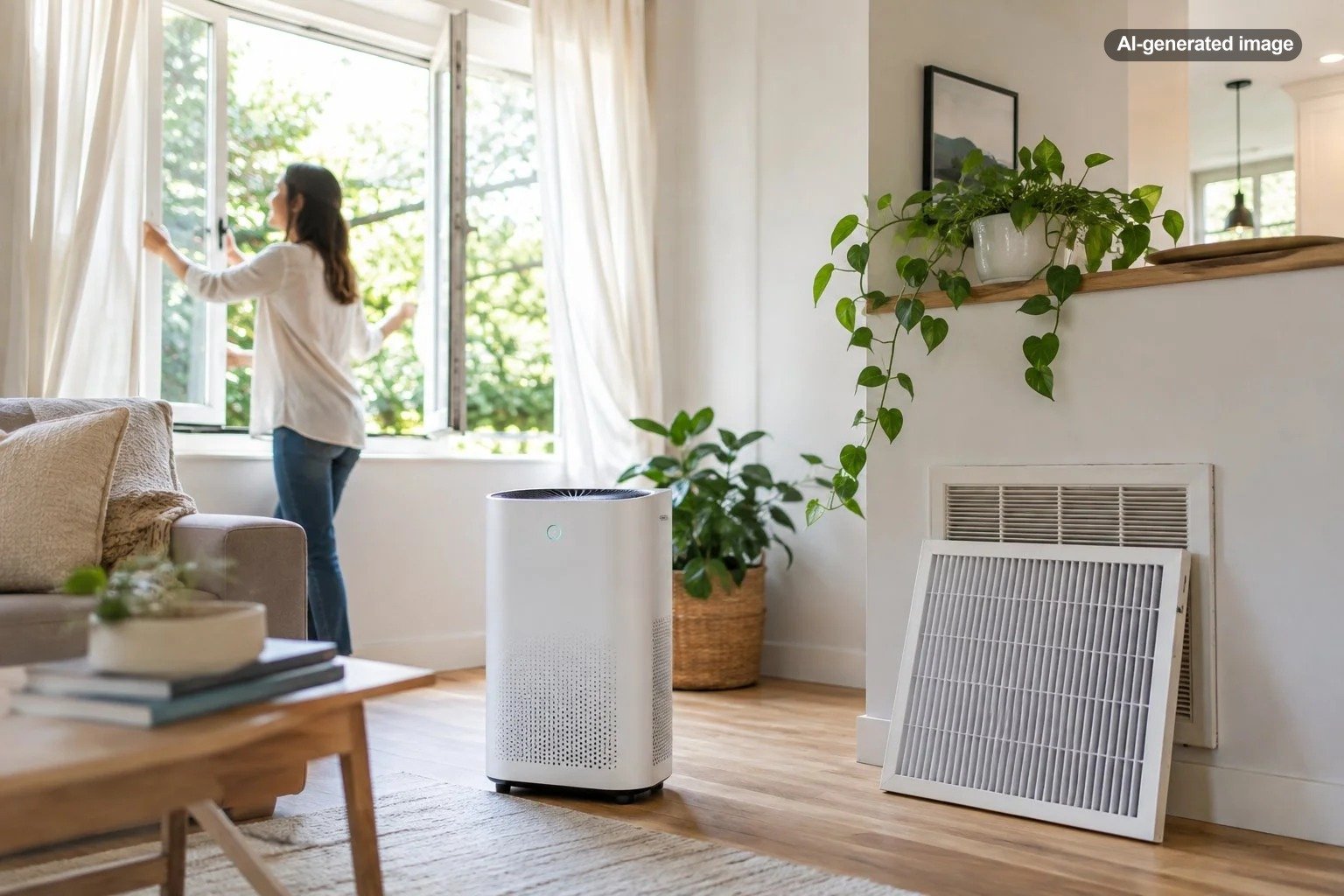
Ventilation dilutes indoor pollutants by exchanging indoor air with outdoor air. That may be as simple as opening windows in favorable weather, or it may involve kitchen and bathroom exhaust fans or a mechanical whole-house ventilation system. The best method depends on the home, climate, outdoor air conditions, and equipment already installed.
Kitchen and bathroom exhaust deserve particular attention because they remove contaminants close to where they are generated. Cooking can contribute particles, moisture, and combustion pollutants, while showers and baths add substantial moisture. Exhaust fans are most useful when they discharge outdoors rather than simply moving air around the room.
Opening windows is not always the right move. During wildfire smoke, unusually high outdoor particle pollution, or very hot and humid weather, bringing outdoor air inside can create a different problem. In those situations, follow local air-quality and emergency guidance and use your home’s mechanical systems appropriately.
Use filtration for the job it can actually do
Filtration is useful, particularly for airborne particles, but no filter removes every indoor pollutant. Portable air cleaners treat a room or defined area, while central HVAC filters treat air that passes through the home’s heating and cooling system. Neither approach substitutes for correcting a strong pollution source.
For a portable unit, sizing matters. The EPA recommends considering the clean air delivery rate, commonly called CADR, and selecting an air cleaner appropriate for the room where it will operate. A small unit tucked into a large open-plan living area may simply move too little filtered air to make much difference. Placement matters too: blocked intakes, covered outlets, or hiding a unit tightly behind furniture can interfere with airflow.
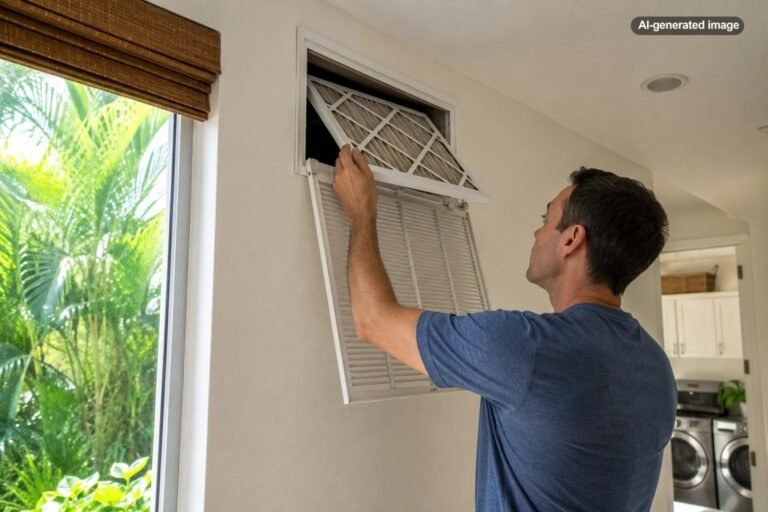
For a central system, use a filter that is suitable for the HVAC equipment. Higher-efficiency filtration can improve particle removal, but a filter that creates more airflow resistance than the system is designed to handle can be counterproductive. Follow the equipment manufacturer’s guidance or consult a qualified HVAC professional before making a significant change in filter type.
| Approach | Best suited to | Main limitation |
|---|---|---|
| Source control | Pollutants with an identifiable cause | Requires finding and addressing the source |
| Outdoor-air ventilation | Diluting many indoor contaminants | Outdoor air may sometimes be polluted, hot, or humid |
| HVAC filtration | Particles carried through a central system | Only treats air moving through the equipment |
| Portable air cleaner | Supplemental particle filtration in a room | Performance depends on sizing, placement, and pollutant type |
| Humidity control | Moisture-related conditions | Does not remove unrelated pollutants such as radon or carbon monoxide |
Keep moisture from becoming an air-quality problem
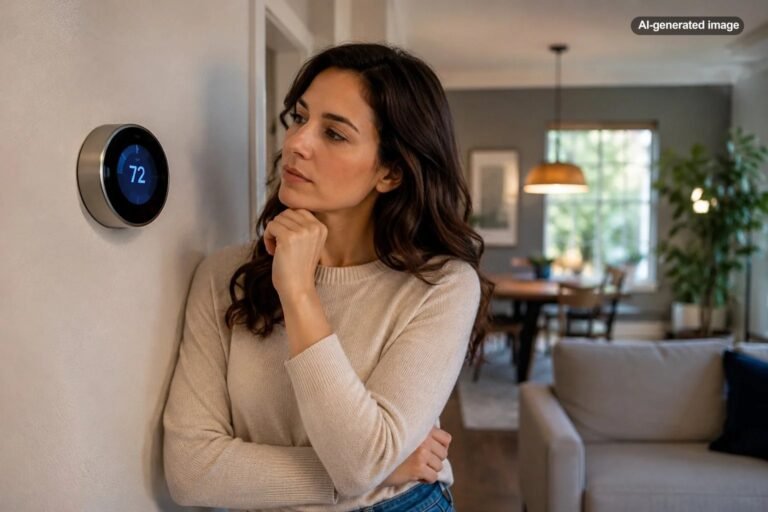
Humidity is easy to overlook because it is not a visible pollutant, yet excess moisture can support mold growth and create conditions that make a home feel persistently damp. EPA guidance recommends keeping indoor relative humidity below 60 percent and, when possible, in roughly the 30 to 50 percent range.
A simple humidity meter can help you see whether a room is consistently damp rather than relying on how the air feels. In humid climates, air conditioning or dehumidification may be part of the solution. In bathrooms and kitchens, exhaust ventilation can remove moisture near its source. Leaks, wet building materials, repeated condensation, or water intrusion need attention rather than being treated as humidity problems alone.
If mold is visible or a persistent musty odor accompanies moisture damage, focus on fixing the water or moisture source. Cleaning without addressing continuing dampness can leave the underlying conditions unchanged. Significant, recurring, hidden, or widespread moisture problems may justify evaluation by an appropriate professional rather than repeated cosmetic cleanup.
Take combustion pollutants seriously
Homes with fuel-burning appliances need an additional layer of attention. Furnaces, boilers, fireplaces, wood stoves, gas cooking appliances, fuel-burning space heaters, and other combustion equipment can produce pollutants. Carbon monoxide is especially important because you cannot reliably detect it by sight or smell.
The U.S. Consumer Product Safety Commission recommends carbon monoxide alarms on each level of a home and outside sleeping areas. Alarms should be installed, tested, maintained, and replaced according to the manufacturer’s instructions. They are a safety device, not a substitute for proper installation, venting, and maintenance of combustion equipment.
Portable generators belong outdoors and well away from the home; they should never be operated inside a house or garage, even with doors or windows open. If a carbon monoxide alarm sounds, follow the alarm manufacturer’s emergency instructions and official local emergency guidance rather than trying to troubleshoot a fuel-burning appliance yourself.
Test for the pollutant you cannot see, smell, or filter away casually
Radon deserves a place in any serious indoor-air plan because it is not solved by dusting more often or buying a standard portable air purifier. Radon is a naturally occurring radioactive gas, and the EPA states that testing is the only way to know the radon level in a home. The agency recommends that homes be tested.
If you have never tested your home, consider radon testing as a separate air-quality task rather than trying to infer risk from the age, cleanliness, location, or appearance of the property. If testing finds an elevated level, use EPA and state radon-program guidance to determine appropriate next steps and qualified mitigation resources.
Build a routine instead of chasing perfect air
Indoor air quality is usually better managed as a household routine than as a one-time shopping project. Start with obvious sources, then keep ventilation equipment, exhaust fans, HVAC filters, moisture control, and safety devices on your regular home-maintenance radar.
What to do
- Walk through the home and identify likely particle, moisture, odor, and combustion sources.
- Correct controllable sources before adding equipment solely to mask the problem.
- Use kitchen and bathroom exhaust that vents outdoors when those rooms are generating pollutants or moisture.
- Check indoor humidity and investigate recurring dampness, leaks, or condensation.
- Review the HVAC manufacturer’s filter guidance and replace filters according to the equipment and filter instructions.
- Add a properly sized portable air cleaner if a particular room would benefit from supplemental particle filtration.
- Verify that required smoke and carbon monoxide alarms are present and maintained.
- Test the home for radon if you have not done so.
Renters can use much of the same sequence even when building systems are outside their control. Portable filtration, sensible cleaning, use of installed exhaust fans, humidity monitoring, and reducing indoor pollution sources are renter-friendly steps. Leaks, persistent dampness, malfunctioning exhaust, combustion concerns, or building-system problems should be reported to the property owner or manager through the appropriate process.
Frequently asked questions
Is an air purifier the best way to improve indoor air quality?
Not by itself. Portable air cleaners can reduce certain airborne pollutants, particularly particles, but EPA guidance emphasizes source control and ventilation as foundational strategies. Filtration works best as part of that larger plan.
Should I open windows every day?
Not necessarily. Outdoor-air ventilation can help dilute indoor pollutants, but it makes sense only when outdoor conditions are suitable. Outdoor smoke, particle pollution, extreme heat, or high humidity can change the decision.
What indoor humidity should I aim for?
EPA guidance says indoor relative humidity should remain below 60 percent and ideally be kept between about 30 and 50 percent when possible. The practical goal is also to prevent persistent condensation and damp materials.
Can an air purifier remove carbon monoxide?
Do not rely on a conventional portable air cleaner for carbon monoxide safety. Homes with potential combustion sources should have appropriate carbon monoxide alarms, and combustion appliances should be properly installed, vented, and maintained.
Does a cleaner-looking house automatically have better air?
No. Dust control can be useful, but important indoor-air issues can involve invisible gases, combustion pollutants, radon, ventilation, or hidden moisture. Appearance alone cannot tell you whether indoor air is healthy.
Sources & further reading
- U.S. Environmental Protection Agency: Improving Indoor Air Quality
- U.S. Environmental Protection Agency: Guide to Air Cleaners in the Home
- U.S. Environmental Protection Agency: Mold Course – Moisture and Humidity
- U.S. Environmental Protection Agency: Carbon Monoxide’s Impact on Indoor Air Quality
- U.S. Consumer Product Safety Commission: CO Alarms
- U.S. Environmental Protection Agency: Radon