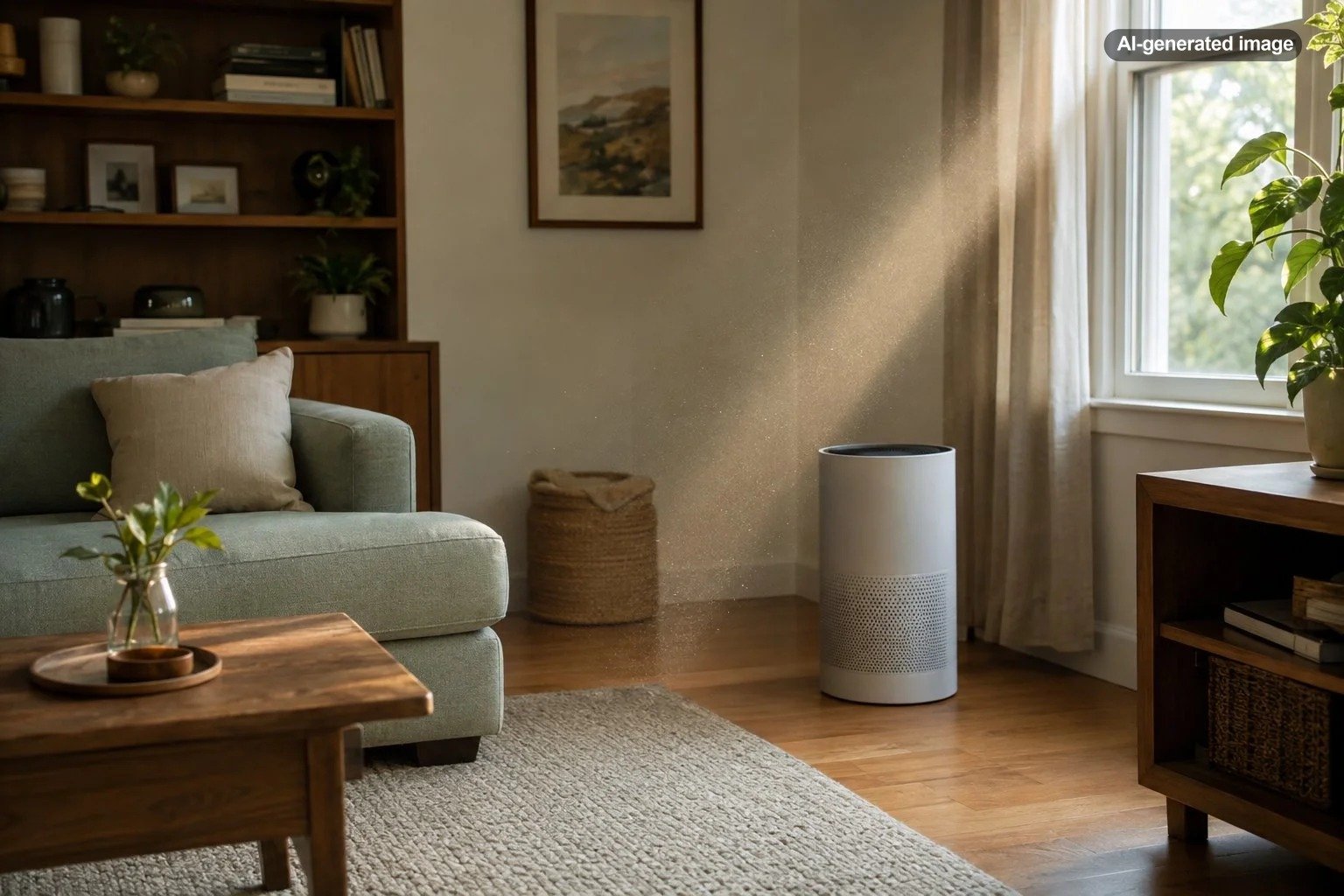
How Can You Reduce Dust Floating in the Air?
To reduce dust floating in the air, focus on three jobs: create less dust, remove settled dust without launching it back into the room, and filter the particles that remain airborne. A portable air cleaner can help, but it works best as part of a broader routine that includes effective HVAC filtration, damp cleaning, vacuuming, clutter control, and attention to entryways, fabrics, pets, and renovation debris.
The important distinction is that visible dust is only part of the problem. Some particles settle quickly on furniture and floors, while smaller particles can remain suspended and circulate through rooms. That is why endlessly dusting a tabletop may make the room look cleaner without fully addressing the dust you see drifting through a shaft of sunlight.
Start by reducing the sources of dust
Indoor dust is not one substance. It can include tracked-in soil, textile fibers, skin flakes, pet dander, pollen, combustion particles, pest debris, and fine material released during cooking, repairs, sanding, or remodeling. The U.S. Environmental Protection Agency recommends source control as a primary strategy for improving indoor air quality because preventing particles from entering the air is often more effective than trying to capture all of them afterward.
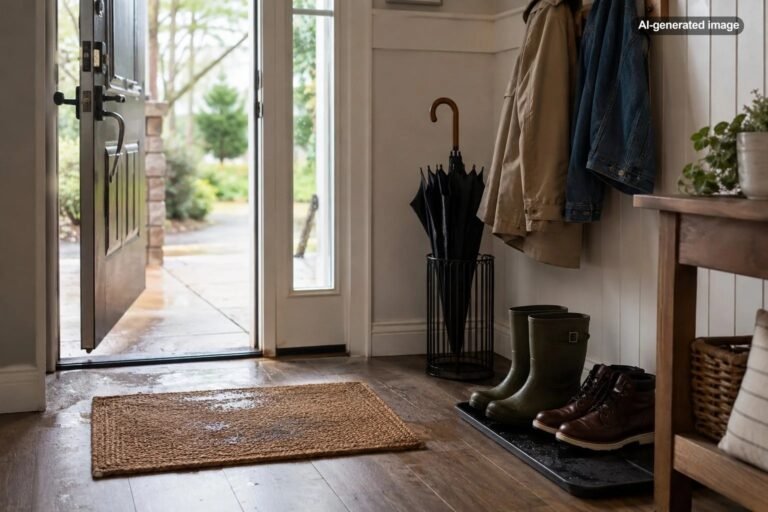
Begin at the entrances. Use an exterior mat and a washable interior mat, remove shoes when practical, and clean the entry floor regularly. These small measures help limit the soil and grit that people otherwise carry through the home and grind into finer particles.
Look closely at fabrics as well. Throw blankets, decorative pillows, curtains, upholstered furniture, bedding, and rugs can collect particles and release them again when disturbed. This does not mean every room needs to become bare and echoing. It means washable, maintainable textiles are easier to manage than layers of rarely cleaned fabric.
- Wash bedding and frequently used throws according to their care labels.
- Vacuum upholstered furniture with an appropriate attachment.
- Store seldom-used textiles in closed cabinets, drawers, or containers.
- Brush and groom pets in an easy-to-clean area when possible.
- Contain sanding, drilling, drywall work, and similar projects instead of allowing debris to spread through the house.
Clean in a way that captures dust
Some cleaning methods simply relocate dust. Feather dusters, dry cloths, aggressive sweeping, and compressed air can send settled particles back into circulation. A lightly damp microfiber cloth is usually more effective on hard, moisture-tolerant surfaces because it holds particles instead of flicking them into the room.
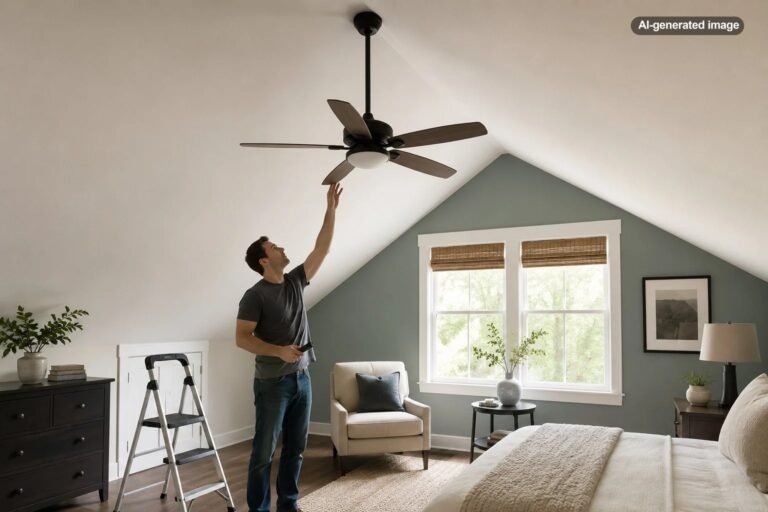
Work from high surfaces to low ones so anything dislodged is collected later. Start with ceiling fan blades, the tops of cabinets, shelves, window trim, and tall furniture. Continue with tables and counters, then finish with upholstery and floors. Do not saturate wood, electronics, unsealed stone, or other moisture-sensitive finishes; follow the material or manufacturer’s care instructions.
What to do
- Turn off ceiling fans before cleaning them.
- Wipe elevated surfaces with a clean, slightly damp microfiber cloth.
- Fold or rinse the cloth as it becomes loaded rather than spreading the same dust farther.
- Vacuum soft furnishings, floor edges, vents, and rugs slowly.
- Damp-mop compatible hard floors after vacuuming.
- Wash or replace cleaning tools so they are ready to capture dust next time.
Vacuum design and maintenance matter. A machine may advertise strong suction yet still leak fine particles through its body, hose connections, or exhaust. A well-sealed vacuum equipped with suitable filtration is preferable when airborne dust is a recurring concern. Empty the bin or change the bag before it becomes overfilled, clean or replace filters as directed, and take care not to create a dust cloud during disposal.
Use your HVAC filter effectively
A central heating and cooling system can help remove particles only while air is moving through a suitable filter. Check the filter regularly and replace it according to the equipment manufacturer’s instructions, the filter maker’s guidance, and actual household conditions. Homes with pets, heavy cooking, nearby construction, open windows, or frequent door traffic may load filters more quickly than quieter households.
Higher-efficiency filtration can capture smaller particles, but the filter must be compatible with the system. An overly restrictive filter can reduce airflow in equipment that was not designed for it. Before making a substantial change in filter type or efficiency, consult the HVAC manual or a qualified technician who can evaluate the system rather than relying solely on the largest number printed on a package.
Also inspect the basics. A filter installed backward, a poorly fitted filter with gaps around the frame, blocked return grilles, or a neglected filter compartment can reduce performance. The airflow arrow on a disposable filter should point in the direction specified for the equipment, generally toward the blower.
Add a portable air cleaner where it will matter most
A portable air cleaner can reduce airborne particles in a single room or defined area. Choose a unit with a clean air delivery rate, or CADR, appropriate for the room size. A machine sized for a small bedroom may provide disappointing results in an open living and dining area, especially when doors remain open to adjoining spaces.
HEPA filtration is commonly used for particle removal, but the complete appliance matters. Airflow, room sizing, filter fit, operating speed, placement, noise, and maintenance all influence real-world usefulness. Place the unit where air can move freely into and out of it, not tightly behind a sofa, under a desk, or inside a decorative cabinet.
Run it consistently enough to circulate the room air. A powerful machine used only occasionally may accomplish less than a correctly sized unit operating for longer periods at a comfortable sound level. Keep replacement-filter availability and cost in mind before selecting a model, because an air cleaner with a clogged or unavailable filter is mainly an expensive fan.
Avoid ozone-generating devices marketed as a simple answer to indoor air problems. Ozone can irritate the respiratory system, and the EPA advises against using ozone generators in occupied spaces. For household dust, mechanical particle filtration is the more relevant feature.
The best dust-control plan catches particles at the door, on the cleaning cloth, in the vacuum, and in the filter before they can make another lap around the room.
Ventilate selectively rather than automatically
Ventilation can dilute pollutants generated indoors, but opening windows is not always the right dust strategy. Outdoor pollen, wildfire smoke, traffic particles, landscaping debris, and nearby construction dust can enter through open windows and doors. Ventilate when outdoor conditions are favorable, and rely more heavily on filtration when outdoor particle levels are elevated.
Use exhaust fans that vent outdoors while cooking and during activities that generate particles or moisture. Confirm that bathroom and kitchen exhaust systems actually discharge outside rather than into an attic, ceiling cavity, or cabinet. Clean reusable screens or filters according to the appliance instructions so grease and dust do not obstruct airflow.
Check for unusual or persistent dust sources
Ordinary household dust accumulates gradually. A sudden increase, a distinctive powder, or debris concentrated near one location deserves closer attention. Recent drywall work, sanding, deteriorating insulation, a damaged return duct, fireplace ash, pest activity, or construction outside the home may be contributing.
In older homes, do not sand, scrape, drill, or disturb unknown painted surfaces, insulation, flooring, pipe coverings, or other suspect materials merely to investigate dust. Materials containing lead or asbestos require appropriate identification and handling. Stop the work and consult a qualified professional when the source may involve hazardous building material.
Create a routine that is realistic to maintain
Dust control does not require deep-cleaning the entire house every day. Concentrate on the places that generate or collect the most material: entryways, bedrooms, pet areas, rugs, upholstered seating, return grilles, fan blades, and rooms near active outdoor sources.
A practical rhythm might include wiping high-use hard surfaces during the week, vacuuming floors and upholstery on a consistent schedule, washing bedding regularly, checking the HVAC filter monthly until you understand how quickly it loads, and cleaning portable air-cleaner filters as instructed. Homes differ, so visible buildup and equipment guidance are more useful than a universal calendar.
Before you decide
- Identify whether the dust is ordinary household buildup or a sudden, localized change.
- Improve source control and cleaning before buying multiple devices.
- Confirm HVAC filter compatibility rather than choosing by efficiency alone.
- Size a portable air cleaner for the actual room or open area.
- Consider noise and replacement-filter availability.
- Use outdoor ventilation only when outdoor air conditions are suitable.
Frequently asked questions
Why can I see dust floating after I clean?
Cleaning may disturb particles that were resting on floors, fabrics, shelves, and fan blades. Dry dusting, fast vacuuming, shaking textiles indoors, or sweeping can increase the visible plume. Capture dust with a damp cloth, vacuum slowly, and run suitable filtration during and after cleaning.
Will an air purifier eliminate dust on furniture?
No. A portable air cleaner can reduce some airborne particles, but larger particles often settle before reaching the unit. You will still need to clean surfaces, floors, fabrics, and source areas.
Should I leave the HVAC fan running all the time?
Continuous fan operation may increase filtration, but suitability, energy use, comfort, humidity behavior, and equipment design vary. Review the system documentation or ask a qualified HVAC professional about the best fan setting for your equipment and climate.
Does high indoor humidity cause more dust?
Humidity does not create every type of dust, but excessive moisture can support mold growth and dust-mite activity, while very dry conditions may make some lightweight particles easier to disturb. Address leaks and moisture problems, and maintain indoor conditions appropriate for the home and climate.
Do houseplants remove meaningful amounts of dust?
Leaves can collect some settled particles, but ordinary houseplants should not replace source control, cleaning, ventilation, or filtration. Plant soil and damp organic material can also introduce maintenance concerns if overwatered.