
Can One Air Purifier Clean an Entire House?
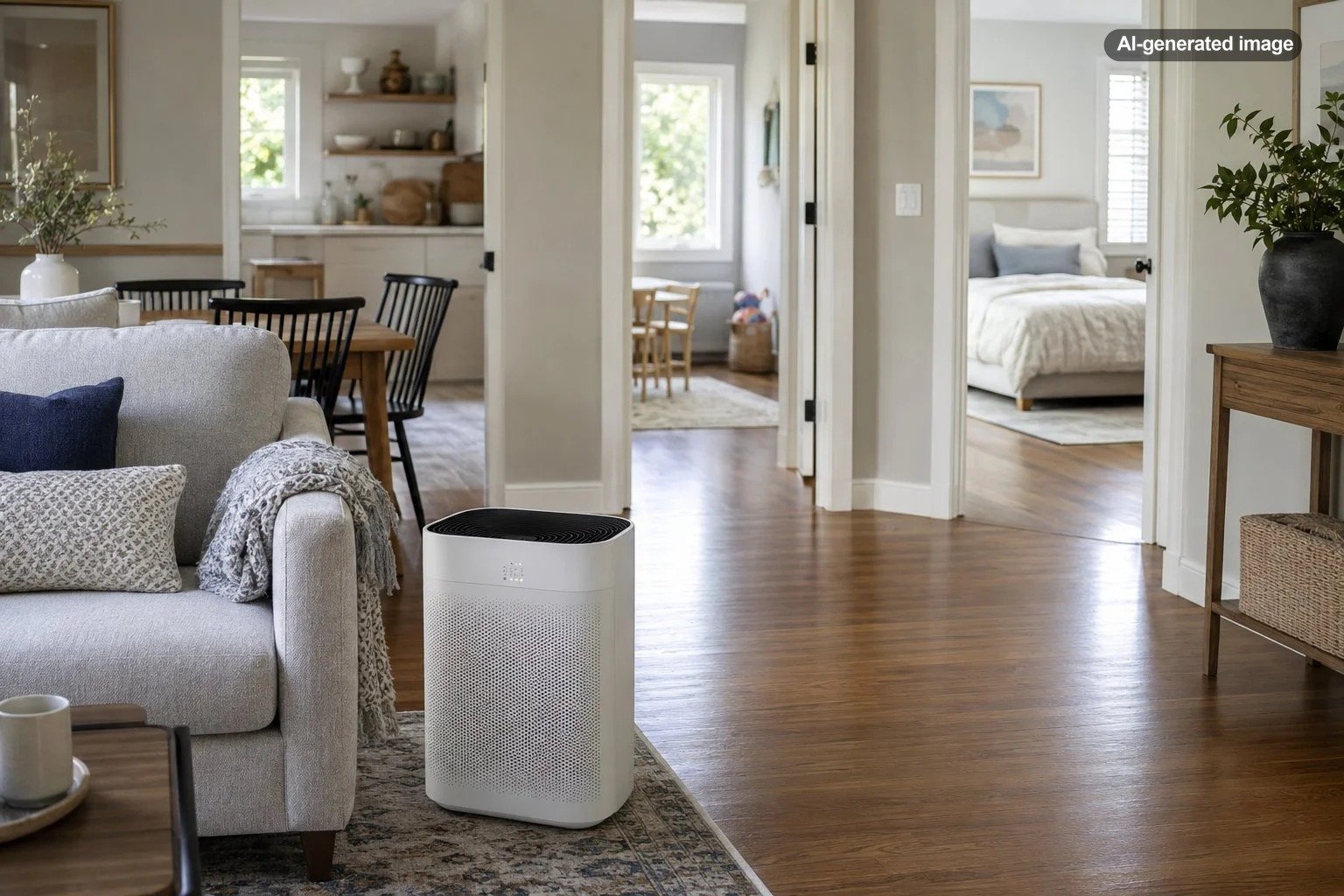
Usually, one portable air purifier cannot clean an entire house effectively. These appliances are designed to filter air within a single room or connected open area, not pull polluted air through closed doors, around corners, and between floors. One suitably sized unit may serve a compact apartment or open-plan living area, but a typical multiroom house generally needs more than one purifier or a combination of portable units and compatible central HVAC filtration.
The deciding factors are not simply total square footage. Walls, doors, ceiling height, airflow, purifier capacity, fan speed, and the location of pollution sources all determine how much useful filtration reaches each room.
Why whole-house coverage is difficult
A portable purifier cleans air only after that air reaches its intake. In an open studio, air can circulate through most of the living space with relatively few barriers. In a house with closed bedroom doors, a stairwell, long hallways, or separate wings, air from distant rooms may exchange too slowly for one machine to make a meaningful difference.
Placement in a central hallway does not automatically solve the problem. A hallway may be geographically central while remaining a poor airflow location. The unit can repeatedly filter nearby air while barely affecting a bedroom behind a closed door.
The U.S. Environmental Protection Agency describes portable air cleaners as appliances intended for a single room or area. Central furnace and HVAC filters, by contrast, can filter air moving throughout a ducted system. Neither approach removes every pollutant, and filtration works best alongside source control and ventilation with clean outdoor air.
An air purifier cleans the air that reaches it, not every room shown on the floor plan.
Use CADR instead of vague coverage claims
For particle filtration, one of the most useful numbers is the clean air delivery rate, or CADR. It represents the volume of filtered air a purifier delivers. A higher CADR can serve a larger area or clean a smaller area more frequently, assuming the purifier is operated at the speed used for the rating.
EPA sizing guidance for rooms with 8-foot ceilings pairs approximately 100 square feet with a minimum CADR of 65 cubic feet per minute, 300 square feet with 195 cfm, and 500 square feet with 325 cfm. Higher ceilings increase the volume of air, so selecting a unit for a larger area is sensible when a room rises above the standard 8-foot assumption.
Coverage statements can also reflect different numbers of air changes per hour. A purifier may technically circulate the equivalent volume of a very large room once per hour while serving a much smaller room several times per hour. Those are not equivalent levels of cleaning. When comparing models, look for the room size, CADR, assumed ceiling height, air-change rate, and fan speed behind the claim.
| Home layout | Likely approach | Main limitation |
|---|---|---|
| Small open studio | One correctly sized unit | Kitchen or outdoor pollution may require more capacity |
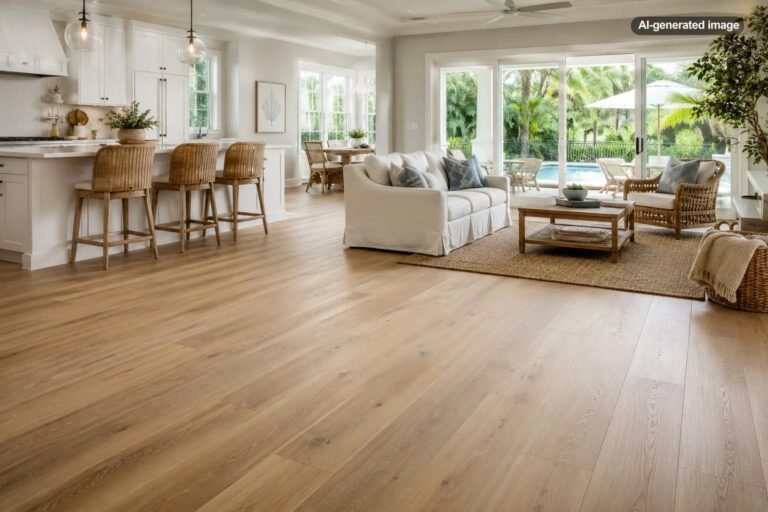
| Open living, dining, and kitchen zone | One larger unit or two quieter units | Connected floor area and ceiling height must be counted together |
| Two-bedroom apartment | Living-area unit plus bedroom unit as needed | Closed doors interrupt air exchange |
| Multistory house | Multiple room units and compatible HVAC filtration | One portable unit rarely serves separate floors evenly |
How many air purifiers does a home need?
There is no universal unit-per-square-foot formula because households use rooms differently. Start with the spaces where people spend the most time and where the pollutant of concern is most likely to appear.
- Bedrooms: Prioritize the occupied bedroom, especially when the door remains closed overnight.
- Main living area: Size the purifier for the complete connected space, not merely the furniture arrangement around it.
- Home office: A smaller dedicated unit may be more effective than expecting a distant living-room purifier to reach the room.
- Pet areas: Put filtration near the occupied zone without allowing hair, bedding, or curtains to obstruct the intake.
- Seasonal smoke or pollen: Choose sufficient particle CADR and reduce infiltration where practical rather than relying on filtration alone.
Where to place each purifier
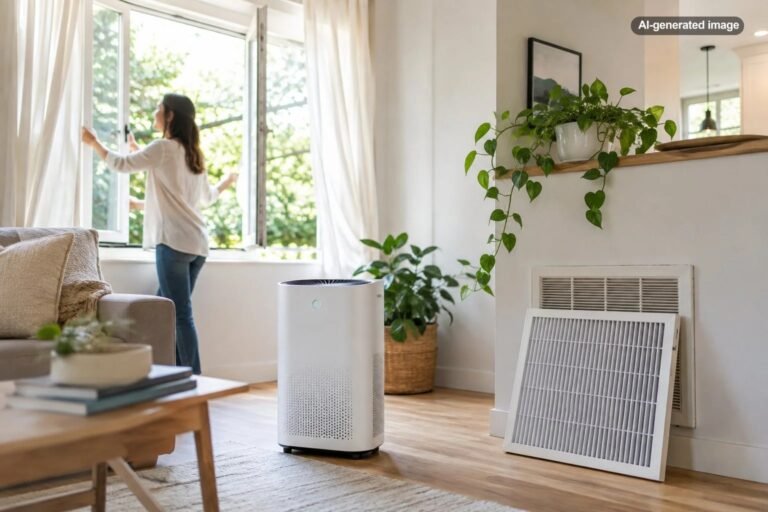
Place a portable purifier in the room it is meant to serve. Leave its intake and outlet unobstructed, and keep it away from curtains, furniture, and tight corners unless the manufacturer specifically permits that placement. Redirect the outlet if it creates an uncomfortable draft, but do not hide the appliance behind a sofa for visual convenience.
Run time matters as much as location. Higher fan speeds and longer operation move more air through the filter. A powerful unit used only occasionally, or left on a nearly silent low setting that provides too little airflow for the room, may accomplish less than a modestly sized unit operated consistently.
Noise therefore deserves serious consideration. The most impressive maximum-speed performance is of limited value if the sound encourages everyone to switch the machine off. For bedrooms and workspaces, compare published noise information and choose a model that can provide adequate airflow at a setting the household will tolerate.
What one purifier can and cannot remove
Particle filters can reduce airborne dust, pollen, smoke particles, and some pet-related particles that pass through the machine. A HEPA filter describes particle-capture efficiency at the filter, while CADR incorporates both filtration and airflow. For room selection, CADR is generally the more practical performance measure.
Odors and gaseous pollutants require a different medium, commonly activated carbon or another sorbent designed for gases. CADR ratings apply to particles, not gas removal, and a thin carbon sheet may have limited capacity. No purifier should be expected to correct an active pollution source.
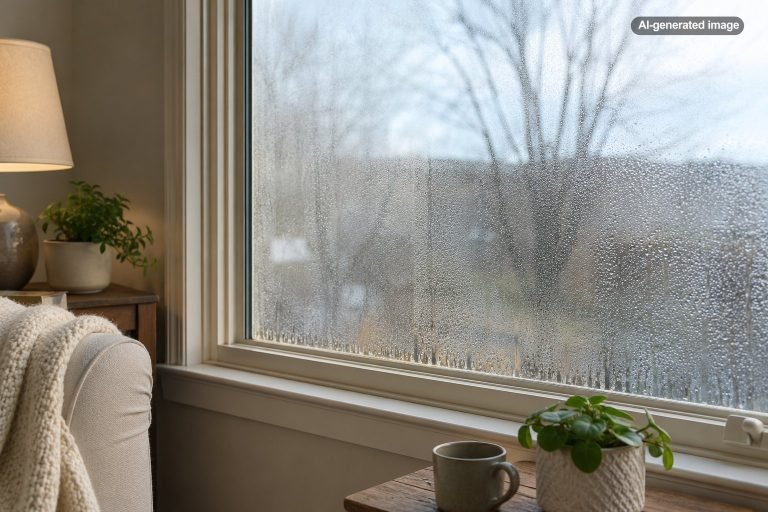
- A purifier does not repair a moisture leak or eliminate the cause of mold growth.
- It does not make indoor smoking harmless.
- It does not replace a functioning kitchen exhaust system.
- It does not remove settled dust until that dust becomes airborne and reaches the intake.
- It does not replace safe ventilation when outdoor conditions allow it.
Can an HVAC filter clean the whole house?
A central HVAC filter has a genuine whole-house advantage because it treats air traveling through the duct system. Its reach still depends on the equipment, duct layout, filter fit, operating time, and whether return air is moving from the relevant rooms.
EPA advises using a filter rated at least MERV 13, or the highest efficiency the system fan and filter slot can accommodate. A higher-efficiency filter should not be forced into an incompatible system. An HVAC professional can assess acceptable resistance, filter size, fit, and possible equipment modifications.
Central filtration also operates only while the blower runs. Extending fan operation may increase filtration, but it can use more electricity and may affect humidity control during cooling season. Portable purifiers can therefore remain useful in bedrooms and other priority rooms even when central filtration is upgraded.
A practical plan for cleaner air throughout the home
What to do
- Identify the concern. Decide whether the main issue is particles, odors or gases, moisture, or an active source such as cooking smoke.
- Control the source. Use exhaust fans, correct moisture problems, vacuum appropriately, keep combustion sources maintained, and ventilate with clean outdoor air when suitable.
- Divide the home into zones. Treat enclosed bedrooms, offices, and separate floors as distinct spaces rather than adding all household square footage together.
- Measure each priority space. Multiply length by width, account for connected open areas, and choose more capacity for high ceilings.
- Compare particle CADR. Select enough clean-air delivery for the actual room, remembering that ratings commonly reflect the highest fan speed.
- Check the central system. Ask an HVAC professional which filter efficiency the equipment can safely accommodate.
- Maintain every filter. Follow the applicable manual, inspect filters regularly, and replace or clean them as directed.
Affiliate disclosure: CraneManor.com may earn a commission when you purchase through links on this page. This does not affect the price you pay. Learn more.
For a bedroom or modest living room, a straightforward appliance with automatic operation can be convenient. The Coway Airmega purifier, for example, includes particle sensing, automatic fan control, filter indicators, and published CADR values. Its suitability still depends on the intended room, desired air-change rate, operating speed, and maintenance routine; it should not be treated as a one-machine solution for every room in a house.
The bottom line
One portable purifier can clean a small open home or a single connected zone when its CADR is appropriate for the space. It is unlikely to clean a conventional multiroom or multistory house evenly, particularly when doors remain closed.
For most homes, the sounder strategy is layered: remove or reduce pollution sources, ventilate when appropriate, use the best HVAC filter the system can accommodate, and place separate portable purifiers in the rooms where people spend the most time. That approach respects the realities of airflow instead of asking one appliance to perform architectural magic.
Frequently asked questions
Should I move one air purifier from room to room?
You can, but it cleans only the room where it is currently operating. Moving it between a living area and bedroom may suit a small household, provided the unit is correctly sized and runs long enough in each location. Dedicated units are more convenient when several rooms need continuous filtration.
Should bedroom doors stay open?
An open door can improve air exchange with a nearby purifier, but it does not guarantee adequate filtration in the bedroom. If the door is normally closed while sleeping, size and place a purifier for that room.
Does a larger purifier always work better?
Extra CADR can be useful, especially when it allows effective operation at a quieter speed. However, size, noise, filter availability, energy use, and placement still matter. An oversized unit hidden behind furniture or rarely operated is not an effective choice.
Can an air purifier solve musty odors?
It may reduce some airborne particles or odors, depending on its filters, but it cannot correct the moisture problem that permits mold growth. Find and address the source of moisture and arrange appropriate cleanup rather than using filtration to mask the warning sign.