
Is Luxury Vinyl Plank a Good Choice for Florida Homes?
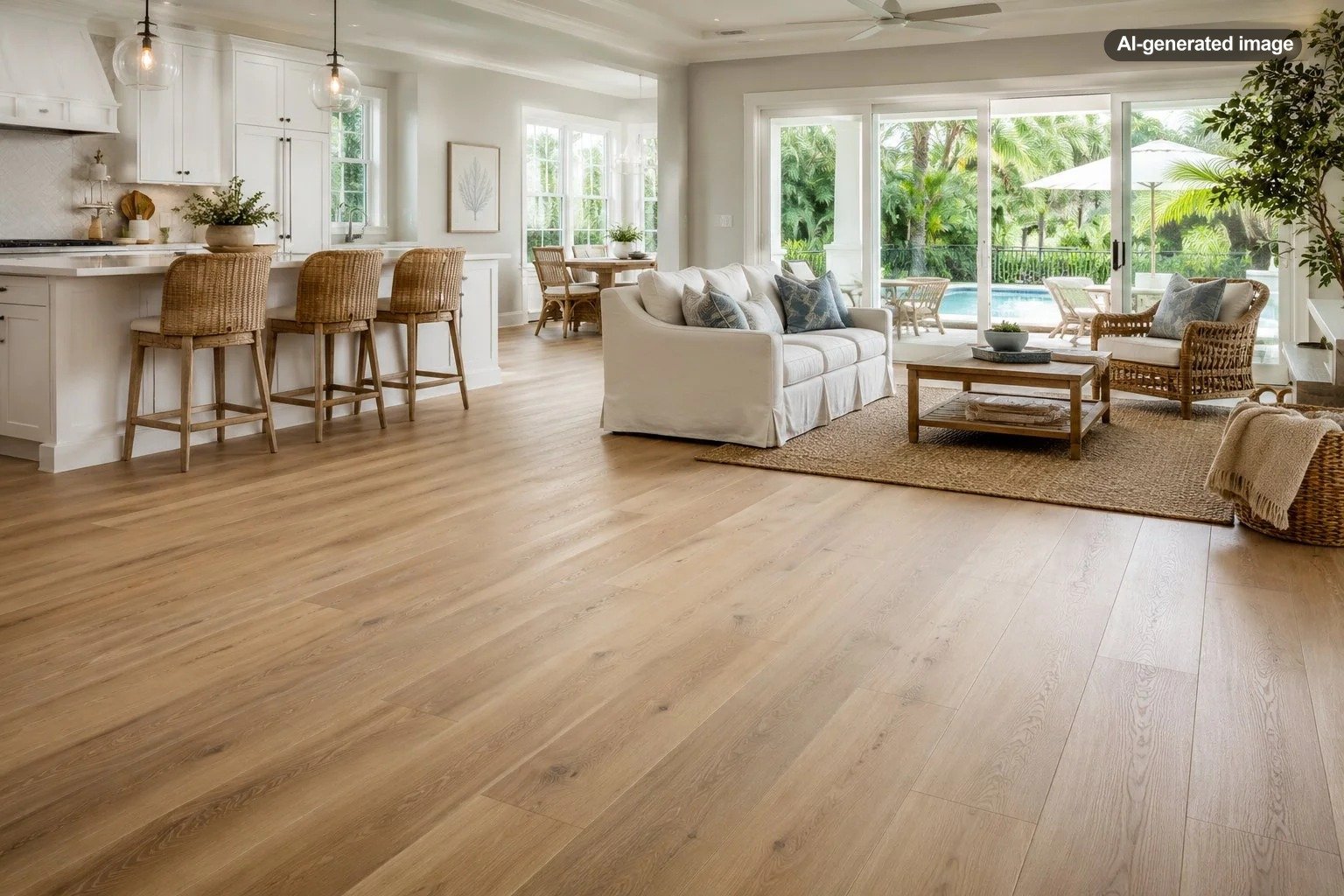
Yes, luxury vinyl plank can be a very good flooring choice for Florida homes, particularly for households that want a wood-like appearance without the moisture sensitivity of traditional hardwood. It is comfortable underfoot, relatively easy to maintain, and available in styles that suit everything from coastal condos to suburban family homes.
The important qualification is that the flooring itself is only part of the decision. Florida’s humid climate, concrete slab construction, strong sunlight, air-conditioning patterns, and occasional water intrusion make subfloor preparation and installation details especially important. A good LVP product installed over a poorly prepared slab can still develop movement, uneven seams, odors, or moisture-related problems.
Why LVP often works well in Florida
Luxury vinyl plank is a type of resilient flooring made to resemble wood planks. Its printed design layer and textured surface can reproduce oak, walnut, maple, and weathered coastal looks without using a solid wood wear surface.
Unlike hardwood, vinyl does not absorb ordinary airborne humidity in the same way unfinished or inadequately conditioned wood can. That makes it appealing in a climate where indoor humidity may fluctuate as air conditioning cycles, doors open, and seasonal weather changes.
Advantages
- More tolerant of splashes and routine moisture than hardwood.
- Available in many wood and stone looks.
- Comfortable and quieter than ceramic tile in many installations.
- Usually simple to sweep, vacuum, and damp-clean.
- Works in bedrooms, living areas, kitchens, and many laundry spaces.
Tradeoffs
- It does not solve moisture problems beneath the floor.
- Uneven slabs can make floating planks flex or separate.
- Strong direct sunlight may cause fading or thermal movement.
- Damaged individual planks can be awkward to replace.
- Some designs look more convincing than others.
Water-resistant flooring is not the same as a waterproof room
Many LVP collections are marketed as waterproof because the plank material will not be ruined by an ordinary surface spill. That can be useful near exterior doors, kitchens, and laundry areas, but it does not turn the entire floor assembly into a sealed basin.
Water can still enter around walls, transitions, cabinets, floor vents, appliance connections, and perimeter gaps. A leaking refrigerator line, storm intrusion, plumbing failure, or flood can trap moisture beneath the planks even when the visible surface appears intact.
Concrete slab preparation matters more than many homeowners expect
Many Florida homes are built on concrete slabs. Before LVP is installed, the slab should be clean, sound, suitably dry, and flat enough for the selected flooring system. Manufacturer instructions commonly require concrete moisture testing and set product-specific limits for moisture and alkalinity.
The exact acceptable readings vary by flooring, adhesive, and installation method, so a generic handheld surface reading should not be treated as universal approval. The installer should follow the testing methods and thresholds stated by the flooring and adhesive manufacturers.
Flatness is equally important. A floating floor installed over dips or high spots may click, flex, feel hollow, strain locking joints, or show movement under furniture. Minor slab irregularities may require grinding or an appropriate patching or leveling material before the first plank is laid.
Before you decide
- Ask how the concrete will be tested for moisture.
- Request documentation of the jobsite conditions and test results.
- Confirm that cracks, low areas, old adhesive, and high spots will be evaluated.
- Verify whether the product requires acclimation before installation.
- Check whether a separate vapor retarder or underlayment is permitted or required.
- Make sure the proposed installation follows the exact manufacturer’s instructions.
Floating, glue-down, and rigid-core LVP are not interchangeable
Floating click-lock flooring connects plank to plank and rests over the prepared subfloor. It can be convenient for renovations, but the perimeter must be able to move as designed. Pinning a floating floor beneath heavy fixed cabinetry, ignoring expansion space, or running it through an area larger than the manufacturer permits can contribute to buckling or separation.
Glue-down LVP is bonded to the slab. It generally feels firmer underfoot and can make individual plank replacement more direct, but adhesive selection, slab moisture, surface preparation, and installation technique become critical.
Rigid-core LVP uses a stiffer composite core and can feel more substantial than flexible vinyl. It may bridge very minor texture, but it should not be expected to correct a genuinely uneven floor. Product labels such as SPC, WPC, rigid core, and waterproof describe construction or performance categories; they do not eliminate the need to read the installation guide.
| Option | Often suits | Pay attention to |
|---|---|---|
| Floating click-lock | Fast renovations and many occupied homes | Slab flatness, expansion space, transitions, and fixed objects |
| Glue-down LVP | Larger continuous areas and a firmer feel | Moisture limits, adhesive compatibility, and surface preparation |
| Rigid-core plank | Households wanting a more substantial plank | Joint quality, direct sunlight, subfloor variation, and product instructions |
Florida sunlight can be as important as Florida humidity
Large sliders, sunrooms, and west-facing windows can expose flooring to considerable heat and ultraviolet light. The floor near the glass may become much warmer than the center of the room, creating localized expansion and contraction.
Check the manufacturer’s guidance for sunrooms, three-season spaces, floor-to-ceiling windows, and rooms without continuous climate control. Window treatments or solar-control glazing may help moderate heat, but they do not override product temperature limits.
Color also affects the visual result. Very dark planks may show pale sand, dust, and pet hair quickly, while very light floors can reveal scuffs or dark debris. Mid-tone, low-contrast wood patterns are often forgiving in busy Florida households.
Humidity control still matters
LVP may tolerate humid air better than many wood floors, but the rest of the home still benefits from controlled moisture. The U.S. Environmental Protection Agency advises keeping indoor relative humidity between 30 and 50 percent to help limit conditions that support mold growth.
Persistent indoor humidity, condensation, musty odors, damp baseboards, or recurring moisture beneath flooring should be investigated rather than concealed. Flooring should be installed only after active moisture sources have been corrected and affected materials have dried appropriately.
Where LVP makes the most sense
LVP is especially practical for open living areas, bedrooms, home offices, kitchens, and hallways where homeowners want one continuous visual surface. It can also be helpful in condos because it is thinner and softer underfoot than many tile assemblies, although condominium associations may impose specific acoustic underlayment or installation requirements.
Bathrooms require more thought. The plank surface may tolerate splashes, but the perimeter, toilet connection, tub edge, and shower area remain vulnerable to water intrusion. Local requirements, manufacturer restrictions, and the room’s drainage details should guide the decision.
For enclosed lanais, garages, and rooms that are not continuously conditioned, standard interior LVP may not be appropriate. Temperature swings and direct sun can exceed the conditions permitted by some products.
Who may prefer another flooring material?
Porcelain tile may be a better choice for homeowners prioritizing maximum resistance to wet conditions, intense sun, scratches, and heavy traffic. It is especially logical for entry areas where sand and grit are routinely tracked indoors. Its disadvantages include a harder feel, colder surface, grout maintenance, and a more involved installation.
Engineered wood may appeal more to homeowners who value a genuine wood wear layer and are comfortable managing indoor conditions carefully. It requires thoughtful product selection and installation in humid climates and is less forgiving of leaks.
Polished concrete can work in modern homes, while laminate may provide another wood-look option. However, each product has its own moisture limitations, and broad terms such as water-resistant or waterproof should always be checked against the written installation and care instructions.
The bottom line
Luxury vinyl plank is a sensible choice for many Florida homes because it combines an attractive wood look with easy maintenance and useful resistance to everyday spills. Its performance, however, depends heavily on the slab beneath it, the room’s exposure to sunlight and water, and adherence to the manufacturer’s installation requirements.
Choose the construction and installation method that fit the room rather than selecting by color alone. A moisture-tested, properly flattened slab and a carefully detailed installation are more valuable than an impressive product label placed over unresolved conditions.
Frequently asked questions
Can LVP be installed directly over a Florida concrete slab?
Often, yes, but only after the slab has been evaluated and prepared according to the flooring manufacturer’s instructions. Moisture, alkalinity, flatness, cracks, contaminants, and old adhesive can affect the installation.
Is thicker LVP always better?
No. Overall thickness can affect feel and installation, but wear-layer construction, joint quality, dimensional stability, finish, subfloor preparation, and suitability for the room also matter. A thicker plank will not correct a poorly prepared slab.
Can luxury vinyl plank develop mold?
The vinyl surface does not provide the same food source as paper or wood, but moisture trapped underneath can affect dust, adhesive, underlayment, baseboards, or nearby building materials. The source of moisture should be corrected before the floor is covered.
Is LVP suitable for coastal homes?
It can be, particularly where sand, wet shoes, and routine humidity are concerns. Use entry mats, remove grit frequently, protect the floor from intense direct sunlight, and remember that LVP is not protection against storm surge or flooding.