
Where Should You Place Water Leak Detectors in Your Home?
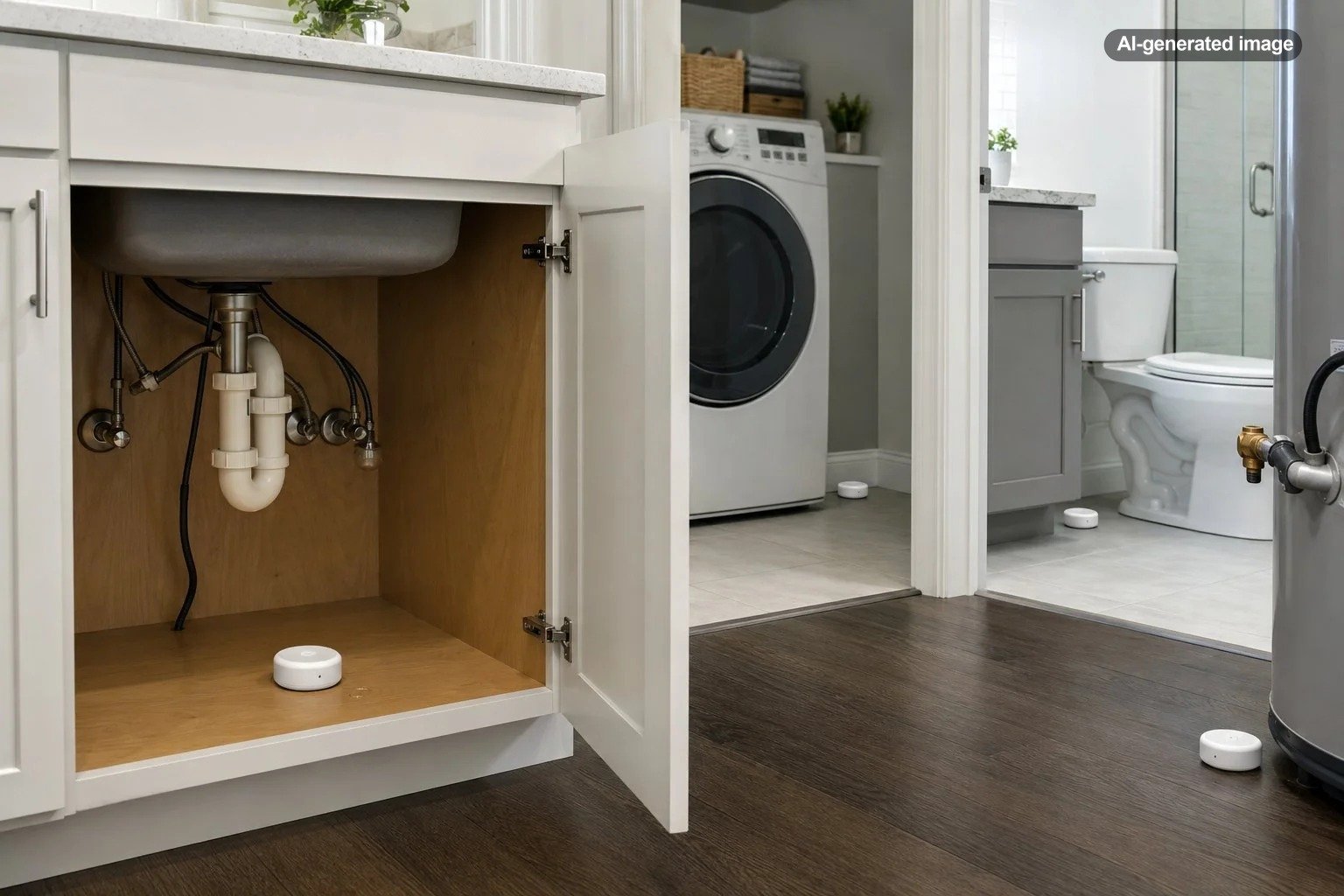
Place water leak detectors where plumbing connections, hoses, tanks, drains, or water-using appliances could release water onto the floor. The highest-priority locations are beside the water heater, behind or next to the washing machine, beneath sinks, near toilets, under the dishwasher, and close to refrigerators with water lines.
The important detail is proximity. A detector should sit where escaping water is likely to reach it early, not merely somewhere in the same room. Start with the places that combine a meaningful leak risk with expensive surrounding finishes, finished living space below, or long periods when nobody is nearby.
Start With the Water Heater
A water heater deserves one of your first detectors because its tank, valves, fittings, and nearby piping can all become leak sources. Place the sensor on the floor beside the unit, ideally near the drain pan or the side where water would first escape.
Do not set the detector inside a drain pan unless its manufacturer specifically permits that placement. Routine condensation, maintenance water, or a damp pan could cause nuisance alarms. The sensor should also remain accessible for testing and battery replacement.
If the water heater sits in an attic, upstairs utility closet, or finished basement, early detection becomes especially valuable. A relatively small leak can travel through ceilings, walls, insulation, flooring, and cabinetry before it becomes obvious in the occupied room below.
Cover the Washing Machine Connections
Position a detector behind or beside the washing machine, close to the hot and cold supply hoses and the drain connection. The best spot is usually on the floor beneath the hose connections without placing the device where the machine could crush, vibrate against, or block it.
If the washer sits in a drain pan, consider whether the detector should monitor the pan or the surrounding floor. Follow the detector manufacturer’s instructions, and make sure the sensor remains reachable without pulling the appliance out every time it needs attention.
Place Sensors Beneath Kitchen and Bathroom Sinks
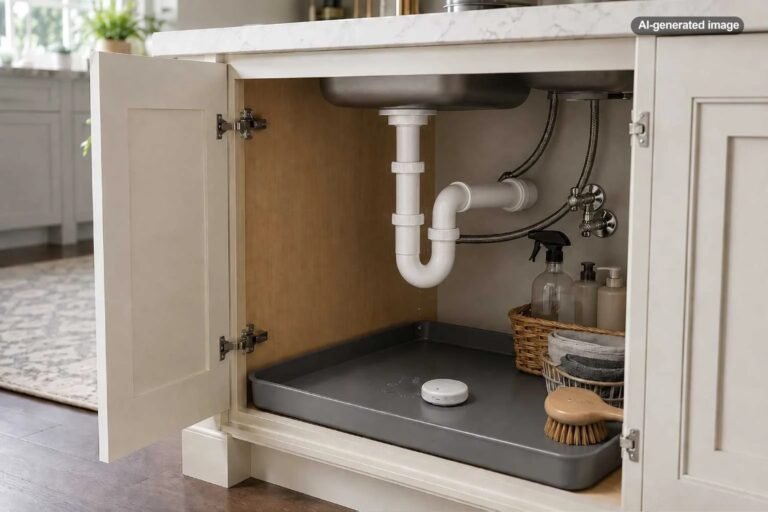
Under-sink cabinets contain several potential leak points in a compact area: faucet supply lines, shutoff valves, drain joints, garbage disposal connections, filters, and dishwasher plumbing. Place the detector flat on the cabinet floor near the plumbing rather than at the front edge of the cabinet.
Before installing it, check for old stains, cleaning-product spills, or routine condensation that might trigger false alarms. Keep bottles, trash bins, and stored supplies from covering the sensor or preventing water from reaching it.
In a double vanity, one centrally located detector may work when the cabinet base is level and open. Separate cabinet compartments, raised dividers, or widely spaced plumbing may justify one sensor beneath each sink.
Monitor Toilets at the Supply Connection
Place a compact detector on the floor behind or beside each toilet, near the shutoff valve and supply line. Avoid putting it where normal mopping, shower spray, or bath splashes will repeatedly wet it.
A toilet can also leak from the tank, tank bolts, fill connection, wax seal, or nearby plumbing. A floor sensor cannot identify which component failed, but it can alert you when water reaches an area where it should not be.
Prioritize upstairs bathrooms, powder rooms that are rarely used, and toilets on wood or laminate flooring. In frequently splashed bathrooms, careful placement matters more than simply pushing the sensor as close to the fixture as possible.
Protect the Dishwasher and Refrigerator Water Line
For a dishwasher, place the detector beneath the adjacent sink cabinet near the dishwasher supply and drain connections when those lines are accessible there. If the appliance has an accessible toe-kick area and the manufacturer’s instructions allow it, a sensing probe or cable may provide coverage closer to the appliance itself.
For a refrigerator with an ice maker or water dispenser, position a detector behind or beside the refrigerator near the supply connection. Leave enough clearance that the appliance cannot roll onto the device or damage its cord, probe, or sensing cable.
These appliances are easy to overlook because their water lines are mostly hidden. A slow connection leak may first appear as warped flooring, damp cabinetry, or staining in the room below.
Add Coverage Near HVAC and Water Treatment Equipment
Air handlers, dehumidifiers, condensate pumps, humidifiers, water softeners, filtration systems, and reverse-osmosis equipment can all produce or handle water. A detector near the condensate drain pan, pump, tubing connections, or treatment equipment can provide useful early warning.
Because some HVAC areas are normally humid or occasionally damp, follow the equipment and detector instructions closely. A sensor should not interfere with drainage, airflow, electrical components, service access, or required clearances.
If you see active dripping, an overflowing condensate pan, wet electrical equipment, or unexplained ceiling stains, do not rely on the detector as the solution. Turn off affected equipment when it is safe to do so and arrange appropriate professional service.
Look Beyond Individual Fixtures
Basements, crawlspace access areas, mechanical rooms, utility closets, and plumbing chases may contain several leak sources. Place sensors at low points where water is likely to collect, but do not assume water will always travel in a straight line from the source.
Homes with many risk areas may benefit from combining point-of-use moisture sensors with a whole-home flow monitoring system. Moisture sensors detect water in specific locations, while flow monitors watch water movement through the plumbing and may identify unusual use that never reaches a floor sensor.
The best detector location is not simply near water; it is in the first realistic path that an unwanted leak would take.
How to Decide Which Locations Come First
If you do not have enough detectors for every possible location, rank each area by leak likelihood, potential damage, and how quickly someone would notice the problem.
| Priority | Typical locations | Why they matter |
|---|---|---|
| Highest | Water heater, washing machine, upstairs plumbing | Multiple connection points or significant damage potential |
| High | Dishwasher, refrigerator line, under-sink cabinets | Hidden leaks can affect cabinets and flooring |
| Moderate | Toilets, HVAC condensate areas, water treatment equipment | Useful where moisture is not routinely expected |
| Situational | Basements, crawlspaces, vacation homes, rarely used rooms | Detection matters because leaks may go unnoticed longer |
A multi-level home should generally prioritize water sources above finished rooms. Renters may prefer freestanding battery-operated alarms that do not require plumbing changes. Owners of second homes may place greater value on app notifications, connectivity monitoring, and automatic shutoff capabilities.
Choose the Right Type of Detector
Affiliate disclosure: CraneManor.com may earn a commission when you purchase through links on this page. This does not affect the price you pay. Learn more.
Simple audible detectors are useful when someone is likely to hear them. They are easy to distribute beneath sinks and beside appliances, making a five-pack of leak detectors a practical format for covering several common risk areas.
Connected detectors can send phone alerts, but they depend on power, batteries, wireless coverage, account setup, or other product-specific requirements. Systems with automatic shutoff valves may limit continued water flow, although installation and compatibility vary. Review the manufacturer’s instructions and use qualified help when plumbing or electrical work is required.
Before you decide
- Confirm whether the alarm is audible, connected, or linked to an automatic shutoff.
- Check that wireless coverage reaches the intended location.
- Keep the sensor accessible for testing and battery changes.
- Make sure appliances cannot crush or displace it.
- Follow the manufacturer’s placement and environmental limits.
- Label connected sensors by room so alerts are easy to interpret.
Test and Maintain the Detectors
A detector that was placed carefully years ago may no longer be useful if its battery is depleted, its sensing contacts are dirty, or stored objects have been piled around it. Test each unit according to its instructions, replace batteries when required, and confirm that connected alerts still reach the correct phones.
EPA WaterSense recommends checking installed leak detection or flow monitoring systems at least annually to confirm that they are operating correctly. It is also sensible to check after changing routers, moving appliances, remodeling cabinets, replacing plumbing equipment, or returning to a seasonal property.
What to do
- List every water-using appliance and fixture in the home.
- Identify the likely path water would take from each connection or tank.
- Prioritize areas above finished rooms or near vulnerable flooring and cabinets.
- Place each sensor where water can reach it without routine splashes causing alarms.
- Test the alarm and any app notification before relying on it.
- Add detector testing to an annual home maintenance schedule.
Common Placement Mistakes
- Putting the sensor too far away: Water may soak into a cabinet, wall, or floor before reaching it.
- Hiding it beneath stored items: Boxes and bottles can block water or muffle an alarm.
- Placing it in routinely wet areas: Shower spray and mopping water can create nuisance alerts.
- Ignoring connectivity: A smart sensor in a weak wireless area may not deliver remote notifications reliably.
- Forgetting access: A detector that cannot be tested or serviced is likely to be neglected.
- Using detectors instead of repairs: Sensors provide warning; they do not correct worn hoses, faulty valves, damaged drains, or leaking equipment.
Frequently Asked Questions
Should a leak detector touch the appliance?
Usually, no. Place it close enough to encounter escaping water but far enough away that vibration, heat, movement, or the appliance itself will not damage it. Follow the detector manufacturer’s instructions.
How many water leak detectors does a home need?
There is no universal number. Count the major leak-prone locations, then prioritize water heaters, washing machines, kitchens, bathrooms, and water sources above finished space.
Can one detector cover an entire room?
Sometimes, but only when the floor is level and water from each likely source would travel toward the sensor. Cabinets, thresholds, drain pans, grout lines, and floor slopes can redirect water.
Are smart detectors better than audible alarms?
They serve different households. Audible alarms can be sufficient in occupied areas, while remote alerts are more useful for basements, detached spaces, large homes, and properties that are often vacant.
Do leak detectors prevent water damage?
They can provide earlier warning, and some systems can activate a shutoff valve, but no detector guarantees prevention. Fast response, sound plumbing maintenance, correct installation, and appropriate insurance remain important.