
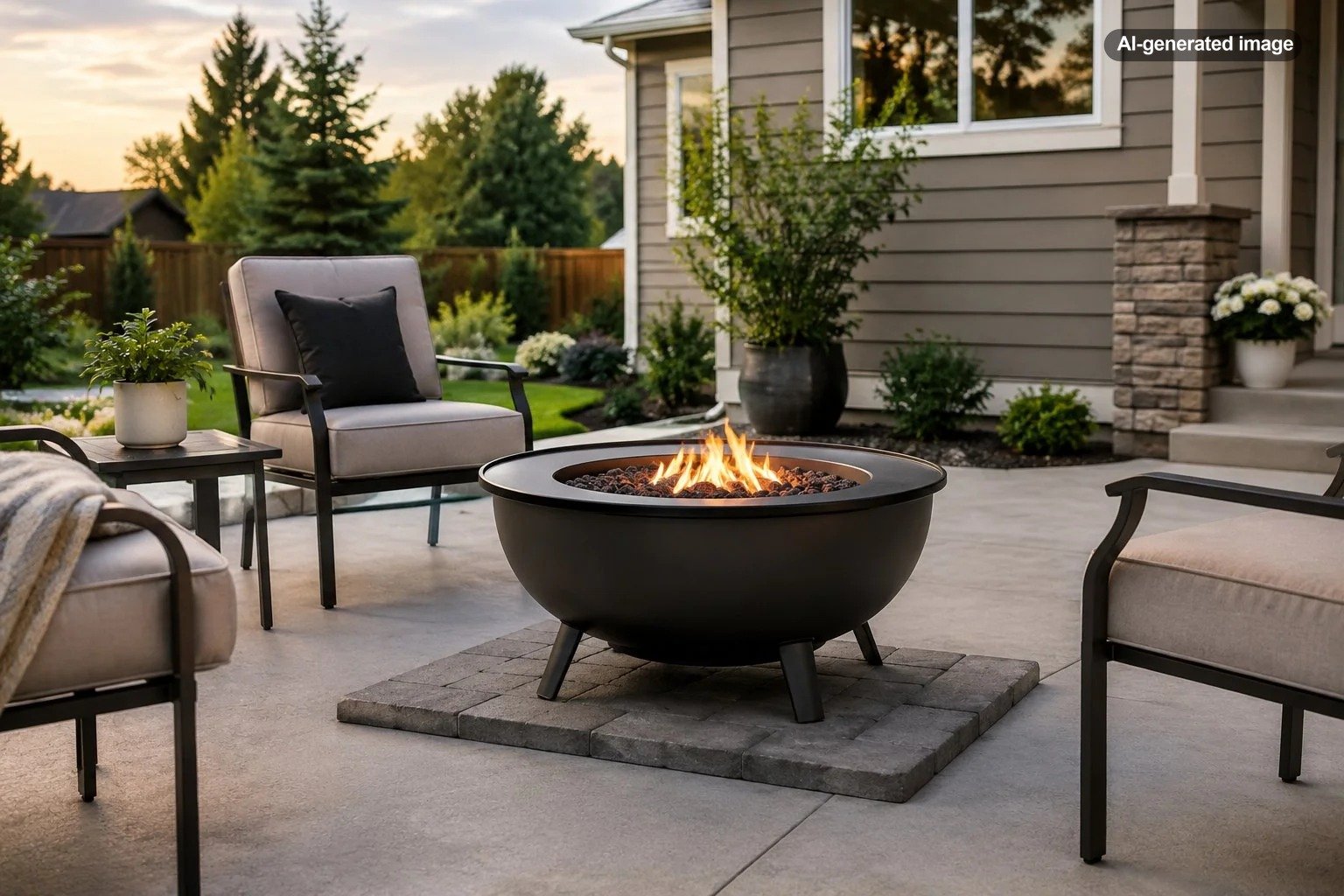
Can You Put a Fire Pit on a Concrete Patio?
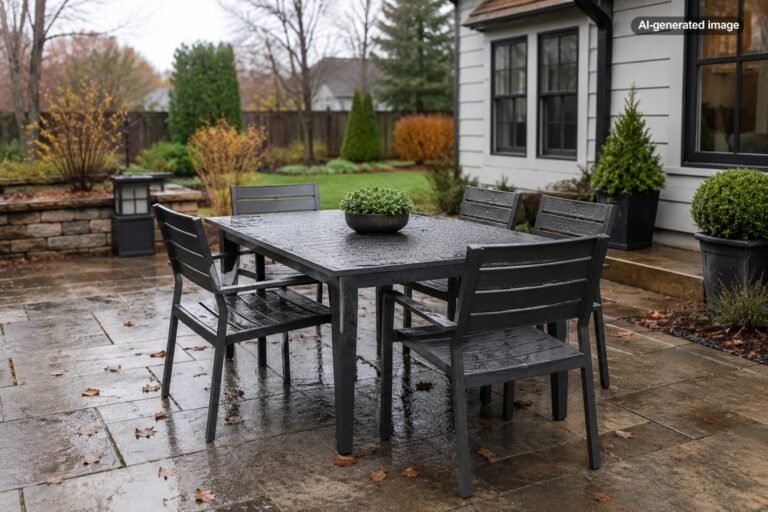
Yes, many portable fire pits can be placed on a concrete patio, but concrete alone does not make every setup safe. The fire pit must be approved for use on a noncombustible surface, positioned with adequate clearance, kept away from structures and overhead hazards, and operated exactly as its manufacturer directs.
The part homeowners often miss is that concrete can still be damaged by intense, concentrated heat. Discoloration, hairline cracking, surface flaking, and spalling are possible, especially when the slab contains moisture or the bottom of the fire pit sits close to the patio.
Why a Fire Pit Can Damage Concrete
Concrete does not ignite, but it is not immune to heat. A wood-burning fire can produce prolonged, uneven heating directly beneath the bowl. When one small area of a slab becomes much hotter than the surrounding concrete, the material expands unevenly and develops internal stress.
Moisture is another concern. Concrete is porous, and water can remain within its capillaries even when the patio looks dry. Rapid heating may turn some of that moisture into vapor. If the pressure cannot escape gradually, the surface can chip, pop, or flake. This is one reason a recently poured, rain-soaked, or persistently damp slab deserves extra caution.
The risk depends on several variables:
- Fire pit design: A raised bowl with sturdy legs generally transfers less direct heat than a low-profile bowl sitting close to the slab.
- Fuel type: Wood fires can create sparks, embers, ash, and intense localized heat. Listed gas fire tables may distribute heat differently, but they still require specified clearances and ventilation.
- Burn duration: A small, short fire is different from a heavily fueled fire that burns for hours.
- Concrete condition: Cracked, deteriorated, thin, or poorly supported concrete may be more vulnerable than a sound slab.
- Weather and moisture: Damp concrete exposed to sudden high heat may be more susceptible to surface damage.
Concrete will not catch fire, but it can still crack, stain, or deteriorate when a fire pit concentrates heat in one place.
Start With the Fire Pit Manufacturer’s Instructions
The fire pit manual should be the first authority for placement. Look for instructions covering approved surfaces, minimum clearances, overhead restrictions, required ventilation, protective pads, fuel limitations, and whether the unit may be used beneath a patio cover.
Do not assume that advice for one model applies to another. A propane fire table, a smokeless wood-burning pit, a traditional steel bowl, and a permanent masonry feature can have very different requirements. Some portable units are engineered with insulated bases or elevated burn chambers. Others may require a separate noncombustible pad beneath them.
Missing manual? Search the manufacturer’s official website using the exact brand and model number. If the instructions cannot be located, contact the manufacturer rather than improvising a clearance or heat-shielding arrangement.
Use a Proper Barrier When One Is Permitted
A protective layer can reduce staining and limit the amount of radiant heat reaching the patio. However, a thin decorative mat should not automatically be treated as a true thermal barrier. Check that any pad, shield, or platform is specifically rated for the fire pit type and expected temperatures.
Common approaches include:
- A purpose-built fire pit pad rated for high heat
- A manufacturer-approved heat shield with an air gap
- A stable platform made from appropriate patio blocks or pavers
- A layer of fire-rated masonry materials designed for the application
An air gap can be as important as the material itself because it allows heat to dissipate rather than remain trapped against the slab. Never balance a fire pit on loose bricks, uneven pavers, improvised metal scraps, or another unstable arrangement. The unit should remain level and resistant to tipping.
Allow Generous Clearance Around the Fire
A concrete surface addresses only what is below the fire pit. It does nothing to protect siding, eaves, pergolas, umbrellas, patio curtains, shrubs, fences, cushions, or tree branches.
Current fire-safety guidance varies by source and situation. The U.S. Fire Administration advises using outdoor fireplaces and fire pits outside and at least 10 feet from the home or anything combustible in its summer safety guidance. NFPA guidance likewise recommends positioning a fire pit at least 10 feet from anything that can burn. Your manufacturer or local authority may require a greater distance, so follow the strictest applicable instruction.
Look upward as well as outward. Sparks and hot gases rise, and a fire pit should not be placed beneath low branches, a fabric canopy, an umbrella, or a combustible roof unless the appliance is specifically listed for that location and all required clearances are satisfied.
Before you light the fire
- Confirm that outdoor fires are currently permitted.
- Read the manual for surface and clearance requirements.
- Check for dry leaves, mulch, cushions, and other combustibles nearby.
- Move the pit away from roof overhangs and overhead branches.
- Place it on a level, stable base where it cannot be bumped easily.
- Keep a connected garden hose or appropriate extinguisher nearby.
- Create a clear zone that discourages children and pets from approaching.
- Check wind conditions before ignition.
Wood, Propane, and Liquid-Fuel Fire Pits Need Different Precautions
Wood-burning fire pits
Wood-burning models create embers and sparks in addition to radiant heat. Use a spark screen when the design permits it, burn only appropriate dry firewood, and avoid overfilling the bowl. Accelerants such as gasoline should never be used to start or revive the fire.
Ash can remain hot long after visible flames disappear. Allow it to cool completely and follow the manufacturer’s disposal instructions. Do not place warm ash in a plastic trash container or beside combustible materials.
Propane and natural gas fire features
Gas fire pits avoid flying wood embers, but they introduce fuel-system concerns. Inspect hoses, fittings, burners, controls, and the fuel supply according to the manual. Do not use a unit that smells strongly of gas, has damaged components, or behaves irregularly.
Gas appliances also need ventilation. Never enclose a portable propane cylinder or alter the fire table’s cabinet unless the manufacturer expressly permits the configuration.
Alcohol and other liquid-burning tabletop units
Use particular caution with small liquid-fuel fire pits. The U.S. Consumer Product Safety Commission has issued warnings and recalls involving tabletop units that burn pooled alcohol or other liquid fuel because an invisible or difficult-to-see flame can ignite fuel while it is being poured. This can cause flame jetting, spreading fire, and severe burns.
Never add liquid fuel to a unit that is burning, hot, or not confirmed to be completely extinguished. Check the CPSC website for current warnings or recalls associated with the exact product before using one.
Consider the Condition and Age of the Patio
A new patio should be allowed to cure according to the concrete contractor’s instructions before it is exposed to heavy furniture, concentrated heat, or other demanding use. There is no universal waiting period that applies to every concrete mix, slab thickness, weather condition, or finish.
Existing cracks also matter. A narrow, stable hairline crack does not necessarily mean the patio is unsafe, but widening cracks, settlement, rocking sections, crumbling edges, or hollow-sounding areas may point to a larger condition. A fire pit should not be used to conceal or bridge an unstable section of patio.
Decorative finishes deserve attention too. Sealers, coatings, stains, overlays, and painted surfaces may discolor or deteriorate at temperatures the underlying concrete could otherwise tolerate. Ask the coating manufacturer whether the finish is suitable near a fire feature.
Do Not Forget Local Rules
Fire pit rules are not uniform. Cities, counties, fire districts, homeowners associations, landlords, and condominium communities may restrict open burning, fuel types, fire pit locations, smoke, or use during drought and high-fire-risk conditions.
A portable fire pit may be treated differently from a permanent gas installation or built-in masonry pit. Permanent gas lines, electrical ignition systems, structural work, and attached patio covers can introduce permit, code, or professional installation requirements. Confirm the rules that apply to your address before purchasing or installing the feature.
When a Concrete Patio Is Not the Right Location
Choose another location when the patio is too small to provide the required clearance, lies beneath a low combustible cover, is surrounded by dry vegetation, or forms the only busy route between the house and yard. A safe fire pit area should not force guests to squeeze between flames and furniture.
Renters and condo residents should obtain permission before using any open-flame appliance. Even when local law allows a fire pit, a lease, building policy, or association rule may prohibit it.
Frequently Asked Questions
Will a fire pit always crack concrete?
No. Many people use properly designed fire pits on sound concrete without visible damage. However, cracking and surface deterioration remain possible when heat is intense, prolonged, concentrated, or applied to damp or vulnerable concrete.
Can I put sand beneath a fire pit?
Sand inside a wood-burning bowl may be recommended for certain models, but loose sand beneath the entire unit is not a universal solution. It can shift, hold moisture, create instability, and conflict with the manufacturer’s instructions.
Can a fire pit go under a covered patio?
Only when the specific appliance is approved for that setting and every ventilation, side-clearance, and overhead-clearance requirement is met. Never assume that a tall patio roof provides enough clearance.
Should I use a fire pit mat on concrete?
A properly rated mat or thermal barrier may help protect the finish and reduce heat transfer. Confirm that it is suitable for concrete, compatible with the fire pit’s fuel type, large enough for the unit, and permitted by the fire pit manufacturer.
What is the safest simple setup?
A listed fire pit used outdoors on a sound, level concrete patio, with manufacturer-approved ground protection, generous clearance, stable seating placement, active adult supervision, and fire-extinguishing equipment close at hand is a sensible starting point.