
Why Does My Entryway Smell Damp?
A damp smell in an entryway usually means moisture is lingering somewhere nearby, even when you cannot see an obvious puddle or leak. The cause may be as ordinary as wet shoes sitting on an absorbent mat, but a persistent musty odor can also point to condensation, damp flooring, water entering around a door, or moisture hidden behind trim or drywall.
The useful question is not simply how to cover the smell. It is where the moisture is coming from and why the area is staying damp long enough to develop an odor.
Start With Things That Regularly Get Wet
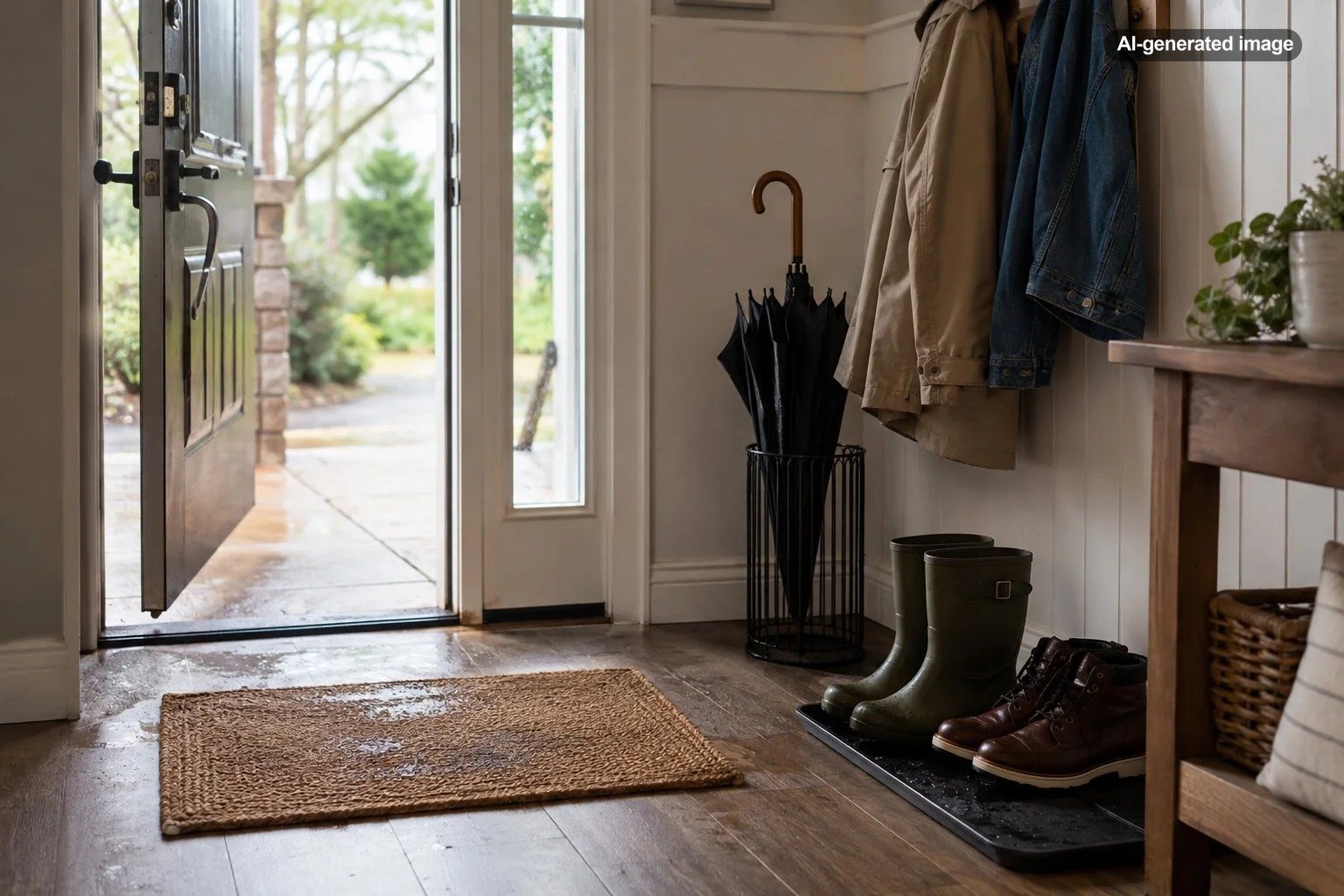
An entryway is one of the few places in a home where outdoor moisture is routinely carried inside. Rainwater on shoes, damp umbrellas, wet dog paws, snow, and recently washed floor mats can create a surprisingly persistent smell, especially when airflow is limited.
Remove washable mats and rugs for a day or two and smell the room again. Check the underside of each mat rather than judging it only from the top. Rubber-backed and thick woven mats can trap moisture against tile, wood, laminate, or other flooring long after the exposed surface feels dry.
Also empty any shoe basket, umbrella stand, coat closet, storage bench, or cubby near the door. Damp fabric and footwear packed into an enclosed space can make the entire entryway smell musty without there being a building problem at all.
Check Whether Water Is Getting In Around the Door
If the smell becomes stronger after rain, pay closer attention to the exterior door itself. Moisture can sometimes enter around a worn threshold, deteriorated weatherstripping, damaged exterior trim, or another opening near the doorway. The source may be subtle enough that you never see running water.
Look for swollen trim, peeling paint, discoloration, softened wood, staining near the corners of the doorway, or flooring that has begun to cup, lift, or separate. These clues do not prove where the water is entering, but they justify a closer inspection.
Do Not Overlook Condensation and Indoor Humidity
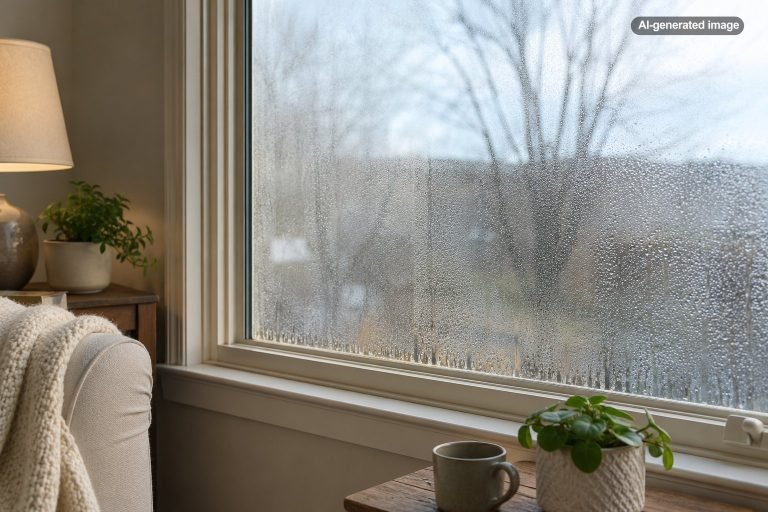
A damp smell does not always require a leak. Water vapor in indoor air can condense on cooler surfaces, particularly around exterior doors, windows, masonry, or poorly insulated sections of a wall. The U.S. Environmental Protection Agency notes that condensation can develop when humid air encounters a colder surface and that persistent moisture can encourage mold growth.
A small humidity meter can help distinguish a generally humid room from one isolated wet spot. EPA guidance recommends keeping indoor relative humidity below 60 percent when possible and ideally between 30 and 50 percent. The appropriate comfort level can still vary with climate and season, so the number is best treated as a diagnostic clue rather than a complete diagnosis.
If the entryway routinely feels clammy, look at what is happening around it. An exterior door may be opened frequently on humid days. A nearby bathroom may release moisture into the hall. Wet coats may dry slowly in a closed closet. A poorly ventilated space can retain that moisture long after the original source is gone.
Inspect Rugs, Flooring, and Baseboards More Closely
Porous materials deserve special attention because they can hold water below the visible surface. A rug may feel dry on top while its pad or backing remains damp. Moisture can also migrate underneath floating flooring or become trapped along the edge of a wall.
Temporarily remove loose rugs and mats. Check for darkening, staining, swelling, loose flooring, an odor concentrated along one edge, or a difference in texture between the suspicious area and the surrounding material.
Avoid aggressively pulling apart finished walls or flooring simply to chase an odor. If the evidence points toward concealed moisture, especially after a leak or repeated rain exposure, a qualified professional may be better equipped to identify the source without unnecessarily damaging finishes.
Could the Damp Smell Be Mold?
It could be, but odor alone cannot tell you exactly what is growing or where. EPA guidance says that some compounds produced by molds can create the familiar musty or moldy odor and that a moldy odor is a reason to investigate for possible growth.
The more important issue is moisture. Mold needs moisture to grow, so repeatedly spraying fragrance, deodorizer, or cleaner into a damp area does not address the underlying condition. If mold is present, the water source also needs to be corrected or the problem may return.
A Practical Way to Narrow Down the Source
What to do
- Remove wet shoes, coats, umbrellas, mats, baskets, and other movable items from the entryway.
- Dry the area thoroughly and ventilate it when outdoor conditions make that practical.
- Check the underside of rugs and mats and inspect flooring edges for trapped moisture.
- Smell inside nearby closets, benches, cabinets, and shoe storage to see whether the odor is concentrated there.
- Inspect the door threshold, weatherstripping, trim, baseboards, and adjacent walls for staining, swelling, peeling finishes, or dampness.
- Notice whether the odor becomes stronger after rain, humid weather, floor washing, or another repeatable event.
- If no simple source appears, consider professional moisture investigation rather than repeatedly masking the smell.
Drying the Area Matters More Than Deodorizing It
Once you find an ordinary moisture source, concentrate on drying rather than perfuming. EPA guidance recommends drying wet or damp materials promptly, ideally within 24 to 48 hours after a leak or spill, because prolonged moisture increases the opportunity for mold growth.
That can mean laundering and fully drying a washable mat, moving wet shoes to a better-ventilated location, opening a closet so damp coats can dry, using air conditioning or a dehumidifier when indoor humidity is high, or repairing the source of rainwater intrusion.
For hard surfaces with minor visible mold, EPA guidance describes cleaning with water and detergent and drying the surface completely. Porous materials that remain moldy or cannot be adequately cleaned and dried may need replacement. More extensive contamination, substantial water damage, or uncertain water sources call for professional guidance.
A persistent damp odor is useful information: somewhere nearby, moisture is arriving faster than the space can dry.
How to Keep the Smell From Coming Back
Once the source is corrected, prevention is mostly about giving water fewer places to linger. Choose an entry mat that can be lifted and dried easily. Avoid leaving wet footwear pressed against walls or woodwork. Give coats and umbrellas enough air circulation to dry instead of packing them immediately into a closed closet.
After storms, occasionally check the threshold and corners of the doorway rather than waiting for visible damage. If the entryway is consistently humid, address the humidity rather than relying on fragrance products to make the room seem fresher.
Most damp-smelling entryways have a manageable explanation. The key is to work from the simplest removable sources toward the building itself, watching for patterns along the way. A smell that disappears when a soaked mat is removed is one problem. A smell that returns after every rainstorm is telling you something quite different.
Frequently Asked Questions
Why does my entryway smell musty only after it rains?
A rain-related pattern can indicate wet footwear and mats, but it can also suggest water entering near the door, exterior trim, threshold, wall, or adjacent floor. Check removable items first, then inspect the building materials for recurring dampness or staining.
Can a doormat make an entire foyer smell damp?
Yes. Thick, absorbent, or rubber-backed mats can retain moisture underneath even when the top feels reasonably dry. Removing the mat for a day or two is an easy diagnostic step.
Will a dehumidifier solve a damp entryway smell?
It may help when high indoor humidity is the main cause, but it will not repair rain intrusion, plumbing leaks, or permanently wet materials. Treat humidity control as one part of the investigation rather than a substitute for finding a water source.
Should I worry if I smell mold but cannot see any?
A persistent moldy or musty odor is worth investigating. Hidden moisture or growth can occur behind or beneath finishes, but smell alone cannot establish the extent or exact cause. Look for moisture patterns and seek professional evaluation when the source cannot be found.