
What Should Be in a Florida Hurricane Preparedness Kit?
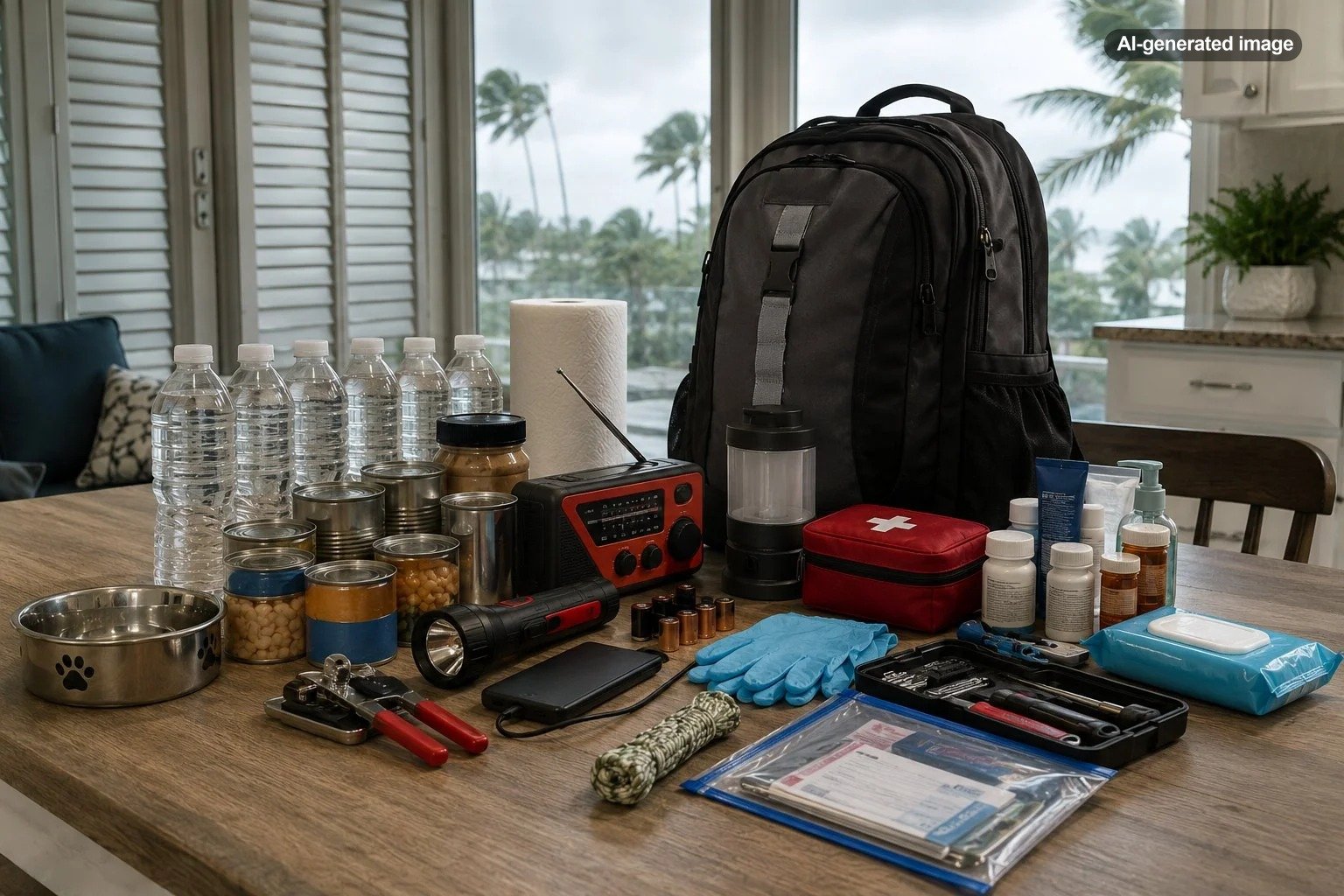
A Florida hurricane preparedness kit should contain enough water, nonperishable food, medicine, lighting, communication tools, hygiene supplies, important documents, and household-specific essentials to keep everyone in the home functioning when power, water, stores, roads, or communications are disrupted. Florida emergency officials currently recommend preparing enough essential supplies for each household member, including pets, for at least seven days.
The useful distinction is that a hurricane kit is not simply a plastic bin full of flashlights. It should support three different situations: staying home through an outage, leaving quickly if an evacuation is ordered, and managing the first several days after a storm when normal services may still be limited.
Start with water and food for at least seven days
Water belongs at the top of the list because a hurricane can affect both municipal service and private wells. Florida’s Division of Emergency Management advises households to prepare at least seven days of essential supplies for every member of the family. Do not assume that because a storm has passed, tap water, grocery stores, restaurants, or card-payment systems will immediately return to normal.
Choose nonperishable foods that your household will actually eat and that require little preparation. Useful categories include canned foods, shelf-stable meals, nut or seed butters, crackers, cereal, dried fruit, shelf-stable milk, protein snacks, and foods appropriate for any dietary restrictions. If canned food is part of the plan, include a manual can opener rather than relying on an electric one.
Food and water basics
- Drinking water for every person in the household
- At least seven days of shelf-stable food
- Pet food and additional water for animals
- Infant formula or specialized nutrition when needed
- Manual can opener
- Disposable plates, cups, and utensils if water for washing may be limited
Rotate stored food and water rather than forgetting the kit in a closet for years. A simple seasonal review before hurricane season makes it easier to replace expired food, update dietary needs, and confirm that containers have not leaked or been damaged.
Keep medicine and health essentials together
Prescription medications can be much harder to replace when pharmacies are closed, roads are blocked, or a household has evacuated to another community. Florida officials specifically advise including medicine in a disaster supply kit. FEMA hurricane guidance also recommends preparing medications, copies of prescriptions, first-aid supplies, eyeglasses or contact-lens supplies, and backup batteries for assistive equipment when applicable.
Include a basic first-aid kit along with any personal health supplies your household routinely needs. That may mean hearing-aid batteries, mobility-device accessories, diabetes supplies, allergy medication, menstrual products, incontinence supplies, or equipment associated with an individual’s care plan.
If someone depends on electrically powered medical equipment, the preparedness plan needs to go beyond buying extra batteries. Discuss backup-power and evacuation planning with the equipment provider, medical team, utility, or local emergency-management office as appropriate. Florida also maintains resources for residents with access and functional needs.
Plan for lighting, information, and phone power
Power outages are one of the most predictable household disruptions associated with hurricanes. Your kit should therefore include flashlights or battery-powered lanterns, spare compatible batteries, and more than one way to receive emergency information.
Florida emergency officials encourage residents to maintain multiple ways to receive weather updates and alerts, including a battery-operated or hand-crank weather radio. Phones are useful, but cellular service, internet access, and household charging may be interrupted at the same time.
- Flashlights or battery lanterns
- Spare batteries in the correct sizes
- Battery-operated or hand-crank weather radio
- Charged portable phone power banks
- Vehicle charging cable
- Written emergency contact numbers
Recharge power banks regularly throughout hurricane season. Also test flashlights and radios before a storm is approaching; discovering corroded batteries during an outage is avoidable.
Add hygiene and sanitation supplies
Think about what becomes inconvenient when water service, hot water, trash collection, or stores are unavailable. Toilet paper, soap, hand sanitizer, moist wipes, toothbrushes, toothpaste, trash bags, personal hygiene products, diapers, and similar basics can make a prolonged outage considerably easier to manage.
Store enough for the entire household rather than building a generic kit for two people and assuming it will somehow stretch. Families with babies, older adults, pets, or specialized care needs should customize this section heavily.
Protect documents, cash, keys, and essential information
A storm kit should also help you function outside the house. Keep copies of identification, insurance information, medical information, emergency contacts, and other critical records protected from water. Do not rely on cloud storage as the only way to reach documents; internet service may be unreliable when you need them.
Include some cash in practical denominations. Electronic payment systems and ATMs may not operate during extended outages. An extra set of important keys can also be useful, particularly if different household members may evacuate separately.
Digital preparation matters too. Before a storm, back up important household records, save useful account numbers, photograph or video major possessions, and make sure household members know where emergency information is stored.
Prepare a separate evacuation-ready bag
The full household kit may contain cases of water, food, sanitation supplies, and bulky equipment. That does not mean all of it belongs in one bag. A smaller evacuation bag should contain the items you cannot afford to leave behind or spend an hour finding.
Pack the evacuation bag first
- Add essential medicine, identification, important documents, cash, and keys.
- Add a flashlight, phone charger, power bank, weather information option, and basic first-aid supplies.
- Add a change of clothing, sturdy footwear, and essential toiletries.
- Add food, water, and household-specific supplies for the trip and initial arrival.
- Include pet carriers, leashes, vaccination or identification records, food, and medication when animals are part of the household.
Store the bag somewhere accessible. If local officials issue an evacuation order, follow that direction rather than delaying departure to continue packing. Florida uses designated evacuation zones in many communities, and residents should know their zone before a storm threatens.
Do not forget pets, children, and individual household needs
The best hurricane kit looks different from one home to another. A household with two adults in a condo does not have the same needs as a family with an infant, three pets, an older relative, and equipment that requires electricity.
For pets, plan for food, drinking water, bowls, medication, carriers or secure leashes, waste-management supplies, identification, and relevant records. For children, consider diapers, formula, familiar foods, comfort items, and activities that do not require electricity. For older adults or people with disabilities, think through mobility equipment, spare batteries, communication needs, adaptive feeding items, medication management, and transportation.
A hurricane kit works best when it is built around the people who will actually depend on it, not around a generic checklist.
Treat generator safety as a separate priority
A portable generator is not simply another item to toss into a disaster-supply list. Improper generator use can create a deadly carbon monoxide hazard. The CDC advises that portable generators should never be used inside a home or garage and should be operated outdoors, in a dry area, more than 20 feet from the home, doors, and windows. Battery-operated or battery-backup carbon monoxide detectors are also an important part of safe generator use.
Keep the kit easy to inspect instead of beautifully forgotten
Emergency supplies need maintenance. A good system uses sturdy, water-resistant containers that can be opened easily and that are labeled by function: food, lighting and power, first aid, hygiene, pet supplies, and documents, for example.
Review the kit before hurricane season and again if a named storm could affect your area. Replace expired medication or food as appropriate, recharge power banks, test radios and lights, update documents, confirm clothing still fits children, and make sure pet and medical needs have not changed.
Keep evacuation supplies separate from bulky home supplies. That simple division prevents the common problem of having plenty of emergency gear but no practical way to take the most important pieces with you.
A hurricane kit is only one part of Florida preparedness
Supplies matter, but they do not replace an evacuation plan. Know whether your home is in an evacuation zone, decide where you could go, identify transportation options, keep vehicles reasonably fueled or charged, sign up for local emergency alerts, and discuss the plan with everyone in the household.
People living in manufactured homes, flood-prone areas, evacuation zones, or homes with household members who have special medical or accessibility needs may face different decisions from neighbors only a few miles away. Local emergency-management instructions should take priority over generalized advice from any article or checklist.
Frequently asked questions
How many days of supplies should a Florida hurricane kit contain?
Florida’s Division of Emergency Management currently recommends enough essential food, water, medicine, and related supplies for each household member, including pets, for at least seven days.
Should everything be stored in one hurricane kit?
No. A larger home kit can hold bulky supplies, while a smaller evacuation bag should contain documents, medicine, chargers, essential clothing, food, water, and other items you would need to take immediately.
Do I still need a radio if I have a smartphone?
A phone is useful, but Florida emergency officials recommend having multiple ways to receive alerts. A battery-powered or hand-crank weather radio provides another option if cellular service, internet access, or household power is disrupted.
When should I assemble the kit?
Before a storm is approaching. Preparing early allows you to buy supplies gradually, customize the kit, and avoid depending on store inventory during the rush immediately before landfall.