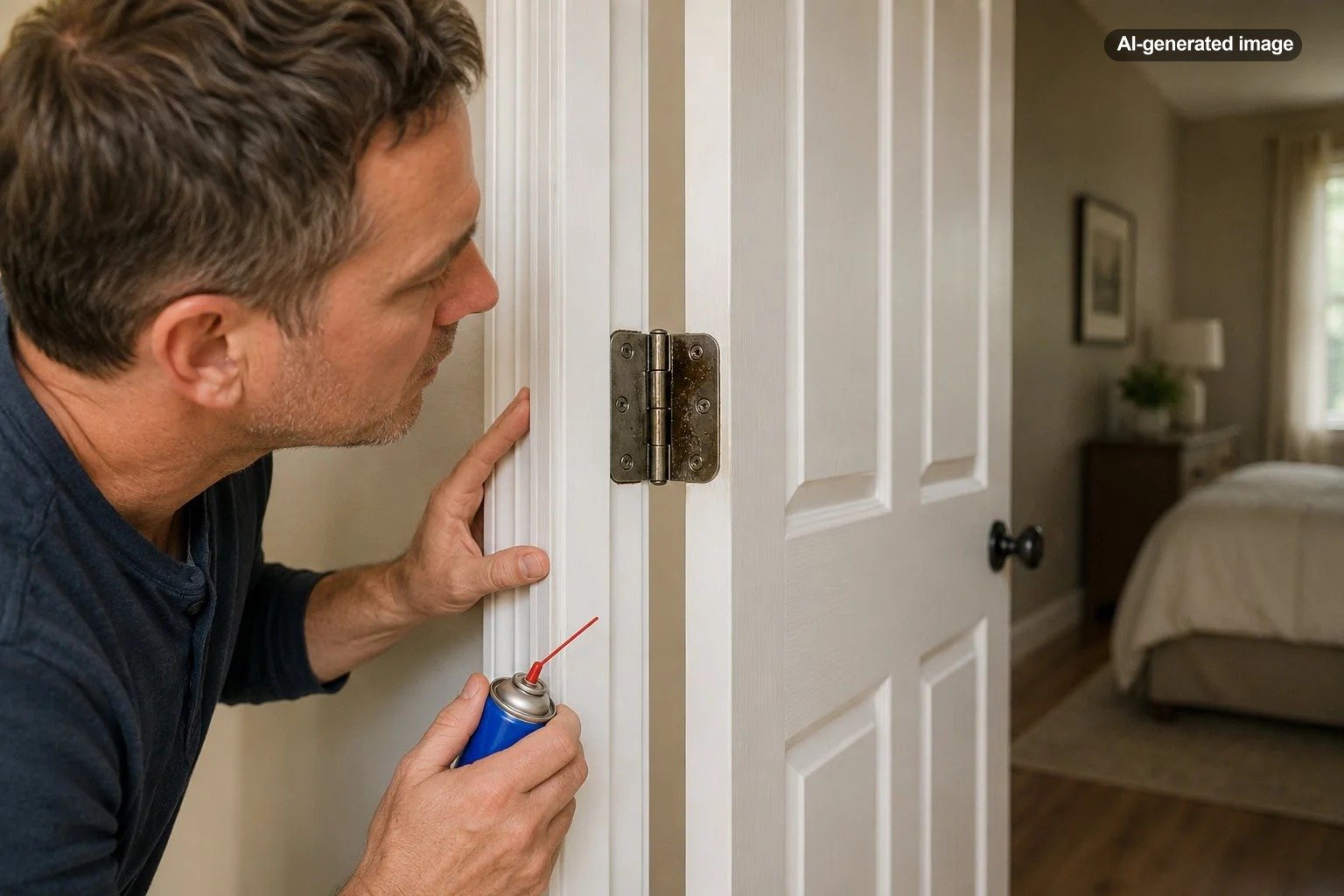
Why Does My Door Hinge Keep Squeaking After Lubrication?
A door hinge that keeps squeaking after lubrication usually has one of five problems: the lubricant never reached the rubbing surfaces, dirt or rust is trapped inside the hinge, the product did not leave a durable lubricating film, the door is pulling the hinge out of alignment, or the hinge itself is worn. Applying another generous spray may quiet it briefly, but it will not correct the underlying cause.
The sensible next step is to identify the noisy hinge, inspect its screws and alignment, and then clean and lubricate the hinge pin directly. If the sound remains after that, the problem is more likely mechanical than merely dry.
Why lubrication does not always stop the squeak
A traditional butt hinge contains a pin running through several interlocking metal knuckles. The noise generally begins where those parts rub. Lubricant placed on the outside of the hinge may make the surface look thoroughly treated while barely reaching that contact area.
Gravity can also carry a thin spray down the face of the door or frame instead of into the hinge. Meanwhile, dried oil, paint dust, household debris, corrosion, or microscopic metal particles remain around the pin. Fresh lubricant mixes with that residue and creates a gritty paste rather than a clean sliding surface.
The product choice matters as well. A penetrating or water-displacing formula may loosen a stubborn pin and provide temporary relief, but its effect may not last as long as a lubricant designed to leave a persistent film. Light machine oil, a hinge-compatible silicone lubricant, and white lithium grease are common options for metal hinges. Follow the product label, confirm compatibility with nearby finishes, and use only a modest amount.
| Likely cause | Useful clue | Next step |
|---|---|---|
| Lubricant missed the pin | Noise returns almost immediately | Apply at the knuckle gaps or remove the pin |
| Dirt or old residue | Dark runoff or gritty movement | Clean the pin and hinge openings |
| Loose or misaligned hinge | Door drops, rubs, or changes sound when lifted | Tighten hardware and inspect alignment |
| Rust or corrosion | Orange-brown staining or a rough pin | Clean light corrosion or replace damaged parts |
| Worn hinge | Side-to-side play, grinding, or metal dust | Replace the hinge or obtain professional help |
First, confirm which hinge is making the noise
Sound travels surprisingly well through a door. A squeak that seems to come from the top hinge may originate at the center hinge, the latch, a rubbing door edge, or a door closer. Open and close the door slowly while listening near each hinge. Place a fingertip lightly on the hinge leaf, away from pinch points, to feel for vibration.
Next, move the door through only part of its swing. A hinge squeak tends to repeat as the knuckles rotate. A scraping sound at one particular position may instead indicate that the door edge is contacting the frame, weatherstripping, threshold, or floor.
Check the screws and hinge alignment
Before removing anything, inspect the screws securing every hinge leaf. Tighten loose screws with the correctly sized hand screwdriver or a carefully controlled driver. Stop when the screw is snug; overtightening can strip the wood and make the problem worse.
Look at the gaps around the closed door. A visibly uneven gap, a latch that no longer meets the strike cleanly, or a door that rubs the frame can indicate sagging. Also compare the hinge barrels. Their knuckles should form a reasonably straight line rather than appearing twisted or pulled apart.
A loose screw that spins without tightening needs more than additional torque. The hole may be stripped, the screw may be too short for the application, or the underlying wood may be damaged. Repair methods depend on the door, frame material, screw location, and severity of the damage. Heavy exterior or solid-core doors deserve particular care because their weight can make an improvised repair unreliable.
Clean and lubricate the hinge pin properly
Protect the floor and nearby painted surfaces with an absorbent cloth. If the pin can be serviced, close the door and support it so its weight remains stable. Work on only one standard hinge pin at a time; removing multiple pins can allow the door to shift or fall.
What to do
- Use a nail set, pin punch, or similarly suitable tool to tap the hinge pin upward from below. Avoid striking decorative caps or deforming the pin.
- Pull the pin out only as far as needed. If it resists strongly, stop and check whether the hinge uses a nonremovable or security pin.
- Wipe the pin clean with a lint-free cloth. Remove loose residue from accessible knuckle openings without forcing debris farther inside.
- Inspect the pin for bends, deep grooves, rough corrosion, or flattened areas. Significant damage favors replacement rather than repeated lubrication.
- Apply a thin, even film of a compatible lubricant to the clean pin. More is not better; excess attracts debris and can stain the door or trim.
- Reinsert the pin, then open and close the door several times to distribute the lubricant. Wipe away all runoff promptly.
If the pin is not designed for removal, apply a small amount of lubricant at the gaps between the hinge knuckles. Move the door repeatedly so capillary action can draw the lubricant inward. A narrow applicator helps keep the product on the hardware rather than the wall.
Do not use cooking oil. It can oxidize, become sticky, collect dust, and create odors. Avoid mixing several lubricants without first cleaning away old residue, since incompatible formulas can produce a gummy buildup. Protect stone, unfinished wood, wallpaper, and other porous surfaces from drips, and provide ventilation when the lubricant label calls for it.
What if the cleaned hinge still squeaks?
A clean, correctly lubricated hinge that continues to complain is giving useful information. Watch the hinge while another adult moves the door slowly. If a leaf flexes, the barrel shifts sideways, or the pin rises as the door swings, the hinge may be bent, installed out of line, or carrying an uneven load.
Minor squeaking without play may come from a rough spot on the pin or inside a knuckle. A compatible replacement pin can sometimes resolve the issue, but matching the diameter, length, tip, and head style matters. If the hinge has obvious wear, replacing the complete hinge with one of the same size, corner shape, hole pattern, material, and load suitability is generally the cleaner solution.
Confirm that the sound is not coming from adjacent hardware. A rubbing latch, loose handle, spring hinge, pivot hinge, or door closer requires its own maintenance approach. Do not spray lubricant indiscriminately into locks or sealed door closers; the appropriate product and service points can differ from those of an ordinary hinge.
How to keep the squeak from returning
Keep hinges clean rather than repeatedly coating them with more product. During ordinary household cleaning, wipe dust from the knuckles with a dry or lightly damp cloth and dry the metal afterward. Remove lubricant drips while they are fresh, especially around pale paint and absorbent trim.
Pay attention to the door’s behavior, not only its sound. A changing perimeter gap, new resistance at the latch, or recurring loose screws can reveal developing alignment trouble before the hinge becomes noisy. In humid rooms and coastal environments, inspect metal hardware for corrosion and address moisture sources rather than relying on lubricant as the only defense.
Finally, use restraint. A few well-placed drops on clean contact surfaces are more effective than saturating the entire hinge. When the same squeak returns quickly after careful cleaning and lubrication, treat that recurrence as evidence of wear or alignment trouble. The hinge may be small, but it should not need a weekly oil bath to behave itself.
Frequently asked questions
Can I lubricate a hinge without removing the pin?
Yes. Apply a small amount at the gaps between the hinge knuckles and move the door several times. Pin removal becomes useful when surface application does not reach the friction point or when old residue needs to be removed.
Why did the squeak stop and then return the next day?
The lubricant may have displaced moisture or loosened debris without leaving enough lasting film at the contact surfaces. A dirty, worn, or misaligned hinge can also push lubricant away from the area where friction is occurring.
Should I replace the hinge pin or the entire hinge?
A pin may be enough when the hinge leaves and knuckles are straight, secure, and minimally worn. Replace the complete hinge when the knuckles are distorted, the leaves flex, there is substantial play, or a correctly matched replacement pin does not resolve the problem.
Could the noise be coming from somewhere else?
Yes. Check the latch, handle, weatherstripping, door closer, threshold, and any point where the door contacts the frame. A rubbing sound or click may require an alignment adjustment rather than hinge lubrication.