How Do You Keep Smoke From Blowing Toward Patio Seating?
Keeping smoke away from patio seating is mostly a matter of working with airflow rather than trying to overpower it. Start by placing the fire source where the prevailing breeze carries smoke away from chairs, keep the fire burning cleanly with dry fuel and good airflow, and leave enough flexibility in the seating arrangement to adjust when the wind changes. On an especially gusty or unfavorable evening, the best solution may simply be not to light a wood fire.
Smoke is rarely perfectly predictable outdoors. Houses, privacy walls, fences, pergolas, hedges, and even groups of people can disrupt airflow and create small eddies that send smoke in unexpected directions. A patio that seems perfectly arranged on a still afternoon can behave very differently once an evening breeze arrives.
Start With Wind Direction, Not Furniture Symmetry
The most attractive patio layout on paper may not be the most comfortable one around a fire. Before permanently locating a wood-burning fire pit, spend time noticing which direction the breeze typically travels across the patio during the hours when you actually use the space.
The U.S. Environmental Protection Agency specifically advises people using backyard recreational fires to consider wind direction. That simple point matters because moving a fire pit a modest distance can sometimes work better than endlessly shifting chairs after the fire is lit.
Temporary observation is useful before committing to built-in hardscaping. A portable chair, an unlit fire pit, and several evenings of watching leaves, tree branches, flags, or other natural wind indicators can reveal more than a perfectly centered landscape plan. Remember that seasonal wind patterns may change, so no outdoor arrangement will eliminate every smoky evening.
Give Smoke Somewhere to Go
Air needs a reasonably clear path around and above a fire. Tall solid barriers can alter that path. A privacy wall, tightly enclosed courtyard, deep covered patio, or dense hedge may cause air to swirl rather than move cleanly through the space.
This does not mean every open patio is smoke-free or every sheltered patio will be smoky. It means the surrounding geometry matters. If smoke repeatedly curls back toward the same chairs, consider whether a nearby obstruction is creating a circulation pattern that traps it.
Burn Dry Wood and Maintain a Clean Fire
Where the smoke travels matters, but so does how much smoke the fire produces. Wet, green, or poorly seasoned firewood tends to produce more smoke because part of the fire’s energy is being used to drive moisture out of the wood instead of supporting efficient combustion.
EPA guidance for recreational fires recommends dry, seasoned wood and notes that firewood around 20 percent moisture is preferable. A basic moisture meter can help if smoky fires are a recurring problem. Test freshly exposed wood rather than relying only on whether the exterior feels dry.
A healthy wood fire also needs oxygen. EPA wood-burning guidance recommends beginning with dry kindling, building a relatively small hot fire, and allowing airflow between pieces of fuel. Continually choking a fire down until it smolders can turn an enjoyable patio feature into a smoke generator.
Before you light the fire
- Check the actual wind direction at patio level.
- Use dry, seasoned firewood rather than green or damp wood.
- Keep adequate airflow between pieces of wood.
- Do not burn garbage, plastic, treated lumber, yard waste, or other inappropriate materials.
- Check local restrictions and air-quality advisories before burning.
- Make sure the seating arrangement can be adjusted if conditions change.
Do Not Expect a Screen to Redirect Smoke
Fire screens are useful for purposes for which they are designed, but they should not be treated as smoke-routing devices. Fine screens, decorative enclosures, and improvised barriers can affect airflow around a fire, sometimes in ways that make combustion or smoke behavior worse rather than better.
Similarly, placing a box fan next to an open flame is not an elegant substitute for sensible fire placement. Artificially blasting air around a live fire may disturb flames, embers, and ash. Outdoor fire equipment should be used according to its manufacturer’s instructions rather than modified in an attempt to make smoke travel in a preferred direction.
Keep the Seating Plan Flexible
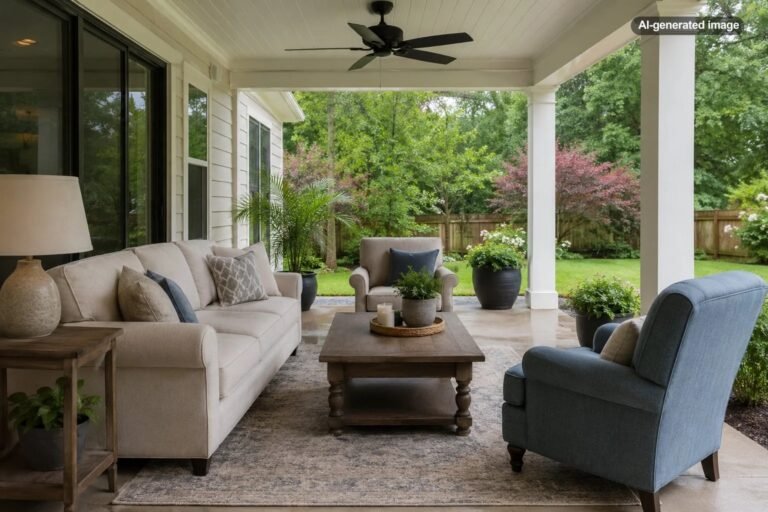
A rigid ring of heavy furniture can make a changing breeze unnecessarily frustrating. Even in a carefully planned outdoor room, it helps to have at least some chairs or stools that can move easily. A small adjustment in seating position may be enough when the wind shifts temporarily.
Think in terms of a primary seating zone and a secondary position rather than assuming every chair must remain perfectly symmetrical around the fire. Conversation is generally more enjoyable when nobody is squinting through smoke merely to preserve the landscape designer’s geometry.
If you are planning a patio from scratch, this is also a reason to avoid squeezing the fire and seating into the smallest possible footprint. Generous circulation space gives people more options and makes the area feel less constrained even when there is no fire burning.
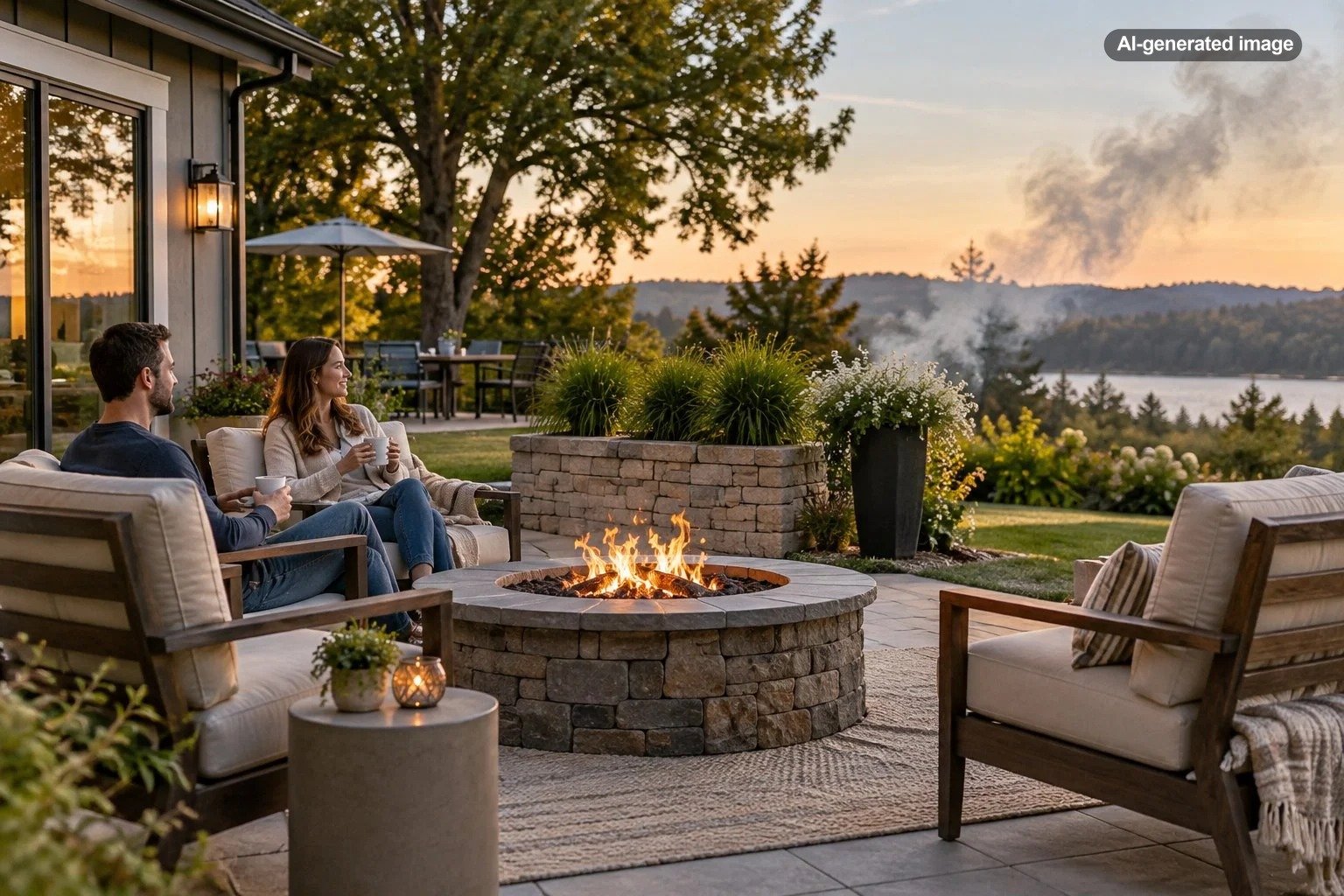
The best fire-pit layout respects the breeze as much as it respects the view.
Consider a Cleaner-Burning Alternative When Smoke Is a Constant Problem
Some properties simply make wood smoke difficult to manage. Compact lots, closely spaced neighbors, enclosed courtyards, and frequently shifting winds can turn a traditional wood fire into more trouble than atmosphere.
The EPA notes that natural gas and propane recreational fires produce fewer harmful air pollutants than burning wood. A different fuel source will not eliminate the need for safe placement, proper operation, or compliance with local requirements, but it can substantially change the smoke problem.
If the ritual of tending a wood fire is important to you, better fuel and better placement may be worth pursuing first. If the main goal is warmth, conversation, or visible flame with less wood smoke, a properly installed and operated gas or propane option may suit the patio better.
Remember That Smoke Is More Than a Comfort Issue
Wood smoke contains fine particles and gases, so repeatedly sitting in a plume is not something to accept as part of the outdoor-fire experience. The EPA identifies fine-particle pollution as a significant health concern associated with wood smoke, particularly for people with certain heart or lung conditions and other susceptible individuals.
If smoke is drifting directly into the seating area, move away from it rather than assuming a little eye-watering is harmless. Be especially considerate of children, older adults, neighbors, and anyone who may be more sensitive to smoke.
Also check local rules before burning. Restrictions on recreational fires vary by jurisdiction, and temporary bans or air-quality restrictions can apply even where backyard fires are normally permitted. Manufacturer instructions and local requirements should govern the installation and operation of any fire pit or outdoor fireplace.
A Practical Order for Solving a Smoky Patio
What to do
- Observe which way the wind is actually moving when you typically use the patio.
- Determine whether a wall, fence, hedge, roofline, or other obstruction appears to be pushing smoke back toward people.
- Use properly seasoned, dry fuel and build a clean-burning fire with adequate airflow.
- Move portable seating to the upwind side when necessary.
- If the problem repeats, reconsider the fire pit’s position rather than continually rearranging guests.
- If the site is inherently difficult for wood burning, consider whether a cleaner-burning fuel option better fits the space.
- Skip the fire whenever wind, local restrictions, air-quality conditions, or other safety considerations make burning inappropriate.
Frequently Asked Questions
Which side of a fire pit should you sit on to avoid smoke?
Generally, sitting upwind of the fire keeps you out of the smoke plume because the breeze carries smoke away from you. Wind can shift, however, and nearby structures can create swirling airflow, so treat this as a practical guideline rather than a guarantee.
Why does fire pit smoke seem to follow people?
Smoke responds to moving air, including small changes caused by wind, nearby structures, heat, and people occupying the space. When several people are positioned around a fire, someone may frequently end up downwind as those air currents shift.
Does dry wood really make a difference?
Yes. Dry, seasoned wood burns more efficiently and generally creates less smoke than wet or green wood. EPA guidance recommends seasoned wood and identifies moisture around 20 percent as a useful target.
Should you use a fan to blow fire pit smoke away?
Do not improvise airflow around an open flame without guidance from the fire pit manufacturer. A fan can disturb flames, ash, or embers. Changing seating, fire placement, fuel quality, or whether you burn under the current conditions is a more sensible starting point.
What if smoke always blows toward the same part of the patio?
That repeated pattern is useful information. Observe surrounding walls, fences, vegetation, roofs, and openings that may influence airflow. If moving the fire is permitted and appropriate for your equipment and site, repositioning it may be more effective than trying to redirect the smoke after combustion begins.