What Outdoor Fabric Dries the Fastest?
If speed is the only consideration, open-weave synthetic mesh is generally the fastest-drying outdoor fabric. Water has relatively little material to soak into, and the open construction allows air to move through the fabric from both sides. That is why mesh is so common on sling chairs, poolside seating, and other furniture designed to get wet repeatedly.
For cushioned furniture, the answer is less absolute. Solution-dyed acrylic, olefin, and outdoor-grade polyester can all dry reasonably quickly because they are synthetic fibers that do not behave like highly absorbent natural textiles. But the fabric is only the outer layer: cushion foam, batting, seams, weave density, water-resistant treatments, humidity, and airflow can have a larger effect on total drying time than the fiber name on the label.
Why mesh usually dries fastest
A sling chair covered in open synthetic mesh works differently from a padded lounge chair. Instead of creating a solid textile surface over a cushion, the mesh contains countless openings through which water can drain and air can circulate. There is also less fabric mass available to retain moisture.
Many outdoor sling materials use polyester yarns with protective coatings or similar synthetic constructions. They are designed for exposed furniture where rain, splashes, and routine washing are expected. After a shower, much of the water can simply run through instead of remaining trapped between fabric and cushion fill.
This makes mesh particularly practical around pools, on uncovered patios, in humid climates, and anywhere furniture needs to return to service quickly after getting wet. The tradeoff is comfort: mesh seating does not provide the plush feel of a deep outdoor cushion.
How the main outdoor fabrics compare
| Fabric type | Typical drying behavior | Best use | Main tradeoff |
|---|---|---|---|
| Open synthetic mesh | Very fast because water drains through the open weave | Sling chairs, poolside seating, wet locations | Less plush than cushioned upholstery |
| Olefin | Generally quick drying | Cushions, pillows, casual outdoor upholstery | Performance varies by weave and construction |
| Solution-dyed acrylic | Generally quick drying when used with outdoor cushion construction | Patio cushions, pillows, umbrellas, upholstery | Dense cushions can remain wet underneath even when the surface feels dry |
| Outdoor polyester | Often quick drying, especially in lighter constructions | Pillows, cushions, covers, occasional-use furniture | Quality and outdoor performance vary considerably |
| Natural fibers | Usually slower when exposed directly to repeated moisture | Better suited to protected settings when specifically rated for the use | Can absorb and retain more moisture |
Olefin is a strong choice when drying speed matters
Olefin, also called polypropylene fiber, is widely used in outdoor textiles because it takes on relatively little moisture compared with many natural fibers. That can help an olefin cover shed moisture and return to a dry feel quickly when it is exposed to ordinary rain or splashing.
It can be a sensible choice for a patio where cushions are frequently carried in and out, seating receives occasional pool splashes, or afternoon showers are common. As with every outdoor fabric, however, the construction matters. A thick, tightly woven piece of upholstery wrapped around saturated foam will take longer to become fully dry than a thin piece of fabric tested by itself.
Solution-dyed acrylic balances comfort and outdoor performance
Solution-dyed acrylic is a familiar choice for higher-quality outdoor cushions and upholstery. It provides a softer, more textile-like surface than sling mesh while being designed for outdoor exposure. It is also commonly selected where resistance to fading, stains, and weather exposure matters alongside drying behavior.
For a conventional patio sofa or deep seating chair, this can be a more useful balance than simply choosing the material that dries fastest. A cushion should feel comfortable, look appropriate with the furniture, tolerate sun exposure, and be practical to clean as well as deal effectively with moisture.
The cushion interior can matter more than the upholstery
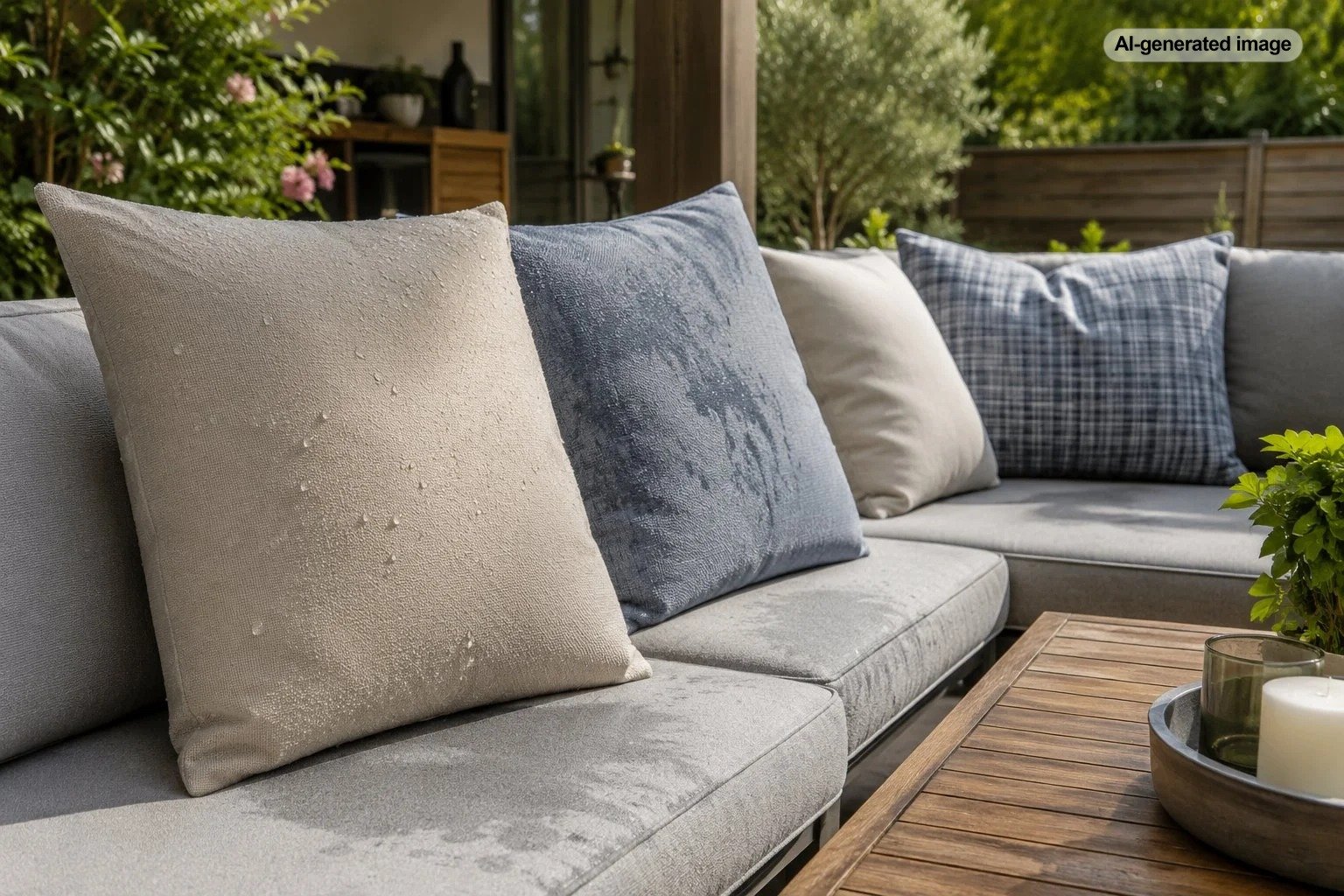
If you are shopping specifically because your patio cushions take days to dry, changing only the outer fabric may not solve the problem. Outdoor cushions are layered products. Upholstery fabric surrounds batting, foam, inserts, seams, zippers, and sometimes liners, each of which can affect how quickly water enters, drains, and evaporates.
For exposed furniture, look at the entire cushion system. An outdoor-rated cover paired with quick-draining or reticulated foam is designed for a different moisture environment than indoor-style foam placed inside weather-resistant fabric. Venting and drainage openings can also help moisture escape.
Construction is especially important for deep seats. A thin dining-chair pad has relatively little material to dry, while a thick sectional cushion can retain moisture deep inside even when both pieces use the same upholstery fabric.
The fastest-drying patio cushion is a system, not simply a fabric swatch.
Weave, coatings, and airflow change the result
Fiber type gives you a useful starting point, but two fabrics made from the same general material can behave differently outdoors. A loose or open weave exposes more surface area to moving air. A dense weave may slow evaporation. Water-resistant finishes can cause droplets to bead and roll away rather than immediately wetting the textile, but those finishes do not make every fabric or cushion completely waterproof.
Airflow around the furniture is equally important. Cushions placed upright with space between them usually have a better chance to dry than cushions left flat against a solid seat deck. Shade can protect fabric from harsh sun, but a perpetually damp, stagnant corner of a covered patio may dry more slowly than a breezy location.
What should you choose for a rainy or humid patio?
Start with the type of furniture rather than searching for one universally superior fabric. If you want seating that can get soaked and become usable again with minimal fuss, sling furniture with open synthetic mesh is difficult to beat. There is no large cushion core waiting underneath to release trapped water.
If you want cushioned furniture, prioritize a combination of outdoor-rated acrylic, olefin, or polyester upholstery and cushion construction intended to drain and dry efficiently. Removable covers can make cleaning and seasonal care easier, while cushions that can be stood on edge give air access to more of the surface after rain.
Before you decide
- Ask whether the furniture will sit fully exposed, under a roof, or beneath a covered porch.
- Check the cushion fill and drainage design, not just the fabric name.
- Favor open mesh for furniture that will receive frequent rain or pool water.
- Choose outdoor-rated upholstery when you want the comfort of padded seating.
- Make sure removable cushions can be lifted or stood upright for better airflow.
- Consider how much sun, humidity, wind, and storage space the furniture receives.
How to help outdoor cushions dry faster
After rain, remove standing water and position removable cushions so air can circulate around both faces. Standing cushions on an edge is often more effective than leaving them flat on the furniture. If covers have zippers or vents designed to remain open during drying, follow the furniture manufacturer’s care instructions.
Avoid putting covers over cushions that are still damp. Covers are useful for reducing routine exposure to dirt and weather, but trapping moisture beneath one can work against the drying process. Likewise, do not put damp cushions into a sealed storage box simply because the exterior fabric no longer feels wet.
Routine cleaning also matters. Dirt and organic debris can collect in fabric texture and seams, so follow the textile manufacturer’s cleaning instructions and allow the material to air dry completely afterward.
Frequently asked questions
Does polyester dry faster than acrylic outdoors?
Either can dry quickly, and fabric construction often matters more than the fiber name alone. A lightweight outdoor polyester may dry faster than a dense acrylic upholstery, while an open acrylic construction may outperform a heavier polyester one. For cushions, the fill underneath can dominate the total drying time.
Is waterproof fabric better than quick-drying fabric?
Not necessarily. Waterproofing, water resistance, drainage, and drying are different characteristics. For seating, a breathable system that drains efficiently can sometimes be more practical than trying to prevent every drop of water from entering. Choose based on how exposed the furniture will be and follow the manufacturer’s intended use.
What fabric is best for pool furniture?
For chairs expected to receive frequent splashes, open synthetic sling mesh is particularly practical because water can pass through it quickly. Cushioned pool furniture can also work well, but it benefits from outdoor upholstery combined with inserts designed for moisture and drainage.
Why do my outdoor cushions stay wet for so long?
The likely culprit may be the cushion core rather than the surface fabric. Thick foam, absorbent batting, limited drainage, tight liners, shaded placement, high humidity, and poor airflow can all extend drying time. Check the entire cushion construction before replacing the upholstery alone.
The bottom line
Open synthetic mesh is generally the fastest-drying choice for outdoor seating because its open structure allows water to drain and air to pass through easily. If you want plush cushions instead, olefin, solution-dyed acrylic, and outdoor polyester can all be practical quick-drying options when paired with the right cushion interior.
The best choice is therefore less about finding one magic fiber and more about matching the complete furniture construction to the weather it will actually face. For an uncovered pool deck, prioritize drainage. For a comfortable covered patio, appearance and hand feel may deserve more weight. And in a humid or rainy setting, pay just as much attention to what is inside the cushion as to the fabric covering it.