Can Outdoor Furniture Stay Outside in Florida Rain?
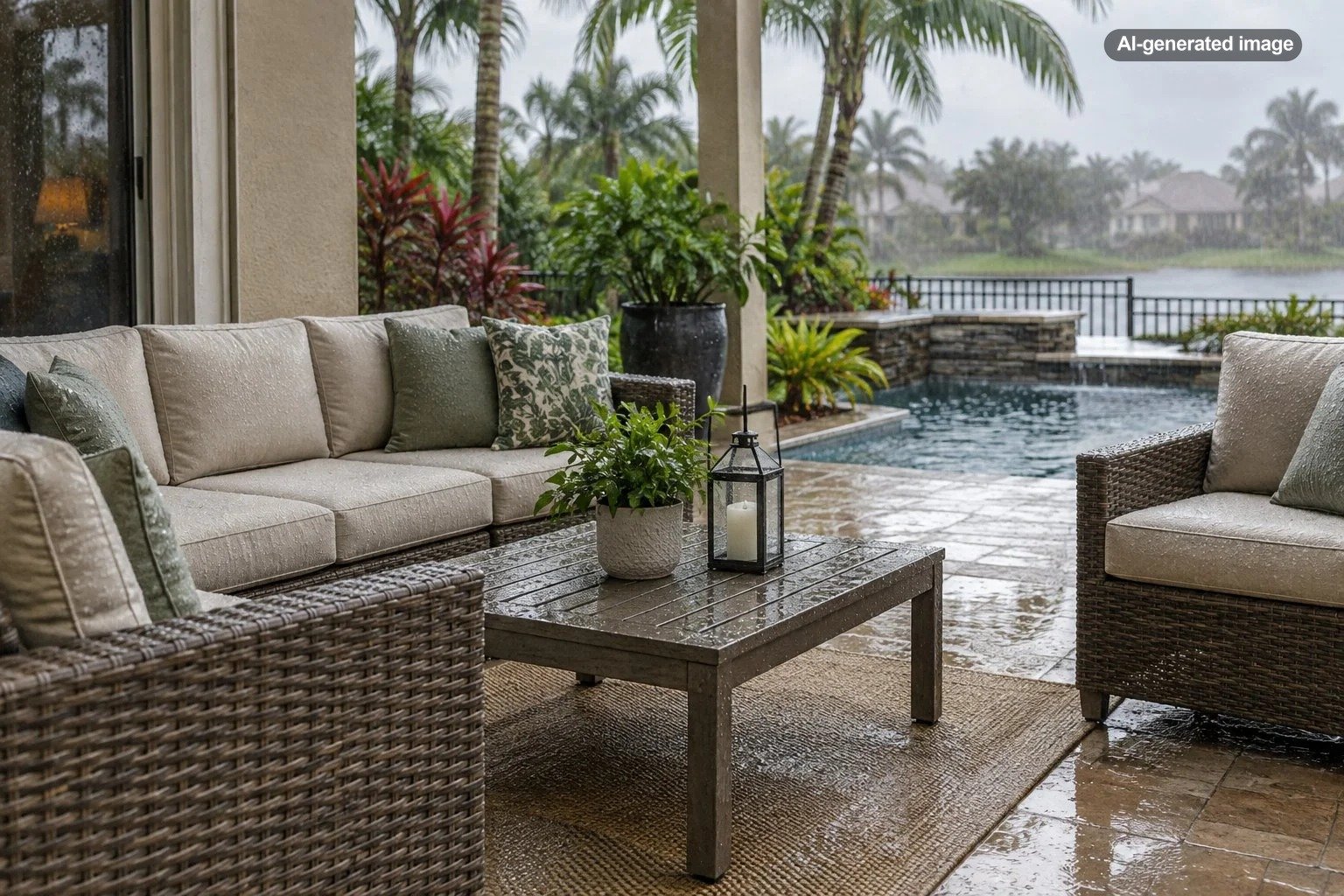
Yes, much of today’s outdoor furniture can stay outside during ordinary Florida rain, but the answer depends far more on the material, construction, cushions, and drainage than on the word outdoor printed on a product label. A sturdy aluminum or all-weather synthetic frame may handle repeated showers with little fuss, while untreated wood, ordinary indoor-style cushions, poorly coated steel, or furniture that traps water may deteriorate much faster.
Florida adds another complication: furniture may get wet repeatedly and then sit in warm, humid air. That makes drying ability almost as important as water resistance. A patio setup that sheds rain and dries quickly is generally easier to live with than one that merely survives getting wet.
What Florida rain actually tests
A brief shower is not the same thing as repeated soaking. Outdoor furniture in Florida may experience cycles of wetting, intense sun, humidity, windblown debris, and, in coastal areas, salt exposure. Those conditions can reveal weak points that might be less noticeable on a covered patio in a drier climate.
The most vulnerable areas are often not the broad surfaces you can see. Water can collect inside hollow frames, remain beneath cushions, settle around fasteners, or sit in joints where two materials meet. Dirt and organic debris can also remain damp against fabric or furniture surfaces after a storm.
The best furniture for a rainy patio is not simply furniture that can get wet; it is furniture that can get wet and dry efficiently.
Which furniture materials handle rain best?
| Material | Rain practicality | What to watch |
|---|---|---|
| Aluminum | Generally well suited to rainy patios when designed for outdoor use | Finish condition, joints, hardware, and drainage |
| All-weather synthetic lumber | Often designed for extended outdoor exposure | Manufacturer care instructions and dirt buildup |
| Outdoor resin or plastic | Usually tolerant of rain and easy to wipe down | Stability, fading, trapped water, and construction quality |
| Teak and other outdoor woods | Can perform well when appropriately selected and maintained | Finish expectations, staining, weathering, joints, and recommended care |
| Steel or iron | Varies considerably by finish and construction | Chips, scratches, exposed metal, corrosion, and water-holding joints |
| Wicker-style furniture | Depends on whether it is outdoor synthetic material or natural fiber | Confirm the material; natural indoor wicker is a different proposition |
Material names alone do not guarantee performance. Two chairs described as aluminum, for example, may have very different coatings, hardware, welds, cushion systems, and drainage details. Manufacturer instructions should therefore take precedence over broad material rules.
All-weather synthetic furniture can be especially convenient for uncovered spaces. Some manufacturers explicitly design their synthetic lumber furniture for year-round exposure to rain and other weather. That does not make every synthetic chair equivalent, so check the specifications for the furniture you actually own.
The cushions usually need more attention than the frames
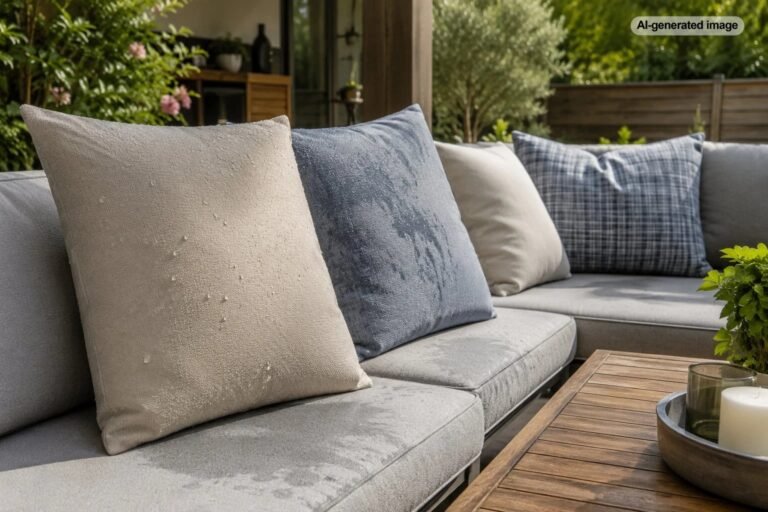
Outdoor upholstery can be surprisingly capable, but there is an important distinction between water-resistant and waterproof. Outdoor performance fabrics may resist water, staining, fading, mold, and mildew better than ordinary textiles, yet water can still reach the cushion fill through seams, zippers, or prolonged exposure.
Sunbrella, for example, describes its outdoor upholstery as water resistant rather than completely waterproof and notes that cushion-fill construction varies among manufacturers. That distinction is useful well beyond one fabric brand: the outer textile and the material hidden inside the cushion should be considered separately.
After heavy rain, stand removable cushions on edge when possible so air can reach more of the surface. Avoid putting a damp cushion immediately into a sealed storage box. Enclosed storage is most useful when the contents go in dry and the compartment itself stays dry.
What about wood furniture?
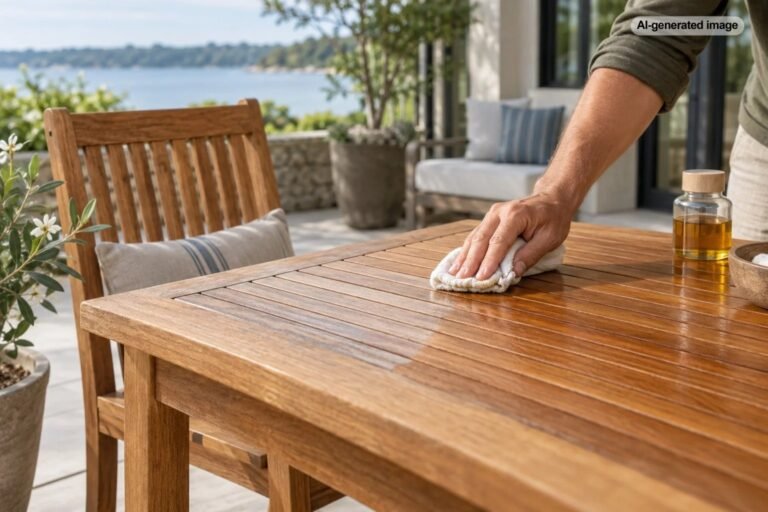
Outdoor wood is one of the areas where personal preference matters. Some woods are chosen specifically for exterior furniture and may be allowed to weather naturally. Others depend more heavily on protective finishes and routine maintenance. Repeated rain can also affect appearance before it creates a structural concern, so decide whether natural weathering is acceptable to you.
Do not assume that a finish suitable for one wood or furniture collection is appropriate for another. If you want to preserve a particular color or finish, use the manufacturer’s maintenance instructions rather than applying a generic oil, sealer, or coating simply because the furniture lives outdoors.
Metal furniture needs inspection, not panic
Well-made outdoor metal furniture is intended to encounter weather, but coatings and hardware deserve periodic attention. Check for damaged finishes, loose fasteners, areas where water collects, and exposed metal. The practical concern is less about one afternoon shower and more about allowing small maintenance issues to persist through months of repeated wetting.
Lightweight metal furniture presents a separate Florida issue: wind. A chair that tolerates rain perfectly may still need to be moved or secured when significant wind or severe weather is expected. Weather resistance does not mean storm resistance.
A simple routine after heavy rain
What to do
- Remove leaves, flowers, soil, and other debris that could remain wet against furniture.
- Check seats, tabletops, frames, and storage compartments for standing or trapped water.
- Stand removable cushions upright or otherwise position them for better airflow.
- Let pieces dry before enclosing them tightly beneath covers or inside storage.
- Inspect painted or coated metal occasionally for damage and address maintenance according to the manufacturer’s directions.
- Clean upholstery and furniture surfaces using methods approved for the specific material rather than a one-cleaner-fits-all approach.
Covered patio versus fully exposed patio
Furniture beneath a deep covered lanai has an easier job than furniture beside an uncovered pool. Even when windblown rain occasionally reaches the covered area, reducing the amount of direct soaking can make cushion care and routine cleaning simpler.
For a fully exposed patio, prioritize furniture designed for that type of exposure, quick-draining cushion construction, easy-to-clean surfaces, and pieces that can be secured or moved when severe weather approaches. If you dislike handling cushions every time rain appears on the radar, that should influence what you buy. A lower-maintenance setup may be worth more than a beautifully upholstered set that constantly needs attention.
When should you bring furniture or cushions inside?
Ordinary afternoon rain does not necessarily require moving genuinely outdoor-rated furniture every time clouds gather. Removable cushions are a judgment call based on their construction, how exposed the patio is, how quickly they dry, and what their manufacturer recommends.
More caution makes sense before severe thunderstorms, tropical weather, hurricanes, or other conditions involving substantial wind. Bringing in or securing loose outdoor items is a storm-preparation issue rather than a rain-durability issue. Follow official local emergency guidance when significant weather threatens.
Common mistakes that shorten outdoor furniture life
- Assuming outdoor means maintenance-free. Even durable furniture accumulates dirt and benefits from inspection and cleaning.
- Ignoring the cushion fill. Performance fabric does not automatically make the entire cushion waterproof.
- Covering furniture while it is still damp. Give wet surfaces and cushions an opportunity to dry.
- Letting debris remain after storms. Damp leaves and dirt can sit against surfaces long after the rainfall ends.
- Using harsh cleaners without checking instructions. Cleaning methods appropriate for one finish or textile may damage another.
- Forgetting about wind. A weather-resistant lightweight chair can still become a problem during a serious storm.
So, can you simply leave it outside?
In many cases, yes. Quality outdoor furniture chosen for exposed use can remain outside through Florida’s routine rain without becoming a daily moving project. The easiest setups combine genuinely weather-ready frames with good drainage, suitable outdoor upholstery, sensible cleaning, and enough airflow for wet components to dry.
The key is to assess the furniture as a complete system. Frame material matters, but so do cushions, hardware, coatings, covers, drainage, exposure, and storage habits. When those pieces work together, leaving patio furniture outdoors becomes far more practical.
FAQ
Should I cover patio furniture every time it rains?
Not necessarily. Some outdoor furniture is designed to remain exposed. Covers can reduce dirt and direct exposure, but follow the furniture and cover manufacturers’ instructions and avoid sealing persistent dampness underneath.
Can outdoor cushions be left in Florida rain?
Some outdoor cushions tolerate rain well, but not all are waterproof. Check both the fabric and cushion construction. After significant soaking, position removable cushions so they can dry thoroughly.
Does rain ruin aluminum patio furniture?
Outdoor aluminum furniture is commonly chosen for weather exposure, but construction and finish quality still matter. Inspect coatings, hardware, joints, and drainage rather than assuming every aluminum product will perform identically.
Is synthetic lumber practical for an uncovered Florida patio?
It can be. Certain synthetic-lumber furniture is specifically manufactured for extended outdoor exposure and rain. Verify the care and exposure guidance for the particular furniture rather than relying solely on the material category.
What matters most in a rainy climate?
Choose furniture intended for outdoor exposure, make sure water can drain instead of pooling, allow wet cushions and surfaces to dry, remove damp debris, and prepare loose furniture appropriately when severe weather is forecast.