
Why Does My Front Door Rattle When It Is Windy?
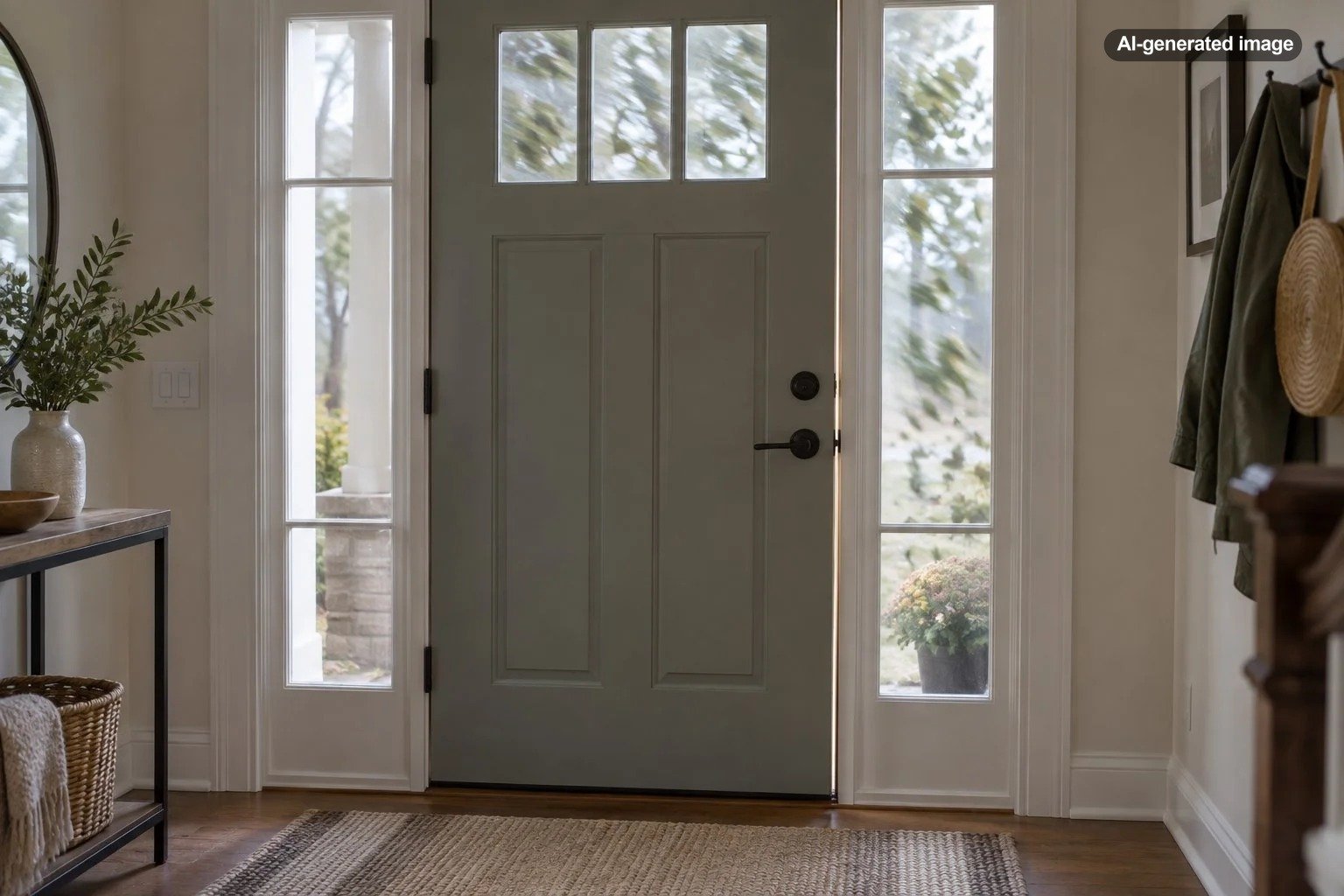
A front door that rattles when the wind picks up usually has a little too much room to move while it is closed. The most common causes are compressed or missing weatherstripping, a latch that does not hold the door firmly against the stop, loose hinges, or excess clearance around the threshold. Wind pressure then pushes and releases the door just enough to create that familiar tapping or shaking sound.
The good news is that a rattling door does not automatically mean the door needs replacing. In many cases, a few minutes of careful inspection can reveal where the movement is coming from and whether the solution is a simple adjustment or a job for a door professional.
Why wind makes a closed door rattle
An exterior door is exposed to changing air pressure. On a breezy day, pressure against the outside of the house can repeatedly push the door inward or pull it toward the exterior. A properly adjusted door has enough contact with its seals and latch to resist that small movement without making noise.
When there is extra clearance somewhere around the door, however, the slab can move between two resting points. The latch may tap against the strike plate, the door may bump against the stop, or loose hardware may vibrate. That is why the sound can seem much louder on windy days even though nothing is visibly moving very far.
Check the latch and strike plate first
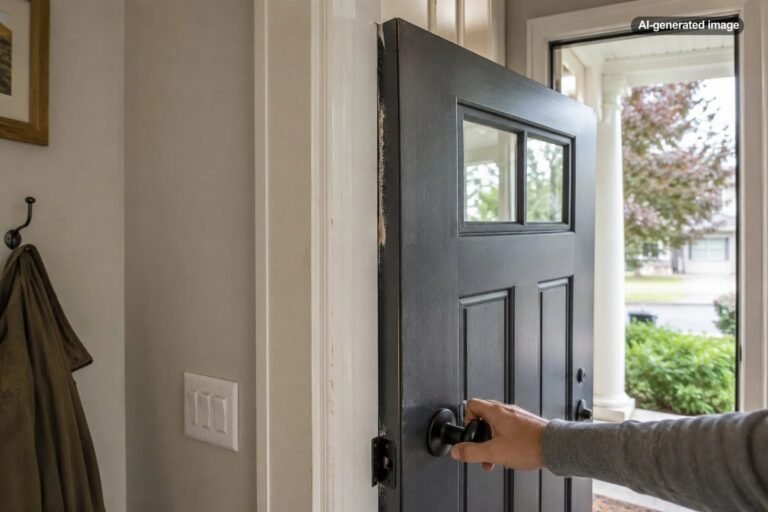
The latch area is one of the most useful places to start because even a small amount of play can let the door chatter in its frame. With the door closed, gently push and pull near the knob or lever. If the door moves noticeably before the latch stops it, the latch may not be holding the door snugly against the weatherstripping.
Look at the strike plate on the jamb and check whether its screws are secure. Also watch how the latch enters the opening when the door closes. A door that has shifted slightly over time may still latch normally while no longer being held tightly enough to prevent movement.
Strike plates can sometimes be adjusted, but avoid aggressively bending, filing, or relocating hardware before understanding why the alignment changed. A sagging door, loose hinge, swollen frame, or settling issue can create the same symptom, and altering the strike plate alone may simply hide the underlying problem.
Inspect the weatherstripping around the door
Weatherstripping does more than block drafts. It also provides gentle compression around a closed exterior door, helping keep the slab stable against the stop. If that material has flattened, torn, pulled away, or disappeared in one area, the door may have enough room to rattle.
Run your eyes around the top and both sides of the closed door. Look for sections where the seal appears much less compressed than elsewhere. Visible daylight around a closed exterior door is another clue that the fit deserves attention. The U.S. Department of Energy specifically identifies loose-fitting exterior doors, loose hinges, and strike-plate issues as items to address when improving exterior-door weatherstripping.
Look for loose or worn hinges
If the movement is not concentrated near the latch, open the door and inspect the hinges. Check whether the screws appear loose and whether the door seems to drop or shift as it swings. A door that has sagged slightly can develop uneven gaps around the frame, making wind-related movement more noticeable.
One easy visual check is to compare the gap around the top and sides of the door. It does not have to be mathematically perfect, but a dramatically tighter gap at one corner and wider gap at another can indicate alignment trouble.
Tightening an obviously loose hinge screw may be straightforward, but screws that spin without tightening can indicate damaged or stripped material underneath. Repeatedly installing larger hardware without understanding the construction of the jamb is not a particularly elegant repair strategy.
Check the bottom of the door and threshold
The lower edge can also contribute to rattling, especially when a door sweep is worn or the threshold no longer provides consistent contact. With the door closed, look for obvious gaps near the bottom corners and listen to whether the sound seems to originate low on the door.
A sweep should help reduce air infiltration without dragging so heavily that the door becomes difficult to operate. Adjustable thresholds can sometimes compensate for minor gaps, but adjustment methods vary. Before changing one, identify what type you have and make small changes rather than forcing components upward.
What to do
- Close and lock the door, then gently push and pull near the handle to see whether you can reproduce the movement.
- Check the latch, strike plate, knob or lever, and visible screws for looseness.
- Inspect the weatherstripping along the top and sides for flattened, missing, torn, or poorly contacting sections.
- Open the door and examine the hinges for loose fasteners, unusual movement, or obvious sagging.
- Inspect the sweep and threshold for gaps or inconsistent contact.
- If the door appears significantly misaligned, stop making isolated adjustments and have the door and frame evaluated as a system.
Do not overlook the hardware itself
Sometimes the door is secure and the noise is actually coming from something attached to it. A loose handle, decorative knocker, mail slot, storm-door component, wreath hanger, or other entry hardware can vibrate in gusty weather and sound surprisingly similar to a loose door.
Test these pieces individually while the door is closed. Lightly hold each suspected component during the kind of wind that normally creates the noise. If the rattling stops, you have narrowed the mystery without taking the entire entry apart.
A windy day often reveals a small amount of door movement that calm weather politely keeps to itself.
When the rattle may signal a larger door-fit problem
Occasional light movement is different from a door that suddenly no longer fits its opening correctly. Pay attention if the door has recently become difficult to latch, scrapes heavily against the frame, shows a dramatically changing gap, or appears visibly crooked. Those symptoms can point to a broader alignment issue rather than ordinary weatherstrip wear.
Can replacing weatherstripping stop the rattle?
It can when the noise is caused by lost compression between the door and its stop. New weatherstripping can reduce both movement and drafts when it is properly sized and installed. It will not solve a sagging door, a badly positioned strike plate, loose hinges, or a distorted frame, so identify the source of the movement first.
Why does the door rattle only during strong gusts?
Stronger gusts create larger pressure changes across the exterior of the house. A door with only a small amount of free play may therefore remain quiet in ordinary weather but move enough to make noise during gusts. That pattern often points toward minor clearance or compression issues rather than continuous mechanical movement.
Should a properly closed exterior door move at all?
A closed door does not need to feel permanently wedged into its frame, but it should latch reliably and make consistent contact with its seals. Noticeable back-and-forth movement near the handle is a useful reason to inspect the latch, strike, weatherstripping, and hinges.
Does a rattling door mean it needs to be replaced?
Usually not by itself. Replacement becomes a more reasonable discussion when the door or frame is substantially damaged, distorted, deteriorated, persistently difficult to operate, or unable to provide a satisfactory fit after appropriate adjustments. For an otherwise sound door, correcting the specific source of excess movement is generally the more logical first step.