
Why Does My Front Door Rub Against the Frame?
A front door usually rubs against its frame because the door has shifted slightly, the hinges have loosened, the wood has expanded with moisture, or the frame is no longer perfectly square. The location of the contact provides the most useful clue: rubbing near the upper latch-side corner often points to hinge sag, while rubbing along a broad section of the edge may suggest swelling, paint buildup, or frame movement.
Most cases begin as a small alignment problem rather than a major structural failure. Still, a door that changes suddenly, becomes difficult to lock, or develops alongside wall cracks deserves closer attention before anyone starts trimming away wood.
Start by locating exactly where the door rubs
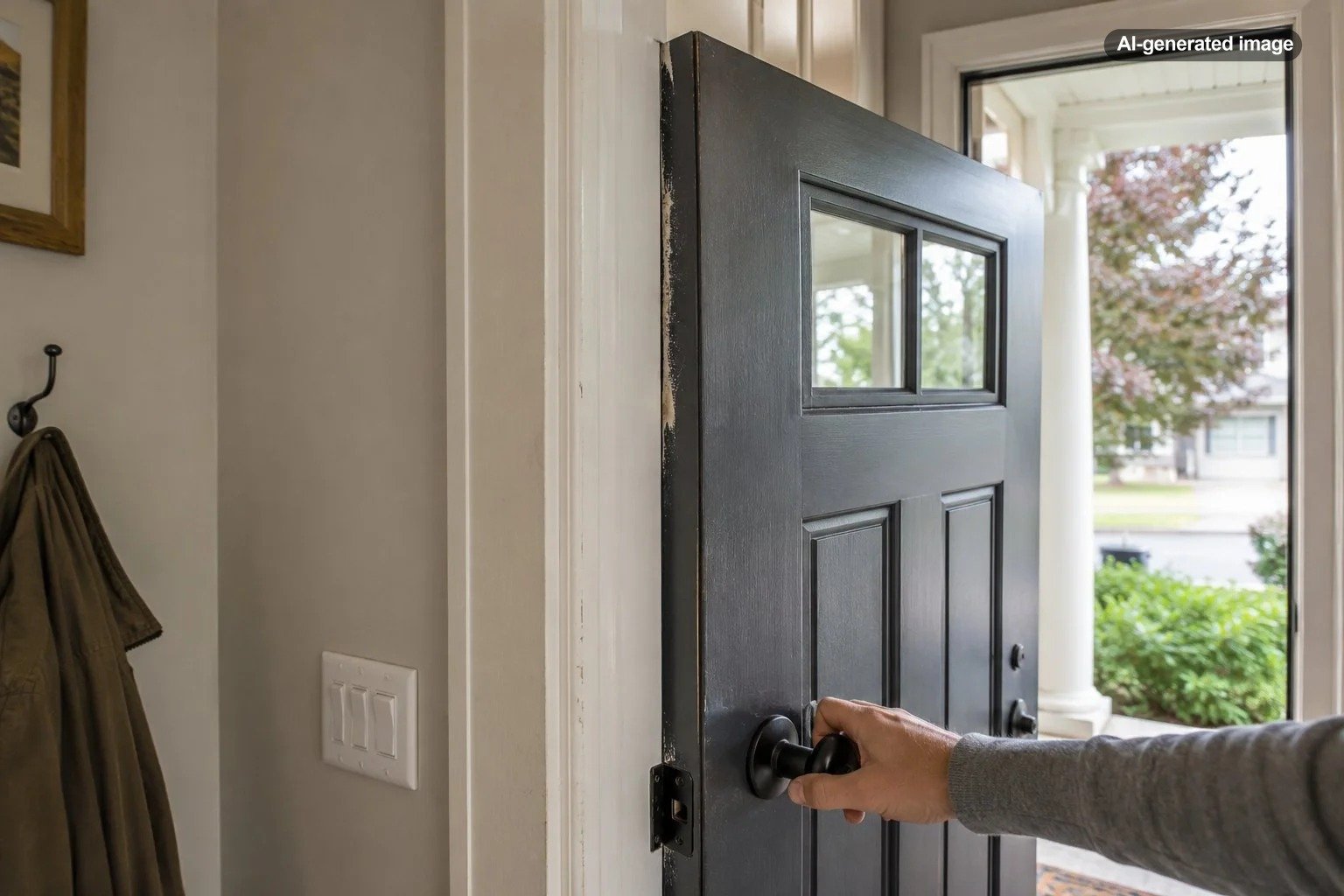
Open and close the door slowly while watching the gap between the door slab and the frame. A normal reveal should look reasonably consistent, even if it is not mathematically perfect. Look for a narrowing gap, fresh scrape marks, chipped paint, compressed weatherstripping, or a shiny area where two surfaces repeatedly touch.
The pattern often narrows the possibilities:
- Upper latch-side corner: The door may be sagging away from the top hinge.
- Lower latch-side corner: A hinge may be misaligned, the frame may have shifted, or the threshold may be influencing the door’s position.
- Along the top edge: The header, frame, or door may have moved, or the door may have too little clearance.
- Along most of the latch edge: Moisture swelling, thick paint layers, or an uneven jamb may be reducing the gap.
- At the threshold: The door may have dropped, the threshold may have risen, or debris and damaged weather seals may be creating resistance.
A pencil mark at the contact point can help you track whether the problem stays in one location or changes with the season.
Loose hinge screws are the most common place to begin
A heavy exterior door places considerable leverage on its hinges. Over time, screws can loosen or lose their grip in the jamb. Even a small amount of movement at the top hinge can allow the opposite corner of the door to drop enough to scrape the frame.
What to do
- Open the door and support its weight so it is not pulling on the hinges while you work.
- Inspect every hinge for loose screws, visible gaps, bent leaves, or movement between the hinge and jamb.
- Snug loose screws with a hand screwdriver. Stop if a screw spins without tightening, since that suggests a stripped hole.
- Close the door and test the alignment before making another change.
- If a screw hole is stripped or the hinge remains loose, use an appropriate wood-repair method or consult a carpenter rather than repeatedly driving the same screw into damaged material.
A hand screwdriver offers more control than a drill and reduces the chance of stripping the screw head or overtightening the fastener. Do not force a screw deeper if you are unsure what lies behind the jamb, particularly near glass panels, concealed wiring, or specialty door systems.
The hinges themselves may be worn or bent
If the screws are tight but the door still drops when you lift the handle, inspect the hinge knuckles and pins. Worn hinges can develop play, while bent hinge leaves may pull the door out of alignment. Rust, missing screws, cracked metal, or a pin that repeatedly works upward are additional signs that the hardware needs attention.
Hinge bending is sometimes presented as a quick adjustment, but it is easy to overcorrect the geometry, damage the finish, or place uneven stress on the other hinges. For a solid wood, glass-paneled, steel, or unusually heavy entry door, replacing damaged hardware or having it adjusted professionally is generally more predictable than improvising with force.
Humidity can make a wood door swell
Wood gains and loses moisture as surrounding conditions change. An exterior door may fit well during a dry season and begin rubbing during a humid or rainy period. This is especially likely when an edge, top, or bottom surface is unfinished, the coating has failed, or water reaches the door repeatedly.
Seasonal swelling commonly creates broader contact than a loose hinge does. You may notice the door becoming tight along a longer section of the latch edge rather than at one small corner. Peeling paint, soft wood, dark staining, open joints, or a damp threshold suggest that the moisture source needs attention before the door is trimmed.
Check nearby gutters, roof runoff, porch exposure, caulk joints, flashing, weatherstripping, and the threshold. The goal is not merely to make the door close today; it is to prevent repeated wetting that can damage the door and surrounding materials.
Paint buildup and weatherstripping can imitate a warped door
Several layers of paint can gradually consume the small clearance around a door. Fresh paint can also feel tacky, especially where two painted surfaces press together. Look for thick ridges, drips, peeling layers, or paint transferred from the door to the jamb.
Weatherstripping can create similar resistance when it is folded, displaced, too thick, or installed in a position that pushes the slab sideways. A tight seal is useful, but the door should not require a shoulder check to engage the latch. Inspect the entire seal for pinched areas and confirm that the threshold is clean and securely positioned.
Do not remove weatherstripping permanently just to create clearance. An incomplete seal can allow drafts and water intrusion. Replace damaged material with a type and size appropriate for the door system.
The frame may be out of square
Door frames can move because of ordinary settling, repeated slamming, moisture damage, a loose jamb, poor original installation, or movement in the surrounding wall. The door may begin rubbing even though the hinges and slab appear sound.
Compare the gaps around the full perimeter. A reveal that narrows gradually can indicate that the frame is racked rather than that the door has swollen in one spot. Also check whether the latch still aligns with the strike plate and whether the deadbolt enters its opening without lifting, pushing, or pulling the door.
A single sticky door does not prove that a foundation is failing. Houses and doors move for many less serious reasons. The warning comes from a pattern of new or progressive changes, not from one scrape mark by itself.
When should you sand or plane the door?
Trimming should come after hinge, hardware, moisture, paint, seal, threshold, and frame checks. Removing wood may stop the rubbing, but it can also create an oversized gap when humidity falls or conceal a frame problem that continues to develop.
Minor sanding may be reasonable when the door is stable, the contact area is clearly identified, the clearance is only slightly tight, and no moisture or movement warning signs are present. Remove as little material as possible, test frequently, and reseal any exposed wood according to the door manufacturer’s finishing guidance. Exterior doors need protected edges because bare wood can absorb moisture.
Planing a large amount, cutting a metal or fiberglass door, altering a fire-rated assembly, or modifying a door with complex weather seals is not a casual repair. Those situations are better handled with product-specific instructions or professional help.
A lasting door repair restores the alignment; it does not simply erase the scrape mark.
How to keep the problem from returning
- Check hinge screws when the door first begins to feel different rather than waiting until it will not latch.
- Keep exterior coatings intact, including the less visible top and bottom edges when the manufacturer requires them to be sealed.
- Direct roof and gutter runoff away from the doorway.
- Replace torn or compressed weatherstripping with correctly sized material.
- Keep the threshold clean and watch for standing water or deteriorated wood.
- Avoid repeatedly forcing or slamming a binding door, which can loosen hardware and damage the latch or frame.
Frequently asked questions
Why does my front door rub only in summer?
Higher humidity can increase the moisture content of wood, causing the door or frame to expand. Seasonal rubbing is more likely when surfaces are poorly sealed or regularly exposed to rain.
Why does the top corner of my door hit the frame?
The upper latch-side corner often rubs when the door sags because the top hinge or its screws are loose. Check all hinge fasteners and hardware before removing material from the corner.
Can I fix a rubbing door by tightening the hinges?
Sometimes. Tightening loose screws can restore alignment when hinge movement is the cause. It will not correct a swollen slab, damaged hinge, shifted frame, or raised threshold.
Should I move the strike plate?
Only after confirming that the door itself is properly aligned. Moving the strike plate can improve latch engagement, but it does not correct a sagging or rubbing door and may leave the deadbolt poorly aligned.
When should I call a professional?
Seek help when the door is very heavy, the frame is loose or deteriorated, water damage is present, the deadbolt cannot operate normally, substantial trimming appears necessary, or the problem accompanies progressive movement elsewhere in the house.