Why Does My Air Conditioner Get Louder When the Filter Is Dirty?
A dirty air filter can make a central air-conditioning system sound noticeably louder because the system has a harder time moving air through the return side. As dust and debris accumulate in the filter, airflow resistance increases. That can change the sound of air rushing through return grilles, make the blower seem more prominent, and force the HVAC system to operate under less favorable airflow conditions.
The important distinction is that a dirty filter usually creates or exaggerates airflow-related noise. It does not explain every new rattle, scrape, bang, buzz, or grinding sound. If replacing a visibly dirty filter does not restore the system to its normal sound, another HVAC issue may be involved.
Why a dirty filter changes the sound of your AC
A central air conditioner depends on a steady volume of air passing through its return ductwork, filter, blower, evaporator coil, and supply ducts. The filter sits directly in that airflow path. When it becomes loaded with dust, lint, pet hair, and other particles, the blower has to move air through a more restrictive surface.
The U.S. Department of Energy’s Building Science Education program notes that a dirty or clogged HVAC filter can dramatically reduce airflow. ENERGY STAR similarly advises that a dirty filter slows airflow and makes heating and cooling equipment work harder.
That change in airflow can alter what you hear. Air may move faster through smaller available openings, a return grille may produce a stronger rushing sound, or slight gaps around a filter or filter door may begin to whistle. Depending on the equipment, the blower itself may also sound more obvious because the entire return-air system is operating differently than it does with a clean, properly fitted filter.
A dirty filter often makes the airflow sound different before it makes the air conditioner sound mechanically broken.
What kinds of noises can a dirty filter cause?
The most plausible filter-related sounds are those connected to restricted airflow rather than moving mechanical parts.
| Sound | Possible connection to the filter | What it may suggest |
|---|---|---|
| Rushing air | Often plausible | Air is being pulled through a more restrictive return path. |
| Whistling | Often plausible | Air may be squeezing through a gap around the filter, grille, or filter door. |
| Louder return vent | Often plausible | Restricted airflow can make the return side more noticeable. |
| Rattle | Sometimes indirect | A loose grille, access panel, or filter may vibrate as airflow changes. |
| Grinding or scraping | Not a typical filter-only symptom | A blower, motor, bearing, wheel, or other mechanical component may need attention. |
| Electrical buzzing | Not something to dismiss as a dirty filter | Electrical or equipment issues may require professional evaluation. |
The sound itself matters. A soft increase in air noise near a return grille is a very different symptom from metal-on-metal scraping inside an air handler. Avoid using the filter as a catch-all explanation for every new HVAC sound.
How to check whether the filter is the likely cause
A simple inspection can help narrow the problem without opening sealed equipment compartments or attempting mechanical repairs.
What to do
- Turn the system off at the thermostat before removing a filter from its normal slot.
- Find the installed filter, which may be behind a return grille or in a filter cabinet near the air handler or furnace.
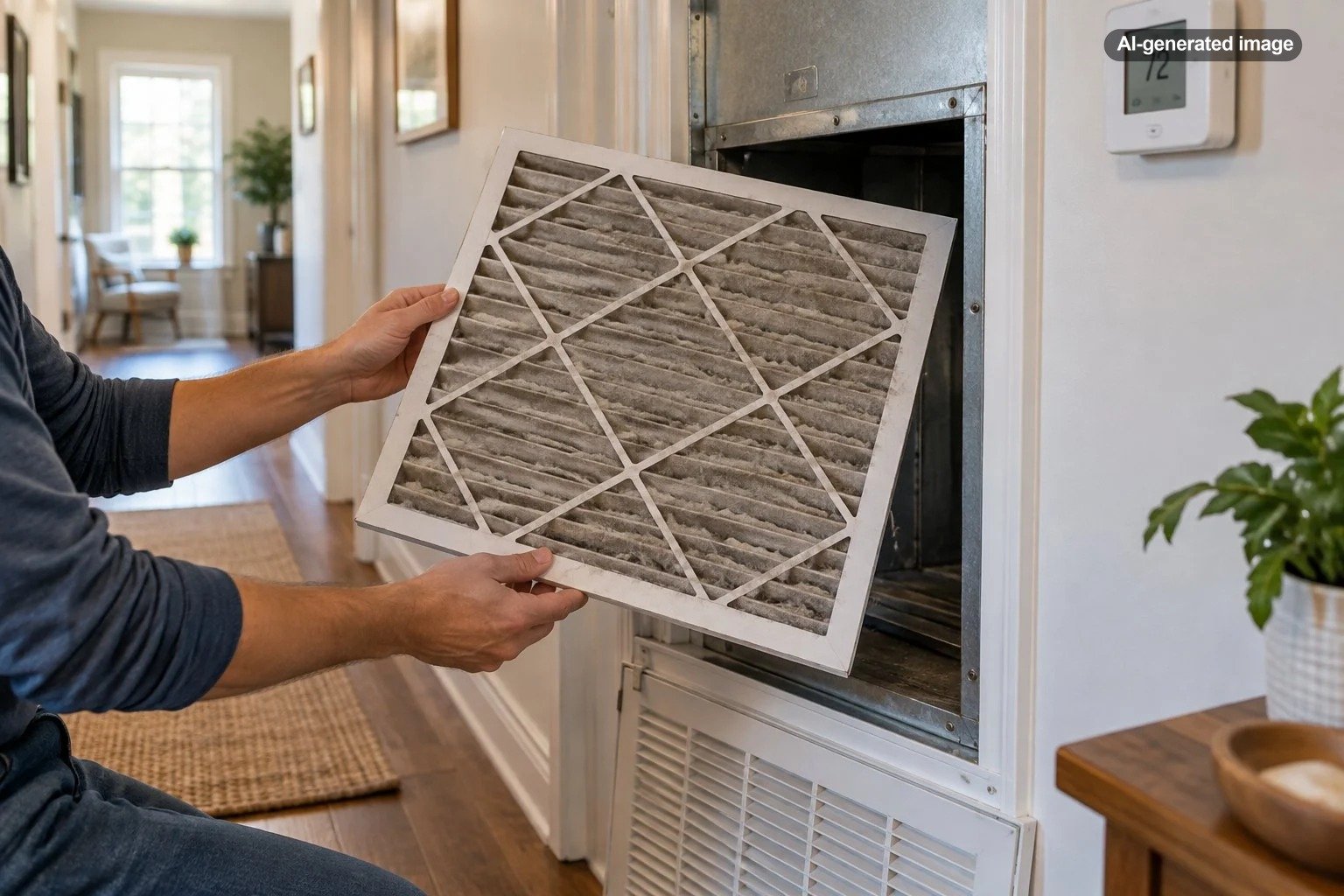
- Check its condition. If the filter surface is heavily loaded with visible dust and debris, it may be restricting airflow.
- Confirm the replacement size and type. Use a filter that fits the system correctly and is appropriate for the equipment.
- Install it in the correct airflow direction according to the markings on the filter and the system configuration.
- Restart the system and listen. If the rushing or whistling decreases substantially, the dirty filter was probably contributing to the noise.
Do not force a filter into a slot where it does not fit. The U.S. Environmental Protection Agency advises homeowners to make sure HVAC filters fit snugly without being bent or crushed. The agency also notes that filter efficiency should be compatible with the system’s fan and filter slot.
A clean filter can still be too restrictive for some systems
Replacing a filthy filter is useful, but the goal is not simply to install the highest-efficiency filter available. Filters differ in how they capture particles and how much resistance they introduce into an HVAC system.
The EPA recommends using the highest-rated filter that the system fan and filter slot can accommodate, and it specifically suggests consulting an HVAC professional when there is uncertainty about compatibility. That nuance matters because a filter can be new and clean yet still be a poor match for a particular system.
Why the noise may be most obvious at the return grille
Homeowners sometimes hear a louder AC and assume the outdoor condenser or compressor is becoming noisy, when the sound is actually coming from the indoor return-air path. Large return grilles can make changes in airflow surprisingly audible.
If a clogged filter is positioned directly behind a return grille, the relationship can be especially obvious: the filter is physically close to the place where you hear the noise. Whistling may also develop if the filter does not sit correctly in its frame or if air is being pulled around its edges.
A filter that is the wrong physical size can create another problem. Air may bypass it rather than moving evenly through the filter media. That can create noise while also undermining filtration. The correct dimensions and a proper fit matter as much as remembering to change the filter.
How often should you inspect the filter?
There is no single replacement interval that is correct for every filter, HVAC system, and household. Filter construction, manufacturer instructions, system runtime, pets, renovation dust, outdoor air conditions, and other factors can all affect how quickly a filter becomes loaded.
ENERGY STAR recommends inspecting, cleaning, or changing filters regularly and advises checking them monthly. EPA guidance says filters should be replaced according to manufacturer recommendations and notes that heavily soiled filters may need more frequent replacement.
That makes visual inspection more useful than blindly relying on one universal calendar rule. A home where the system runs constantly during a hot summer may load a filter differently from a home where the equipment runs only occasionally.
When a new filter does not make the AC quieter
If you replace a dirty filter and the sound remains, the filter may have been only part of the problem or completely unrelated to it. Airflow can also be affected by dirty coils, blower problems, duct restrictions, closed or obstructed grilles, and other system conditions that are not resolved by changing a filter.
ENERGY STAR’s HVAC maintenance guidance includes checking blower components for proper airflow and cleaning air-conditioning coils as part of professional maintenance. Those tasks go beyond simply changing a return-air filter.
What homeowners often overlook
One overlooked clue is when the noise started. If the sound gradually became more noticeable as the filter accumulated dirt and then decreases after replacement, restricted airflow is a sensible explanation. If the noise appeared suddenly while the filter was still relatively clean, look beyond the filter.
Another clue is location. Air whooshing at a return grille points toward a different set of possibilities than clattering from the blower cabinet or buzzing at the outdoor condenser. You do not need to diagnose the component yourself, but describing the type and location of the sound can help an HVAC technician narrow the investigation.
Finally, do not overlook simple fit. A filter that bows, rattles, leaves obvious gaps, or has been installed backward can create its own noises. Correct installation is a small detail with an outsized effect on filtration and airflow.
FAQ
Can a dirty air filter damage an air conditioner?
A dirty filter can restrict airflow and make the HVAC system work harder. ENERGY STAR warns that dirty filters can increase energy use and contribute to equipment problems. The severity depends on the system and how restricted the airflow becomes, so repeated operation with a heavily clogged filter should not be treated as harmless.
Can a dirty filter make the AC whistle?
Yes, it can contribute to whistling if restricted airflow causes air to move through small gaps around the filter, grille, or filter access area. A poor-fitting filter can also be part of the problem. Persistent whistling after installing the correct clean filter deserves further investigation.
Will changing the filter immediately make the AC quieter?
If restricted airflow through the dirty filter was the main cause, the airflow noise may improve quickly after the correct replacement is installed. If nothing changes, do not keep swapping filters. The noise may originate elsewhere in the HVAC system.
Should I buy a higher-MERV filter to fix the problem?
Not automatically. Higher-efficiency filtration can be useful, but the filter still has to be compatible with the HVAC system’s fan and filter slot. The EPA recommends using the highest-rated filter the system can accommodate and consulting an HVAC professional when compatibility is uncertain.