Should Ceiling Fans Turn Off When You Leave the Room?
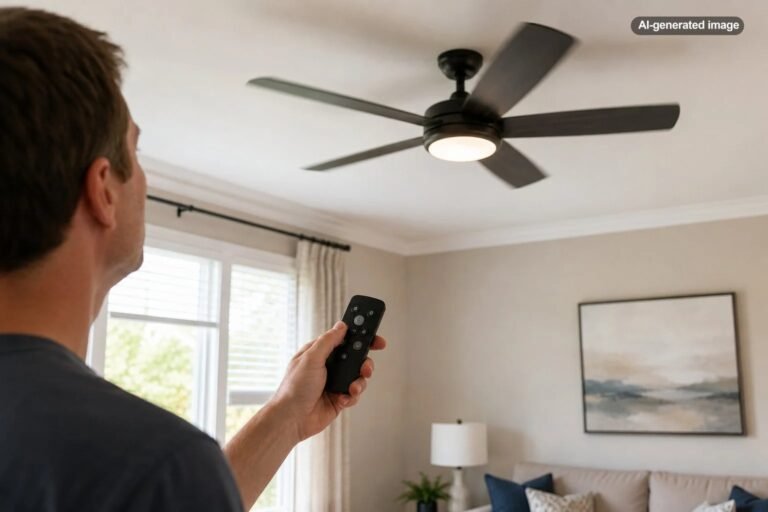
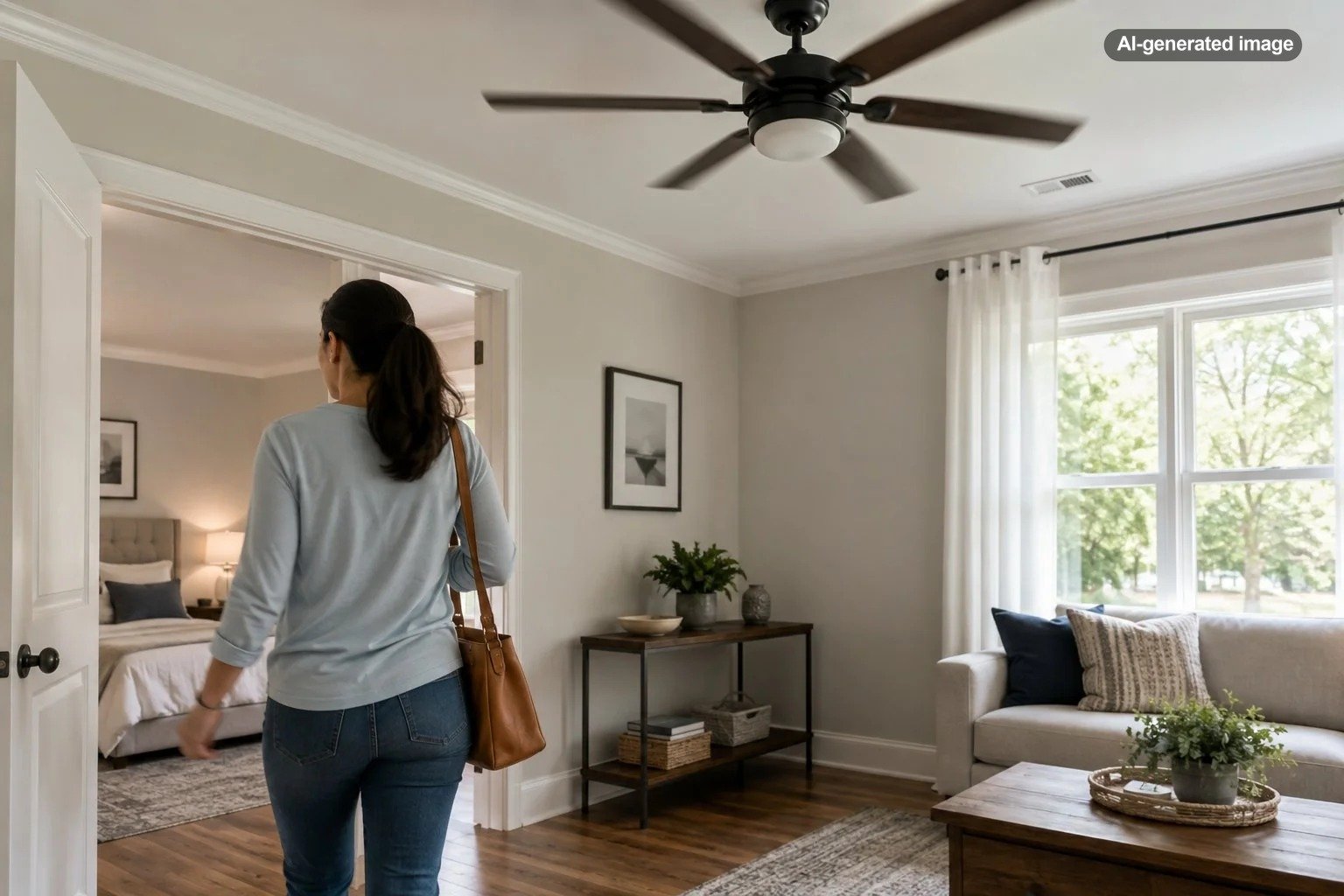
Yes, in most homes, a ceiling fan should be turned off when everyone leaves the room. A ceiling fan does not meaningfully lower the room’s air temperature. Instead, it moves air across your skin, helping you feel cooler while you are present.
Leaving the fan running in an empty room generally uses electricity without improving anyone’s comfort. There are a few practical exceptions, including certain heating-season uses, moisture-prone spaces, plant rooms, and rooms where air circulation supports another specific purpose. Even then, continuous operation should be intentional rather than automatic.
Why Ceiling Fans Do Not Cool Empty Rooms
Air conditioners cool a home by removing heat and moisture from indoor air. Ceiling fans work differently. Their rotating blades create airflow, and that moving air increases evaporation from the skin. The result is a wind-chill effect that can make the room feel more comfortable even though the actual air temperature remains nearly the same.
This distinction matters because a fan running in an empty room is not storing up coolness for later. When you switch the fan off, the room will not suddenly become warmer because of the fan stopping. When you return and switch it back on, the airflow begins helping almost immediately.
ENERGY STAR specifically advises turning ceiling fans off in unoccupied rooms because fans cool people, not rooms. The U.S. Department of Energy gives similar guidance and notes that ceiling fans can support comfort while allowing a higher air-conditioning thermostat setting when people are present.
A ceiling fan is a comfort tool, not a miniature air conditioner.
How Ceiling Fans Work With Air Conditioning
A ceiling fan is most useful when it allows occupants to feel comfortable at a less aggressive thermostat setting. In summer, the blades typically rotate counterclockwise when viewed from below. This pushes air downward and creates the noticeable breeze associated with cooling comfort.
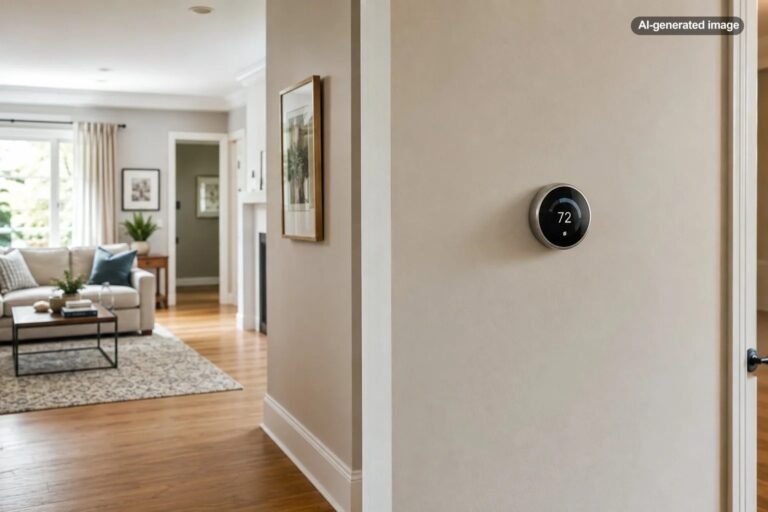
The fan does not reduce the cooling load simply by being on. The potential benefit comes from adjusting the thermostat while using the fan. If the thermostat stays at the same low setting and the fan runs continuously, the household is simply operating two electrical devices instead of one.
A practical summer routine
- Set the ceiling fan to rotate counterclockwise.
- Use a low or medium speed that provides a comfortable breeze.
- Adjust the thermostat modestly upward if comfort allows.
- Turn the fan off when the room becomes unoccupied.
- Switch it back on when someone returns.
This approach is especially effective in bedrooms, living rooms, home offices, and covered porches where people remain in one area for a meaningful period. It is less useful in hallways, storage rooms, or other spaces that are occupied only briefly.
Does Leaving a Fan On Help Circulate Air Through the House?
A ceiling fan primarily moves air within the room where it is installed. It may slightly influence air near an open doorway, but it should not be treated as a substitute for a properly designed HVAC system, return-air pathway, portable air cleaner, exhaust fan, or whole-house ventilation system.
In a room with an open door, a running fan can make the air feel less stagnant. However, it does not guarantee that cooled or heated air will be distributed evenly to neighboring rooms. The effect depends on the floor plan, door position, fan speed, ceiling height, HVAC register placement, and temperature differences throughout the home.
When Leaving a Ceiling Fan On May Make Sense
Although the default advice is to turn fans off in empty rooms, there are situations in which ongoing air movement can serve a practical purpose.
During winter heat circulation
In winter, some ceiling fans can be reversed to rotate clockwise at low speed. This creates a gentle updraft that can help move warm air away from the ceiling and back toward the occupied portion of the room. This is most useful in rooms with high or vaulted ceilings.
Even in winter, the fan does not need to run continuously in every room. Use the lowest effective speed, avoid creating a draft, and turn it off when circulation is no longer useful. Homes with forced-air heating may see little benefit in rooms where the HVAC system already distributes heat evenly.
For plants or specialty rooms
Some indoor plants benefit from gentle air movement because it discourages persistently damp foliage and overly stagnant conditions. Hobby rooms, enclosed sunrooms, and spaces containing temperature-sensitive equipment may also benefit from circulation. These are specialized uses, and the fan should be set only as high as necessary.
In rooms prone to stale air
A ceiling fan can keep air moving in a guest room, finished basement, or rarely used room, but it will not correct a moisture source, remove pollutants, or provide outdoor ventilation. If a space smells musty, feels unusually humid, or develops condensation, address the underlying cause rather than relying on a fan to disguise it.
What About Bedrooms While You Sleep?
A bedroom fan can remain on while the room is occupied overnight. Many sleepers prefer the airflow, steady background sound, or reduced feeling of stuffiness. Use a speed that is comfortable and position the bed so that the breeze does not cause unwanted dryness or discomfort.
Once the bedroom is empty for the day, turn the fan off. There is generally no comfort benefit to running it for hours while everyone is away.
Should Smart Fans or Timers Be Used?
Smart switches, occupancy sensors, wall controls, and scheduling features can help in households where fans are frequently left on by accident. The best control depends on how the room is used.
Before you decide
- Use a timer in a bedroom if the fan is needed only during the first part of the night.
- Use a wall control near the exit so the fan is easy to switch off when leaving.
- Consider an occupancy-based control for playrooms, home gyms, or guest rooms.
- Keep manual control available when pets, plants, or special room conditions require circulation.
- Confirm that any smart control is compatible with the fan motor and light kit.
Compatibility matters because some fan motors require specific speed controls. A standard light dimmer should not be assumed suitable for a ceiling fan. When changing wiring, adding a new wall control, or troubleshooting buzzing and inconsistent speeds, follow the fan manufacturer’s instructions and use a qualified electrician when appropriate.
Common Ceiling Fan Habits That Waste Energy
The most common mistake is leaving fans running throughout the house regardless of occupancy. Another is using several fans while keeping the air conditioner at the same low thermostat setting. The fans may improve comfort, but they do not create meaningful energy savings unless they support a change in cooling behavior.
Running a fan at maximum speed when a lower setting would provide enough airflow is another unnecessary habit. Higher speeds may also create more noise, disturb loose papers, or make the room feel drafty.
Finally, homeowners sometimes expect a ceiling fan to solve uneven HVAC performance. If one room remains consistently hotter or colder than the rest of the home, the cause may involve insulation, solar heat gain, ductwork, airflow balance, window performance, or equipment sizing. A ceiling fan may improve comfort, but it does not diagnose or repair the underlying issue.
The Best Rule for Everyday Use
Use ceiling fans where people are spending time, and turn them off when those spaces are empty. In summer, use the fan’s breeze to support a comfortable thermostat setting rather than expecting the fan to cool the room by itself. In winter, reverse the fan only when gentle circulation actually improves comfort.
A fan left on for a few extra minutes is not a household emergency. The useful habit is simply to treat the fan like a task light: valuable when someone needs it, unnecessary when no one is there.
Frequently Asked Questions
Does a ceiling fan lower room temperature?
Not in the way an air conditioner does. It creates airflow that helps occupants feel cooler through increased evaporation from the skin.
Will a room stay cooler if the fan runs all day?
Generally, no. The room may feel more comfortable when you enter because air is moving, but the fan has not stored cool air or removed significant heat.
Should a ceiling fan stay on for pets?
A fan may provide a breeze, but it should not be the only cooling measure for a pet. Maintain a safe indoor temperature, provide water, and follow veterinary guidance for animals that are elderly, very young, short-nosed, or medically vulnerable.
Should ceiling fans run during winter?
They can be useful at low speed in clockwise mode when warm air collects near a high ceiling. Turn the fan off if it creates an uncomfortable draft or provides no noticeable benefit.
Can a ceiling fan replace ventilation?
No. It recirculates indoor air but does not reliably remove moisture, odors, smoke, or pollutants from the home.