
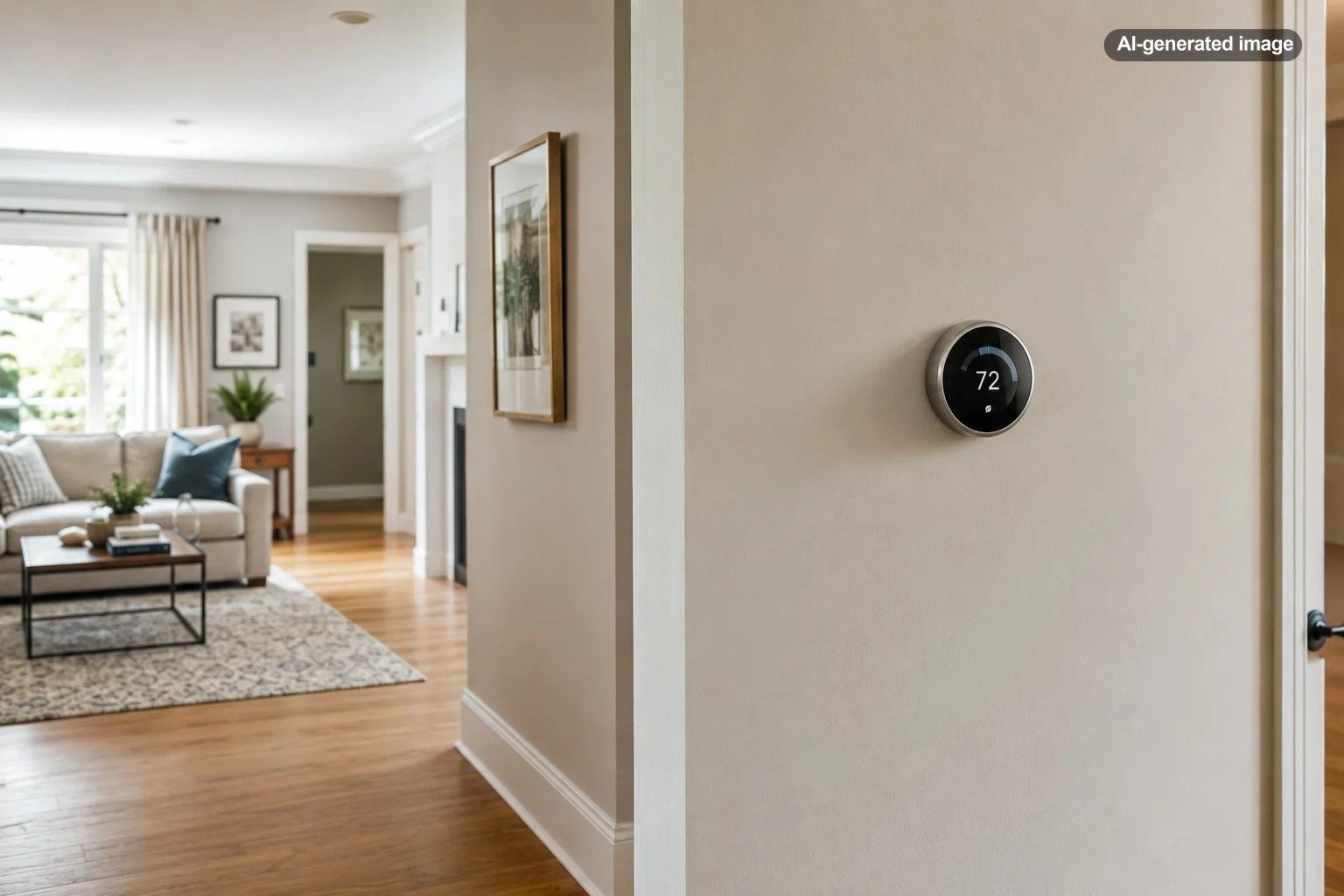
What Is the Best Place to Install a Smart Thermostat?
The best place to install a smart thermostat is on an interior wall in a frequently used part of the home, where it can measure a temperature that reasonably represents the surrounding living space. The location should have normal air circulation and remain away from direct sunlight, exterior doors, windows, supply vents, kitchens, fireplaces, lamps, electronics, and other sources of unusual heat or cold.
For many homes, that means a central hallway, living area, or nearby interior passage rather than a secluded corner. However, the most central spot is not automatically the best one. The thermostat must also be compatible with the existing wiring and able to communicate reliably with the home’s Wi-Fi network, remote sensors, and connected equipment.
Why Thermostat Placement Matters
A thermostat does not know how every room feels. It responds primarily to the temperature measured at its own location, along with information from any compatible remote sensors. If the wall around it is unusually hot, cold, drafty, or stagnant, the HVAC system may run according to a misleading reading.
For example, afternoon sun can warm the thermostat even while the rest of the home remains comfortable. The air conditioner may then continue cooling longer than necessary. A winter draft near an exterior door can produce the opposite problem by making the thermostat call for more heat.
A smart thermostat can make sophisticated decisions, but those decisions still depend on the quality of the temperature information it receives.
Use an Interior Wall in a Representative Area
An interior wall is generally preferable because it is less affected by outdoor temperatures than an exterior wall. Look for a location near the center of everyday activity, but not directly inside a room with unusual temperature patterns.
A suitable location may be in a main hallway near the living room, on a living-room wall that does not receive direct sun, or in another shared area that remains open to the rest of the home. The thermostat should sense ordinary household conditions rather than the temperature of a rarely used guest room, enclosed stairwell, storage area, or isolated corner.
Keep It Away From Misleading Heat and Cold
Several ordinary household features can distort the temperature around a thermostat. Before settling on a location, observe the wall at different times of day and while the heating or cooling system is operating.
Before you decide
- Confirm that direct sunlight does not reach the thermostat during any part of the day.
- Keep it away from exterior doors, frequently opened windows, and noticeable drafts.
- Do not place it directly above or beside a supply register, return grille, radiator, or portable heater.
- Avoid walls shared with fireplaces, hot-water pipes, unconditioned garages, attics, or other unusually warm or cold spaces.
- Provide open air around the device rather than hiding it behind artwork, drapery, a bookcase, or an open door.
- Keep it away from ovens, cooktops, televisions, computers, large lamps, and other heat-producing equipment.
A return-air grille is not necessarily a poor neighbor because return areas can reflect mixed household air, but the thermostat should not sit where strong moving air directly washes across its sensors. The same principle applies to ceiling fans and portable fans: normal room circulation is useful, while a concentrated stream of air can be misleading.
Install It at a Practical Height
In many homes, thermostats are installed around five feet above the finished floor. That height is accessible to most standing adults and generally keeps the device within the occupied zone rather than near the warmer ceiling or cooler floor.
The exact installation height may be influenced by existing wiring, manufacturer instructions, accessibility needs, and local requirements. Avoid moving a thermostat substantially higher or lower merely to align it with artwork or a decorative wall arrangement. A thermostat is a control and sensing device first; visual alignment is secondary.
Consider the Existing Wiring Before Relocating It
Replacing an existing thermostat in the same location is often simpler than moving it because the necessary low-voltage control wires may already be present. Relocation can require fishing new cable through walls, patching the old opening, evaluating the HVAC controls, and confirming that the wiring supports the selected thermostat.
Compatibility varies among HVAC systems and thermostat models. Heat pumps, multi-stage equipment, zoned systems, humidifiers, dehumidifiers, and certain proprietary controls may require particular terminals, wiring arrangements, or professional configuration. Some smart thermostats also need a common wire or another approved power solution.
Affiliate disclosure: CraneManor.com may earn a commission when you purchase through links on this page. This does not affect the price you pay. Learn more.
Before buying a compatible smart thermostat, check the manufacturer’s compatibility guidance for the home’s exact HVAC system and wiring. Wi-Fi features, remote control, and scheduling do not make a thermostat universally compatible with every system.
Check Wi-Fi and Smart-Home Connectivity
A smart thermostat needs a stable connection if you plan to use app control, software updates, voice assistants, geofencing, or remote monitoring. Test the wireless signal at the intended wall before installation, particularly in large homes, older masonry buildings, or locations far from the router.
A strong Wi-Fi signal should not override temperature accuracy, however. Placing the thermostat beside a router, television, or network cabinet may expose it to equipment heat. It is usually better to improve the network with appropriate router placement or compatible networking equipment than to move the thermostat into a thermally unsuitable location.
Remote temperature sensors can help in homes where one wall cannot represent every room. They may be useful for a nursery, bedroom level, home office, or distant living area, depending on the thermostat’s supported features. They do not excuse poor placement of the primary thermostat, but they can provide better control over which occupied area influences the schedule.
Placement in Two-Story and Zoned Homes
A single thermostat in a two-story home often cannot represent both levels perfectly because warm air tends to rise and each floor may have different sun exposure, insulation, and airflow. If one HVAC system serves the entire house, place the thermostat in the area the household most wants to prioritize and consider whether compatible sensors can improve comfort during different parts of the day.
With a properly designed zoned system, each thermostat should be located in a representative part of its own zone. A thermostat controlling upstairs bedrooms, for example, generally belongs within that bedroom zone rather than downstairs near the main return. The zoning controls, dampers, equipment, and thermostats must be designed and configured to work together.
| Location | Typical concern | Better approach |
|---|---|---|
| Exterior wall | Outdoor heat or cold can influence the wall | Use a nearby interior wall |
| Near a supply vent | Conditioned air reaches the sensor too quickly | Choose a wall with gentler room circulation |
| Sunny entryway | Sunlight and door drafts distort readings | Move deeper into a shared living area |
| Kitchen | Cooking creates temporary heat | Use an adjacent hallway or living area |
| Behind decor | Restricted airflow traps warmer or cooler air | Leave open space around the thermostat |
| Remote bedroom | One closed room may not represent the home | Use a shared area or a compatible sensor strategy |
Common Smart Thermostat Placement Mistakes
The most common mistake is choosing convenience over measurement quality. An installer may reuse an easy cable route, or a homeowner may choose a location that looks tidy without considering daily sunlight and airflow.
- Installing behind a door: The open door can block airflow and make the controls awkward to reach.
- Mounting near a bathroom: Heat and humidity from showers may temporarily affect the nearby area.
- Using a rarely occupied room: The HVAC system may satisfy that room while frequently used spaces remain uncomfortable.
- Ignoring wall cavities: Air leakage through the wiring opening can affect the sensor. Follow the manufacturer’s installation instructions for the wall opening and base.
- Assuming software will correct everything: Features that account for sunlight or use remote sensors may help, but a sound physical location remains the better starting point.
How to Evaluate a Location Before Installation
What to do
- Identify interior walls in shared, frequently occupied areas.
- Eliminate spots exposed to sun, drafts, vents, appliances, or unusual wall temperatures.
- Check whether the existing thermostat wiring can reach the location and supports the selected model.
- Test Wi-Fi strength at the wall without moving the thermostat toward a heat-producing device.
- Review the manufacturer’s placement, wiring, and compatibility instructions.
- Use a qualified professional when relocation, new wiring, zoning, or system compatibility is uncertain.
Frequently Asked Questions
Can a smart thermostat go on an exterior wall?
It may function there, but an interior wall is generally a better choice because an exterior wall can be influenced by outdoor temperatures, insulation gaps, or solar exposure. Follow the thermostat manufacturer’s requirements and ask an HVAC professional to evaluate the site when relocation is difficult.
Should a thermostat be near the return-air vent?
A location near a return can sometimes reflect mixed household air, but the thermostat should not be subjected to a strong draft or placed where the return disrupts normal sensing. Evaluate the actual airflow rather than relying on a fixed distance that may not suit every system.
Can I put a smart thermostat in the living room?
Yes, provided the living room is representative of the home’s occupied space and the thermostat is away from windows, direct sun, fireplaces, electronics, lamps, supply vents, and frequently opened doors.
Should I move an existing thermostat when upgrading?
Not automatically. If the current location is on an interior wall and produces dependable comfort without obvious exposure to drafts or heat sources, keeping it may avoid unnecessary wiring work. Relocation makes more sense when the existing position consistently misrepresents household conditions.
Can remote sensors fix a poorly placed thermostat?
Remote sensors can improve room prioritization when supported by the thermostat, but they should complement sensible primary placement. They may not correct wiring problems, direct heat exposure, weak connectivity, or an HVAC system with underlying airflow or zoning issues.