
Where Should You Place an Air Purifier in a Bedroom?
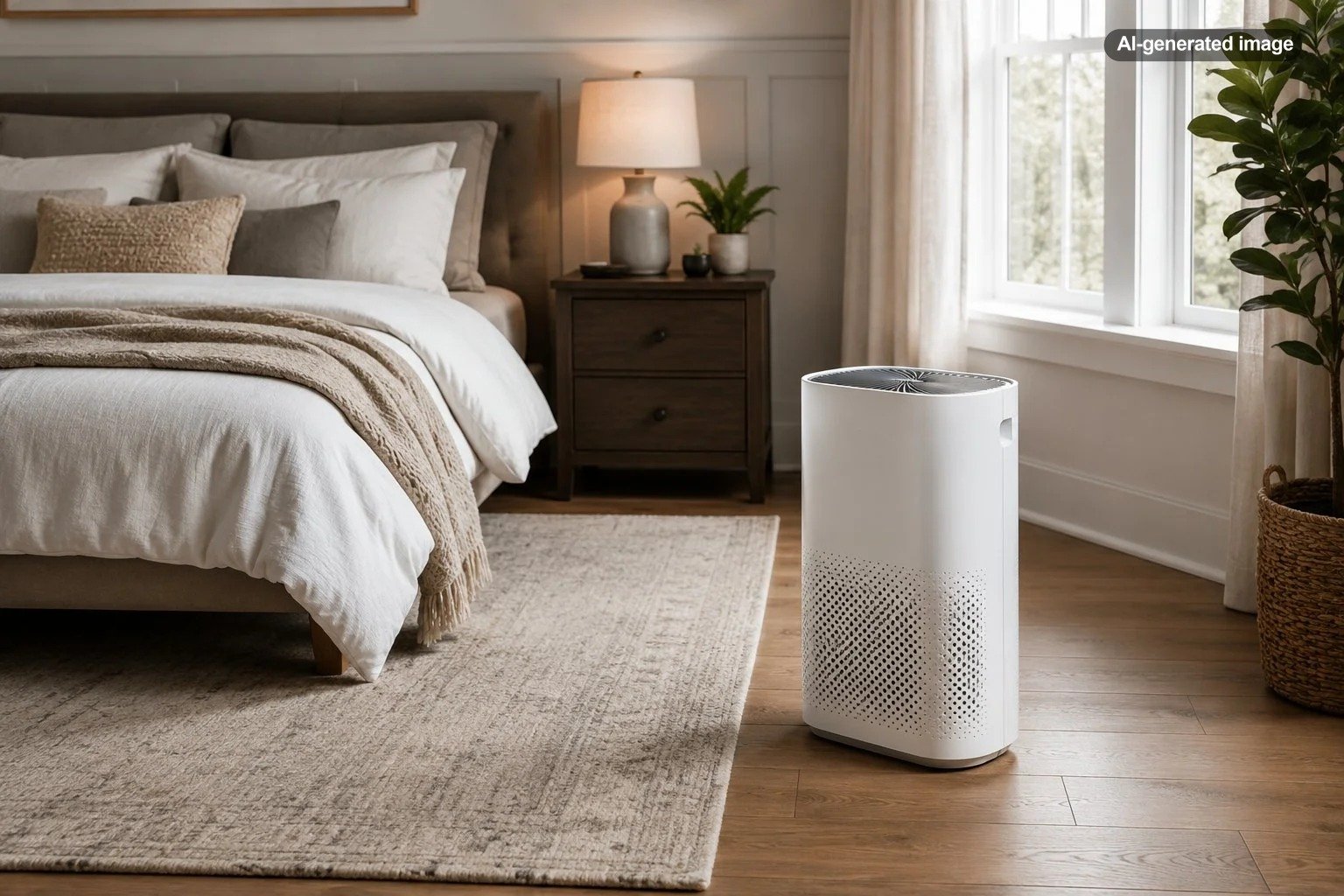
The best place for an air purifier in a bedroom is an open, stable location where its intake and clean-air outlet are not blocked by walls, furniture, bedding, or curtains. In many bedrooms, that means placing it a few feet from the bed, near the center of an open wall or beside a nightstand rather than behind it.
The exact spot depends on the purifier’s airflow pattern, the room layout, and the pollutant you are trying to reduce. The goal is not simply to put the machine as close to your pillow as possible. It is to give the purifier enough breathing room to pull in room air, filter it, and circulate cleaner air without creating an irritating draft or excessive nighttime noise.
Start With Unobstructed Airflow
An air purifier works by moving air, so its location can either support or undermine its performance. A powerful unit wedged between a dresser and a wall may circulate less effectively than a modest unit placed in the open.
Look closely at the purifier before choosing a location. Some models draw air through the front, some through the sides, and others use a 360-degree intake. Clean air may leave through the top, front, or side. Keep all of those openings clear rather than judging clearance from the front panel alone.
Avoid placing the purifier directly against a wall unless its manual explicitly permits it. Do not tuck it behind a headboard, under a desk, inside an open closet, or between hanging curtains. Soft materials can drift toward an intake, while large furniture can create a pocket of poorly circulated air.
Should an Air Purifier Be Near the Bed?
It can be, but closer is not automatically better. A purifier several feet from the bed can clean the surrounding room air without blowing directly across your face. This is often more comfortable for sleeping and may make fan noise feel less prominent.
Place the unit where the clean-air outlet is not aimed straight at your pillow. Direct airflow can feel chilly, dry, or distracting even when the purifier itself is operating normally. A small adjustment in angle may solve the problem without moving the machine across the room.
People who are especially sensitive to noise may prefer the purifier near the foot of the bed or along an adjacent wall. Someone primarily concerned about particles entering through a particular doorway may prefer a position between the bed and that source, provided the unit still has open space around it.
Floor, Table, or Dresser: Which Height Is Best?
Use the surface and orientation recommended by the manufacturer. Many full-size bedroom purifiers are designed to stand upright on the floor. Smaller models may be suitable for a sturdy table or dresser, but only when the surface is level, stable, and large enough to support the entire base.
A floor position is usually practical because it keeps a larger unit stable and leaves furniture surfaces free. It can also help capture particles that become airborne near the floor. However, a purifier should not sit on deep carpet if the carpet can obstruct an intake underneath the unit or make the base unstable.
A raised position may work for a compact purifier, particularly in a small room where floor space is scarce. Keep it away from the edge, do not crowd it with lamps or books, and prevent the outlet from blowing into curtains, artwork, or a wall.
| Location | When it works well | What to check |
|---|---|---|
| Open floor area | Full-size purifiers and uncluttered bedrooms | Stable surface, clear intake, safe cord route |
| Beside the bed | Nighttime use and easy control access | No direct draft and no blockage from bedding |
| On a dresser | Compact units in rooms with limited floor space | Manufacturer approval, stability, and outlet clearance |
| Near a doorway | Rooms affected by particles entering from adjoining spaces | Door movement and walking clearance |
| In a corner | Only when the unit has adequate clearance on every required side | Restricted airflow and nearby curtains |
Think About Where Pollutants Enter the Room
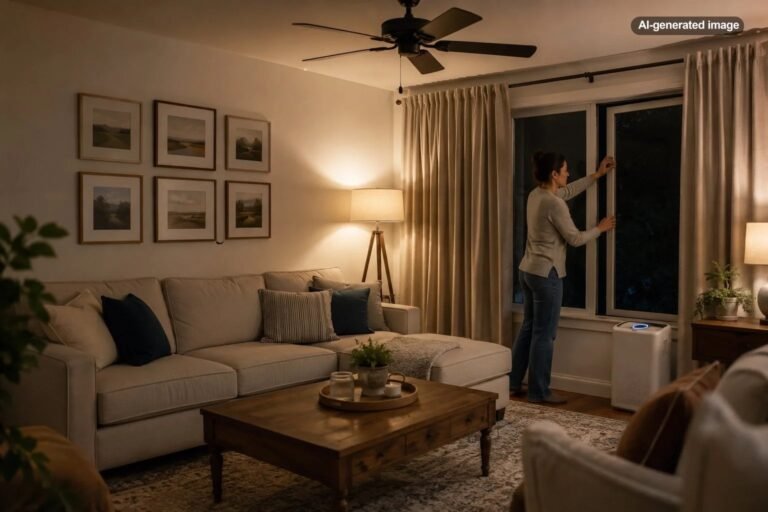
Placement can be adjusted according to the source of the problem. If outdoor smoke or pollen is entering through a leaky window, positioning the purifier in the same general part of the room may help intercept particles after they enter. Keep enough separation from curtains and blinds to preserve airflow.
If dust is stirred up by a frequently used doorway, a location between the door and the sleeping area may be useful. For pet-related particles, place the purifier in the room where the pet and the sleeper spend time rather than expecting one bedroom unit to clean an entire house.
Portable air cleaners are intended to serve a room or defined area. An open bedroom door may allow the unit to exchange air with the hallway, but it also increases the volume of air the machine is being asked to clean. Closing doors and windows generally creates a more controlled room, especially when outdoor air is smoky or otherwise unsuitable for ventilation.
The best location is the one that lets the purifier move room air freely while remaining comfortable enough to run consistently.
Do Not Ignore Room Size and Purifier Capacity
Perfect placement cannot compensate for an undersized purifier. Check the model’s Clean Air Delivery Rate, commonly abbreviated as CADR, and its suggested room size. A higher CADR means the unit delivers a greater volume of filtered air for the pollutant category being measured.
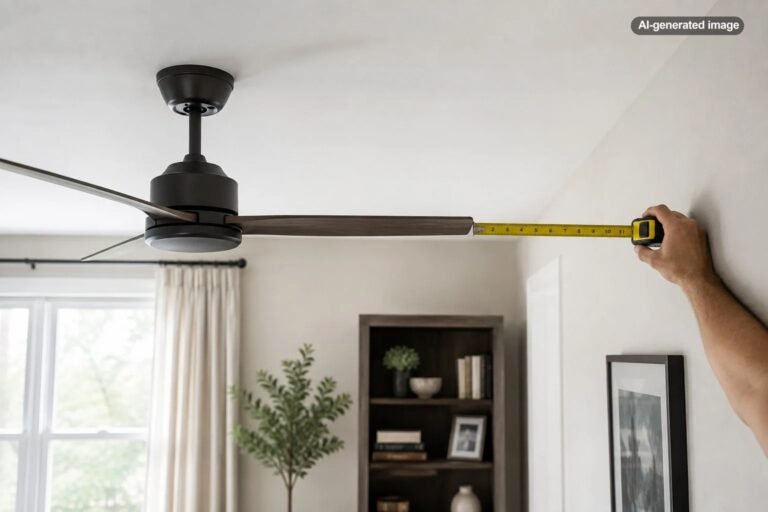
Measure the bedroom’s length and width to estimate its square footage. If the ceiling is higher than a standard 8-foot ceiling, the room contains more air than the floor area alone suggests, so a purifier rated for a larger room may be appropriate.
Room-size claims can also be presented at different air-change rates. A model advertised for a very large space may achieve that claim by cleaning the room only once per hour. For a bedroom, compare the suggested room size, CADR, and the number of air changes rather than relying on the largest coverage number printed in advertising.
Affiliate disclosure: CraneManor.com may earn a commission when you purchase through links on this page. This does not affect the price you pay. Learn more.
For a typical bedroom, a straightforward appliance such as a HEPA air purifier with automatic mode may be easier to live with than a complicated whole-home control system. Whatever model you consider, confirm that its verified performance suits the room and that its intake design fits the location you have available.
Common Bedroom Placement Mistakes
- Hiding it behind furniture: This may keep the machine out of sight, but it can also obstruct airflow.
- Placing it under hanging fabric: Curtains, bed canopies, and loose bedding can interfere with an intake or outlet.
- Aiming the outlet at the sleeper: The resulting draft may make the purifier uncomfortable to use overnight.
- Using an unstable surface: A narrow stool, soft mattress, or uneven pile of books is not an appropriate stand.
- Creating a tripping hazard: Keep the cord away from the path between the bed, bathroom, and doorway.
- Putting it beside moisture: Keep electrical appliances away from humidifiers, open windows during rain, and places where water may spill.
- Running it only after the room feels dusty: Filtration is generally more useful when the unit runs consistently at a tolerable speed.
Before you decide
- Find every intake and clean-air outlet on the purifier.
- Read the model’s required wall and furniture clearances.
- Measure the bedroom and consider ceiling height.
- Choose a stable surface near an outlet.
- Keep cords out of walking paths.
- Check that curtains and bedding cannot drift into the unit.
- Test the location overnight for noise and drafts.
How to Fine-Tune the Position
Begin with the purifier in an open location several feet from the bed. Close the bedroom door and windows when outdoor conditions make that appropriate, then run the unit at the highest speed you can comfortably tolerate. Higher fan speeds generally move and filter more air, while lower settings may be more suitable for sleep.
After a night or two, evaluate comfort rather than expecting placement to remain permanent. If airflow reaches your face, rotate or relocate the unit. If the fan sounds loud beside the headboard, move it toward the foot of the bed. If furniture blocks the intake, create more clearance.
Keep filters clean and replace them according to the manufacturer’s instructions. A clogged filter can reduce airflow, increase noise, and make a well-positioned purifier less effective. Placement, capacity, operating speed, and maintenance all work together.
Frequently Asked Questions
Can I put an air purifier in a bedroom corner?
Only when the corner leaves the required clearance around every intake and outlet. Many corners restrict circulation, so an open section of wall is often preferable.
Should the bedroom door be open or closed?
A closed door gives the purifier a more clearly defined volume of air to clean. An open door increases air exchange with adjoining spaces and may require more capacity.
Can an air purifier sit on carpet?
It may be acceptable when the base remains stable and no bottom intake is obstructed. Check the manual, especially with deep or plush carpet.
Is it safe to leave an air purifier running overnight?
Room air purifiers are commonly designed for extended operation, but use the unit only as directed. Inspect the cord, keep openings clear, plug it into an appropriate outlet, and follow all manufacturer safety instructions.
Does an air purifier replace ventilation or cleaning?
No. Filtration can reduce certain airborne pollutants, but it does not remove every contaminant or replace source control, suitable ventilation, regular cleaning, or correction of moisture and mold problems.