
Why Does My Living Room Smell Fine During the Day but Stale at Night?
A living room that smells perfectly normal during the day but stale at night is often reacting to changes in airflow, temperature, humidity, and how the room is used after sunset. Closing windows and doors, reducing mechanical ventilation, spending several hours in the room, and warming upholstered furniture can all make faint odors more noticeable. The timing itself is useful evidence: an odor that appears predictably at night is often easier to trace than one that comes and goes randomly.
The important distinction is between ordinary accumulated room odor and a persistent musty, damp, chemical, smoky, or combustion-related smell. Start with simple sources and ventilation before assuming something is wrong inside the walls.
Why a room can smell different after sunset
Homes are not chemically or mechanically identical from hour to hour. During the day, exterior doors may open repeatedly, windows may be cracked, exhaust fans may run, and people may move between rooms. All of that can increase air movement and dilute odors.
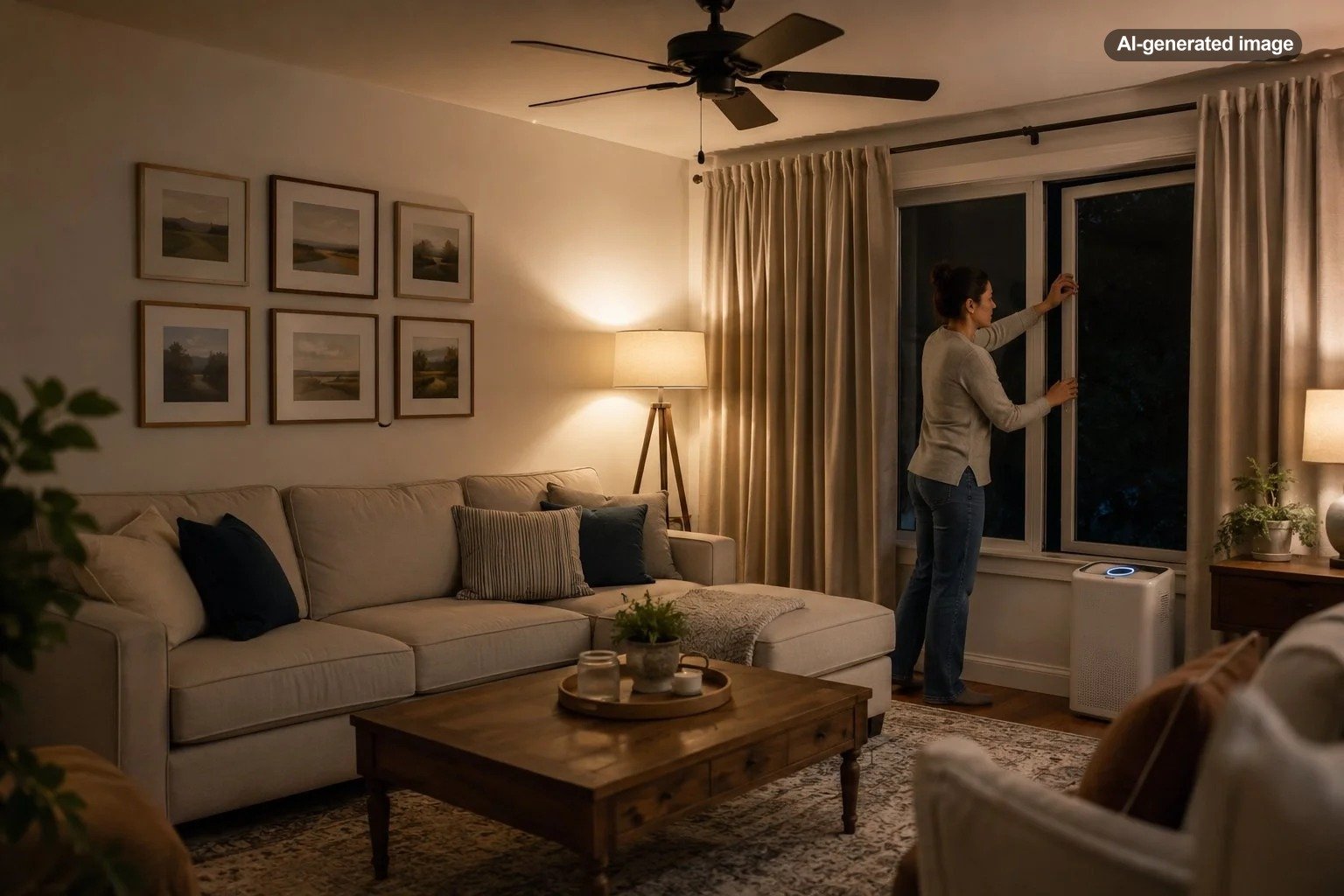
At night, the house often becomes more closed. Windows are shut, doors stay closed longer, occupants gather in one room, and cooking, pets, candles, fireplaces, laundry, or evening showers can add moisture or odors elsewhere in the home. The U.S. Environmental Protection Agency notes that bringing in outdoor air helps control odors, pollutants, temperature, and humidity. Inadequate ventilation can allow indoor pollutants and odors to become more concentrated.
Start with fabrics, because they hold more odor than the room appears to
A living room contains an unusually large amount of absorbent material. Sofas, throw pillows, curtains, rugs, upholstered chairs, pet beds, blankets, and carpeting can collect cooking residue, body oils, pet odors, smoke particles, dust, and fragrance products.
During the day, those background odors may be diluted by air movement. After the room has been occupied for several hours with the doors and windows closed, they can become much more obvious. Warmth can also change how readily some odors are perceived.
Test fabrics systematically rather than deodorizing the entire room at once. Remove washable blankets and pillow covers for an evening. Check beneath sofa cushions, along rug edges, behind curtains, and under furniture. If the odor changes significantly after one group of textiles is removed or cleaned, you have narrowed the problem without masking it.
Watch what happens when the HVAC system changes modes
Nighttime thermostat schedules can alter both temperature and airflow. A system that runs frequently during a hot afternoon may circulate and filter air regularly, then cycle much less once the evening temperature falls. Conversely, a heating system may begin operating after sunset and move air through parts of the house that were relatively inactive during the day.
Pay attention to whether the smell appears before the HVAC system starts, immediately after a cycle begins, or only after it has been off for a long period. That distinction can help separate a room-specific odor from something associated with airflow.
A dirty filter, blocked return, closed supply register, or poorly ventilated room can contribute to disappointing air circulation, but an odor alone does not diagnose an HVAC fault. Follow the equipment manufacturer’s maintenance instructions, and have persistent system-related odors evaluated by a qualified HVAC professional rather than experimenting inside equipment.
Check humidity and moisture, especially when the smell is musty
A vague stale smell and a distinctly musty smell are not quite the same clue. The EPA states that a moldy odor can indicate mold growth and should be investigated. Moisture control is central to preventing mold problems.
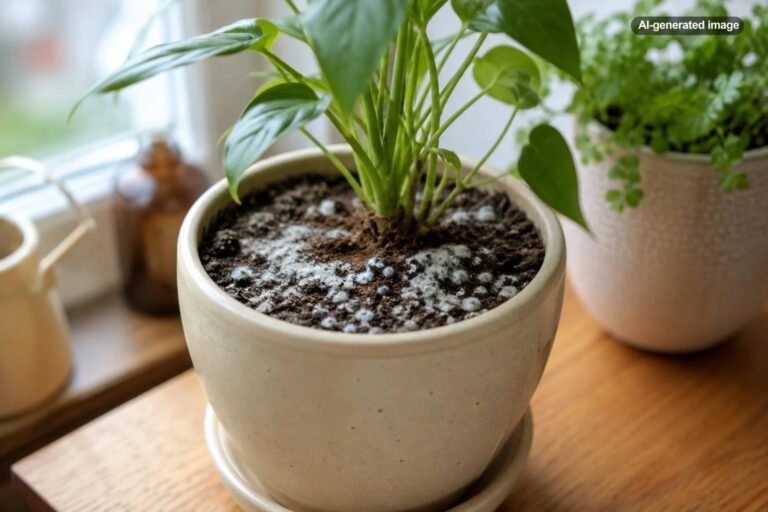
Look for ordinary moisture sources before imagining a major hidden problem. Check around windows for condensation, beneath potted plants, behind furniture placed against exterior walls, around sliding doors, near an adjoining bathroom, and beneath rugs on potentially damp floors. Inspect ceilings and baseboards for discoloration, swelling, peeling finishes, or recurring dampness.
Humidity can also vary over the course of a day. Cooking, showering, outdoor weather, air-conditioning cycles, and closing the house for the evening can all change indoor moisture conditions. EPA guidance recommends controlling indoor moisture and generally keeping relative humidity below 60 percent, ideally in the 30 to 50 percent range.
Do not overlook small evening-specific odor sources
Some causes are surprisingly mundane. A nearly empty drinking glass containing milk, food packaging beside a sofa, a pet blanket warmed by body heat, damp shoes near an entry, an overwatered plant, or a kitchen trash container in an adjoining open-plan space can be nearly undetectable earlier in the day and conspicuous after the house closes up.
Fireplace ashes, scented candles, incense, smoking materials, cleaning products, hobby supplies, and recently delivered furniture can also contribute odors. If the smell resembles burning, overheating plastic, natural gas, fuel, or another potentially hazardous source, treat that as a separate safety issue rather than as ordinary staleness.
What to do
- Notice the exact time the odor begins and whether it coincides with closing windows, cooking, HVAC cycles, or gathering in the room.
- Ventilate the room when outdoor conditions make that reasonable and see whether the odor clears noticeably.
- Remove obvious food, trash, pet, shoe, plant, and damp-item sources.
- Inspect rugs, curtains, upholstery, blankets, and cushions rather than relying on room fragrance.
- Check humidity and look carefully for condensation, leaks, staining, or other moisture clues.
- Observe whether the odor appears when heating or cooling equipment starts or stops.
- If the smell remains strong after basic source control and ventilation, investigate the specific odor category rather than continuing to mask it.
Use the overnight test to separate ventilation from a source problem
A simple controlled comparison can be revealing. On one evening, remove obvious odor sources and ventilate the room appropriately before closing it for the night. Avoid candles, room sprays, diffusers, and other fragrance products so they do not complicate the test.
If the room remains fresh much longer, accumulated indoor odors and low air exchange become more plausible explanations. If the same distinctive odor returns quickly from one location, focus on that location. If the odor follows an HVAC cycle or appears in multiple rooms simultaneously, the investigation should shift toward whole-home airflow or another shared source.
The time an odor appears can be as informative as the odor itself.
When should you investigate further?
Ordinary stuffiness that improves with source removal, cleaning, and appropriate ventilation is different from an odor that is persistent, localized, or clearly associated with moisture. Escalate the investigation when a musty odor keeps returning, visible moisture is present, building materials remain damp, or the smell seems to originate inside a wall, ceiling, floor, or HVAC system.
Also distinguish stale air from potential safety hazards. Burning, electrical, gas, fuel, or unexplained combustion odors should not be handled as a housekeeping problem. Leave risky diagnosis and repairs to appropriately qualified professionals, and follow applicable emergency guidance for suspected gas, fire, or carbon monoxide concerns.
How to keep the room smelling naturally fresher
Once the source is understood, prevention is usually less dramatic than deodorizing. Keep soft furnishings reasonably clean, dry damp items promptly, use kitchen and bathroom exhaust where appropriate, maintain HVAC filters according to the equipment and filter instructions, and address water intrusion rather than disguising the resulting odor.
Most importantly, think in terms of source control, ventilation, and moisture management. Those are more useful principles than simply adding a stronger scent. A living room that smells stale only at night is giving you a pattern to work with, and a few evenings of deliberate observation can often identify what changes when the sun goes down.
FAQ
Why does my house smell stuffier when all the windows are closed?
Closing the house can reduce the exchange of indoor and outdoor air, allowing odors produced by people, cooking, pets, furnishings, and household products to become more noticeable. Appropriate mechanical or natural ventilation can help dilute indoor contaminants and odors.
Can a sofa make an entire living room smell stale?
Yes. Upholstery and cushions can retain body oils, pet odors, food residue, smoke particles, and other odor-producing material. Because a sofa has a large fabric surface area, a relatively mild odor can influence the whole room.
Does a musty smell always mean mold?
No. Damp textiles, old carpet, humid spaces, and other materials can smell musty. However, the EPA advises that a moldy odor can be a sign of mold growth and should be investigated, particularly when there is evidence of moisture.
Will an air purifier fix a stale smell?
Not necessarily. Filtration and air cleaning can be useful components of indoor air management, but they do not replace removing the odor source or correcting moisture problems. The EPA emphasizes source control, ventilation, and supplemental filtration or air cleaning as complementary strategies.
Sources & further reading
- U.S. Environmental Protection Agency: What can I do to improve indoor air quality in my home?
- U.S. Environmental Protection Agency: How much ventilation do I need in my home to improve indoor air quality?
- U.S. Environmental Protection Agency: What does mold smell like?
- U.S. Environmental Protection Agency: Guide to Air Cleaners in the Home