Why Are My Plants Getting Mold on the Soil?
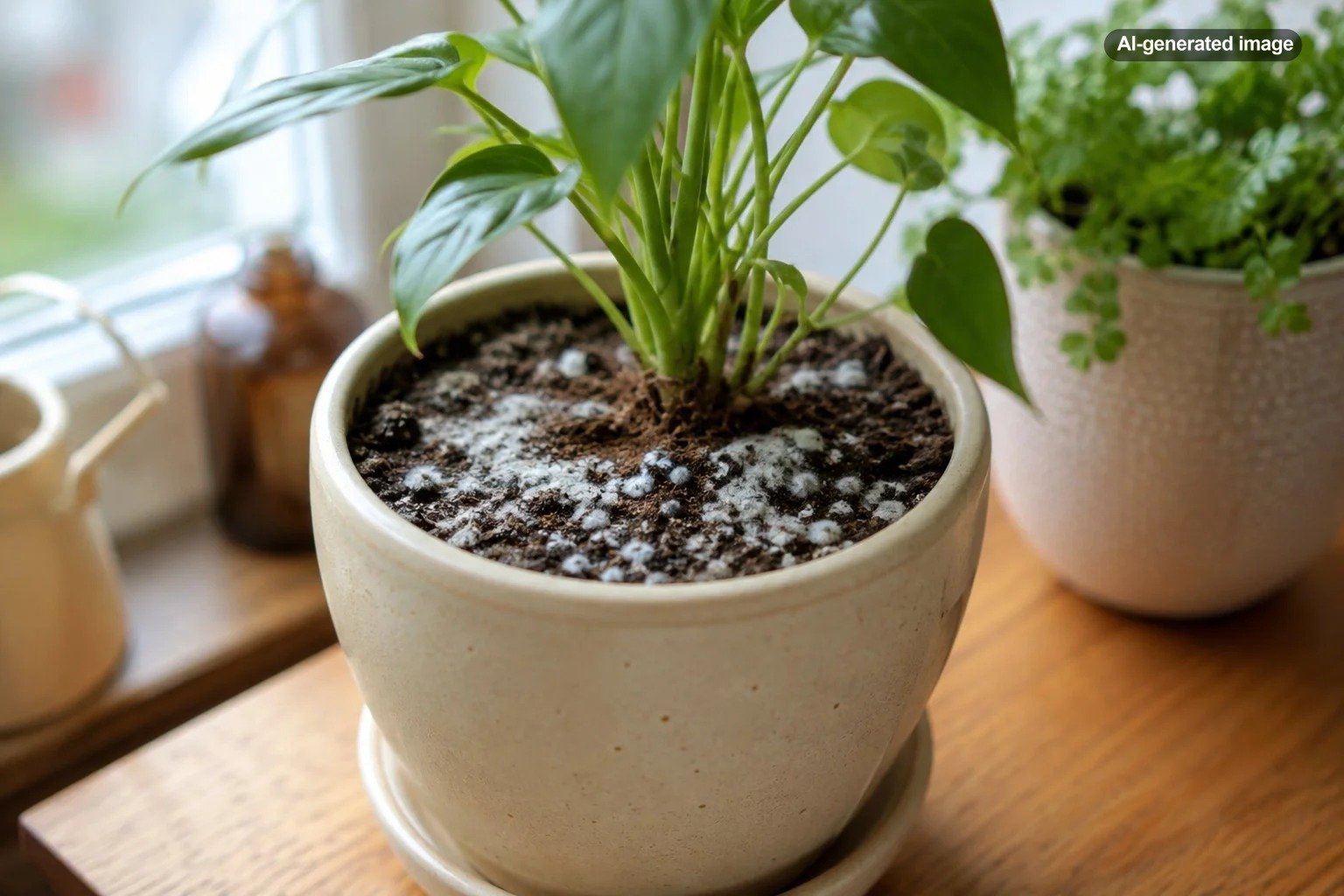
Finding a pale, fuzzy layer on your houseplant soil is unsettling, but it is usually not a botanical emergency. In many cases, the growth is a saprophytic fungus feeding on damp potting mix, fallen leaves, bark, or other decomposing organic material rather than attacking the living plant.
The appearance still deserves attention because it tells you the soil surface is remaining moist long enough for fungi to thrive. Overwatering, poor drainage, low light, limited airflow, and high indoor humidity are the most common reasons it appears.
What Is the Fuzzy Growth on the Soil?
White or gray fuzz on the surface of potting mix is often fungal mycelium, the threadlike structure of a fungus. Potting mixes commonly contain organic ingredients such as bark, peat, coir, and composted material. When those ingredients remain consistently damp, fungi can begin decomposing them.
This surface growth is different from powdery mildew, which develops on leaves and stems. It is also different from mineral buildup. Fertilizer salts and hard-water deposits tend to look dry, crusty, or crystalline rather than soft and web-like.
| What you see | Likely explanation | What to check |
|---|---|---|
| Soft white or gray fuzz | Surface fungus | Moisture, airflow, and dead organic material |
| Hard white crust | Mineral or fertilizer deposits | Water quality and fertilizer use |
| Black film on leaves | Possible sooty mold | Aphids, scale, or other sap-feeding pests |
| Soft stems and dark roots | Possible root or crown rot | Drainage and prolonged waterlogging |
The Most Common Causes
The soil stays wet for too long
Frequent watering is the leading cause. A plant may be watered on schedule even though it has not used the moisture from the previous watering. This is especially common during winter, after a plant is moved into lower light, or when a large pot holds far more soil than the roots can occupy.
The calendar is a poor moisture meter. Check the mix before watering. Depending on the plant, that may mean feeling the top inch or two, lifting the pot to judge its weight, or using a clean wooden skewer to check moisture deeper in the container.
The pot cannot drain properly
A container without a drainage hole allows excess water to collect around the roots. Even when a nursery pot sits inside a decorative cachepot, water can remain hidden in the outer vessel after watering. Root growth may also block an existing drainage hole.
Water thoroughly only when the plant needs it, let the excess drain, and empty the saucer or cachepot. Do not leave the inner pot standing in runoff.
Light and airflow are limited
Low light slows photosynthesis and reduces how quickly a plant uses water. Still indoor air also slows evaporation from the soil surface. A plant tucked into a dim corner may therefore remain damp much longer than the same plant near bright, appropriate light.
Move the plant closer to suitable indirect light when its care requirements permit. Leave a little space between closely grouped pots and avoid pressing foliage against cold windows or walls.
Dead material is feeding the fungus
Fallen leaves, spent flowers, decorative moss, bark fragments, and other debris provide an easy food source. A few forgotten leaves can create a tiny compost pile on top of the pot.
Remove plant debris regularly. Decorative moss can be attractive, but it also makes it harder to see and feel the potting mix. Consider removing it from plants that repeatedly develop surface mold.
The room is humid
Humidity alone may not make a properly watered pot moldy, but it slows drying and can compound drainage or watering problems. The U.S. Environmental Protection Agency generally recommends keeping indoor relative humidity below 60 percent and ideally between 30 and 50 percent for moisture and mold control.
Affiliate disclosure: CraneManor.com may earn a commission when you purchase through links on this page. This does not affect the price you pay. Learn more.
If the room often feels muggy or develops window condensation, a digital hygrometer can help you track temperature and relative humidity instead of guessing. It will not detect mold, but it can reveal whether persistent indoor humidity is contributing to slow soil drying.
How to Remove Mold From Plant Soil
What to do
- Isolate the plant temporarily. This makes inspection easier and prevents watering runoff or loose debris from reaching nearby pots.
- Scoop away the affected surface. Remove the visible growth along with roughly the upper half-inch to inch of potting mix, taking care not to damage shallow roots.
- Discard dead leaves and flowers. Do not leave decomposing material on the soil.
- Let the mix dry appropriately. Wait until the plant reaches its normal watering threshold rather than watering immediately after treatment.
- Improve the conditions. Correct poor drainage, provide suitable light, and increase gentle air circulation.
- Add fresh potting mix if needed. Replace the removed layer with clean mix formulated for that type of plant.
Cleaning the surface without changing the growing conditions is usually temporary. The growth may return because the underlying cause, commonly excessive moisture, remains in place.
Should You Repot the Plant?
A small patch of surface mold does not automatically require repotting. Repotting can stress a plant, and replacing all the soil is unnecessary when the roots are healthy and the mix drains normally.
Repotting becomes more reasonable when the mix stays wet for an unusually long time, has collapsed into a dense mass, smells sour, lacks drainage, or repeatedly grows mold despite corrected watering. It may also be necessary when roots are tightly circling the pot or blocking drainage holes.
Choose a clean container with drainage holes and a good-quality potting mix intended for indoor containers. Garden soil is generally too dense for houseplants and may introduce pests or disease organisms. Avoid moving a small root system into a dramatically larger pot; the extra volume of wet mix can make moisture management harder.
When Surface Mold Signals a Bigger Problem
Harmless-looking surface fungus and damaging root disease can occur under the same wet conditions. Pay attention to the plant, not just the potting mix.
If fungal growth appears beyond the pot, investigate the room rather than blaming the plant. Mold on nearby walls, baseboards, window trim, flooring, or furniture can point to condensation, a leak, or a broader indoor moisture problem. Correct the water source promptly and seek qualified help when the affected area is extensive, hidden, or associated with building damage.
How to Keep the Mold From Returning
- Check soil moisture rather than watering by the day of the week.
- Use containers with functional drainage holes.
- Empty saucers and cachepots after watering.
- Match the pot size to the root system.
- Provide the amount of light recommended for the plant.
- Remove fallen leaves, flowers, and decorative material that stays damp.
- Keep the soil surface open rather than covering it with stones that trap moisture.
- Monitor room humidity when slow drying is a recurring problem.
- Clean previously used pots before reusing them.
Surface mold is less a verdict on the plant than a message about the moisture surrounding its roots.
Frequently Asked Questions
Is mold on potting soil harmful to people?
A small amount of fungal growth confined to one pot is not the same as a building-wide mold problem, but visible mold should still be handled thoughtfully. Avoid deliberately disturbing or inhaling spores. People with mold allergies, asthma, compromised immune systems, or other health concerns may prefer to have someone else clean or repot the plant and should consult an appropriate health professional for personal guidance.
Can I sprinkle cinnamon on moldy soil?
Cinnamon is often suggested online, but it does not correct overwatering, blocked drainage, insufficient light, or high humidity. Removing the affected layer and fixing the moisture imbalance is more reliable than covering the surface with a household powder.
Does surface mold mean the plant is dying?
Usually not. A plant with firm stems, normal foliage, healthy roots, and only a small amount of surface growth can often recover with straightforward care adjustments. Wilting in wet soil, soft tissue, and rotting roots are more concerning signs.
Why are fungus gnats appearing too?
Fungus gnat larvae feed on fungi and decaying organic matter in moist growing media. Adult gnats around a moldy pot are another clue that the mix is remaining too wet. Letting the surface dry appropriately, removing debris, emptying standing water, and correcting drainage address the conditions that favor both problems.