Should You Unplug a Refrigerator Before Evacuating for a Hurricane?
If you are evacuating for a hurricane, unplugging the refrigerator can be a sensible precaution in some situations, but it is not automatically the right choice for every home. Federal emergency guidance recommends unplugging appliances and electronics to reduce the risk of damage from electrical surges. At the same time, deliberately unplugging a refrigerator means it stops cooling immediately, which matters if you are leaving food inside.
The practical decision is less about the refrigerator itself and more about what you are leaving behind. If you expect to be gone for an extended period, have emptied the appliance, or have been instructed to shut off electricity to the home, unplugging it is usually straightforward. If you are leaving a stocked refrigerator or freezer and electrical service is still available, keeping it powered may preserve food longer until an outage actually occurs.
Why unplugging can make sense before a hurricane
Hurricanes can produce outages, voltage fluctuations, lightning, flooding, and damage to utility infrastructure. Ready.gov advises unplugging appliances, equipment, and electronics during power outages to help avoid damage from electrical surges. The U.S. Fire Administration also advises considering unplugging appliances during severe weather.
If your evacuation plan already involves emptying the refrigerator, there is little benefit in keeping an empty appliance operating in a house that may lose power anyway. Unplugging it can also make the appliance easier to prepare for a prolonged absence: remove food, discard anything likely to spoil, clean spills, dry the interior, and prevent trapped moisture and odors.
The situation changes when the refrigerator still contains food. Disconnecting it while the house has electricity voluntarily starts the clock on warming food. That may be reasonable when you know you will be gone well beyond the safe storage period, but it can be counterproductive if you expect a short evacuation and hope to preserve what is inside.
Think about the food before you think about the plug
The U.S. Food and Drug Administration says an unopened refrigerator generally keeps food cold for about four hours after power is lost. A full freezer can maintain its temperature for approximately 48 hours, or about 24 hours if it is half full, as long as the door remains closed.
Those timeframes explain why leaving a refrigerator powered can still be useful before an evacuation. Electricity may remain available for hours or even throughout the storm at your particular home. If you unplug the appliance before leaving, refrigeration ends immediately rather than when utility power eventually fails.
| Situation | Practical approach |
|---|---|
| Refrigerator is stocked and power is still on | Keeping it powered may preserve food longer unless emergency instructions say otherwise. |
| You have emptied the refrigerator for a long evacuation | Unplugging it is reasonable; clean and dry the interior. |
| Officials instruct residents to shut off electricity | Follow the official evacuation and utility instructions. |
| Floodwater may reach electrical equipment | Prioritize electrical safety and follow emergency guidance rather than approaching wet equipment. |
If you expect a long evacuation, emptying the refrigerator may be simpler
For a hurricane evacuation that could last several days, relying on refrigerated perishables to remain safe may not be realistic, especially if a lengthy outage is expected. Before leaving, use, freeze, relocate, or discard highly perishable foods as circumstances allow. The FDA recommends preparing for outages with coolers, frozen gel packs, ice, and appliance thermometers.
Freezers deserve separate consideration. A tightly packed freezer retains cold substantially longer than a refrigerator, so unnecessarily unplugging a full freezer shortly before evacuation can sacrifice useful cold-storage time. If you leave it operating, keep the door firmly closed and resist the temptation to open it immediately when you return.
What to do if you decide to unplug it
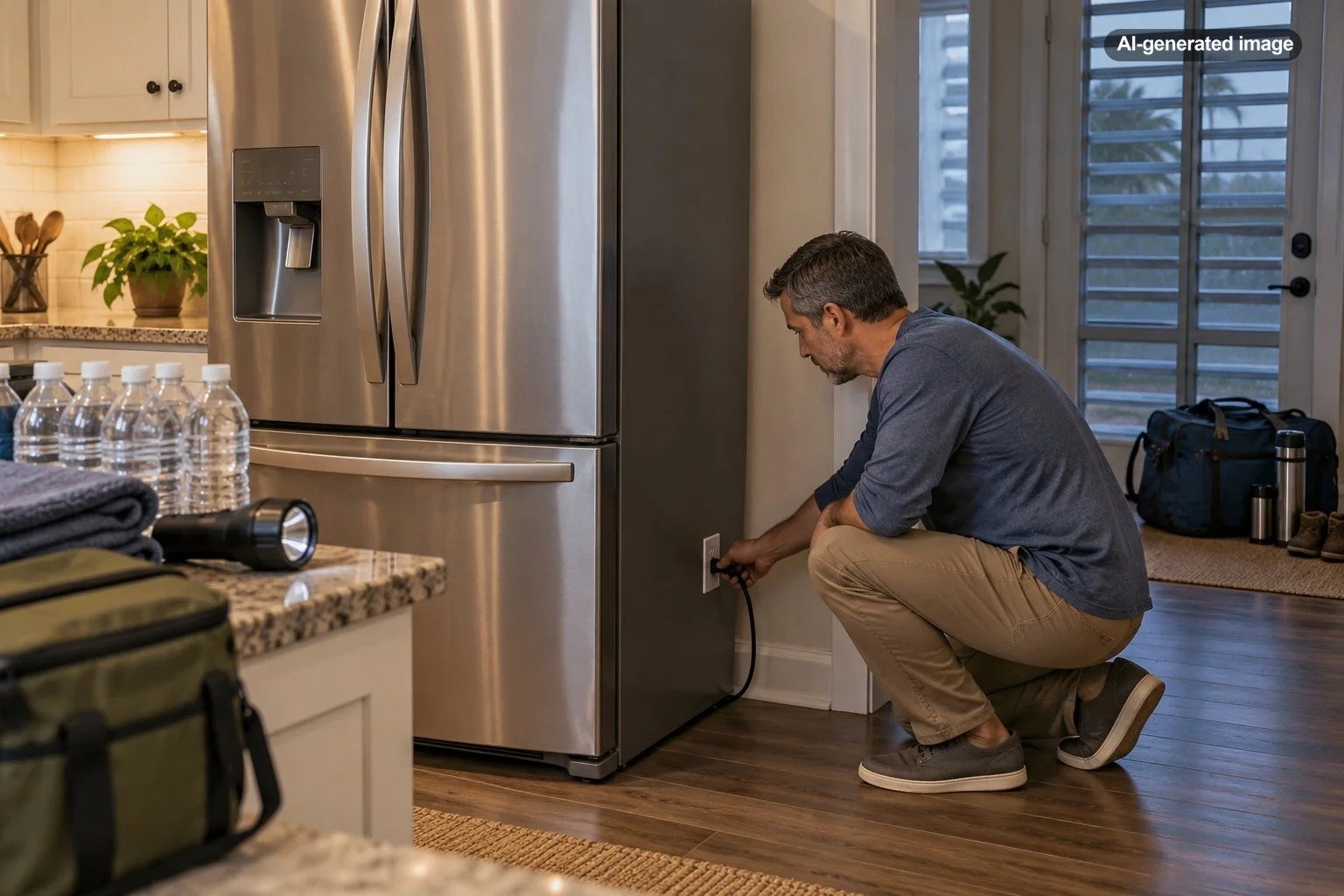
If the refrigerator will be empty and disconnected for the evacuation, prepare it as you would for any extended shutdown. Remove perishable food and ice, clean up spills, wipe the interior, and give damp surfaces time to dry. Follow the appliance manufacturer’s instructions for extended shutdowns, particularly for models with water dispensers, ice makers, or unusual plumbing arrangements.
Before you leave
- Remove or relocate food you do not intend to leave behind.
- Check local evacuation instructions for guidance about electricity, water, and other utilities.
- If you are unplugging the refrigerator, do so only while the area and your hands are dry and the outlet is safely accessible.
- Clean and dry the appliance if it will sit unused.
- Do not perform electrical work or approach outlets, cords, or appliances exposed to water.
Do not improvise with extension cords when reconnecting a refrigerator. The U.S. Fire Administration advises plugging major appliances such as refrigerators directly into wall outlets rather than extension cords.
Flood risk changes the answer
A refrigerator in a house exposed to storm surge or flooding presents a different problem from an ordinary power outage. FEMA guidance states that if water has been present around electrical circuits or equipment, power should be turned off at the main breaker or fuse panel when it is safe to do so, and electrical equipment should be inspected before power is restored.
This is not a situation for walking through water to reach an appliance plug or electrical panel. If flooding has already begun, leave electrical equipment alone and follow emergency instructions. Your evacuation takes priority over saving food or an appliance.
The FDA also advises discarding refrigerators that have been submerged in floodwater. Even when the exterior appears intact, flood exposure can affect parts of the appliance that are difficult to clean or evaluate safely.
What to check when you return
If the refrigerator remained plugged in, do not assume the food stayed safe simply because the power is on when you arrive home. The electricity may have been interrupted and restored while you were away.
An appliance thermometer provides useful evidence. FDA guidance says refrigerated food should generally be discarded when perishable items have been above 40 F for four hours or more. For frozen food, items that still contain ice crystals or are 40 F or below may generally be refrozen or cooked. Do not rely on smell or appearance alone to determine whether food is safe.
If you return to visible flood damage, standing water, a wet electrical panel, damaged wiring, or a refrigerator that has shifted or been submerged, treat the problem as an electrical and flood-recovery issue rather than an ordinary appliance restart.
The best refrigerator plan is the one that protects people first, accounts honestly for how long food can stay cold, and does not create an unnecessary electrical risk.
So, should you unplug it?
Unplug the refrigerator when it fits your evacuation plan, not as an automatic hurricane ritual. If you are emptying it for a long absence, local authorities have instructed residents to disconnect utilities, or the home is being prepared for an extended shutdown, unplugging may be appropriate. If the refrigerator or freezer remains stocked and power is still available, leaving it operating can extend the amount of time the food stays cold.
Above all, follow local evacuation and utility instructions. Do not delay leaving in order to manage appliances, and never enter water or remain in an unsafe structure to unplug a refrigerator.
FAQ
Should I turn off the main breaker before evacuating?
Do not treat shutting off the main breaker as a universal hurricane rule. Follow instructions from local emergency officials and your utility. If flooding has affected electrical equipment, avoid contact with wet electrical systems and have them evaluated before power is restored.
Should I empty my refrigerator before a hurricane?
For a short event, that may not be necessary. For a prolonged evacuation or an outage expected to last well beyond normal refrigerated-food safety limits, removing highly perishable food can reduce the mess and uncertainty you face when returning.
How long will food stay cold if the power goes out?
The FDA says an unopened refrigerator generally keeps food cold for about four hours. A full freezer can hold temperature for approximately 48 hours, while a half-full freezer lasts about 24 hours if the door remains closed.
Can I plug the refrigerator back in as soon as I return?
If the home stayed dry and the electrical system and appliance appear undamaged, follow the refrigerator manufacturer’s normal operating instructions. If there was flooding, water near electrical components, a damaged cord, or other storm damage, do not reconnect the appliance until the relevant equipment has been evaluated.