How Do You Remove Rust Stains From a Paver Patio?
Rust stains on a paver patio are usually removable, but the safest method depends on the paver material, the source of the rust, and how long the stain has been sitting. For most concrete pavers, the practical approach is to remove the rusting object, rinse away loose debris, test a cleaner made specifically for rust on masonry or pavers in an inconspicuous spot, and then treat the stain according to the cleaner’s directions.
What you should not do is assume that stronger means better. Aggressive acids, harsh scrubbing, and careless pressure washing can leave a cleaned spot that looks more noticeable than the original stain. A controlled, stain-specific treatment is usually the better first move.
First, figure out what caused the rust stain
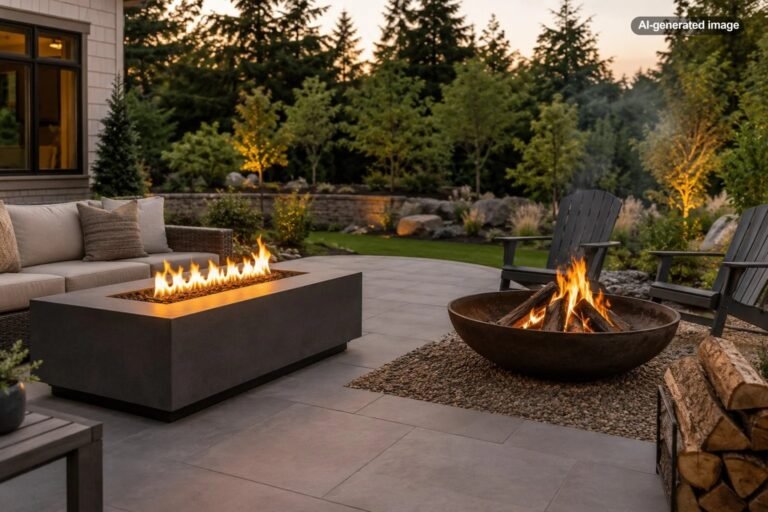
Rust on a patio is often less mysterious than it appears. Water can carry iron oxide from a rusting metal object onto porous paving, where the orange or brown discoloration settles into the surface. Common culprits include metal chair legs, fire pit bases, planters with metal components, umbrella stands, screws, nails, tools, and decorative objects.
Rust can also appear in dots or streaks rather than a neat ring. Small metal fragments left by equipment can oxidize, and some lawn or garden products containing iron can create scattered staining when granules land on damp paving. Identifying the source matters because cleaning the patio without correcting the cause simply sets up another round of stains.
Make sure you know what kind of paver you have
Concrete pavers, clay brick, and natural stone do not necessarily tolerate the same cleaning chemistry. A product intended for concrete paving may not be appropriate for limestone, marble, travertine, or another acid-sensitive stone.
If you know the manufacturer or product line, its care instructions should take priority. If you do not, treat the surface conservatively. Testing in a hidden location is especially important on colored, textured, coated, or sealed pavers because even a cleaner that removes rust successfully can alter sheen or color if it reacts with the finish.
Sealed paving deserves extra attention. A rust treatment may affect an aftermarket sealer even when the underlying paver remains sound. The result can be a dull patch or a difference in gloss that becomes visible after the stain is gone.
How to remove the rust step by step
What to do
- Move the rusting furniture, planter, tool, or other source away from the stained area.
- Sweep or rinse away loose dirt so the treatment contacts the stain rather than a layer of debris.
- Confirm that the cleaner is intended for your type of paver or masonry surface.
- Test the cleaner in a small, inconspicuous area and allow the test spot to dry so you can judge color and finish changes.
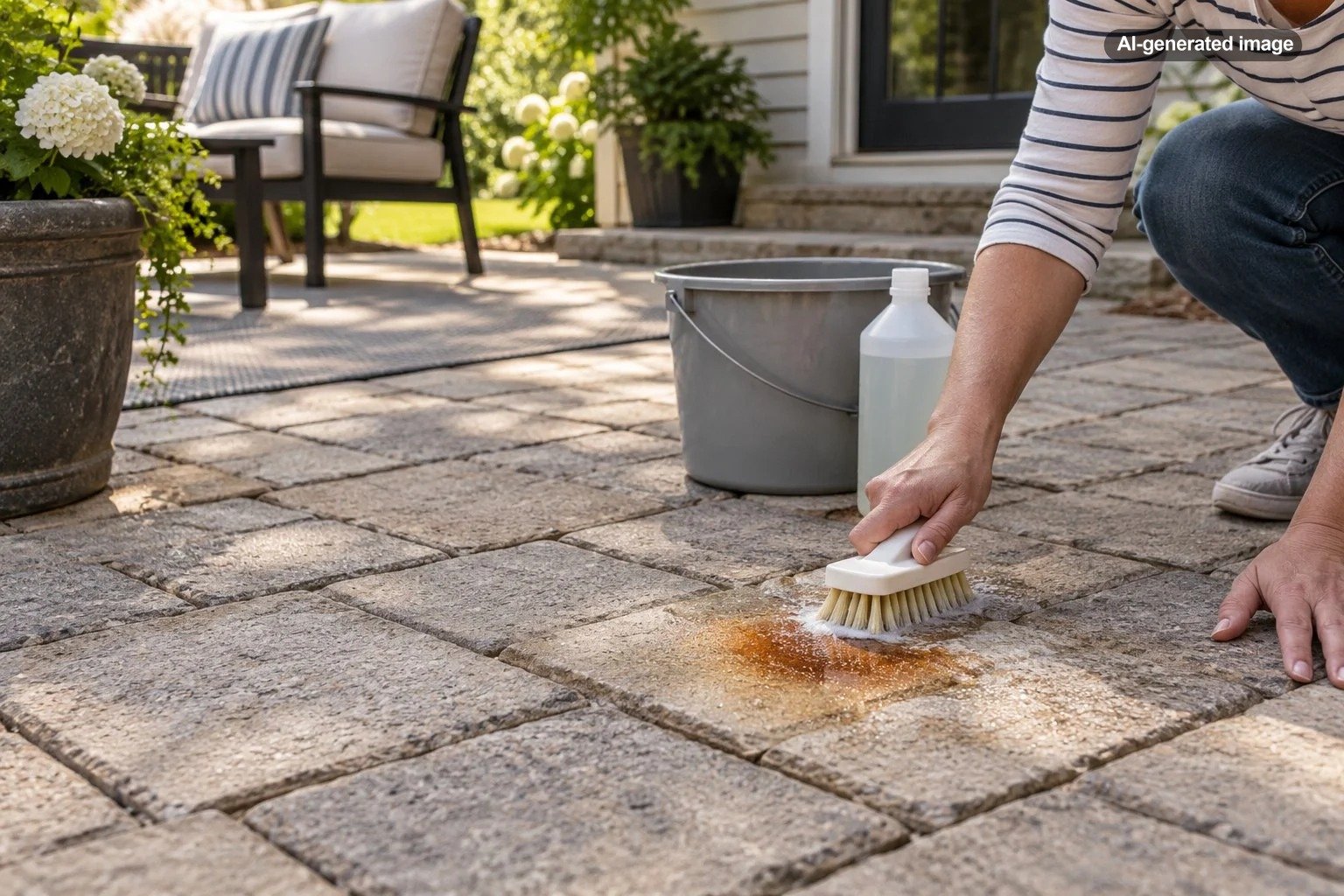
- Apply the rust treatment exactly as directed, including any instructions for wetting the surface, dwell time, agitation, protective equipment, and rinsing.
- Rinse the treated area thoroughly and let it dry before deciding whether another application is needed.
The drying step is more useful than it sounds. Wet pavers often appear darker, which can disguise both a remaining rust stain and a change caused by the cleaner. Evaluating the surface after it dries gives you a much better idea of whether to stop or repeat the process.
Why a dedicated rust remover usually makes more sense
Rust is chemically different from ordinary patio dirt, algae, grease, or leaf residue. That is why an all-purpose surface cleaner may leave an orange stain behind even after the surrounding paver looks noticeably cleaner.
Paver manufacturers and hardscape-care companies offer cleaners formulated specifically for iron and rust staining. These products are intended to dissolve or loosen the mineral discoloration rather than merely scrub the visible surface. Some modern paver rust cleaners are specifically formulated without muriatic acid, which is useful because highly aggressive acid treatments can damage masonry surfaces or create uneven appearance when misused.
This does not mean every rust remover is harmless. Follow the label, protect nearby materials and plants as directed, and do not leave a chemical treatment sitting longer simply because the stain is stubborn. Multiple careful treatments are preferable to improvising a much stronger mixture.
The goal is not merely to make the orange color disappear; it is to remove the stain without creating a new blemish in its place.
Should you scrub or pressure wash the stain?
Light agitation with a suitable brush may be part of the directions for some cleaners, but brute-force scrubbing is rarely the smartest starting point. Abrasive tools can change the texture of a paver, particularly on a finished or decorative surface.
Pressure washing also requires restraint. A pressure washer can remove surface dirt, but rust is not simply loose grime. Excessive pressure can disturb joint sand, mark the paver surface, or clean one small area so aggressively that it contrasts with the rest of the patio. If pressure washing is appropriate for the paving system, use it as part of an overall maintenance method rather than as an attempt to blast a rust stain away at point-blank range.
What about vinegar, bleach, or household acids?
Household remedies are tempting because the stain seems small, but they introduce unnecessary uncertainty. Bleach is not a purpose-built rust treatment, while acidic household products can react differently with concrete, mortar, natural stone, pigments, and sealers.
The bigger concern is not whether a home remedy can lighten rust at all; it is whether it can do so predictably without altering the surrounding paving. A cleaner labeled for rust removal on the specific type of masonry is easier to use responsibly because its directions define where and how it is intended to be applied.
What if the rust stain does not come out completely?
Older rust can penetrate deeply enough that complete removal becomes difficult. Repeating a compatible treatment according to its directions may improve the result, but there is a point where repeated chemical cleaning risks changing the surface more than the residual stain does.
With individual interlocking pavers, replacement can sometimes be an option for a severely stained unit, especially if spare matching pavers are available. That is a different calculation from cleaning an entire poured slab: one badly stained removable paver may be simpler to replace than to subject to increasingly aggressive treatments.
Color matching should still be considered. A brand-new replacement can initially look different from weathered surrounding pavers, even when it is nominally the same color and style.
How to keep rust stains from coming back
Prevention is mostly about separating rust-prone metal from wet paving. Inspect the bottoms of outdoor furniture, planters, fire features, decorative pieces, and umbrella bases. If metal feet are corroding, address the corrosion or replace the affected component rather than repeatedly cleaning the patio beneath it.
- Do not leave loose nails, screws, tools, or metal hardware on the patio.
- Check metal furniture feet periodically, particularly where water collects after rain.
- Use appropriate nonstaining protective feet or barriers where compatible with the furniture and paving.
- Clean up iron-containing lawn or garden products promptly if they spill onto the patio.
- Correct drainage or irrigation patterns that repeatedly wash rusty runoff across the same pavers.
If you move an outdoor object and discover a small orange ring, dealing with it promptly is usually easier than waiting until months of moisture have deepened the discoloration.
Frequently asked questions
Can rust permanently stain patio pavers?
It can. Fresh surface staining is generally easier to treat, while older or deeply embedded rust can be much more stubborn. The porosity, color, finish, and material of the paver also influence the final result.
Will a rust remover discolor my pavers?
A compatible product used correctly may remove rust without noticeable discoloration, but no cleaner should be assumed harmless on every paver or sealer. Always follow the manufacturer’s directions and test first.
Can I clean just the stained paver?
Yes, but spot cleaning can occasionally make one area look different because the treated paver becomes cleaner than its neighbors. After the rust is removed, a broader routine cleaning may help create a more uniform appearance if the rest of the patio is heavily weathered or dirty.
Should I seal the patio after removing rust?
Rust removal does not automatically mean the patio needs sealing. Whether sealing is appropriate depends on the paver, existing finish, installation, and the sealer manufacturer’s requirements. If the patio was previously sealed and the cleaner affected that coating, you may need to evaluate the finish after the area is fully clean and dry.
Rust stains are annoying, but they usually call for patience rather than force. Identify the source, match the cleaner to the paving material, test before treating a visible area, and give the surface time to dry before deciding whether it needs another pass. That measured approach gives you the best chance of removing the rust while keeping the patio itself looking consistent.