Why Does My Sliding Closet Door Rub Against the Track?
A sliding closet door usually rubs against the track because the door is no longer sitting squarely in its hardware. The most common causes are a roller that has shifted out of adjustment, debris in the track, a loose or misplaced floor guide, worn rollers, or a track that has become slightly bent. In many cases, the door itself is perfectly usable and the problem can be narrowed down with a few careful observations.
The location of the rubbing is the best clue. A scrape at the top points toward rollers or the upper track, while rubbing near the floor often involves the bottom guide, door alignment, or a panel that is hanging too low.
Why sliding closet doors start rubbing
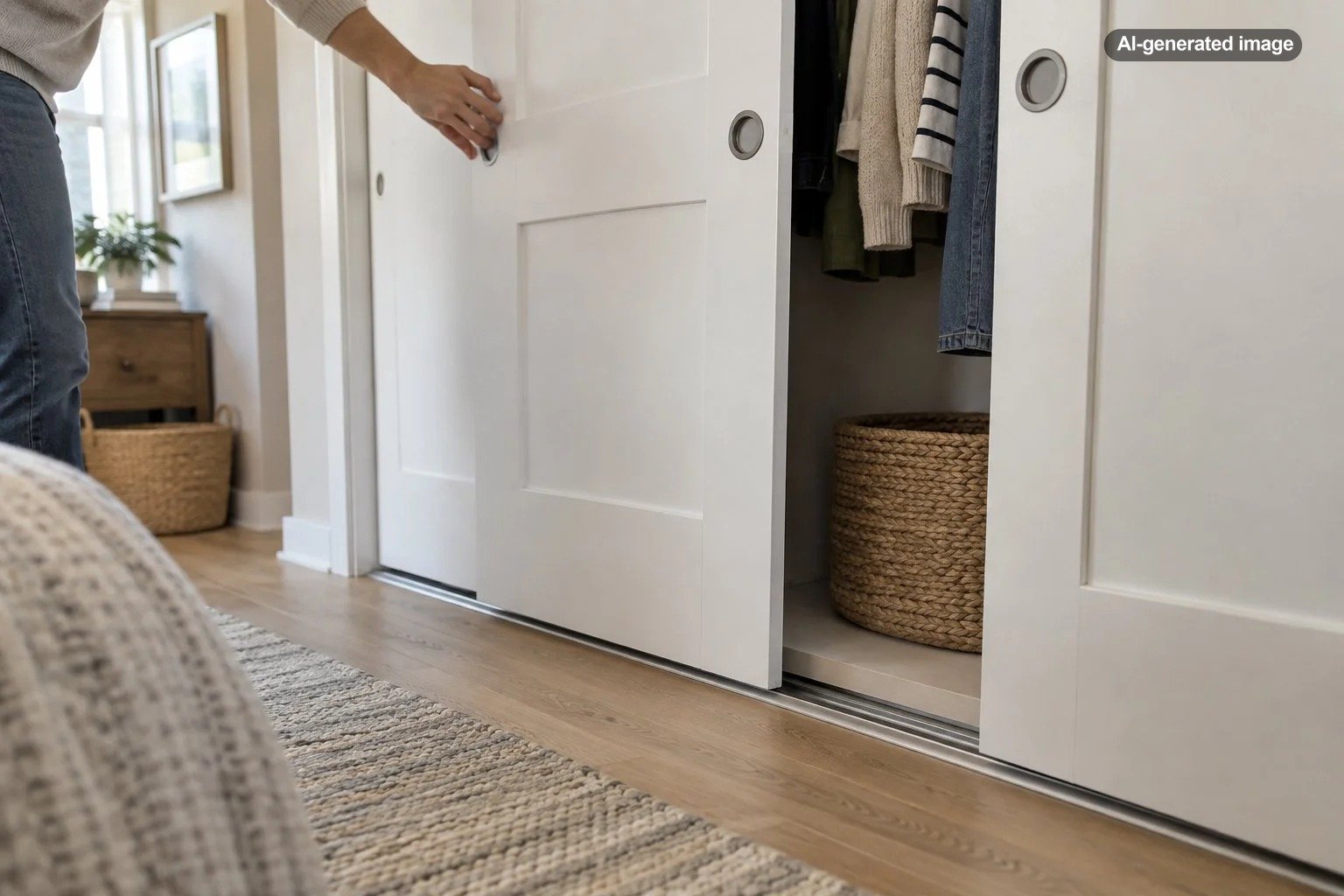
Most bypass closet doors depend on several pieces working together: an upper track, rollers or hangers, overlapping door panels, and a lower guide that keeps the doors from swinging sideways. When one part moves even slightly out of position, clearances that were once adequate can disappear.
That does not necessarily mean the track has failed. Doors can settle after years of use, screws can loosen, rollers can wear unevenly, and guides can shift when they are bumped by shoes, storage boxes, vacuum cleaners, or other everyday traffic.
The rollers may need adjustment
On many top-hung sliding closet doors, the rollers determine both the height and the angle of the door panel. If one roller sits higher than the other, the door can hang diagonally. One edge may then scrape the track, floor guide, jamb, or neighboring door.
Stand back and look at the vertical edges of the door. If the gap between the door and the side jamb becomes noticeably wider or narrower from top to bottom, the panel may be out of plumb. Also compare the bottom edge with the floor. An obvious tilt is a strong reason to inspect the roller adjustment before doing anything more drastic.
There may be dirt or a rough spot in the track
Closet tracks collect more debris than they appear to. Dust, carpet fibers, pet hair, grit, bits of drywall, and small objects can interfere with rollers or guides. Even a small obstruction can make a lightweight closet door feel as though something is seriously wrong.
Run the door slowly and notice whether it rubs everywhere or only at one particular point. Resistance in exactly the same location each time often suggests a localized obstruction, damaged track section, or mounting issue rather than a general door-alignment problem.
The track may be bent
A metal track can become distorted if it is struck, stepped on during renovation, overtightened against an uneven surface, or damaged while furniture is being moved. A small inward bend can narrow the path enough for a roller or guide to rub.
Look along the track from a low angle rather than only from above. Reflections and shadows can make a shallow dent easier to spot. Avoid forcing a roller through a visibly damaged section, because that may make the door harder to remove later.
The bottom guide may have shifted
Bypass closet doors commonly use a floor-mounted guide to keep the panels separated and prevent side-to-side swinging. If that guide loosens or rotates slightly, the door can begin dragging against it. A guide set too tightly can also create unnecessary friction.
This is especially worth checking when the door slides smoothly for most of its travel but scrapes near the center of the closet opening, where many floor guides are installed.
How to figure out exactly where the door is rubbing
What to do
- Move the door slowly from fully closed to fully open and listen for the first point of contact.
- Watch the top rollers and the lower guide while someone else moves the door, if practical.
- Check whether the scraping occurs along the entire track or at one specific location.
- Compare the gaps around the door panel to see whether it hangs noticeably crooked.
- Inspect the track for debris, loose fasteners, dents, raised edges, or sections that appear out of line.
- Check whether the two bypass doors rub against each other when they overlap.
If the door moves freely when it is centered in the opening but rubs near one side, pay close attention to the jamb and roller height. If it binds at the same middle point regardless of direction, the track or floor guide deserves closer inspection.
What you can try before replacing the hardware
Start with cleaning because it is the least invasive step. Vacuum loose debris from accessible track surfaces and wipe away compacted dust. Do not coat the entire track with a random household lubricant. Some systems are designed for rollers to move on relatively clean surfaces, and oily products can attract more dirt.
Next, check accessible screws and brackets for looseness. Tighten only enough to secure the component. Overtightening thin metal hardware can deform it or make alignment worse.
If your door hardware includes an obvious roller-height adjustment, small changes may bring the panel back into alignment. Adjust gradually and test the door after each change rather than making a large correction at once. Keep the panel supported while working with hardware that carries its weight.
A sliding door that rubs is often telling you where its alignment changed; the sound is a clue, not just an annoyance.
When two sliding doors rub against each other
Bypass doors need enough separation to move past one another without their faces, handles, brackets, or roller hardware colliding. If the doors have recently been removed and reinstalled, confirm that each panel is in the correct track position. Some roller assemblies have different offsets for the front and rear panels, so hardware that looks nearly identical may not be interchangeable.
Also check whether a knob, pull, mirror trim, decorative molding, or added organizer is reducing the clearance between the panels. A door can be correctly aligned and still rub if something has been added to its surface.
When the door itself may be contributing to the problem
Not every rubbing problem originates in the hardware. Wood and composite doors can change slightly with age, moisture, damage, or repeated impact. A bowed or swollen panel may no longer maintain the clearance it once had.
Look across the face and edges of the door for obvious bowing, delamination, loose trim, or an edge that appears swollen. If the rubbing developed after water exposure or significant humidity, the panel condition deserves attention along with the track.
Carpet replacement can create another deceptively simple problem. A thicker carpet or higher pad may leave less space under the door than the previous flooring did. In that situation, repeatedly adjusting the rollers may not solve the underlying clearance issue.
Signs the rollers or hardware may be worn out
Adjustment can correct positioning, but it cannot restore a cracked wheel, badly worn bearing surface, damaged bracket, or distorted track. Replacement becomes more reasonable when the door repeatedly falls out of alignment, the roller visibly wobbles, the wheel no longer turns freely, or the track has significant permanent damage.
When replacing parts, match the existing system rather than assuming all bypass-door hardware is universal. Door thickness, roller diameter, bracket offset, track profile, panel weight, and guide configuration can all affect compatibility.
What not to do
Avoid forcing a stubborn door back and forth. If a roller is partially out of the track, repeated force can damage the wheel, bracket, or track further. Likewise, do not hammer a metal track while the door is hanging from it.
Do not start trimming the bottom of the door until you know the panel itself is actually too tall. A door that hangs low because of misadjusted rollers may look as though it needs cutting when a hardware correction is all that is required.
Finally, resist replacing the entire closet-door system before identifying the rubbing point. Tracks, guides, and rollers are separate sources of trouble, and a relatively small component may be responsible for the problem.
How to keep the problem from coming back
Keep the track and guide area reasonably clean, and avoid storing objects where they can repeatedly strike the lower guide. If the doors become noticeably harder to move, investigate early instead of compensating by pulling harder.
Periodically look at the gaps around the panels. A door that slowly begins leaning, dragging, or overlapping differently is often giving you advance notice that something has loosened or shifted.
Frequently asked questions
Why does my closet door scrape only at one end?
The panel may be tilted, one roller may be set differently from the other, or the jamb and track may not be perfectly aligned. Compare the vertical gaps at both sides of the door before adjusting anything.
Why does the door make noise even though it still slides?
A roller can continue moving while rubbing against part of the track, or the panel may lightly touch a guide or neighboring door. Continued scraping is worth investigating because friction can gradually wear the contacting surfaces.
Can a bent closet-door track be repaired?
Minor deformation may sometimes be correctable, but severely damaged or sharply creased track is often better replaced. The important question is whether the track can still hold and guide the door reliably without forcing the rollers through a damaged section.
Do sliding closet doors need to be perfectly level?
They need to be aligned closely enough for the rollers, guides, and overlapping panels to operate without binding. The practical goal is smooth travel, appropriate clearances, and a panel that sits properly within the opening.
When should I call someone instead of adjusting it myself?
Get help when the door is unusually heavy, contains a large mirror or glass panel, repeatedly comes off the track, has damaged mounting hardware, or cannot be safely supported during adjustment. Those situations are less forgiving than a simple cleaning or minor alignment check.