How Do You Arrange Furniture in a Living Room With a Large Sectional?
A large sectional should usually act as the anchor of the living room rather than one piece among many. Start by deciding what the sectional needs to face, protect comfortable walking routes around it, and then add only the tables, chairs, lighting, and storage the room can support without feeling crowded.
The most successful arrangement is not necessarily the one that pushes the sectional tightly against a wall. In many rooms, pulling it forward slightly, using its back to define a conversation zone, or allowing one side to float can make the entire floor plan feel more intentional.
Decide what the sectional is supposed to organize
Before moving anything, identify the living room’s main activity. A television-focused family room has different needs from a conversation room, a fireplace-centered space, or an open-plan room that also connects to a dining area.
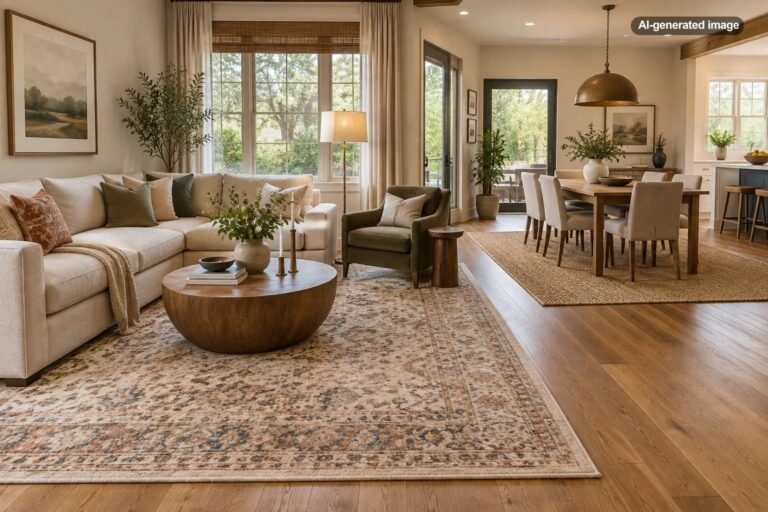
If the television is the priority, orient the longest useful seating positions toward the screen without blocking primary paths. If a fireplace or view is the visual focal point, the sectional can face or partially wrap around it. In an open floor plan, the back of the sectional can work almost like a low wall, separating the living area from dining, kitchen, or circulation space.
This decision matters because large sectionals create strong visual direction. Once the sectional is in the right place, the rest of the furniture should reinforce that arrangement rather than create competing centers of attention.
Protect the pathways before adding more furniture
The quickest way to make a sectional feel too large is to force people to weave around ottomans, tables, chair corners, and the end of the chaise. Walk through the room exactly as you normally would, paying attention to routes between doors, hallways, the kitchen, stairs, and frequently used seating.
Try to keep the busiest routes open rather than sending traffic through the middle of the conversation area. A smaller side table or narrower console is often a better solution than adding another full-size furniture piece simply because a bare section of floor looks unfinished.
Also consider how the sectional itself is entered. If everyone must approach the sofa from one narrow opening between a coffee table and chaise, the layout may feel irritating even if it looks balanced in a photograph.
What to do
- Place the sectional in the position that best supports the room’s main use.
- Walk every normal route through the room before adding tables or chairs.
- Mark awkward pinch points and keep those areas visually quiet.
- Add the coffee table or ottoman next.
- Finish with accent seating, lighting, and decorative pieces only where they improve function.
Choose a coffee table that relates to the whole seating area
A sectional often surrounds the center of the room more than a standard sofa does, so the coffee table needs to feel accessible from several seats. The best shape depends on the sectional’s geometry and the amount of open floor space inside it.
A round or oval table can soften a boxy L-shaped arrangement and make circulation around corners easier. A rectangular table works naturally with a long sectional when the room itself is narrow. A square table can work well inside a generous U-shaped or deep L-shaped seating area where a smaller rectangular piece might look lost.
Scale matters more than following a rigid formula. A tiny table floating in the middle of a massive sectional can make the furniture feel even larger, while an oversized table can leave too little room to move comfortably. The goal is a table that visually belongs to the seating group and remains practical from the seats people actually use.
The sectional should define the room, but it should not consume every useful inch around it.
Use accent chairs to balance, not surround, the sectional
A large sectional already provides substantial seating, so additional chairs should usually solve a specific problem. One chair can create a more conversational angle. Two lighter-scale chairs can balance the visual weight of a long sectional in a larger room. A swivel chair can be especially useful when the living space connects to several focal points.
Avoid automatically placing bulky chairs on every open side. That can create a ring of furniture with no comfortable way in or out. Chairs with visible legs, slimmer arms, or a more open profile often provide contrast next to a deep upholstered sectional.
Let the rug connect the seating group
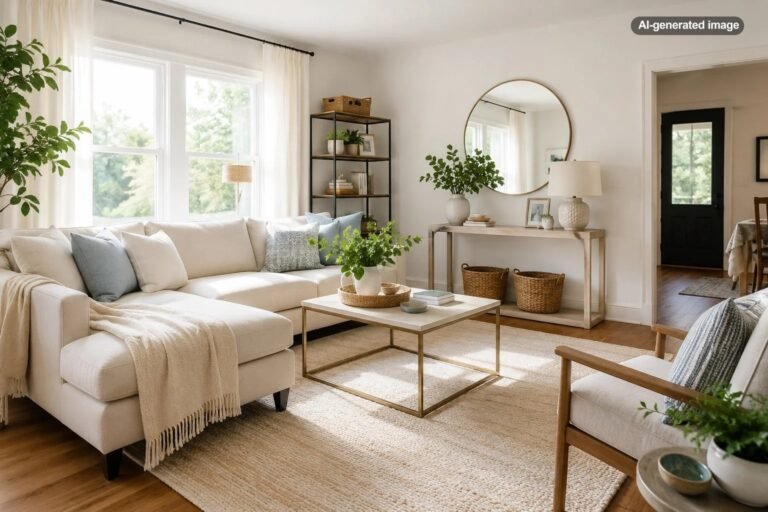
An area rug can make a large sectional feel grounded instead of bulky, but a rug that is visibly undersized may have the opposite effect. Think of the rug as the floor boundary for the conversation area rather than as a decorative island under the coffee table.
In many rooms, having at least the front portion of the sectional visually connected to the rug creates a stronger composition. Accent chairs should also relate clearly to that same rug so the room reads as one seating arrangement instead of several disconnected pieces.
If an appropriately scaled rug would interfere with doors, vents, adjoining zones, or important circulation, reconsider the furniture position rather than forcing the rug to solve the entire floor plan.
Balance the sectional with height and light
Because a sectional creates a broad horizontal mass, the room usually benefits from a few taller elements. A floor lamp, substantial table lamp, artwork, bookshelf, plant, or properly scaled window treatment can provide vertical balance without adding another large footprint.
Lighting is especially useful because it makes different parts of a large sectional functional after dark. A reading lamp near one end and another light source across the room can feel more balanced than relying only on a central ceiling fixture.
Keep decorative surfaces selective. One well-placed side table may be more useful than several small tables tucked into every corner. The goal is to support the sectional, not outline it with accessories.
Know when the sectional should float
Floating a sectional means placing some or all of it away from the walls. This can work particularly well in large rooms and open plans because it creates a defined seating area while preserving the walls for storage, artwork, windows, or circulation.
A floating sectional can also correct an overly spread-out arrangement. When every piece is pushed to the perimeter, people may end up sitting unusually far apart while the center of the room remains empty.
If the back of the sectional is visible from an entry or adjoining room, make that view feel deliberate. A narrow console can sometimes provide a visual transition, but only if there is enough room to use it without creating a cramped passage. Leaving the back of the sectional clean and unobstructed is also perfectly acceptable.
Adjust the layout for a small living room
In a smaller living room, the sectional may need to perform several jobs at once: primary seating, lounging space, and the visual boundary of the room. That does not automatically mean it is too large. One substantial piece can sometimes produce a calmer room than a collection of sofa, loveseat, and multiple chairs.
Reduce the number of secondary furnishings before blaming the sectional. Consider one compact table instead of a large coffee table plus several side tables. Choose a single flexible chair rather than a matching pair. Wall-mounted lighting can free up floor and tabletop space when appropriate.
Most importantly, preserve the most-used walkway. A small living room that is easy to move through generally feels better than one with technically more seating but constant obstacles.
Common sectional arrangement mistakes
- Pushing every piece against a wall: This can leave an awkward empty center and weaken conversation.
- Adding furniture before testing circulation: The room may look complete but become frustrating to use.
- Using a coffee table that is too small for the seating group: It can appear stranded rather than connected to the sectional.
- Overfilling the open side: A sectional does not automatically require two chairs, a bench, and multiple tables opposite it.
- Ignoring the chaise direction: The chaise can either support the room’s flow or become its biggest obstruction.
- Treating the television as the only consideration: Doors, windows, conversation, natural light, and everyday circulation matter too.
Before you decide
- Identify the room’s main focal point and activity.
- Check every doorway and regular walking route.
- Make sure the chaise does not create a bottleneck.
- Choose a central table that suits the sectional’s shape and scale.
- Use accent chairs only when they improve conversation or balance.
- Choose a rug large enough to visually connect the main seating group.
- Add lighting and vertical elements to balance the sectional’s horizontal mass.
FAQ
Should a sectional be against the wall?
No. It can sit against a wall when that makes sense for the room, but it can also float partially or completely. The better choice is the one that supports circulation, focal points, and conversation.
What should go opposite a large sectional?
Depending on the room, the opposite side might hold one or two accent chairs, a fireplace, television, low media cabinet, windows, or simply open space. Do not add furniture merely to make the layout symmetrical.
Can you use a round coffee table with a sectional?
Yes. Round tables can work particularly well with angular sectionals because they soften the geometry and eliminate projecting table corners. The table still needs to be appropriately scaled for the seating area.
How do you make a large sectional look less bulky?
Create visual breathing room around it, use lighter-scale secondary furniture, connect the seating group with an appropriately sized rug, and add vertical elements such as lamps or artwork. Reducing unnecessary furniture is often more effective than adding more decor.
Is a sectional too big if it dominates the living room?
Not necessarily. A sectional can be the dominant piece and still work beautifully. It becomes a practical problem when it blocks essential circulation, interferes with doors or other functions, or leaves too little room for the surfaces and lighting the household actually needs.