
How to Make a Living Room Feel Brighter Without Installing New Fixtures
A living room can feel noticeably brighter without new ceiling lights, electrical work, or a major renovation. The most effective approach is to help the light you already have travel farther: uncover the windows, remove obstacles, reduce heavy visual blocks, introduce reflective surfaces, and spread portable light across several parts of the room.
Brightness is not only about adding more light. It is also about reducing deep shadows and choosing colors, finishes, and furniture arrangements that keep the room from absorbing every available ray.
Let the windows do more work
Before buying anything, stand in the living room during the brightest part of the day and look at what interrupts the natural light. A sofa arm, tall bookcase, large plant, television cabinet, or thick curtain panel may be casting more shade than expected.
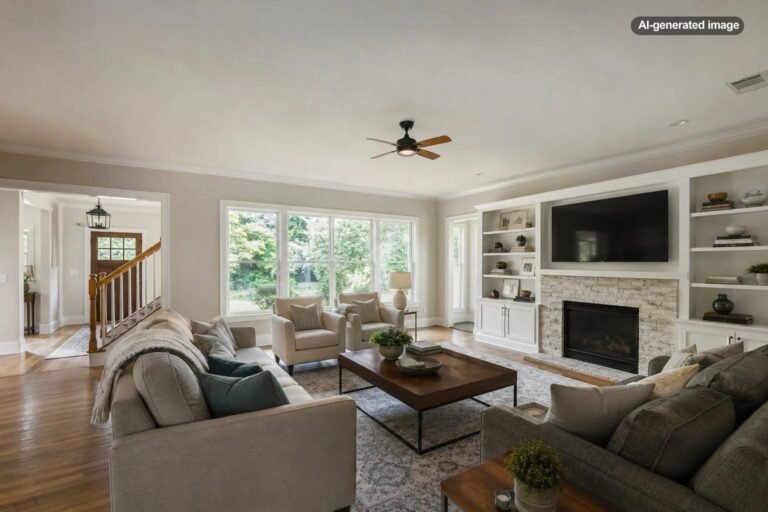
Keep the space directly in front of a window relatively open. Low furniture generally preserves more daylight than tall furniture, especially in smaller rooms. If a window sits behind a sofa, leave enough distance for light to pass above and around the back rather than wedging the upholstery tightly against the sill.
Curtains should rest mostly outside the glass when open. A rod that extends beyond the window frame gives the panels somewhere to go, exposing more of the window. This can also make the opening look wider. Sheer panels soften glare and provide daytime privacy, but several dense layers can make a modest window work much harder than it should.
What to do first
- Clean the inside of the glass and remove dust from screens, blinds, and sills.
- Open curtains fully and raise blinds above the main viewing area.
- Move tall objects away from the sides of the window.
- Trim outdoor foliage only when it can be done safely and is permitted.
- Observe the room again at morning, midday, and late afternoon.
Rearrange furniture to reduce shadow zones
Large, dark furniture can divide a room into separate pools of light and shadow. This is particularly noticeable when the primary window is on only one wall. Rather than lining up every substantial piece between the window and the room, create a path that allows daylight to reach the center.
Try rotating a sofa so its lower profile faces the window, moving a tall cabinet to an interior wall, or replacing a visually heavy coffee table with one that has slender legs and more visible floor underneath. The furniture does not need to be pale, but the room will usually feel brighter when the darkest pieces are distributed rather than clustered in one large mass.
Use mirrors where they can catch real light
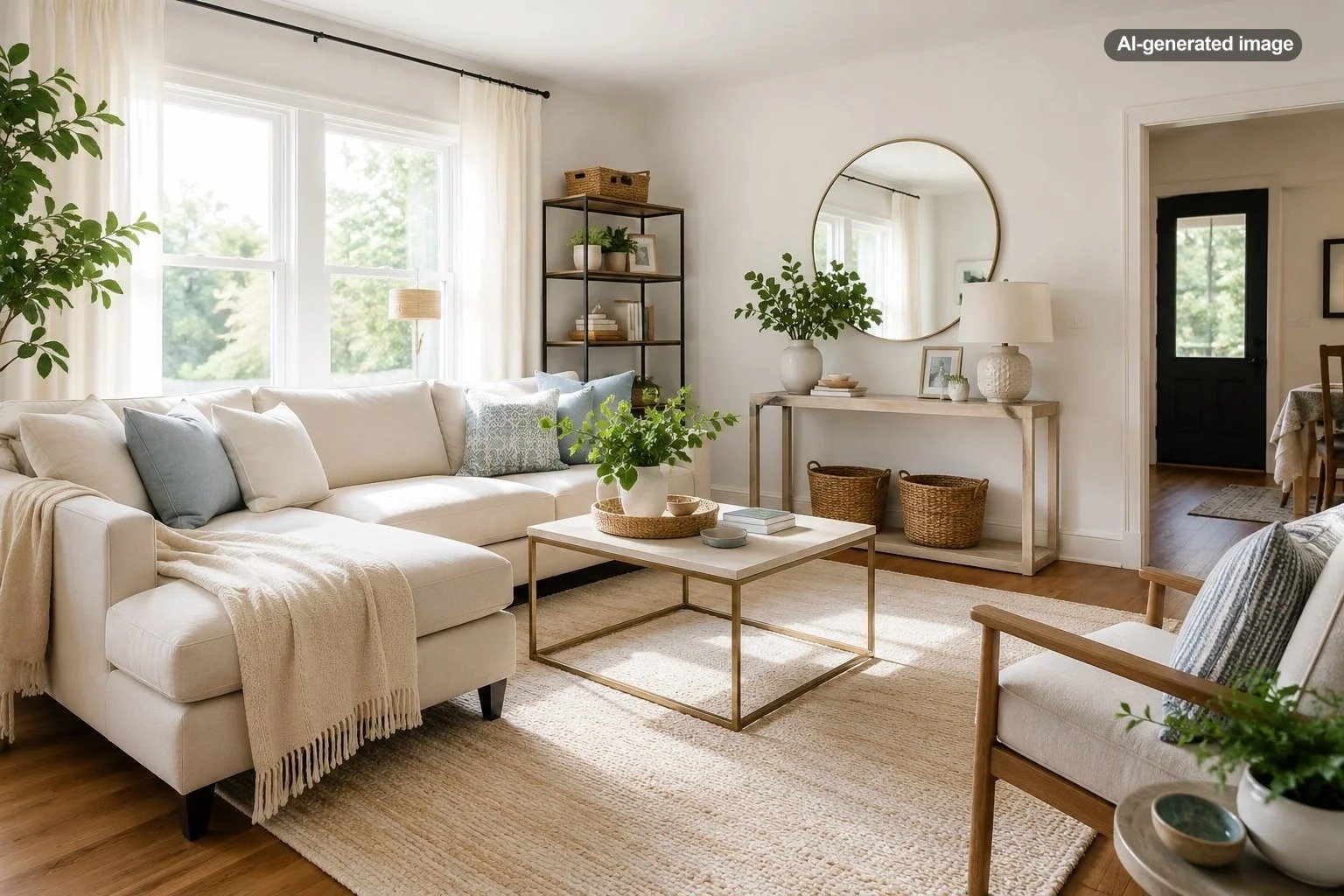
A mirror can make a room appear lighter, but placement matters more than size alone. Positioning one across from or at an angle to a window allows it to reflect daylight into the room. A mirror placed opposite a blank, dim wall may add depth, but it will not create the same luminous effect.
Check the reflection before hanging it. Ideally, the mirror should capture a window, a pale wall, a lamp, artwork, or an attractive open view. Avoid positioning it where it mainly doubles a dark television screen, cluttered shelving, or a narrow hallway.
Reflective effects do not have to come from a giant mirror. Glass-topped tables, metallic frames, glazed ceramics, polished hardware, and lightly reflective trays can add small highlights. The goal is a few controlled glints, not a room filled with shiny surfaces.
Lighten the largest visual surfaces
Walls, floors, curtains, sofas, and rugs occupy far more visual space than small accessories. Changing even one of these large surfaces can make a bigger difference than adding a collection of pale pillows.
If painting is practical, choose a light color with an undertone that suits the room’s daylight. North-facing rooms often make cool whites and grays look flatter or bluer, while warm whites, pale putty shades, and gentle creams can feel more welcoming. Rooms with strong warm afternoon light may tolerate cooler neutrals more easily. Test a generous sample on more than one wall and observe it throughout the day.
Light Reflectance Value, often abbreviated as LRV, indicates how much visible light a paint color reflects. A higher number generally means a more reflective color, but undertone, sheen, furnishings, and exposure still affect the result. Bright white is not automatically the best choice if it turns stark or gray under the room’s actual light.
Renters or homeowners who do not want to paint can work with a pale area rug, lighter curtain panels, a washable sofa cover, or a substantial piece of light-toned artwork. One large adjustment usually looks calmer and more intentional than dozens of tiny white objects scattered around the room.
Replace heavy textiles selectively
Dense velvet drapes, deep-colored rugs, thick throws, and large dark cushions can make a room feel cozy, but using all of them together may absorb light. There is no need to remove every rich textile. Instead, decide which pieces provide texture or character and which are simply adding visual weight.
A lighter rug can open the center of the room, while pale curtain panels can brighten the perimeter. Textiles with subtle variation are often more forgiving than solid white. Oatmeal, warm gray, sand, faded blue, and softly patterned fabrics can reflect light without making a busy household feel like it must protect a showroom.
Advantages
- Lighter textiles can change the room without construction.
- Many options are renter-friendly and reversible.
- Texture can preserve warmth while the palette becomes brighter.
Tradeoffs
- Very pale fabrics may show spills, pet hair, or tracked-in dirt.
- Thin curtains may not provide enough nighttime privacy.
- Removing too many dark elements can make the room feel flat.
Improve the lamps and bulbs you already use
A room with one bright lamp can still feel dim because the light falls in only one area. Instead of pushing a single bulb to uncomfortable intensity, spread portable light across multiple heights. A floor lamp beside a sofa, a table lamp near a reading chair, and a small lamp on a console can soften the contrast between the brightest and darkest parts of the room.
Check the maximum bulb rating and other instructions printed on each lamp before changing bulbs. Compare lumens when evaluating brightness rather than relying only on wattage. Also pay attention to color temperature. Warm white light often feels comfortable in living rooms, while excessively cool light can appear clinical, especially beside warm wood, cream upholstery, or traditional decor.
Matching every bulb is not mandatory, but lamps that are visible at the same time should feel reasonably coordinated. A very amber lamp next to a stark blue-white lamp can make the room look uneven even when both are bright.
A bright room is usually created by balanced light, not by one punishingly bright source.
Reduce visual clutter around the darkest areas
Clutter does not physically eliminate much light, but it creates extra edges, shadows, and dark pockets that make a room feel busier and more enclosed. Start with horizontal surfaces near windows and lamps. A crowded sill blocks daylight, while an overloaded side table can prevent a lamp from spreading light across the wall and floor.
On open shelves, leave some breathing room around books and objects. Mix vertical books with a few horizontal stacks, and avoid filling every opening with dark storage bins. Closed storage may make the room feel calmer, but a full wall of deep cabinetry can still look heavy. Balance it with lighter objects, exposed wall space, or integrated portable lighting that does not require permanent installation.
Choose a few bright accents instead of whitening everything
A room does not need to become entirely white or beige to feel brighter. Contrast gives pale areas definition. Keep the walnut table, navy chair, black frames, or dark green sofa if those pieces anchor the design. The key is to surround them with enough midtone and light surfaces that they read as deliberate accents rather than a continuous shadow.
Colors that feel luminous often include soft yellow, warm ivory, muted aqua, pale sky blue, blush, and fresh botanical green. Use them where daylight can reach them: on artwork, pillows, ceramics, flowers, or a throw placed near the window. Matte black and other dark accents can remain, but repeating them sparingly around the room usually feels more balanced than concentrating them in one corner.
Before you decide
- Identify which window provides the strongest daylight.
- Move obstacles before purchasing decor.
- Choose one large surface to lighten first.
- Place mirrors according to what they will reflect.
- Spread lamps across different areas and heights.
- Keep enough dark contrast to give the room structure.
What commonly goes wrong
The most common mistake is treating brightness as a shopping problem before considering layout. New pillows and decorative objects cannot compensate for curtains covering half the window or a bookcase blocking the room’s main source of daylight.
Another mistake is choosing the coolest, whitest bulb available and assuming it will resemble natural daylight. Brightness, color temperature, shade material, lamp position, and the surrounding colors all influence how pleasant the result feels.
Finally, avoid adding mirrors without checking their reflected view. A poorly placed mirror can amplify visual clutter or glare instead of making the living room feel open.
Frequently asked questions
What color makes a dark living room look brighter?
Warm whites, pale neutrals, soft creams, and light colors with a relatively high light reflectance value are reliable starting points. The best choice depends on the direction of the windows, nearby finishes, and how the sample changes throughout the day.
Should a mirror face the window?
It can. A mirror directly across from a window reflects the view and available daylight, while one placed on an adjacent wall may redirect light deeper into the room with less glare. Test the reflection before committing to the location.
Can dark furniture stay in a bright living room?
Yes. Dark furniture can provide contrast and make a room feel grounded. Distribute darker pieces, expose some floor around them, and balance them with lighter walls, textiles, or nearby surfaces.
Do sheer curtains make a room brighter?
Sheers can diffuse sunlight and maintain some daytime privacy, but they still reduce a portion of the incoming light. Choose lightweight panels and open them fully when maximum daylight is more important than privacy.
What is the fastest no-cost change?
Open the window treatments completely, clean the glass, clear the sill, and move tall furniture out of the daylight path. Then reposition existing lamps so they illuminate separate areas rather than competing in one corner.