How Do You Clean Fire Glass Without Scratching It?
You can clean fire glass without scratching it by treating it more like decorative glass than gravel: let the fire feature cool completely, shut off the fuel supply, handle the glass carefully, rinse away loose grit before rubbing, wash it in small batches, rinse thoroughly, and let it dry completely before putting it back. Plain water is enough for light dust, while some fire-glass manufacturers recommend a diluted white-vinegar solution for soot or discoloration.
The most important rule is to avoid creating friction with trapped grit. Scratches are more likely when dusty pieces are aggressively scrubbed, scraped with metal tools, or ground against one another while dry. Gentle rinsing and minimal agitation are usually all that routine maintenance requires.
Start by checking the instructions for your fire glass
Fire glass is not one completely standardized product. It may be crushed, rounded, reflective, color-infused, recycled, or supplied specifically for a particular fire feature. The safest cleaning method therefore begins with the care instructions for the glass and the appliance.
American Fire Glass, for example, instructs users to rinse its fire glass with water to remove unwanted dust and dry it on a towel. Celestial Fire Glass describes a more involved cleaning method using equal parts water and household vinegar for dirty glass. Because manufacturers can differ on cleaning solutions, the directions supplied with your specific media should take priority over a generic household cleaning recipe.
Let the fire feature cool completely
Never begin by reaching into recently used fire glass. Turn the appliance off, shut off the gas supply as directed by the appliance manufacturer, and allow the burner, pan, glass, and surrounding surfaces to cool fully.
Protective gloves are sensible even after the media is cool. American Fire Glass specifically cautions that fire glass can be sharp and recommends gloves and safety glasses while handling it. Pieces that once had smooth edges may also become chipped, so cleaning is a good time to look for obviously damaged fragments.
Remove loose grit before you scrub anything
This is the step that matters most when your goal is preventing scratches. Dust, sand, masonry particles, and other hard debris can act like an abrasive when trapped between glass pieces. Do not start by rubbing a dusty handful of fire glass with a towel.
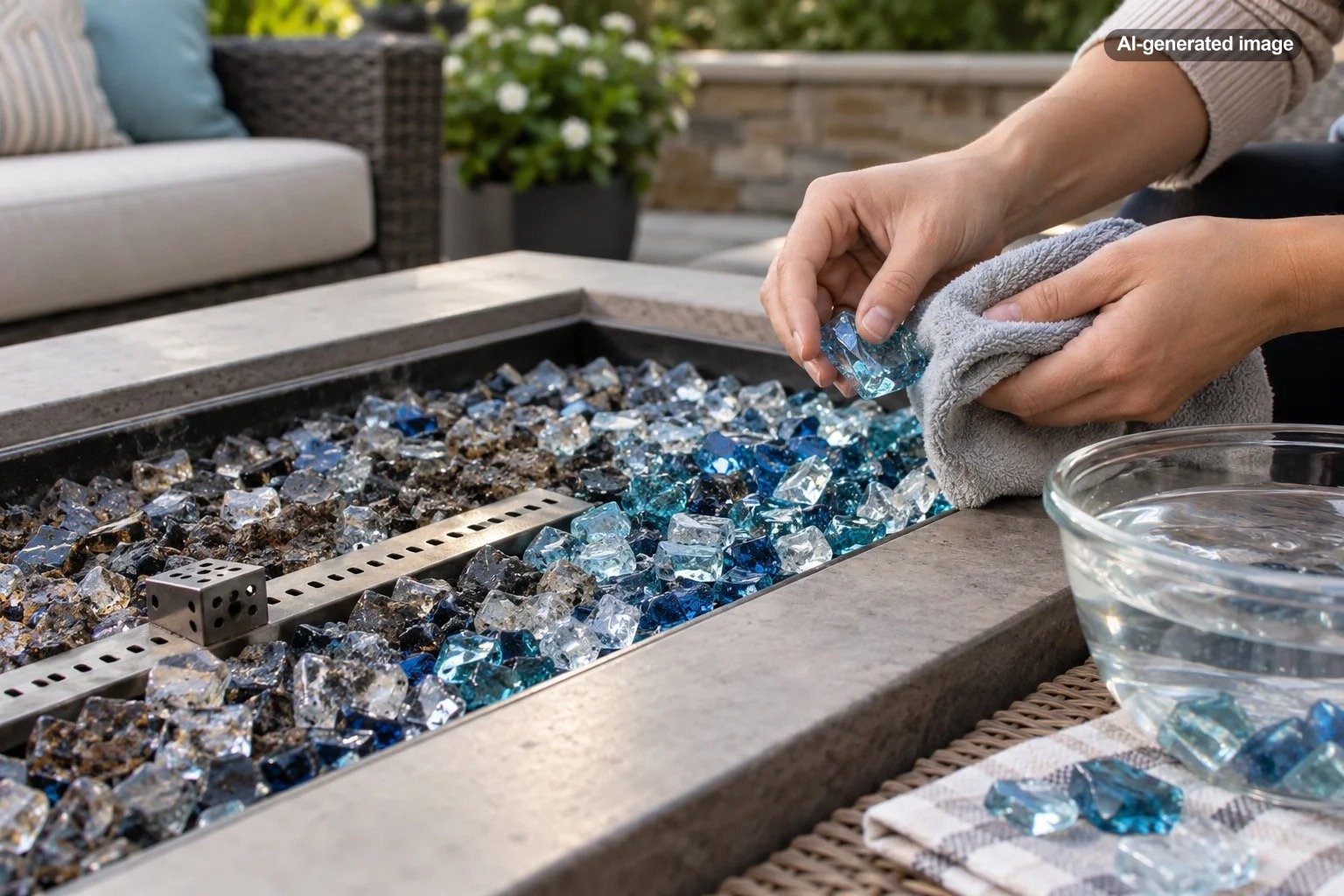
Instead, transfer manageable amounts into a dedicated plastic container, bucket, or suitable strainer and rinse gently with clean water. Work in small batches so you can handle the media without dropping, crushing, or aggressively tumbling it.
What to do
- Make sure the fire feature is off, the fuel supply is secured as directed, and all components are completely cool.
- Put on protective gloves and remove the glass carefully with a plastic scoop or gloved hands.
- Separate out visible debris and discard chipped or questionable pieces rather than returning them to the burner area.
- Rinse each small batch with clean water to flush away loose grit.
- If additional cleaning is needed and your product instructions allow it, soak or gently agitate the glass in the recommended cleaning solution.
- Rinse thoroughly with clean water.
- Spread the glass in a single layer on clean towels or another clean surface and allow it to dry completely before reinstalling it.
Use the gentlest cleaning method that solves the problem
For ordinary dust, start with water. American Fire Glass states that water can be used to remove dust and restore shine, making a simple rinse a sensible first step rather than automatically reaching for a chemical cleaner.
For more stubborn grime or soot, check the specific manufacturer’s care guidance. Celestial Fire Glass recommends a 50/50 mixture of water and household vinegar, followed by a clean-water rinse. If your own product literature specifies another method, follow that instead.
Avoid abrasive powders, steel wool, stiff metal brushes, and rough scouring pads. The goal is to loosen contamination and rinse it away, not polish the glass through force. Vigorous rubbing is particularly unnecessary when the dirt can be softened with water first.
The safest way to preserve the finish is to remove the grit before you create friction.
Do not clean an entire fire pit’s worth of glass at once
A full bucket of wet fire glass becomes heavy and awkward surprisingly quickly. Smaller batches are easier to rinse thoroughly and less likely to be dropped or churned aggressively against one another.
This also gives you a chance to inspect what you remove. Leaves, insects, pebbles, sand, and other debris can collect in an outdoor fire feature. Removing those materials before washing keeps them from circulating through the glass during cleaning.
If you use a strainer, scoop, brush, or container for fire glass, consider keeping it dedicated to household or outdoor maintenance rather than returning it to food preparation. Small fragments can be difficult to see.
Dry the fire glass completely before reinstalling it
After the final rinse, spread the fire glass out rather than leaving it in a deep wet pile. Clean towels, a tarp, or another clean drying surface can work, provided the glass will not pick up fresh grit while it dries.
Celestial Fire Glass advises drying tempered fire glass completely before reuse and notes that moisture remaining in cracked pieces can produce popping when heated. Complete drying also makes it easier to spot cloudy residue that may indicate the glass needs another rinse.
Be especially cautious with reflective or coated fire glass
Reflective fire glass gets much of its appearance from its finished surface. That makes an aggressive trial-and-error approach to cleaning a poor bargain. If you are unsure what type of media you have, use water first and check the packaging, owner’s manual, or manufacturer’s care instructions before applying a cleaner.
This is also a reason to avoid dumping clean glass onto concrete, dragging it across a metal pan, or stirring it forcefully with a metal implement. Cleaning technique is only part of scratch prevention; careful handling while the glass is out of the fire feature matters too.
What if the fire glass still looks cloudy?
Cloudiness can have several causes. A film that disappears after a thorough rinse was probably residue. White spotting may be associated with minerals left by water. Dark deposits near the burner may be soot. A permanently dulled or marked finish, however, may not be something further scrubbing will improve.
Before escalating to stronger cleaners, rinse one or two representative pieces separately and inspect them after they are dry. If the appearance does not change, more abrasion is unlikely to be the elegant solution. Replacing a small amount of permanently damaged media can be preferable to scouring the entire bed.
How often should you clean fire glass?
There is no universal calendar that applies to every installation. Fire glass generally needs little routine care. An uncovered outdoor fire pit beneath trees may collect debris faster than a protected feature, while glass exposed to repeated soot will need attention sooner than clean-burning media.
A practical approach is to clean when dust, debris, water spotting, or combustion residue noticeably changes the appearance. Between deeper cleanings, removing leaves and keeping the fire feature covered when appropriate can reduce the amount of material that eventually has to be washed away.
Frequently asked questions
Can you use vinegar to clean fire glass?
Some manufacturers specifically recommend it. Celestial Fire Glass uses a 50/50 mixture of water and household vinegar in its cleaning instructions. Because care recommendations vary, verify that vinegar is suitable for your particular fire glass before using it.
Can you use dish soap on fire glass?
Manufacturer guidance is not uniform, so do not assume dish soap is appropriate for every product. Use the cleaning method specified for your fire glass. If the directions call for water or a water-and-vinegar mixture, there is no advantage in adding another product.
Can you clean fire glass without removing it?
Light surface dust may sometimes be rinsed or addressed according to the manufacturer’s care instructions, but removal gives you better control when deeper cleaning is needed. It also allows you to inspect the media, remove debris, rinse thoroughly, and dry everything before reassembly.
Should you scrub soot off fire glass?
Begin by soaking or rinsing rather than aggressively scrubbing. If residue remains, follow the media manufacturer’s approved cleaning procedure. Recurrent heavy soot deserves investigation because repeatedly cleaning the symptom does not correct an underlying burner or combustion problem.
When should fire glass be replaced instead of cleaned?
Replace pieces that are visibly chipped, fractured, or otherwise questionable rather than trying to restore them cosmetically. If a reflective or decorative finish remains permanently damaged after gentle cleaning, replacement may also produce a better result than increasingly aggressive scrubbing.