
Why Does My Garbage Disposal Smell Like Rotten Eggs?
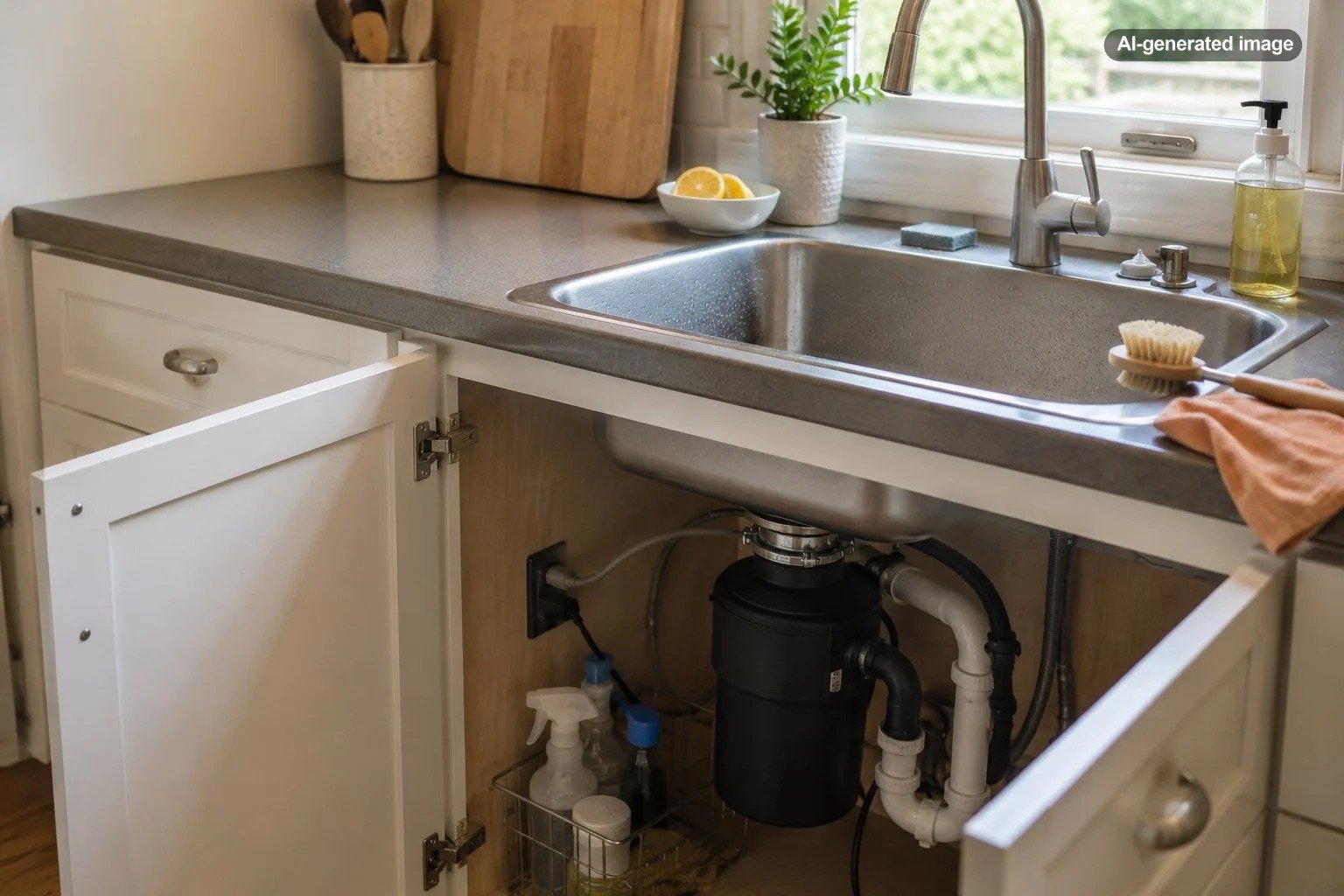
A garbage disposal that smells like rotten eggs usually has decomposing food or greasy residue trapped somewhere you cannot easily see. The most common hiding places are beneath the rubber splash guard, along the grinding chamber walls, inside the drain connection, and in the dishwasher hose. Less commonly, the odor may be coming from the plumbing system rather than the disposal itself.
The useful distinction is whether the smell appears only when the disposal runs, rises from the drain even when the unit is off, or also comes from the faucet water. Each pattern points toward a different cause.
The most likely cause is trapped food residue
A disposal does not contain sharp blades that neatly slice everything into oblivion. Food is broken down inside a grinding chamber, where small particles can cling to damp surfaces. Grease, fibrous vegetables, starchy scraps, eggs, dairy residue, and meat particles can create a particularly stubborn film.
As bacteria break down that organic material, sulfur-like compounds may produce an odor that resembles rotten eggs. The disposal may still drain normally, so the smell can arrive well before an obvious clog.
Do not overlook the underside of the splash guard
The flexible rubber guard at the drain opening catches more residue than most people realize. Its visible surface may look clean while the underside holds a slick layer of food, soap, and grease. When the disposal runs, moving air and water can release that odor into the room.
Before touching the guard or reaching near the opening, switch off power to the disposal at the wall switch and, for additional protection, at the circuit breaker. Never put a hand into the grinding chamber.
What to do
- Turn off electrical power to the disposal.
- Lift each section of the splash guard and scrub its underside with a small brush, warm water, and dish soap.
- Clean around the upper interior wall using a long-handled brush designed for narrow spaces.
- Restore power, run cold water, and operate the disposal briefly to rinse loosened residue.
- Repeat the odor check after the sink has sat unused for an hour or two.
The drainpipe may be the real source
The disposal and sink drain share the same small neighborhood, and smells do not respect property lines. Grease and food sludge can collect in the trap, horizontal drain arm, or connections downstream from the disposal. In that case, cleaning the grinding chamber may improve the odor temporarily without eliminating it.
Notice whether the smell rises from the drain when the disposal has not been used. Slow drainage, gurgling, bubbling in a neighboring basin, or odor from more than one fixture can suggest a drain or venting issue rather than a dirty appliance.
The dishwasher connection can harbor stale debris
Many dishwashers discharge through a hose connected to the disposal. If the hose contains residue, is installed in a way that allows dirty water to flow backward, or has not been flushed by regular dishwasher use, the odor may seem to come directly from the disposal.
Run the dishwasher and observe whether the smell becomes stronger during or shortly after its drain cycle. Water appearing in the sink or backing into the dishwasher also deserves attention. A plumber or appliance technician can inspect the hose routing, air gap, check valve, and drain connection without relying on guesswork.
A dry or disturbed trap can allow sewer odors indoors
The curved section of pipe beneath a sink normally retains water, creating a seal between the room and the drainage system. A frequently used kitchen sink usually keeps this trap full, but leaks, unusual plumbing configurations, venting problems, or pressure changes can compromise the seal.
Sewer gas can include hydrogen sulfide, a colorless gas associated with a rotten-egg odor. People may detect it at low concentrations, but smell alone is not a dependable way to judge exposure. The CDC notes that the sense of smell can become fatigued during continuing or higher exposure.
Check whether the smell comes from the water
If the odor appears when water runs but is not concentrated at the drain, fill a clean glass with cold water and move away from the sink before smelling it. Repeat with hot water. This simple comparison helps separate a drain odor from a water-supply or water-heater issue.
An odor limited to hot water may be associated with conditions inside the water heater, while an odor in both hot and cold water may involve the water source or treatment system. Homes using private wells may require water testing and evaluation by an appropriate water professional. Do not pour chemicals into a water heater or alter its components based only on an odor.
How to clean the disposal without making matters worse
Mechanical scrubbing is usually more useful than masking the odor with perfume. Dish soap and a brush can physically remove the film that feeds odor-producing bacteria. A handful of ice can help move loose material around the chamber, but it does not replace cleaning the splash guard and upper walls.
Citrus peel may leave a temporary fresh scent, yet large quantities can become additional food waste. Use only small pieces if the disposal manufacturer permits them, and avoid treating fragrance as proof that the underlying residue is gone.
Before you clean
- Cut power before cleaning near the opening.
- Use a long-handled brush rather than your hand.
- Run cold water while operating the disposal.
- Do not overload the chamber with ice, peels, or other material.
- Do not mix drain cleaners, bleach, acids, ammonia, or other household chemicals.
Mixing cleaning products can create dangerous gases or violent chemical reactions. If a drain product has already been used, tell any plumber or technician exactly what was poured into the sink and when.
What not to put down a garbage disposal
Odor prevention begins with reducing the material that can cling, swell, tangle, or harden inside the disposal and drain. Place grease, fat, and cooking oil in the trash according to local disposal guidance rather than washing them down the sink.
Large amounts of coffee grounds, flour, pasta, rice, potato peels, onion skins, celery, corn husks, bones, and eggshells can also create trouble depending on the disposal and plumbing. Even items that can technically be ground may accumulate farther down the drain when sent through in quantity.
A disposal is a cleanup aid, not a substitute for the trash or compost bin.
When to call a plumber or appliance professional
Professional evaluation is sensible when the smell persists after a thorough cleaning, returns quickly, appears at multiple drains, or is accompanied by slow drainage, leaks, repeated clogs, gurgling, wastewater backup, or a loose disposal connection.
An appliance professional may be appropriate if the disposal is leaking from its housing, repeatedly trips its reset button, hums without turning, or shows signs of electrical trouble. Turn the unit off and avoid continued operation when there is smoke, sparking, overheating, or a burning odor.
How to keep the odor from returning
After using the disposal, continue running cold water briefly so particles move beyond the immediate drain connection. Feed scraps gradually rather than packing the chamber, and scrape most food into the trash or compost first.
Clean beneath the splash guard regularly, especially after preparing meat, eggs, dairy products, or oily foods. Occasional brushing is less dramatic than a deep odor investigation and considerably more pleasant.
Frequently asked questions
Can baking soda and vinegar fix a rotten-egg smell?
They may loosen light residue or reduce a mild odor, but the bubbling reaction is not a substitute for scrubbing the splash guard and chamber. Never combine them with bleach or commercial drain products.
Why does the disposal smell only when I run it?
Operation moves air and water through the chamber, releasing odor from residue on the splash guard, grinding surfaces, or drain connection. Cleaning those surfaces is the logical first step.
Why does the smell return after cleaning?
The remaining source may be farther down the drain, inside the dishwasher hose, beneath an incompletely cleaned splash guard, or within the water supply. A recurring odor is a clue to widen the inspection rather than simply add more deodorizer.
Is a rotten-egg smell always sewer gas?
No. Decomposing food, sulfur in water, water-heater conditions, sewer gas, and the odorant used in natural gas can all smell similar. Location, timing, drainage behavior, and whether the odor comes from the water help narrow the cause.