How Do You Clean Mildew From Outdoor Cushion Foam?
If outdoor cushion foam has developed mildew, the most important question is not simply what cleaner to use. Foam is porous, so moisture and growth can extend beneath the surface where wiping alone will not solve the problem. For a small, recent problem, you can remove the cover, clean according to the cushion manufacturer’s instructions, gently clean the foam without unnecessarily saturating it, and then dry the foam completely before reassembling the cushion. If growth is widespread, deeply embedded, repeatedly returns, or the foam remains musty after thorough drying, replacement is often the more practical choice.
First, Decide Whether The Foam Is Worth Cleaning
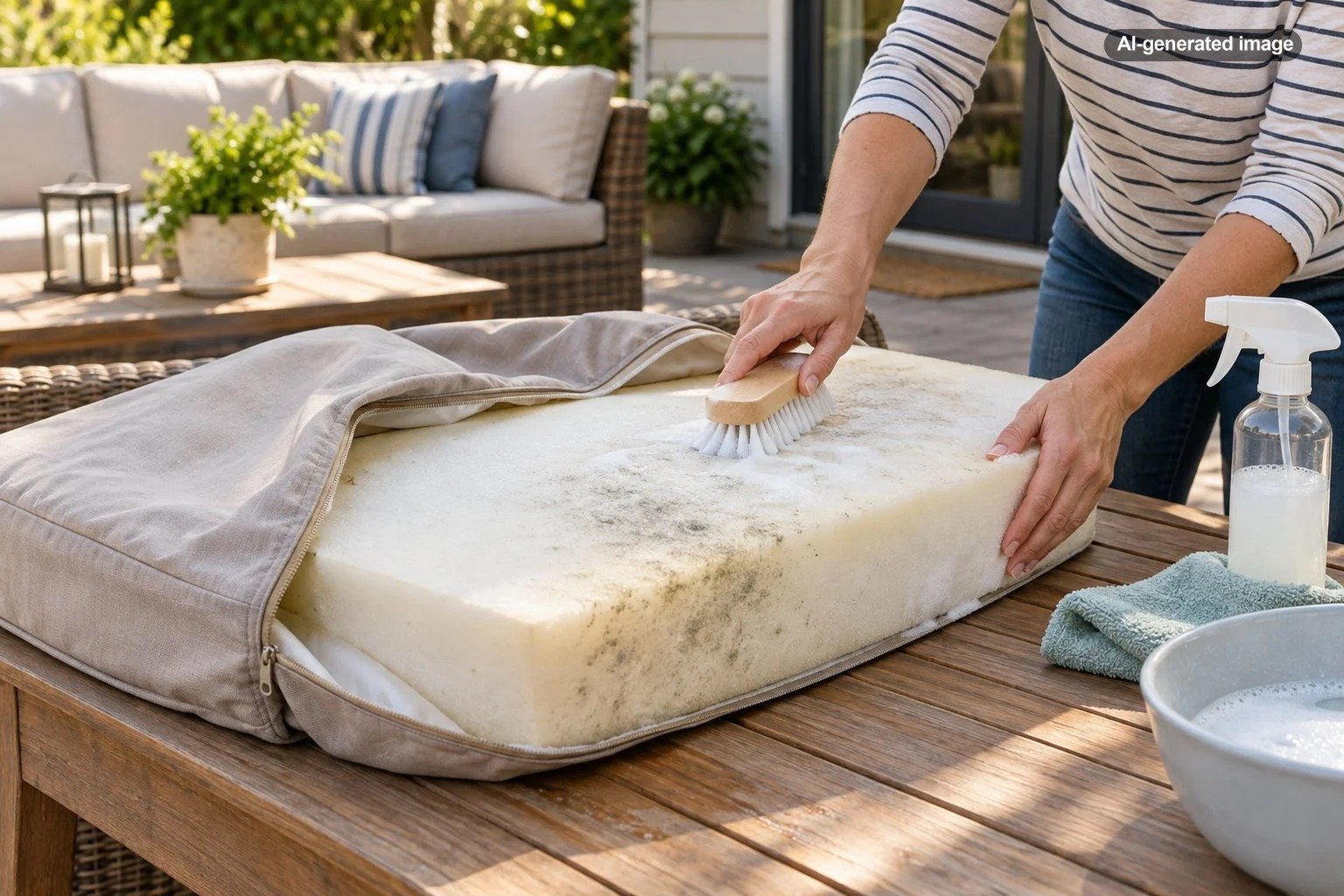
Outdoor cushions can look deceptively simple. The fabric may show only a few dark specks while the foam underneath holds much more moisture. Before reaching for a cleaner, unzip the cushion if it has a removable cover and inspect the foam on several sides.
A small amount of surface spotting after a humid week is a different problem from foam that has stayed wet for days, smells strongly musty throughout, or shows growth across a large portion of its surface. The U.S. Environmental Protection Agency notes that porous materials can be difficult or impossible to clean completely once mold has grown into their spaces and crevices.
Before you decide
- Check whether the cushion cover can be removed without damaging seams or fasteners.
- Look at the foam itself rather than judging the problem only from the fabric.
- Press the foam in several places to see whether moisture remains trapped inside.
- Notice whether the musty odor seems limited to the cover or comes from the foam.
- Read the furniture or cushion care label before applying bleach, peroxide, solvents, or specialty cleaners.
How To Clean A Small Mildew Problem
If the affected area is limited and the foam is otherwise in good condition, start with the least aggressive method that fits the manufacturer’s care instructions. Work outdoors or in a well-ventilated area, keep other people and pets away from the cleaning zone, and avoid shaking or aggressively brushing visibly moldy material where particles can be spread around.
What to do
- Remove the cover if possible. Launder or clean it separately according to its care label. Do not assume the cover and foam can tolerate the same cleaner.
- Inspect the bare foam. If you find widespread growth, heavy deterioration, or contamination extending deeply through the cushion, reconsider whether cleaning is worthwhile.
- Remove loose surface debris carefully. Avoid grinding visible growth deeper into the foam.
- Use a mild cleaning solution permitted by the manufacturer. Apply only enough to clean the affected area rather than soaking the entire cushion unnecessarily.
- Work gently. Compressing and releasing the foam can help move cleaning solution through a limited affected area, but excessive scrubbing may damage the foam structure.
- Remove cleaner residue as appropriate. Follow the care instructions for rinsing. Avoid leaving detergent trapped inside the cushion.
- Dry the foam completely. Stand the cushion or foam insert on an edge where air can reach multiple sides. Rotate it periodically and do not replace the cover while the center is still damp.
The drying stage matters as much as the washing stage. EPA guidance repeatedly emphasizes moisture control because damp porous materials provide conditions where mold can continue growing. A cushion that looks clean but is zipped back into its cover while still wet can soon have the same problem again.
Why More Cleaner Is Not Necessarily Better
There is a temptation to soak outdoor cushion foam with the strongest household product available. That can create a second problem. Foam, adhesives, batting, fabric dyes, coatings, zippers, and thread may respond differently to strong chemicals, and a saturated cushion can take a surprisingly long time to dry internally.
Bleach is especially easy to overgeneralize. Public-health guidance sometimes describes diluted bleach solutions for certain mold-cleanup situations, but that does not mean bleach is appropriate for every cushion material. If the cushion manufacturer does not permit it, use a compatible method instead. Never mix bleach with ammonia or other household cleaners.
When Replacement Makes More Sense
Cleaning is most reasonable when the problem is small, recent, accessible, and followed by complete drying. Replacement becomes more sensible as contamination moves deeper into porous material.
Consider replacing the foam if it remains strongly musty after cleaning and drying, visible growth returns quickly, the foam has been repeatedly soaked, the material is crumbling or permanently deformed, or contamination appears to extend throughout the insert. Foam exposed to sewage, floodwater, or another potentially contaminated water source should not be treated like an ordinary rain-soaked patio cushion.
How To Keep Mildew From Returning
The long-term solution is moisture management. Outdoor cushions routinely encounter rain, dew, humidity, condensation, wet swimsuits, irrigation overspray, and shaded conditions where evaporation is slow. Cleaning the same cushion every few weeks will not help much if it never gets a chance to dry.
After rain, separate cushions from solid furniture surfaces so air can circulate underneath. Stand removable cushions on edge when practical rather than leaving the wet underside pressed against a chair or bench. Keep drainage holes and mesh panels unobstructed, and avoid putting damp cushions directly into a sealed storage container.
Affiliate disclosure: CraneManor.com may earn a commission when you purchase through links on this page. This does not affect the price you pay. Learn more.
If you use a furniture cover, ventilation still matters. A cover can reduce routine exposure to weather and debris, but putting it over already damp furniture can trap moisture. For furniture that fits its dimensions, an outdoor furniture cover can be part of a prevention routine when it is secured properly and used without trapping damp cushions underneath.
The simplest habit is also the most effective: do not store outdoor cushions while they are damp. Give them moving air and enough time for the interior foam to dry, particularly after heavy rain or washing.
Common Mistakes To Avoid
- Cleaning only the fabric cover. A spotless cover can conceal damp or affected foam underneath.
- Soaking foam unnecessarily. More water can lengthen drying time and create conditions for another moisture problem.
- Using an aggressive chemical without checking compatibility. Outdoor fabrics and foams vary considerably.
- Putting the cover back on too early. Trapped interior moisture defeats the purpose of cleaning.
- Sealing damp cushions under a furniture cover. Weather protection works best when the furniture is already dry and air can still move as intended.
- Repeatedly cleaning badly contaminated foam. Porous material with deep, persistent growth may be a replacement problem rather than a cleaning problem.
Frequently Asked Questions
Can You Wash Outdoor Cushion Foam With A Hose?
Some foam inserts may tolerate rinsing, but the correct approach depends on the cushion manufacturer’s care instructions. Thoroughly saturating a thick insert can also make complete drying difficult, so do not assume hosing is the best method simply because the cushion is designed for outdoor use.
Can You Put Damp Foam Back Inside The Cover?
No. Reassembling a cushion while the foam is still damp traps moisture and can encourage another round of odor and microbial growth. Let the insert dry fully first.
What If The Cushion Still Smells Musty After Cleaning?
First make sure the foam is genuinely dry all the way through. Persistent odor after complete drying can indicate that contamination remains within the porous material. At that point, replacing the foam may be more practical than repeatedly wetting and cleaning it.
Does A Furniture Cover Prevent Mildew?
It can reduce direct exposure to rain and debris, but it cannot compensate for cushions that are already wet. Ventilation, drainage, sun or moving air, and dry storage remain important. Never deliberately trap damp cushions beneath a tightly fitted cover.