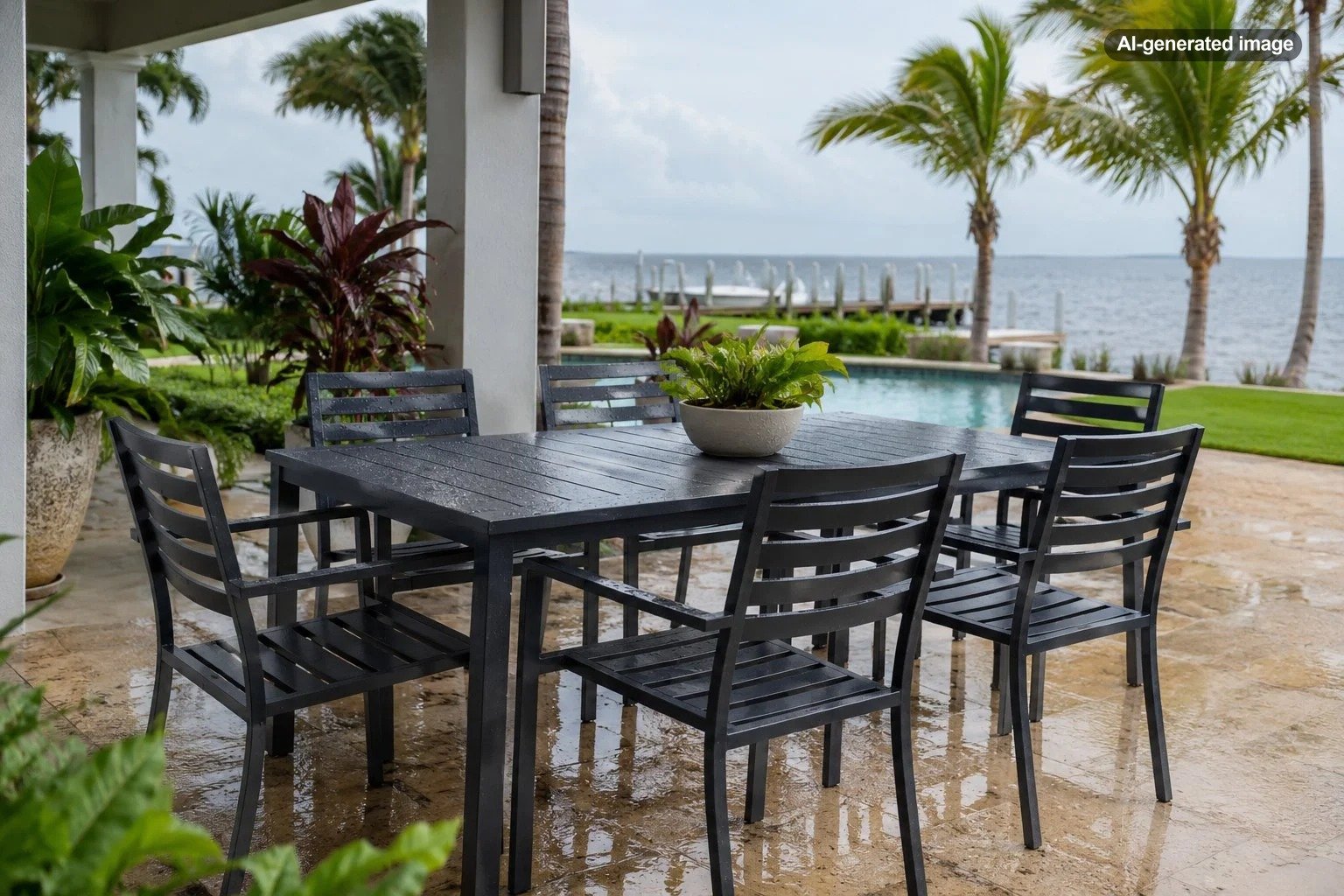
Can Powder-Coated Steel Furniture Stay Outside in Florida?
Yes, powder-coated steel furniture can stay outside in Florida, provided it was made for outdoor use, the finish remains intact, and the furniture receives routine cleaning and inspection. Powder coating gives steel a durable barrier against moisture and weather, but it does not make the metal underneath permanently immune to corrosion.
Florida presents a demanding combination of strong sun, frequent rain, persistent humidity, windblown debris, and, near the coast, airborne salt. A well-made outdoor set can handle those conditions for years. A poorly prepared frame, an indoor-only coating, or one unnoticed chip can tell a much shorter story.
What powder coating does for steel
Powder coating is a factory-applied finish in which dry coating material is deposited on prepared metal and cured. When the substrate has been cleaned and pretreated correctly, the resulting layer can provide a tough, continuous finish that resists ordinary scratches, fading, and corrosion better than many basic liquid-painted finishes. The Powder Coating Institute emphasizes that performance depends on proper pretreatment of the underlying part.
That last point matters. Two chairs described as powder-coated steel may perform quite differently. The outdoor durability of the finished furniture depends on the coating chemistry, metal preparation, coverage at welds and edges, frame construction, and quality control. Powder coating is a process category, not a universal promise of identical weather resistance.
Confirm that the furniture is intended for exterior use. Some powder coatings are formulated specifically for outdoor weather and ultraviolet exposure, while other formulations are intended primarily for interiors. Manufacturer care instructions and stated placement limitations are more useful than the words powder-coated by themselves.
Why Florida is harder on outdoor steel
Humidity alone does not pass through an undamaged coating and immediately rust the frame. Problems usually begin where water and contaminants can reach exposed steel: a chip, scratch, worn foot, thin edge, unsealed opening, imperfect weld, or fastener that uses a different finish.
Florida rain can also collect inside hollow frame members or remain trapped beneath furniture covers. Strong sun heats surfaces and gradually changes the appearance of many finishes. In coastal locations, salt deposited on the furniture attracts moisture and increases the corrosion burden, especially around joints and damaged areas.
| Florida setting | Likely exposure | Practical approach |
|---|---|---|
| Covered inland patio | Humidity, dust, occasional wind-driven rain | Clean periodically and inspect edges, feet, and welds |
| Open inland patio | Direct rain, sun, wet leaves, irrigation spray | Improve drainage, keep furniture clean, and address chips promptly |
| Screened pool area | Humidity, splashes, cleaning chemicals, condensation | Rinse residue, avoid storing damp cushions against frames, and inspect joints |
| Coastal balcony or patio | Salt, humidity, wind-driven rain, intense sun | Rinse more often and follow any coastal maintenance schedule from the maker |
Distance from the water is only part of the decision. A sheltered courtyard several miles inland may be comparatively gentle, while a high-rise balcony with direct exposure to salt-laden wind can be severe. Irrigation overspray, poor drainage, and a cover that holds condensation can also create a harsher microclimate than the address suggests.
How to tell whether a piece is suitable
Before leaving steel furniture outdoors year-round, look beyond color and style. The most useful information is whether the manufacturer identifies the complete product, not merely the coating, as outdoor furniture. Review the care guide for coastal exclusions, storage directions, cleaning methods, and instructions for repairing finish damage.
Before you decide
- Confirm that the furniture is explicitly intended for exterior use.
- Look for even coating coverage around welds, edges, bolt holes, and the underside.
- Check whether hollow legs have intact caps and paths for water to drain.
- Ask what pretreatment or corrosion-protection system lies beneath the visible topcoat.
- Review the manufacturer’s guidance for coastal placement and routine cleaning.
- Make sure replacement glides, caps, and approved touch-up materials are available.
A primer, conversion coating, galvanizing, or electrophoretic coating beneath the powder topcoat may provide additional protection, but terminology varies among manufacturers. Ask for a clear description of the complete finish system rather than assuming every additional layer offers the same performance.
Construction matters as well. Water should not pool in a tabletop rim, collect inside a tube, or sit around a fastener. Plastic glides protect the lower coating from abrasive pavement, but worn or missing glides can expose the steel exactly where water lingers.
A realistic maintenance routine
Start with the furniture maker’s instructions. In general, routine care means removing loose debris and washing the coated metal gently with clean water, a mild neutral cleaner when permitted, and a soft cloth or sponge. Rinse away cleaner residue and allow the frame to dry. Avoid abrasive pads, aggressive polishing compounds, and unapproved solvents that can dull or damage the finish.
Industry cleaning guidance from TIGER Coatings recommends nonabrasive cleaning and notes that powder-coated surfaces in locations with increased salt contamination or near a seacoast require more frequent attention. The correct frequency for furniture still depends on its manufacturer, exposure, and condition.
What to do
- Remove leaves, bird droppings, sunscreen residue, and other deposits before they remain on the finish for long periods.
- Rinse coastal salt and poolside residue with fresh water, paying attention to joints and undersides.
- Wash gently using only products and tools allowed by the manufacturer.
- Inspect welds, feet, seams, hardware, and high-contact edges while cleaning.
- Follow the maker’s repair procedure promptly if the coating has been chipped or penetrated.
- After storms, check for standing water, displaced caps, impact damage, and debris trapped beneath the frame.
There is no responsible universal cleaning calendar for every Florida patio. A covered lanai in central Florida and an oceanfront terrace should not be treated as the same environment. As one manufacturer-specific example, EMU advises quarterly cleaning for certain steel furniture kept near the sea; its published instructions also demonstrate why owners should consult the guidance for their exact product rather than borrowing a schedule from an unrelated brand. See the manufacturer’s steel furniture maintenance example.
What to do about chips and rust
A small surface chip is primarily a maintenance issue when the frame remains solid, stable, and free of spreading corrosion. Do not simply coat over salt, moisture, or loose rust. Clean and repair the area using the furniture manufacturer’s approved system, because incompatible products or poor preparation can trap contamination and create a repair that fails quickly.
Orange staining does not always prove that the main frame has failed. It can originate from an exposed fastener or another nearby metal object and wash across an intact coating. Trace the stain to its source, inspect the underlying finish, and avoid aggressive scraping until you know what is affected.
Should you use a furniture cover?
A cover can reduce sun, leaf litter, and direct rain exposure, but it needs to be breathable, well fitted, and secured against wind. A loose cover can rub against edges, while a sealed cover placed over damp furniture can hold humid air and condensation against the frame.
Let the furniture and cushions dry before covering them. Keep vents open, prevent fabric from resting in standing water, and uncover the set periodically for inspection. During tropical-weather preparations, follow local emergency guidance and secure or move outdoor furniture so it cannot become windblown debris; a cover is not storm protection.
When another material may be the easier choice
Powder-coated steel is appealing when you want slim profiles, substantial weight, crisp color, and a furniture set that does not feel flimsy. It can be an excellent fit for a covered inland patio or for an owner willing to keep up with coastal rinsing and small repairs.
Another material may be more forgiving for an oceanfront property, a frequently vacant home, or a rental where maintenance is inconsistent. Aluminum does not form the same red rust as carbon steel, though its finish and hardware still require care. Certain recycled-plastic and resin furniture can simplify corrosion concerns but may offer a different weight, texture, and visual character. Stainless steel can perform well when the grade, fabrication, and maintenance suit the exposure, but the label stainless does not mean stain-proof in every coastal environment.
The sensible choice is not the material with the grandest durability claim. It is the one whose construction, finish system, maintenance needs, and appearance fit the actual patio and the amount of care the household will realistically provide.
Frequently asked questions
Will powder-coated steel rust in the rain?
It can, but rain is most likely to cause corrosion after water reaches the steel through damaged coating, vulnerable joints, exposed hardware, or poorly protected edges. An intact, outdoor-rated finish substantially reduces exposure.
Can it stay outside all year?
Often yes, if the manufacturer permits year-round outdoor placement. Sheltered storage during extended vacancy or severe weather can reduce wear, but storage directions vary by product.
Is powder-coated steel suitable near a Florida beach?
It can be used near the beach when the product is approved for that exposure and maintained accordingly. Coastal salt raises the maintenance burden, so construction details, finish quality, rinsing, and prompt chip repair become especially important.
Can furniture wax prevent rust?
Some manufacturers permit or recommend particular protective products, while others specify different care. Do not apply automotive wax, oil, or another coating unless the furniture maker says it is compatible with the finish.
What is the clearest answer?
Powder-coated steel furniture can remain outside in Florida, but outdoor rating and routine care matter more than the label alone. Choose a well-constructed product, give coastal pieces extra attention, and treat coating damage before Florida’s climate has an opening to work on the steel beneath.