
Why Does My Sink Smell Bad Only When the Water Runs?
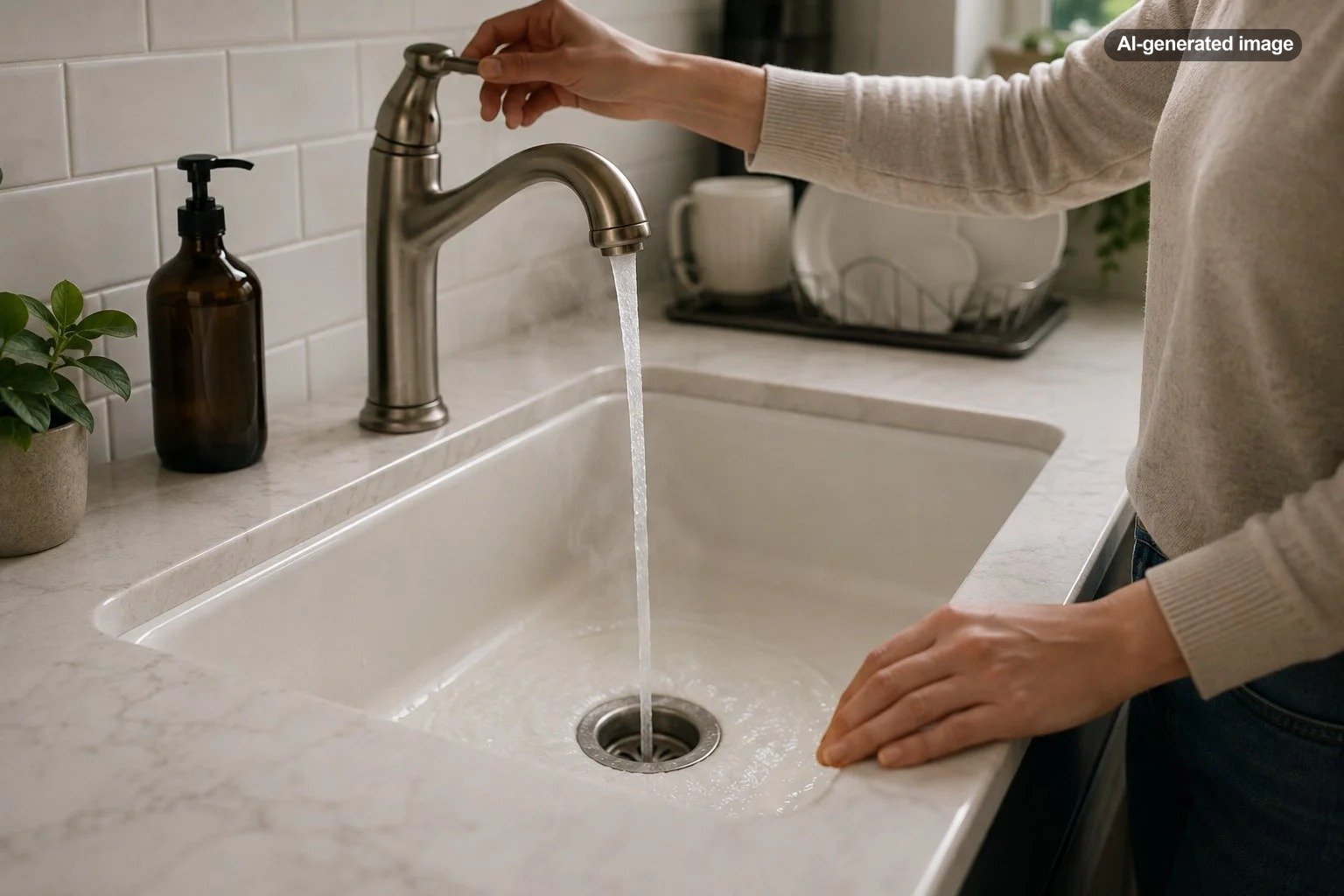
If your sink smells perfectly normal until you turn on the faucet, the timing is an important clue. In many cases, the water is not creating the odor. Instead, flowing water is disturbing residue inside the drain, wetting buildup in the overflow passage, or moving air through the drainage system so an existing smell becomes noticeable.
The first job is to determine whether the odor is coming from the water itself or from the sink and drain. That simple distinction can keep you from cleaning the drain repeatedly when the real issue is elsewhere – or calling a plumber for a water-supply odor that affects multiple fixtures.
Start by separating a water odor from a drain odor
A sink can make it surprisingly difficult to tell where a smell originates. Water hitting the drain creates air movement, and your face is usually positioned directly above the basin. That can make a drain odor seem as though it is coming from the faucet.
What to do
- Use a clean drinking glass that has no detergent or food odor.
- Run cold water briefly, collect some in the glass, and carry it away from the sink before smelling it.
- Repeat the test with hot water after allowing it to warm normally.
- Try the same test at another sink in the home.
- Notice whether the problem is limited to one fixture, one temperature, or several fixtures.
If water collected in the glass smells normal but the sink area smells once water begins draining, the plumbing fixture is the more likely place to investigate. Penn State Extension likewise notes that an odor noticed at one sink can sometimes come from bacteria in the drain rather than from the water supply.
The drain may have organic buildup
One of the most ordinary explanations is buildup inside the drain assembly. Soap residue, toothpaste, shaving products, skin oils, food residue, and other material can collect on surfaces that are continually damp. The stopper mechanism can also hide a surprising amount of residue where it is difficult to see from above.
When the sink is dry and unused, that buildup may produce little noticeable odor. Running water wets and agitates it, while the movement of water through the drain pushes air upward toward the basin. The result can be a smell that seems to appear the instant the faucet turns on.
For a bathroom sink, inspect the removable stopper if the design allows routine removal according to the fixture instructions. Cleaning accessible residue from the stopper and the visible drain opening is a sensible first step. In a kitchen, removable strainers and other accessible surfaces deserve the same attention.
Do not forget the sink overflow passage
Many bathroom sinks have a small overflow opening near the upper edge of the basin. Its passage connects with the drain system and can stay damp while receiving splashes, soap residue, and other material. Because the passage is partly hidden, it is easy to clean the visible basin beautifully while overlooking the area responsible for the smell.
Water running into the sink can move air through this passage or splash enough moisture into it to make an existing odor more noticeable. If the odor seems strongest near the overflow opening rather than directly at the drain, that is a useful clue.
Clean only the accessible surfaces using methods appropriate for your sink material and fixture design. Avoid forcing tools or harsh chemicals into concealed passages when you do not know how the assembly is constructed.
In a kitchen, check the disposal and splash guard
If the problem is at a kitchen sink with a garbage disposal, the disposal area adds several places where residue can accumulate. Food particles can remain around the drain opening and beneath accessible portions of the rubber splash guard even when the disposal chamber looks relatively clean from above.
Follow the disposal manufacturer’s cleaning instructions and disconnect power as instructed before touching any component near the disposal opening. Never put a hand into the grinding chamber. If you cannot safely access a dirty component, leave the disassembly to someone qualified to service the unit.
Slow draining or gurgling changes the diagnosis
A smell by itself often points toward a local cleaning issue. A smell combined with slow drainage, repeated gurgling, backups, or changes at more than one fixture deserves more attention. Those additional symptoms can indicate a drainage or venting problem rather than simple residue near the top of the sink.
The plumbing trap beneath a sink normally maintains a water seal between the room and the drainage system. Venting also helps the drainage system manage pressure as wastewater moves through the pipes. Problems involving drainage, traps, or venting are not something you can reliably diagnose from odor alone.
The U.S. Environmental Protection Agency lists slow drains, plumbing gurgling, backups, and sewage odors among signs that can accompany septic-system trouble, while also noting that odors can have several causes. In other words, smell alone is not enough to diagnose a septic failure, but smell combined with other drainage symptoms should not be ignored.
What if the water in the glass smells too?
If the odor follows the water away from the sink, shift your attention from the drain to the water source. The pattern matters. An odor confined to hot water suggests a different set of possibilities than an odor present in both hot and cold water.
For example, Penn State Extension notes that a rotten-egg odor limited to hot water can sometimes be associated with conditions in the water heater, while an odor affecting both hot and cold water may point toward the water supply. The appropriate response depends on whether the home uses municipal water or a private well and whether the problem appears at one fixture or throughout the house.
Do not alter a water heater, treatment system, well, or plumbing component based solely on an odor diagnosis from the internet. If the water itself has developed a new or persistent smell, unusual color, sediment, or taste, consult the appropriate water utility, water-treatment professional, well professional, or plumber for your system.
A practical order for troubleshooting the smell
The easiest way to approach this problem is to move from simple, local explanations toward broader plumbing or water-supply causes.
Before you decide
- Confirm whether the collected water smells away from the sink.
- Compare cold water with hot water.
- Check whether another faucet has the same odor.
- Clean accessible drain and stopper surfaces.
- Inspect the sink overflow opening for visible residue.
- For kitchen sinks, evaluate accessible disposal and splash-guard surfaces using manufacturer guidance.
- Pay attention to slow draining, gurgling, backups, leaks, or odors at other fixtures.
- Call a qualified professional when the pattern suggests a drainage, venting, septic, water-heater, or water-supply issue rather than ordinary surface buildup.
This sequence matters because a smell that appears only while water runs is not one specific diagnosis. It is a symptom created by movement – moving water, moving air, or both. Finding out exactly where the odor travels is more useful than trying stronger and stronger drain products.
Frequently asked questions
Why does my bathroom sink smell only when I turn the faucet on?
Common possibilities include residue in the drain or stopper assembly, buildup in the overflow passage, or an odor that is being pushed upward as water moves through the drain. First test the water in a clean glass away from the sink.
Can a P-trap cause a bad sink smell?
A trap that is not maintaining an effective water seal can allow drainage-system odors into a room, although frequently used sinks are less prone to simply drying out than seldom-used floor drains. Persistent sewer-like smells, gurgling, or unusual drainage behavior are good reasons to have the plumbing evaluated.
Why does only my hot water smell?
If the odor remains in a glass of hot water after you move away from the sink, the problem may involve the water heater or hot-water system rather than the drain. A plumber or water-treatment professional can help identify the cause without guessing at heater modifications.
Should I keep pouring drain cleaner into a smelly sink?
No. Repeated chemical treatment is not a substitute for identifying whether the odor comes from accessible buildup, the overflow, a disposal, drainage behavior, or the water itself. Some chemicals can also be incompatible with certain plumbing materials or create hazards when mixed with other cleaners.