
How to Reduce Humidity in a Home Without Making It Uncomfortable
A humid home can feel warmer, heavier, and less comfortable than the thermostat suggests. The solution, however, is not always to keep lowering the temperature. You can reduce indoor humidity without turning the house into an icebox by measuring the moisture level, controlling humidity at its sources, operating ventilation correctly, and using targeted dehumidification when the air conditioner cannot handle the entire moisture load.
A practical goal for many homes is a relative humidity level of roughly 30% to 50%. The U.S. Environmental Protection Agency recommends keeping humidity below 60% and ideally within that lower range. In very humid climates, staying consistently near the upper end of the comfortable range may be more realistic than forcing the house to remain exceptionally dry.
Measure the humidity before changing the temperature
Humidity is easy to misjudge by feel alone. A room can seem muggy because of poor air movement, direct sunlight, damp materials, or a high dew point outdoors. Conversely, a cool room may still have excess moisture even if it does not feel obviously sticky.
Affiliate disclosure: CraneManor.com may earn a commission when you purchase through links on this page. This does not affect the price you pay. Learn more.
Place a digital hygrometer in the room where discomfort is most noticeable. Keep it away from a supply vent, shower, stove, sunny window, or dehumidifier discharge, since those locations can distort the reading. Check the number at different times for several days rather than reacting to one momentary spike.
A reading that rises briefly after a shower or while cooking is different from humidity that stays elevated for hours. Persistent readings above approximately 50% deserve attention, particularly when accompanied by condensation, musty odors, damp closets, or moisture collecting on cool surfaces.
Remove moisture where it is created
The least disruptive way to control humidity is to prevent water vapor from spreading through the house. This reduces the amount of work required from both the air conditioner and any dehumidifier.
- Run the bathroom exhaust fan during a shower and for a period afterward, provided the fan vents outdoors.
- Use a range hood that exhausts outdoors when boiling water or cooking foods that release substantial steam.
- Vent the clothes dryer outdoors and inspect the duct if laundry areas feel unusually damp.
- Cover simmering pots when practical and avoid drying large amounts of laundry indoors during humid weather.
- Repair plumbing leaks, roof leaks, and recurring condensation rather than relying on equipment to remove the resulting moisture indefinitely.
- Keep gutters, downspouts, and grading from directing water toward the foundation.
Use outdoor air selectively
Opening the windows is not automatically a humidity-control strategy. It helps only when the outdoor air contains less moisture than the indoor air. On a warm, humid day, open windows can make the house harder to dehumidify even when a breeze feels pleasant at first.
Weather reports usually list relative humidity, but the dew point is often a more useful clue about how much moisture is actually in the outdoor air. When the outdoor dew point is high, keep windows and exterior doors closed and rely on controlled ventilation, cooling, or dehumidification. When conditions become cooler and drier, short periods of cross-ventilation may help freshen the house without adding a large moisture load.
Let the air conditioner remove moisture properly
An air conditioner cools air and removes moisture as water condenses on the indoor coil. This process works best during sufficiently long cooling cycles. Rapid on-and-off cycling may lower the temperature before the system has removed enough moisture, leaving the house cool but clammy.
Avoid making large, repeated thermostat changes in an attempt to dry the air. Lowering the set point may make occupants uncomfortable while doing little to address the reason humidity remains high. A steady setting usually gives the system a better chance to operate predictably.
Check the thermostat’s fan setting as well. In many conventional systems, using Auto allows the blower to stop when the cooling cycle ends. Leaving the fan continuously set to On can, in some installations, move moisture remaining on the coil back into the rooms. System designs and controls vary, so consult the equipment documentation or an HVAC professional before changing advanced airflow or dehumidification settings.
A compatible smart thermostat can make it easier to review temperature schedules and adjust supported settings remotely. It cannot correct improper equipment sizing, drainage problems, duct leakage, or inadequate dehumidification capacity.
Improve air movement without confusing it with dehumidification
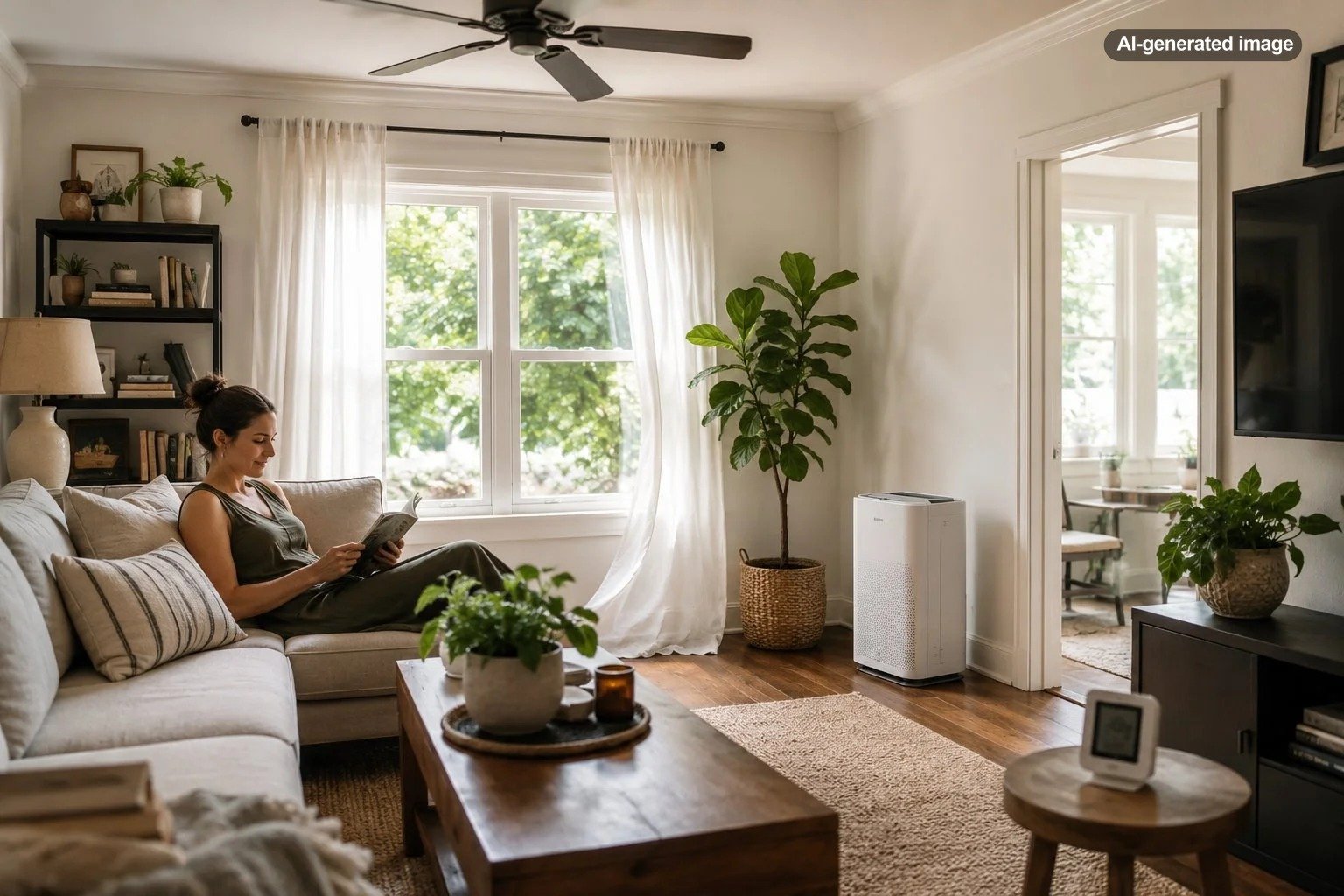
Ceiling fans and portable fans do not remove water from the air, but they can make a moderately humid room feel more comfortable by increasing evaporation from the skin. This may allow a household to maintain a slightly higher thermostat setting while addressing moisture separately.
Use ceiling fans only in occupied rooms, and set them to create a gentle downward breeze during warm weather. Keep furniture, curtains, and rugs from blocking supply and return vents. Leave interior doors positioned to support the airflow strategy intended for the HVAC system, especially in rooms without dedicated returns.
Air movement is most useful when humidity is near the acceptable range. It should not be treated as a substitute for repairing leaks or managing sustained high readings.
Add targeted dehumidification when necessary
A portable dehumidifier can be effective when one basement, laundry room, bedroom, or enclosed area is significantly damper than the rest of the home. Choose capacity according to the size and dampness of the space, not merely the physical size of the appliance. ENERGY STAR notes that portable models are generally intended for a room or localized area, while whole-home systems can serve multiple spaces through ductwork.
For a consistently damp larger room, a dehumidifier with a continuous-drain option can reduce the inconvenience of emptying a bucket, provided the drain is installed according to the manufacturer’s directions. Keep the unit away from walls and furnishings as directed, clean its filter, and avoid creating a trip hazard with cords or drain hoses.
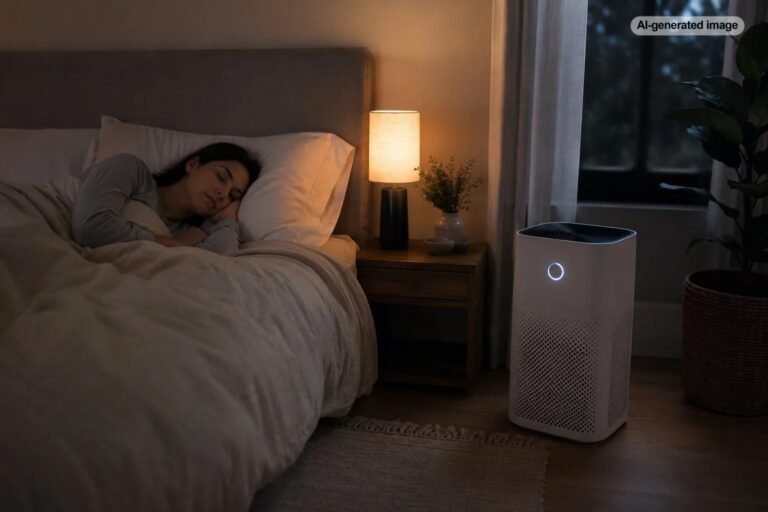
Dehumidifiers release some heat into the room while operating. That is normal, but it means the best placement is not always beside the sofa or bed. A unit may be more comfortable in a basement, hallway, laundry area, or another location where air can circulate and the small temperature increase is less noticeable.
| Approach | Best use | Main limitation |
|---|---|---|
| Exhaust ventilation | Showers, cooking, and short moisture events | Must vent outdoors and be used consistently |
| Air conditioning | Whole-home cooling with routine moisture removal | May not control humidity well during mild, damp weather or short cycles |
| Portable dehumidifier | One damp room or localized problem area | Adds heat, noise, maintenance, and water disposal |
| Whole-home dehumidifier | Persistent humidity throughout a well-sealed home | Requires correct sizing, installation, drainage, and maintenance |
Do not ignore the building itself
Equipment cannot permanently overcome a significant moisture source. Humid outdoor air may enter through leaky ducts, gaps around penetrations, an unsealed crawlspace, or frequently opened exterior doors. Groundwater, foundation seepage, roof leaks, and hidden plumbing leaks can also create localized moisture that appears to be an air-quality problem.
Before paying for larger equipment, look for patterns. Is one room affected more than others? Does the reading rise after rain? Is the problem strongest near a bathroom, attic access, crawlspace, or exterior wall? Does the air conditioner run briefly and stop repeatedly? These observations can help an HVAC technician, plumber, roofer, drainage contractor, or building professional investigate the appropriate system.
A comfortable humidity-control routine
What to do
- Measure relative humidity in the affected rooms for several days.
- Use exhaust fans and reduce avoidable moisture at its source.
- Keep windows closed when outdoor air is humid.
- Confirm that vents, filters, drains, and thermostat settings support normal HVAC operation.
- Use fans for comfort, not as a substitute for moisture removal.
- Add a properly sized portable dehumidifier for a localized problem.
- Request professional assessment when high humidity persists throughout the home or warning signs appear.
The aim is not to make indoor air as dry or as cold as possible. It is to keep moisture controlled enough that the home feels comfortable, surfaces remain dry, and the HVAC system does not have to compensate for preventable water vapor. Measuring first and making targeted changes usually produces a better result than repeatedly lowering the thermostat.
Frequently asked questions
Why does my house feel humid even when the air conditioner is running?
The system may be cycling too briefly, the fan setting may be recirculating moisture after cooling, outdoor air may be entering through leaks, or the home may have a moisture load beyond the equipment’s dehumidification capacity. A clogged drain or mechanical problem can also interfere with normal operation.
Will lowering the thermostat reduce humidity?
It may increase cooling runtime and remove more moisture, but it can also make the house unnecessarily cold. When humidity remains high at a comfortable temperature, source control or dedicated dehumidification is usually the more direct approach.
Can I open windows to reduce indoor humidity?
Only when the outdoor air is drier. Opening windows during muggy weather generally introduces more moisture and makes the cooling system work harder.
Should every humid home have a whole-home dehumidifier?
No. Localized dampness may be handled with source control or a portable unit. A whole-home system is more appropriate when readings remain elevated across multiple rooms and an HVAC professional confirms that the home and existing system are suitable.