
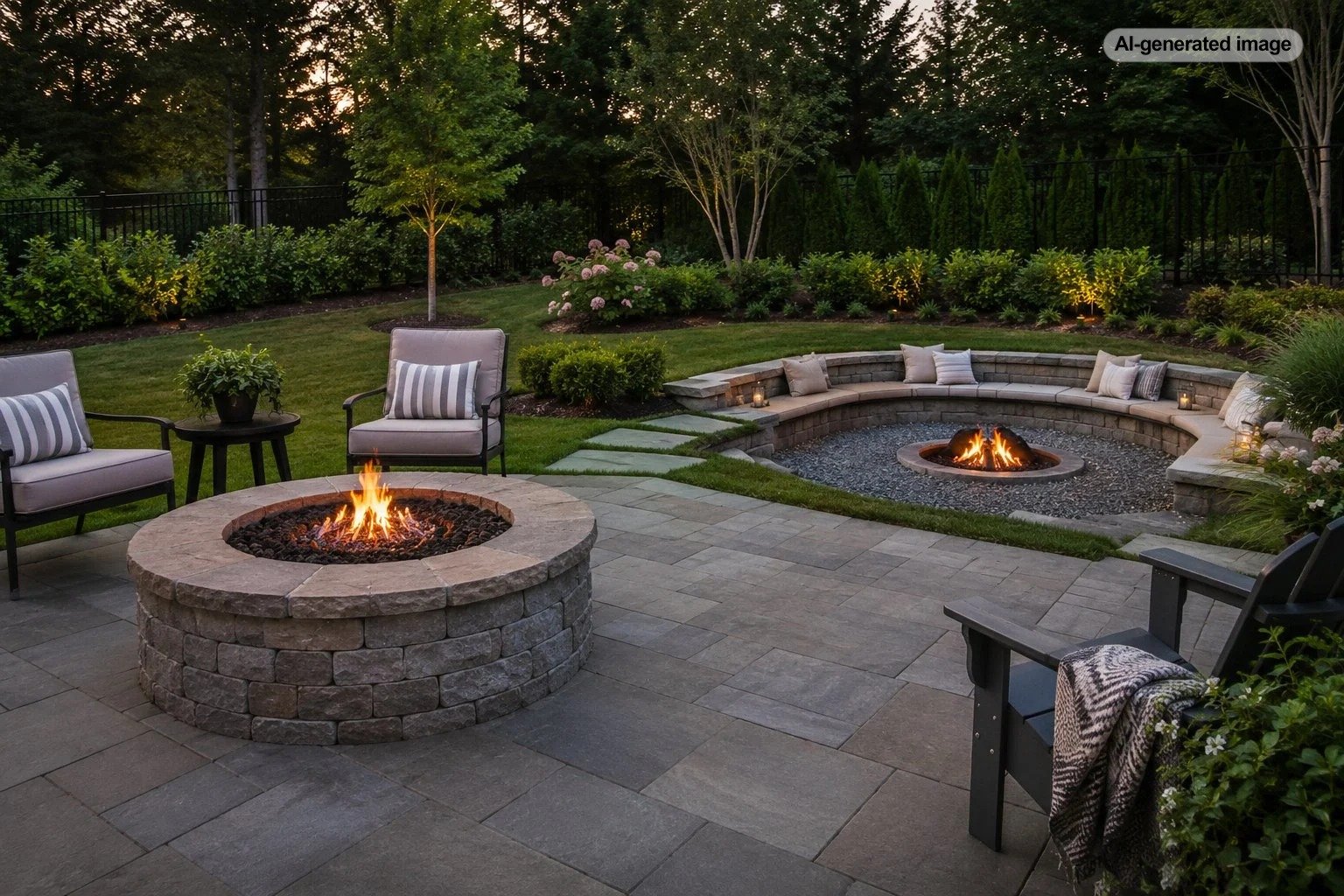
Should a Fire Pit Be Above or Below Ground?
Neither an above-ground nor a below-ground fire pit is automatically better. For most backyards, an above-ground fire pit is the simpler and more forgiving choice because it is easier to see, easier to access, easier to keep free of water and debris, and often easier to change later. A properly designed in-ground or sunken fire pit can create a beautiful, integrated gathering space, but drainage, access, surrounding grades, combustible materials, and safe circulation become more important.
The best choice depends less on whether the flames sit a few inches above or below grade and more on how the entire area is designed. Clearance from combustible materials, a stable noncombustible setting, safe operation, local rules, and the manufacturer’s instructions should come before aesthetics.
What Counts as an Above-Ground or Below-Ground Fire Pit?
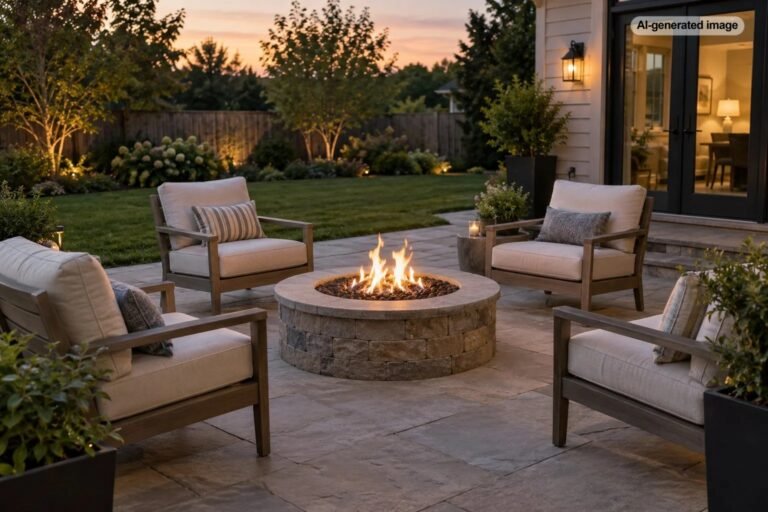
An above-ground fire pit has a bowl, ring, masonry wall, or enclosure that rises visibly above the surrounding patio or yard. The fire itself may still sit somewhat below the top edge, but the structure is clearly raised from grade.
A below-ground fire pit places the combustion area at or beneath the surrounding surface. Some are simple recessed pits; others are part of a larger sunken conversation area where the seating and floor are also lower than the surrounding landscape. These are different design problems. Lowering only the fire bowl is much simpler than excavating an entire seating area.
There is also a middle ground: a low masonry fire pit that rises modestly above a patio. This often delivers some of the built-in appearance people want without introducing as many drainage and visibility concerns as a deeply recessed design.
Above Ground Is Usually the More Practical Choice
For a typical patio or backyard renovation, an above-ground fire pit has several practical advantages. The edge is visible as people walk around it, leaves and runoff are less likely to collect inside, and the fire can be easier to monitor from surrounding seating.
A raised structure can also define the fire zone visually. That does not replace supervision or appropriate clearances, but it gives guests a clear physical boundary. This can be useful on patios where people frequently move between the house, seating, outdoor dining, and lawn.
Advantages
- Easy to see while walking through the patio.
- Generally less vulnerable to ordinary surface runoff.
- Cleaning ash, leaves, and debris is often more convenient.
- Works well with many existing patios and seating arrangements.
- Portable versions can be relocated when conditions and manufacturer instructions allow.
Tradeoffs
- A bulky enclosure can interrupt sightlines.
- A tall wall may push heat or flame farther from seated guests.
- Poorly proportioned masonry can dominate a small patio.
- Placement and combustible clearances still require careful planning.
Why People Choose a Below-Ground Fire Pit
A recessed fire pit can feel quieter visually because the fire feature does not project as far above the paving. In a deliberately designed landscape, that can make the flames feel integrated into the architecture rather than added on top of it.
Below-ground designs can be especially attractive in larger entertaining areas where the fire pit, paving, retaining elements, and seating were planned together. A sunken conversation area can create a distinct outdoor room and reduce visual interruption across a broad yard.
The tradeoff is that excavation changes the project. Water now needs somewhere to go. Steps and changes in elevation need to be obvious and comfortable. Soil conditions, utilities, retaining requirements, and the construction of any gas system may also affect the design. What appears to be a simple stylistic choice can become a landscape and construction project.
Drainage Is the Biggest Practical Difference
Water is one of the easiest issues to underestimate when a fire pit is installed below grade. Rainwater, irrigation, and patio runoff naturally move toward low points. If the fire pit becomes that low point, it can collect water, mud, ash, leaves, and debris.
The concern becomes larger with a fully sunken seating area. Its floor may need a deliberately engineered drainage approach appropriate to the site rather than a casual low spot in the landscape. Properties with slow-draining soil, high seasonal groundwater, heavy rainfall, or runoff from adjacent grades deserve particular attention.
Above-ground fire pits are not immune to weather, of course, but they generally do not function as collection basins in the same way. That is one reason they tend to be easier additions to existing landscapes.
Think About How People Will Move Around the Fire
A beautiful fire pit is less successful if guests constantly squeeze behind chairs, step backward near an unexpected drop, or cross directly through the hottest part of the gathering area to reach another part of the yard.
With an above-ground pit, the main circulation question is usually how much usable patio remains around the seating. With a sunken design, circulation also includes steps, level changes, drainage openings, and the route people use after dark.
Safety Matters More Than the Height of the Pit
Fire-pit safety should be evaluated as a complete system rather than by focusing only on whether the structure is raised or recessed. The U.S. Fire Administration advises using fire pits outdoors and keeping them at least 10 feet from the home or anything that can burn. It also recommends closely watching children, using a metal screen over wood-burning fires to help control sparks, and fully extinguishing or turning off the fire before leaving the area.
The U.S. Consumer Product Safety Commission advises keeping a hose or fire extinguisher nearby, avoiding burning when wildfire risk is high, and never using gasoline to start or restart a fire. CPSC has also issued safety warnings concerning certain alcohol or other liquid-burning fire pits because of severe flame-jetting and pool-fire hazards.
Those general recommendations are not a substitute for the instructions supplied with a manufactured fire pit or burner. Follow the listed installation, clearance, fuel, and operating requirements for the specific equipment you use. Local fire restrictions, building rules, HOA requirements, and permit requirements may also differ by location, so confirm applicable local requirements before building a permanent installation.
Wood and Gas Designs Have Different Planning Needs
A wood-burning fire pit introduces sparks, embers, ash, smoke, and stored fuel into the design. Its surroundings should make routine cleanup practical, and the layout should account for changing wind and smoke direction. The U.S. Fire Administration specifically recommends a metal screen over wood-burning fires to help keep sparks from floating out.
A gas fire feature eliminates ash and flying wood embers but introduces fuel-system considerations. Permanent gas installations should follow the appliance manufacturer’s requirements and applicable local rules, and work involving gas piping should be handled by appropriately qualified professionals where required.
Whichever fuel you choose, avoid treating decorative stone, glass, masonry, or other materials as automatically suitable near high heat. Use only materials and media approved for the specific fire feature and installation.
Which Option Looks Better?
That depends largely on the architecture around it. Above-ground pits tend to read as objects within a patio, so their diameter, wall height, material, and relationship to the furniture matter. A low, restrained enclosure can look intentionally architectural; an oversized one can make a modest patio feel crowded.
Below-ground pits can disappear more easily into the paving, which works well in minimalist landscapes. Fully sunken lounges create a stronger visual statement and can suit broad contemporary yards where there is enough space for generous circulation.
| Consideration | Above ground | Below ground |
|---|---|---|
| Installation complexity | Usually simpler | Usually more involved |
| Visibility while walking | Typically better | Requires careful layout |
| Rainwater collection | Generally less vulnerable | Drainage is a major consideration |
| Cleaning access | Often easier | May require bending or reaching down |
| Visual effect | Distinct focal object | Integrated architectural look |
| Best fit | Most existing patios and flexible layouts | Purpose-designed landscapes and sunken lounges |
How to Decide Before You Build
Before you decide
- Identify the exact fire-pit or burner type and read its installation instructions.
- Check the proposed location for combustible structures, vegetation, branches, fences, and furnishings.
- Confirm local fire restrictions and any applicable building, HOA, or permit requirements.
- Study how water moves across the site after rain.
- Keep normal walking routes away from flames and unexpected level changes.
- Consider how children, pets, older guests, and nighttime visitors will use the area.
- For permanent gas systems, involve qualified professionals as appropriate.
- Choose the aesthetic configuration only after the functional constraints work.
For many homeowners, this process points toward a low above-ground pit as the balanced option: visually substantial without requiring a sunken construction project. But a well-designed recessed pit can be excellent when it is planned as part of the landscape rather than treated as a hole dug into an existing patio.
Frequently Asked Questions
Does an in-ground fire pit give off less heat?
Not necessarily. Perceived warmth depends on the fire feature, fuel, flame characteristics, enclosure, seating position, weather, and installation. Lowering the pit alone does not guarantee less or more usable heat.
Is an in-ground fire pit safer for children?
You should not assume so. A recessed fire can still cause burns and may be less visually obvious when someone approaches it. The U.S. Fire Administration recommends closely supervising children around fire pits and maintaining a kid-free safety zone around outdoor fires.
Can I put a fire pit directly into an existing patio?
Only if the specific fire feature, patio materials, installation method, clearances, and local requirements allow it. A permanent installation may involve construction, drainage, gas, or other considerations that should be evaluated before cutting into existing paving.
Is a sunken conversation pit worth it?
It can be when you have enough space, suitable site conditions, a drainage plan, and a layout that makes steps and circulation comfortable. On a small patio, the same level change may consume too much usable space and introduce unnecessary complexity.
What is the best height for a fire pit?
There is no universal height that suits every fire feature or backyard. Use the dimensions and installation requirements specified for the chosen system, then evaluate how the resulting enclosure relates to your seating and circulation.
The Bottom Line
If you are choosing between above and below ground without other constraints, above ground is usually the more practical default. It is visible, accessible, easier to incorporate into many existing patios, and less prone to becoming the low point where runoff collects.
Choose a below-ground fire pit because the architecture and site genuinely support it, not because it seems inherently safer. A recessed design succeeds when drainage, circulation, construction, fire clearances, fuel requirements, and local rules have all been addressed first.
The safest and most comfortable fire-pit design begins with the site and the fire system, not with whether the flames sit above or below the patio.