
How Do You Improve Air Quality in a Closed Guest Room?
A guest room that stays closed for days or weeks can feel stale even when it looks perfectly clean. The most effective way to improve its air quality is not to cover the room with fragrance, but to address the basics: introduce appropriate outdoor air, improve circulation, control moisture, remove dust and pollutant sources, and make sure the home’s heating and cooling system is working as intended.
Start with the simplest measures before assuming that the room needs special equipment. In many homes, opening the door, safely ventilating with outdoor air when conditions are suitable, cleaning accumulated dust, laundering bedding, and maintaining comfortable humidity can make a noticeable difference.
Why a Closed Guest Room Can Feel Stale
A closed door does not automatically create unhealthy air, but an infrequently used room can receive less air movement than the spaces where people spend most of their time. Dust settles, odors linger in fabrics, and moisture can become more noticeable if the room has poor circulation or an HVAC supply or return that is obstructed.
The U.S. Environmental Protection Agency describes three fundamental approaches to improving indoor air quality: source control, ventilation, and supplemental filtration or air cleaning. That framework is useful for a guest room because it prevents the common mistake of treating every air-quality complaint as an air-cleaner problem.
The best first move is usually to remove or dilute the source of stale air, not perfume it.
Begin With Ventilation and Air Movement
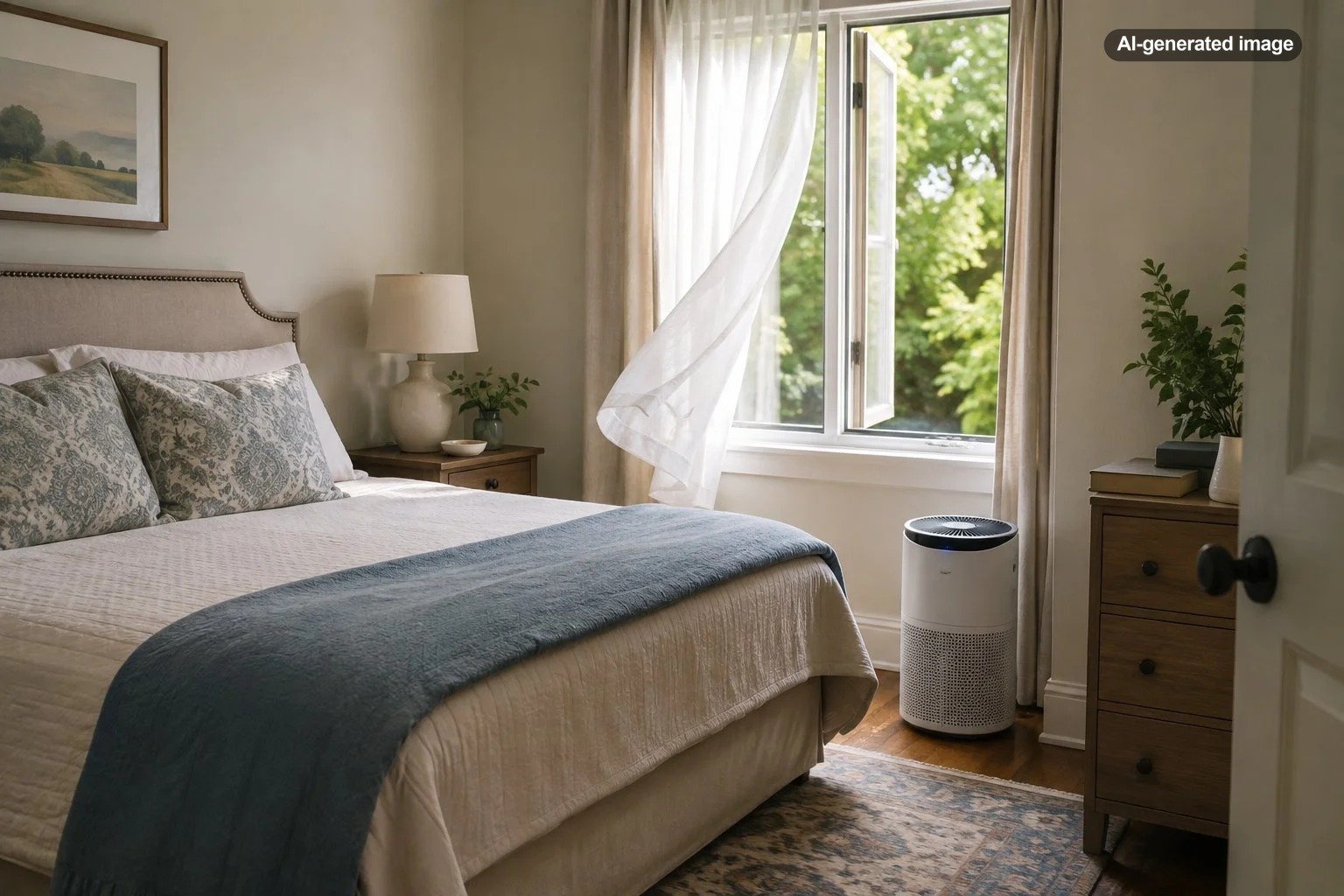
When outdoor conditions are appropriate, opening a window can help exchange indoor air for outdoor air. Opening the bedroom door at the same time can encourage circulation with the rest of the home. If the room has windows on different sides, or a nearby hall or adjoining room can safely be opened, cross-ventilation may improve air movement further.
Ventilation is not automatically beneficial under every condition. The EPA advises considering outdoor pollution, pollen, temperature, and humidity before bringing outdoor air inside. On a smoky day, during a high-pollen period, or when outdoor humidity is extreme, keeping windows closed may be the better choice.
A portable fan can help circulate room air, but circulation and ventilation are not identical. A fan primarily moves existing air around unless it is positioned as part of a deliberate strategy to move air into or out of the room.
Check the HVAC Supply and Return Paths
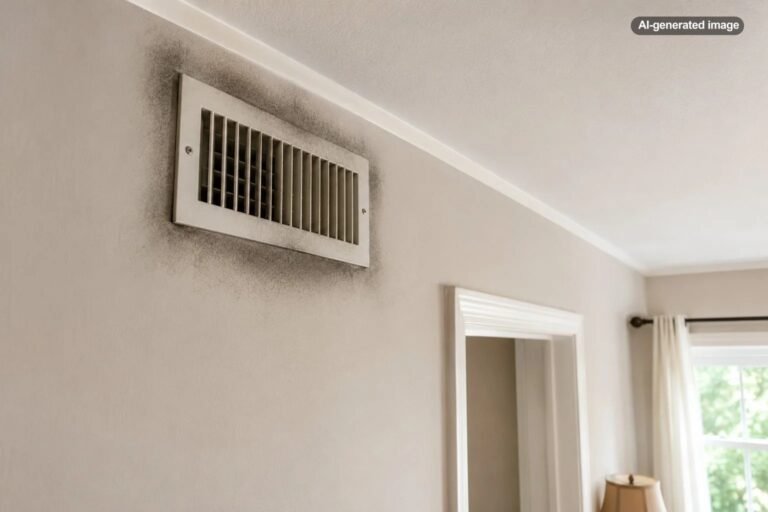
If the guest room is noticeably stuffier, warmer, cooler, or more humid than nearby rooms, check whether furniture, curtains, boxes, or rugs are blocking supply registers or return grilles. Keep accessible vents unobstructed and follow the HVAC manufacturer’s instructions for filter maintenance.
A closed bedroom door can also change airflow depending on how the home’s HVAC system is designed. Some homes have dedicated return-air pathways in bedrooms; others rely on transfer grilles, door undercuts, or central returns elsewhere. If the room consistently has weak airflow or large temperature differences, an HVAC professional can evaluate the system rather than relying on guesswork.
Control Humidity Before It Becomes a Moisture Problem
Humidity deserves special attention in a closed room because excess moisture can contribute to condensation and mold growth. The EPA recommends keeping indoor relative humidity below 60 percent and ideally around 30 to 50 percent.
A small humidity meter can help you determine whether the room is actually humid rather than relying on how the air feels. If humidity is consistently elevated, look for causes such as an exterior leak, window condensation, an adjoining bathroom, poor air-conditioning performance, or a room that remains isolated from conditioned areas of the home.
In hot, humid climates, opening a window may introduce more moisture instead of solving the problem. Air conditioning or a properly sized dehumidifier can be more appropriate when outdoor humidity is high.
Clean the Things That Hold Dust and Odors
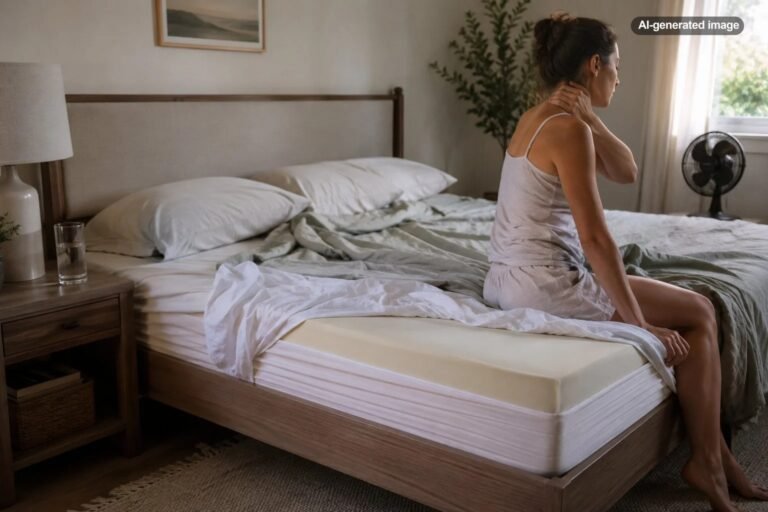
A guest room may go weeks without the routine movement and cleaning that occupied rooms receive. Before guests arrive, vacuum the floor and accessible upholstery, dust horizontal surfaces, and clean beneath and behind furniture where practical. Follow care labels when washing sheets, pillowcases, blankets, duvet covers, and washable window treatments.
Do not overlook the mattress surface, headboard, lampshades, ceiling-fan blades, baseboards, and closet shelving. These locations can collect dust even when the room appears untouched.
If bedding or fabrics smell stale, laundering or airing them appropriately usually addresses the source more directly than spraying fragrance over them. Strongly scented sprays, plug-ins, candles, and similar products may change how a room smells without addressing ventilation, moisture, or accumulated contaminants.
What to do before a guest arrives
- Open the bedroom door and inspect the room for unusual odors, visible moisture, or condensation.
- Check that HVAC registers and return paths are unobstructed.
- Ventilate with outdoor air if weather, pollen, humidity, and outdoor air quality are suitable.
- Dust surfaces and vacuum floors, rugs, and accessible upholstery.
- Launder or refresh bedding according to its care instructions.
- Check room humidity and address persistent excess moisture rather than simply covering the odor.
Be Careful With Musty Odors
A room that merely smells closed-up after sitting unused is different from a persistent musty odor. If the odor returns quickly after ventilation and cleaning, inspect for moisture around windows, exterior walls, plumbing, closets, the ceiling, and areas behind furniture where accessible.
The EPA emphasizes that moisture control is central to controlling indoor mold growth. Visible water damage, recurring condensation, leaks, or visible mold should therefore be treated as a moisture problem rather than an odor problem.
Would an Air Cleaner Help?
An air cleaner can sometimes supplement source control and ventilation, but it should not be treated as a substitute for either. The appropriate choice depends on what you are trying to remove from the air, the size of the room, and the device’s documented performance.
For example, a particulate filter may be relevant when the goal is reducing airborne particles, while a moisture problem requires moisture control. Likewise, a musty odor caused by a leak will not be solved simply by running an air cleaner beside the bed.
If you use a portable air-cleaning device, follow its manufacturer instructions for room sizing, placement, operation, and filter replacement. Avoid assuming that a device can diagnose or correct an unidentified environmental problem.
Should You Leave the Guest Room Door Open?
Leaving an unused guest room door open at least periodically can encourage air exchange with the rest of the conditioned home, particularly when the room otherwise feels isolated. Whether leaving it open continuously makes sense depends on privacy, pets, children, heating and cooling patterns, fire-safety considerations, and the design of the home’s HVAC system.
The larger principle is to avoid unintentionally isolating a room from the airflow strategy the house was designed to use. If closing one bedroom creates persistent comfort or airflow problems, an HVAC assessment can identify whether the room has an adequate supply and return-air pathway.
How Far in Advance Should You Freshen a Guest Room?
There is no need to make guest-room preparation complicated. Checking the room a day or two before someone arrives gives you time to notice stale bedding, dust, humidity, a blocked vent, or an unusual odor without rushing.
If the room smells fresh after ordinary ventilation and cleaning and remains comfortable afterward, routine housekeeping may be all that is needed. If the same odor, dampness, or airflow problem repeatedly returns, investigate the underlying cause instead of resetting the room the same way before every visitor.
Frequently Asked Questions
Does opening a window always improve bedroom air quality?
No. Outdoor ventilation can be useful when outdoor conditions are favorable, but it may be undesirable during poor outdoor air quality, high pollen, smoke, extreme temperatures, or very humid weather.
Can a fan fix stale air in a closed room?
A fan improves air movement but does not necessarily bring in fresh outdoor air or remove a pollutant source. It can be useful as part of a broader ventilation or circulation strategy.
What humidity should a guest room have?
EPA guidance recommends keeping indoor relative humidity below 60 percent and ideally in the 30 to 50 percent range. Persistent high humidity deserves attention because moisture can contribute to mold growth.
Should I use fragrance to make a closed guest room smell fresh?
Fragrance can change the perceived smell of a room, but it does not correct inadequate ventilation, dust accumulation, moisture, or another odor source. Cleaning and source control are better starting points.