How Do You Keep an Outdoor Ceiling Fan From Rusting?
The best way to keep an outdoor ceiling fan from rusting is to start with a fan rated for the moisture it will actually encounter, then keep salt, dirt, and damp debris from lingering on its metal surfaces. Location matters just as much as cleaning: a fan under a deep covered porch faces very different conditions from one mounted beneath an open pergola near the coast.
Rust prevention is less about repeatedly spraying a fan with protective products and more about choosing appropriate materials, controlling exposure where possible, cleaning gently, and catching small areas of corrosion before they spread.
Start with the correct outdoor rating
A beautiful finish cannot compensate for putting an indoor fan in outdoor conditions. ENERGY STAR advises using a UL-listed damp-rated fan in humid locations that are protected from direct water, while fans that may come into direct contact with water should have a wet rating. Wet-rated designs may incorporate moisture-resistant motors, rust-resistant housings, stainless steel hardware, and weather-resistant blades.
That distinction matters because even a covered porch can expose a fan to humidity, condensation, wind-driven moisture, and temperature changes. An indoor-only fan may look perfectly comfortable beneath a roof while its hardware and internal components are experiencing conditions they were never designed to handle.
| Location | What to look for | Main concern |
|---|---|---|
| Fully enclosed indoor room | Indoor-rated fan | No routine outdoor moisture exposure |
| Covered porch or patio protected from rain | Damp-rated fan | Humidity and occasional moisture |
| Open pergola, exposed patio, or other area reached by rain | Wet-rated fan | Direct contact with weather |
| Coastal or salt-air location | Appropriate outdoor rating plus documented corrosion or salt-air resistance | Accelerated finish and hardware corrosion |
Check the documentation for your specific fan rather than assuming that the word outdoor means every model can tolerate every type of exposure. Manufacturer instructions should govern installation, cleaning, and acceptable maintenance products.
Coastal homes need an extra level of corrosion resistance
Salt is particularly hard on exposed metal. If a patio is close to the ocean, faces prevailing coastal winds, or routinely develops a salty film on furniture and windows, the ceiling fan should be selected with those conditions in mind.
Some outdoor fan lines are specifically engineered and marketed for corrosion and salt-air resistance. That is different from assuming every wet-rated fan has identical resistance to coastal conditions. If salt exposure is an important part of the installation, verify the manufacturer’s stated suitability rather than relying on finish color, price, or appearance.
Clean off salt, dust, pollen, and grime before they build up
Outdoor fans collect far more than ordinary household dust. Pollen, insects, airborne soil, cooking residue from nearby grills, and salt can settle on the blades, motor housing, canopy, and hardware. When those deposits repeatedly absorb moisture, they can keep surfaces damp longer and make deterioration harder to spot.
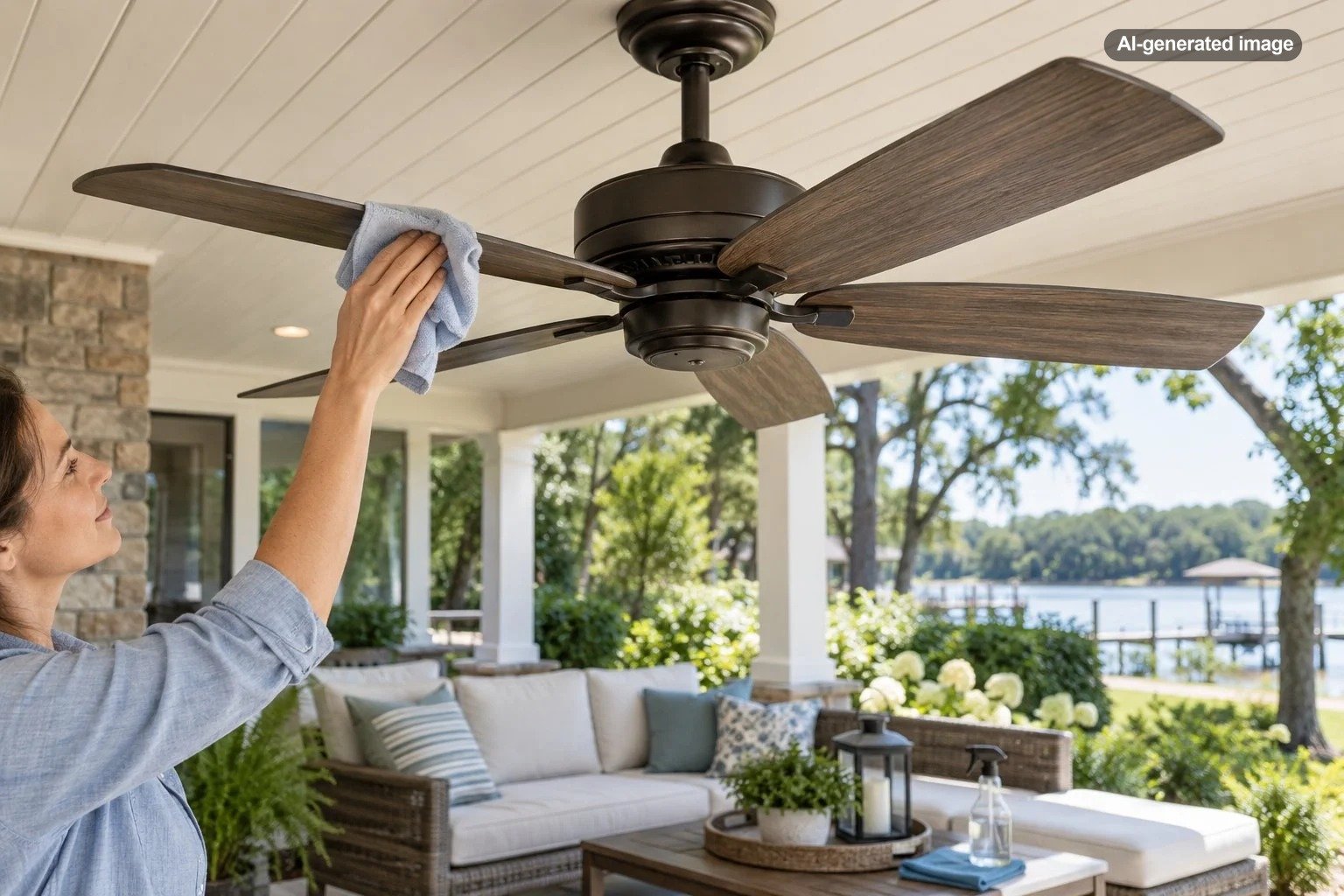
For routine care, follow the fan manufacturer’s cleaning directions. Hunter, for example, recommends cleaning wet-rated fan blades with a damp cloth and periodically checking for rust, loose screws, or operating problems. A gentle approach is preferable to aggressive scrubbing that can damage a protective finish.
A sensible maintenance routine
- Turn the fan off and allow the blades to stop completely before cleaning or inspecting it.
- Remove loose dust and debris gently rather than grinding it into the finish.
- Wipe accessible surfaces according to the manufacturer’s cleaning instructions.
- Pay special attention to seams, screw heads, mounting hardware, and areas where grime tends to collect.
- Look for bubbling finish, discoloration, exposed metal, rust around fasteners, unusual blade movement, or changes in operating sound.
- Let cleaned surfaces dry rather than leaving standing moisture on the fan.
How often this needs to happen depends on the setting. A screened inland porch may remain clean for long stretches, while a fan near salt water or a busy outdoor kitchen may need attention considerably more often. Visual inspection is more useful than pretending one schedule suits every home.
Do not automatically coat the fan with household rust preventives
It is tempting to treat an outdoor ceiling fan like patio furniture and add wax, clear coat, lubricant, or a general-purpose rust-prevention spray. That can be a mistake. Ceiling fans contain electrical components, moving parts, factory finishes, and ventilation openings, and an unapproved coating may discolor the finish, attract dirt, interfere with moving components, or conflict with the manufacturer’s care instructions.
Hunter specifically advises against applying chemicals or protective coatings to its outdoor fans in an attempt to weatherproof them. That does not mean every manufacturer has the same rule, but it illustrates why the manual for the exact model should come before a generic home-maintenance treatment.
The safest rust-prevention strategy is usually to preserve the protection the fan was designed with, not improvise a new coating over it.
Reduce unnecessary weather exposure when you can
A wet-rated fan may be designed for direct weather, but reducing unnecessary exposure can still make maintenance easier. Roof coverage, sensible placement, good drainage around the surrounding structure, and avoiding constant spray from sprinklers can help keep the installation cleaner.
For covered outdoor rooms, consider where wind-driven rain actually travels. A fan mounted several feet inside a deep porch may experience mostly humidity, while one near the outer edge can get repeatedly sprayed during storms. The label on the space – covered patio, lanai, balcony, pergola – matters less than the conditions at the exact mounting point.
Catch small corrosion problems early
A tiny rust-colored mark on a noncritical exposed fastener is different from extensive corrosion around the motor housing, mounting hardware, canopy, or electrical areas. Early inspection gives you a chance to determine whether you are seeing cosmetic surface deterioration or a problem that deserves professional attention.
Avoid disassembling electrical portions of a ceiling fan simply to investigate rust. If corrosion appears extensive, the fan begins wobbling, hardware looks compromised, unusual noises develop, or moisture may have reached electrical components, stop using the fan and have the installation evaluated by a qualified professional or follow the manufacturer’s service guidance.
Should you repair a rusty outdoor fan or replace it?
That depends on where the corrosion is and why it happened. Minor cosmetic deterioration on an otherwise appropriate outdoor-rated fan may call for manufacturer-approved care or replacement hardware. Widespread corrosion on an indoor-rated fan that was installed outdoors points to a more fundamental mismatch between the product and the location.
Replacement also becomes more sensible when corrosion involves structural or electrical areas, when replacement components are unavailable, or when the fan was never rated for its current exposure. If you do replace it, use the failure as useful information: choose the new fan based on the actual moisture and salt conditions at that mounting point.
FAQ
Can a damp-rated ceiling fan rust outdoors?
It can. Damp-rated fans are intended for humid locations protected from direct water. Repeated rain exposure or especially harsh conditions may exceed what the fan was designed to handle.
Is a wet-rated fan completely rust-proof?
Do not assume so. Wet-rated fans are designed for direct moisture exposure, but materials and corrosion-resistance claims vary among manufacturers and models. Coastal installations deserve particular attention to documented salt-air and corrosion resistance.
Can I spray WD-40 or another rust inhibitor on my ceiling fan?
Do not apply a general-purpose chemical, lubricant, or protective coating unless the fan manufacturer specifically permits it for the relevant surface or component. Ceiling fans are electrical appliances, and an improvised treatment can create unintended problems.
What is the easiest way to extend the life of an outdoor fan?
Match the fan to the location, keep contaminants from accumulating, follow its cleaning instructions, and inspect it periodically. Preventing the wrong exposure is generally more effective than trying to correct corrosion after it becomes widespread.