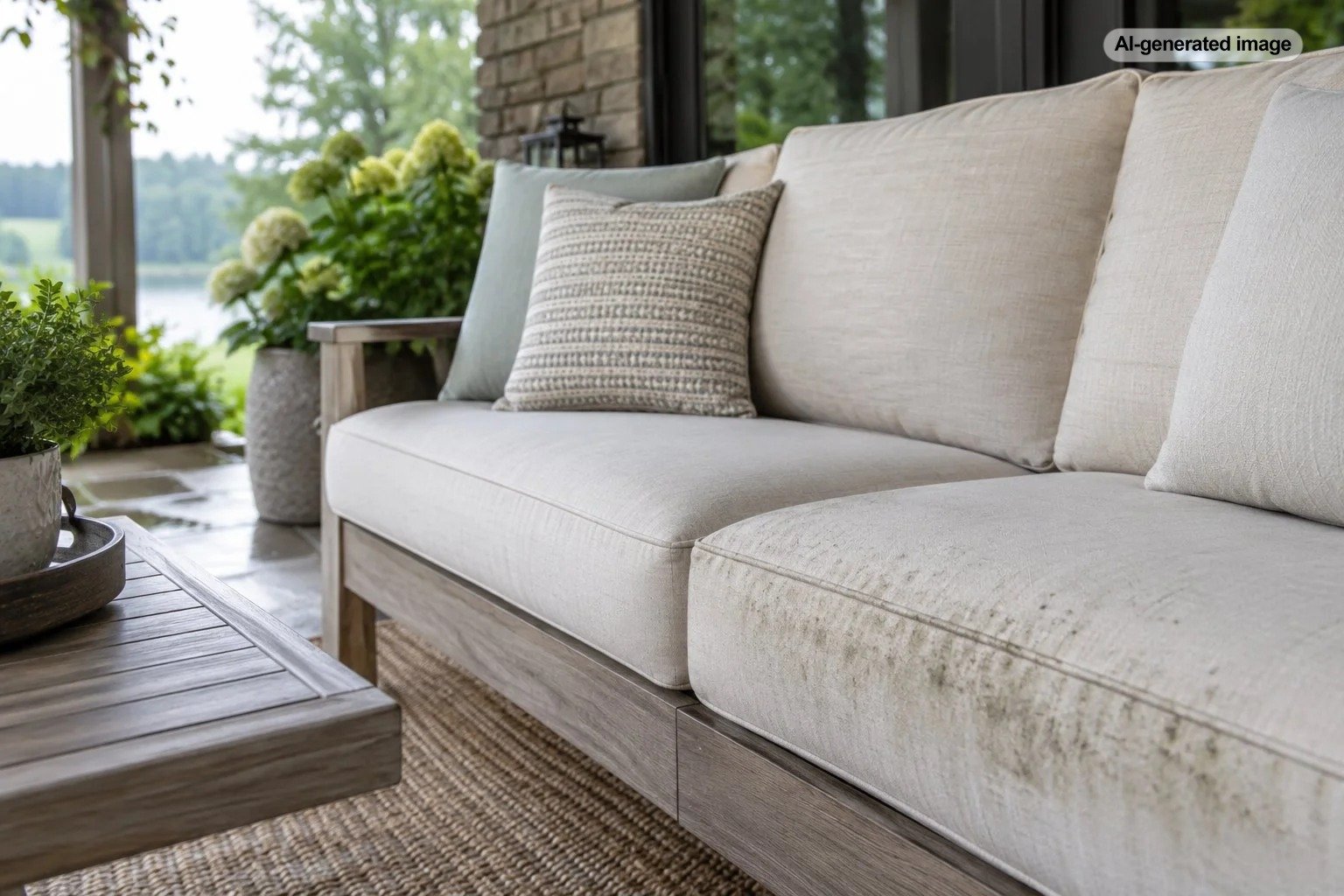
Does Sunbrella Fabric Get Moldy?
Sunbrella fabric is highly resistant to mold and mildew, but that does not mean a Sunbrella cushion can never look moldy. The important distinction is that the fabric itself does not promote mildew growth. Mold or mildew can instead grow on dirt, pollen, food residue, organic debris, or other material sitting on the fabric, particularly when moisture lingers.
That is good news for outdoor furniture owners. A few dark specks after a rainy, humid stretch do not automatically mean the fabric has failed. In many cases, the real problem is a combination of surface contamination, slow drying, and the damp microclimate created around cushions, seams, furniture frames, or storage areas.
Why Mold Can Appear on Mold-Resistant Sunbrella
Mold resistance is not the same thing as creating a sterile surface. Outdoor furniture is constantly exposed to airborne spores as well as pollen, dust, soil, plant debris, sunscreen, food residue, bird droppings, and other organic material. Add rain, condensation, irrigation overspray, or persistent humidity and that surface layer can provide conditions in which mold or mildew becomes visible.
Sunbrella specifically states that its fabrics do not promote mildew growth, while acknowledging that mildew may grow on dirt and other foreign substances that have not been removed. That distinction explains why a cushion can develop spotting even though the underlying performance fabric is designed for demanding outdoor conditions.
The U.S. Environmental Protection Agency likewise emphasizes that moisture control is central to controlling mold. Mold spores are common in indoor and outdoor environments; the practical goal is not eliminating every spore but preventing the sustained dampness that allows growth to continue.
Conditions That Make Mildew More Likely
A cushion that gets wet occasionally and dries promptly is a different situation from one that remains damp for days. Repeated moisture without adequate drying raises the likelihood of trouble, particularly when surface debris is present.
- Persistent shade: Cushions beneath deep roof overhangs or heavily shaded trees may dry slowly after rain.
- High humidity: Warm, humid weather can extend drying time even when the cushion was never soaked.
- Dirty fabric: Pollen, dust, soil, food, and other residue give mildew something other than the synthetic fabric itself to colonize.
- Wet cushion interiors: Water may move through a cover and remain in the cushion filling long after the exterior feels less wet.
- Poor storage: Putting cushions into a deck box, shed, closet, or storage bag while they are still damp can create an ideal enclosed environment for growth.
- Trapped moisture underneath: The bottom of a cushion receives less sun and airflow, especially on solid furniture seats.
How to Clean Mold or Mildew From Sunbrella
For an actual Sunbrella fabric, follow the manufacturer’s instructions for the specific fabric collection rather than assuming that every outdoor textile can tolerate the same treatment. Sunbrella’s current upholstery guidance provides a dedicated method for mold and mildew.
What to do
- Remove loose surface dirt and debris before wet cleaning.
- For Sunbrella upholstery, the manufacturer instructs users to prepare a solution of 1 cup bleach and 1/4 cup mild soap per gallon of water, or to use its designated mold and mildew cleaner.
- Apply the solution across the affected surface and allow it to soak for 15 minutes.
- Clean using a sponge, clean towel, or very soft-bristle brush rather than an abrasive brush.
- Rinse thoroughly so soap and cleaning residue are removed.
- Allow the fabric to air dry completely before putting cushions away or covering them.
Sunbrella also recommends cleaning the entire surface area in situations where localized cleaning could leave water rings or residue. That can be especially useful on seat cushions where a small treated patch might otherwise dry with a noticeable boundary.
Do not automatically transfer these directions to neighboring fabrics, trims, pillows, rugs, painted furniture, or other materials. Bleach can discolor non-Sunbrella textiles and affect surrounding surfaces. Follow product labels, protect nearby materials, and verify that the item you are treating is actually covered in the Sunbrella material for which the instructions were written.
How to Keep It From Coming Back
Cleaning the spotting without changing the moisture conditions can lead to a frustrating repeat performance. Prevention is mostly about keeping organic debris from building up and helping furniture dry thoroughly.
- Brush or vacuum off pollen, leaves, crumbs, and loose dirt periodically rather than waiting for a deep-cleaning day.
- After heavy rain, stand loose cushions on edge so both faces can drain and receive airflow.
- Do not place damp cushions into enclosed storage.
- Check the underside of cushions and the furniture platform before assuming everything is dry.
- Keep furniture away from constantly wet soil, irrigation spray, or areas where roof runoff repeatedly soaks the same cushions.
- Clean spills promptly, especially food, beverages, sunscreen, and other residues that can remain on the surface.
- During extended wet weather, uncover furniture whenever conditions permit so trapped humidity can escape.
Mold resistance helps, but clean fabric plus reliable drying is what keeps outdoor cushions looking fresh.
Is Every Black Spot Actually Mold?
No. Outdoor fabric can acquire many stains that resemble mildew at first glance. Tree debris, pollen, soil splatter, soot, leaf tannins, algae on adjacent surfaces, and grime from furniture frames can all produce dark or greenish marks.
Start by examining where the discoloration occurs. Spotting concentrated along damp seams, undersides, or areas that stay dirty makes mildew more plausible. A streak directly beneath a tree, roof edge, rusty fastener, or furniture joint may point toward another source. The practical advantage of identifying the source is that you can prevent the stain from returning instead of repeatedly treating the fabric.
What About the Cushion Foam Underneath?
The cover is only part of an outdoor cushion system. A Sunbrella cover may perform well while the interior stays damp because of the cushion construction, drainage conditions, or repeated saturation. If a persistent musty odor remains after the cover is cleaned and fully dried, inspect the insert and surrounding furniture rather than repeatedly applying cleaner to the outer fabric.
Removable covers also deserve careful handling. Check the care instructions for the specific Sunbrella application before machine washing, drying, or removing a cover, because cleaning methods vary among product types. The Sunbrella support information notes that some upholstery fabrics may be machine washable while other Sunbrella categories are not.
When Mold on Sunbrella Is More Than a Cosmetic Problem
A few surface spots on an outdoor cushion are usually a maintenance issue rather than evidence of a major household mold problem. The situation deserves more attention when growth repeatedly returns despite thorough cleaning and drying, when the cushion interior remains wet, or when nearby building materials also show moisture damage.
For indoor furniture, enclosed porches, sunrooms, or stored cushions, investigate the environment as well. EPA guidance emphasizes controlling moisture and notes that indoor relative humidity should ideally remain between 30 and 50 percent and, when possible, below 60 percent. Persistent condensation, leaks, or unusually high indoor humidity can therefore be more important than the fabric brand.
Frequently Asked Questions
Is Sunbrella completely mold-proof?
No fabric should be treated as completely immune to the effects of a dirty, persistently damp environment. Sunbrella states that its fabrics do not promote mildew growth, but mildew can grow on dirt and foreign material left on the fabric.
Can you use bleach on Sunbrella?
Sunbrella’s current upholstery instructions include a diluted bleach-and-mild-soap solution for mold and mildew. Follow the instructions for your particular Sunbrella product, rinse thoroughly, protect surrounding non-Sunbrella materials, and observe the safety directions on the cleaning-product labels.
Should outdoor cushions be covered during rain?
A cover can reduce direct exposure, but it should not trap already-damp cushions inside a humid enclosure. Whatever protection method you use, the goal is to keep cushions clean while still allowing them to dry completely after they become wet.
Why does mildew keep returning after cleaning?
Recurring growth usually means the conditions supporting it have not been fully corrected. Look for trapped dirt, wet cushion inserts, slow-drying undersides, irrigation, leaks, enclosed storage, or inadequate airflow rather than focusing only on the visible stain.