
Do Ceiling Fans Actually Lower Room Temperature?
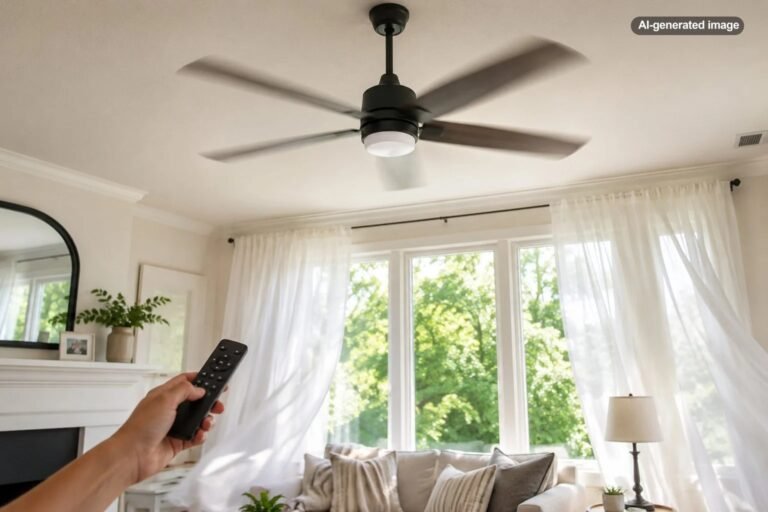
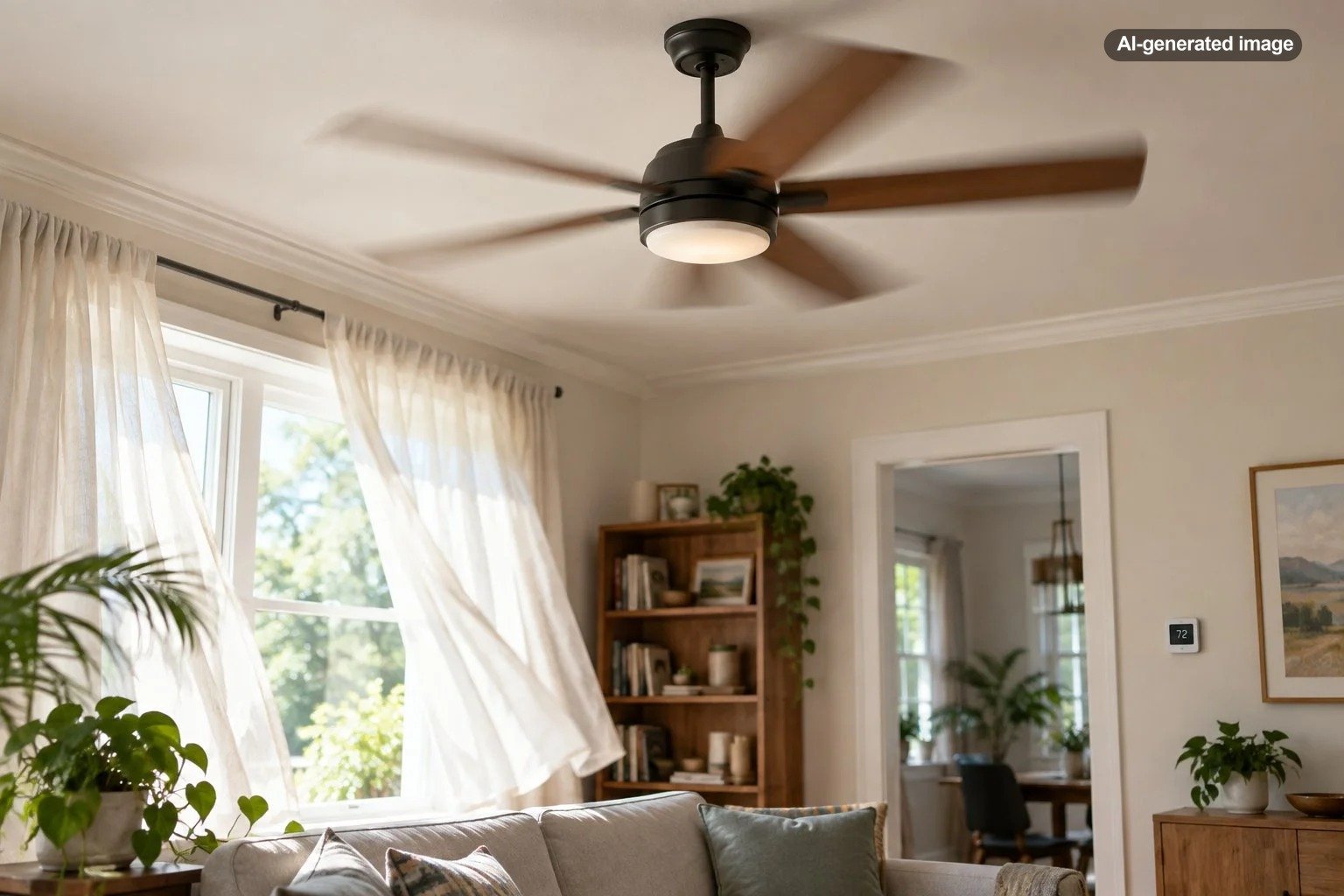
A ceiling fan can make a warm room feel noticeably more comfortable, but it does not actually lower the room’s air temperature in the way an air conditioner does. The fan moves air across your skin, helping your body release heat more effectively. That difference between feeling cooler and making the room cooler explains nearly everything about how ceiling fans should be used.
That also means a fan is most useful when someone is in the room. Leaving one spinning in an empty bedroom does not gradually chill the air for later.
Why a ceiling fan feels cooler even when the thermometer does not change
Your body constantly releases heat. When moving air passes over your skin, it can increase the cooling effect associated with evaporation and heat transfer at the body’s surface. That is why a breeze can feel refreshing even when the air outdoors is exactly the same temperature as it was a moment earlier.
A ceiling fan creates that breeze indoors. ENERGY STAR describes the effect as a wind-chill effect and emphasizes a useful rule: ceiling fans cool people, not rooms. ENERGY STAR’s ceiling fan guidance therefore recommends turning a fan off when the room is unoccupied.
This distinction matters because a thermostat measures air temperature. If a room is 78 degrees F before the fan starts, the thermostat may still read approximately 78 degrees F after the fan has been running. A person sitting beneath the fan, however, may feel substantially more comfortable.
A ceiling fan changes how the room feels far more than it changes what the thermostat reads.
What happens to the actual temperature when a fan runs?
A typical ceiling fan is not a refrigeration system. It does not move indoor heat outdoors, which is what an air conditioner or heat pump does while cooling. Instead, its motor turns blades that circulate the existing indoor air.
The motor also consumes electricity and produces a small amount of heat while operating. In practical household terms, that does not mean the fan will suddenly make a room hot. It simply reinforces why running a fan in an empty room is not a useful strategy for pre-cooling the space.
There are situations in which circulation can make temperatures within a room feel more even. A tall or vaulted room, for example, can develop temperature differences between the occupied area and the air near the ceiling. Moving air may redistribute some of that heat. Redistribution, however, is different from removing heat from the house.
Why ceiling fans can still help with air-conditioning comfort
The practical advantage of a ceiling fan is that comfort does not depend solely on the thermostat setting. If moving air makes you comfortable at a slightly warmer indoor temperature, the cooling system may not have to maintain as low a thermostat setting.
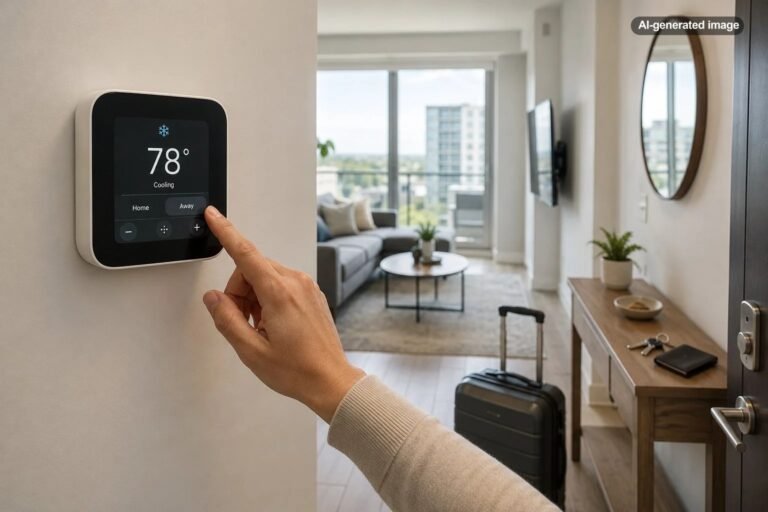
ENERGY STAR specifically recommends adjusting the thermostat when using a ceiling fan because combining airflow with an appropriate thermostat setting can reduce air-conditioning demand. The exact result depends on the home, climate, equipment, occupancy, insulation, fan, and thermostat habits, so there is no universal savings figure that applies to every household.
Which direction should a ceiling fan turn in summer?
For warm-weather comfort, ENERGY STAR recommends operating a ceiling fan counterclockwise when viewed from below. This direction is intended to produce a downward breeze that you can feel in the occupied part of the room.
Do not rely entirely on the appearance of the spinning blades, especially when a fan has an unusual blade shape. Stand beneath the fan instead. During summer operation, you should feel noticeable downward airflow.
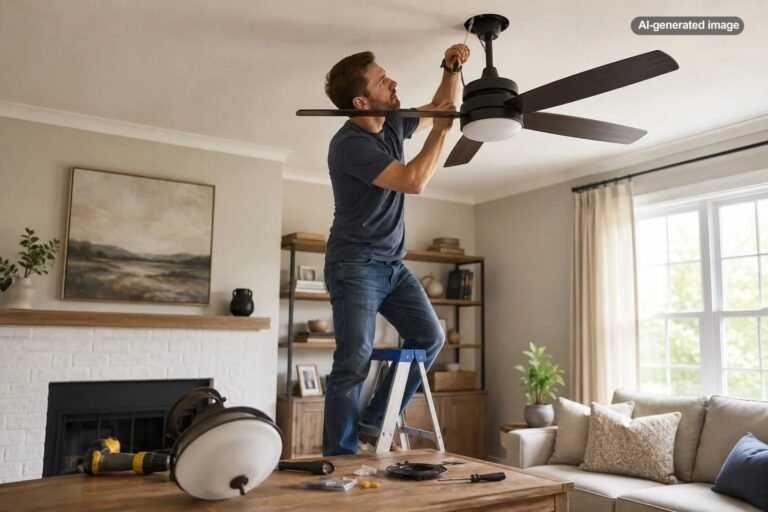
Many reversible fans have a switch on the motor housing, while others use a remote, wall control, or app. Follow the manufacturer’s instructions for changing direction. Some models should be stopped before the direction is reversed.
How fan speed changes comfort
More airflow generally creates a stronger cooling sensation, which is why high fan speed may feel best on a humid summer afternoon. Maximum speed is not always necessary, though. A lower speed can provide enough air movement for sleeping, reading, dining, or working without creating excessive breeze or noise.
The best speed is therefore less about chasing a specific number and more about finding the lowest setting that provides the comfort you want. Fan performance also varies significantly by design. Blade span, motor performance, blade design, mounting configuration, and other factors all influence airflow.
ENERGY STAR notes that blade pitch alone does not determine how much air a fan moves. Motor design, speed, blade material, blade length, and other characteristics also matter, so judging a fan simply by dramatic-looking blades can be misleading.
| Situation | What the fan does | What it does not do |
|---|---|---|
| Occupied warm room | Creates airflow that can make people feel cooler | Act like an air conditioner |
| Empty warm room | Circulates the existing air | Store up cooling for later |
| Room with air conditioning | May improve comfort at a less aggressive thermostat setting | Replace the cooling system during significant heat |
| Tall room | Can help redistribute air within the space | Remove accumulated heat from the home |
Should you leave a ceiling fan on when you leave the room?
Usually, no. Because the main summer benefit comes from air moving across people, an unoccupied room receives little benefit from keeping the fan running. ENERGY STAR recommends switching ceiling fans off when nobody is in the room.
There can be specialized reasons to circulate air in a home, but that is a different goal from personal cooling. A ceiling fan should not automatically be treated as a substitute for dedicated ventilation, humidity control, filtration, or HVAC circulation when one of those systems is needed.
Can a ceiling fan help in winter too?
Yes, although the objective changes. In winter, ENERGY STAR recommends reversing a compatible fan and operating it clockwise at low speed. The resulting gentle updraft can help redistribute warm air that has collected near the ceiling toward the occupied portion of the room.
The U.S. Department of Energy likewise notes that a ceiling fan used this way does not change the room’s temperature; its role is to circulate warm air. Department of Energy winter guidance recommends clockwise operation at low speed for this purpose.
Winter operation can be especially relevant in rooms with tall ceilings, but comfort varies by layout. If the fan produces a noticeable chilly breeze instead of gentle circulation, the speed may be too high or the direction may be incorrect.
What if your ceiling fan barely creates a breeze?
If the fan is spinning but provides little useful airflow, first check the basics before assuming the room simply needs a larger fan.
What to check
- Confirm the direction. For summer comfort, make sure the fan produces downward airflow.
- Try another speed. Low speed may be too subtle for a warm room.
- Consider the mounting position. A fan mounted very close to the ceiling can have different airflow performance from a properly suspended design.
- Look at room scale. A fan that is poorly matched to a large space may not create useful airflow where people actually sit.
- Check for wobbling or unusual behavior. Loose, damaged, or improperly installed components deserve attention rather than simply increasing the speed.
ENERGY STAR notes that low-profile or hugger fans can be useful where ceiling height is limited, but their proximity to the ceiling can reduce airflow compared with a conventional installation. Always follow the fan manufacturer’s mounting, clearance, and electrical instructions.
When a ceiling fan is not enough
A fan can improve comfort, but it cannot solve every hot-room problem. If one room remains dramatically warmer than the rest of the home, especially while the cooling system is running, the underlying issue could involve solar heat gain, insulation, air leakage, duct performance, HVAC balance, window exposure, or another building condition.
Likewise, a ceiling fan is not a substitute for appropriate cooling when indoor conditions become dangerously hot. People who are particularly vulnerable to heat should follow relevant public-health guidance rather than relying solely on airflow for protection.
FAQ
Does a ceiling fan cool a room if the windows are closed?
It can make occupants feel cooler, but closing the windows does not turn the fan into a cooling appliance. It still primarily circulates the indoor air.
Will a ceiling fan make my thermostat read lower?
Usually not simply because the fan is running. The thermostat measures air temperature, while the primary cooling effect of a fan is experienced by people in the moving air.
Should I use a ceiling fan and AC at the same time?
They can work well together. The fan can improve personal comfort while the air conditioner actually removes heat from the indoor environment. The greatest practical benefit comes when the added airflow allows you to use a more moderate thermostat setting while remaining comfortable.
Does a faster ceiling fan make the room colder?
A faster setting may create stronger airflow and make you feel cooler, but it does not necessarily lower the room’s actual air temperature.
Is it better to leave ceiling fans running all day?
Not for ordinary personal cooling. If nobody is in the room, ENERGY STAR recommends turning the fan off because ceiling fans primarily cool people through moving air.
The bottom line
Ceiling fans are effective comfort tools precisely because they do not have to refrigerate an entire room to make a difference. Their job is to move air. In summer, that breeze can make occupants feel cooler; in winter, a reversible fan can help redistribute warm air within a room.
The simplest rule is also the most useful: use the fan when people are there to benefit from the airflow, and use the HVAC system when the actual indoor temperature needs to change.