Why Does My Sliding Door Lock Become Hard to Use?
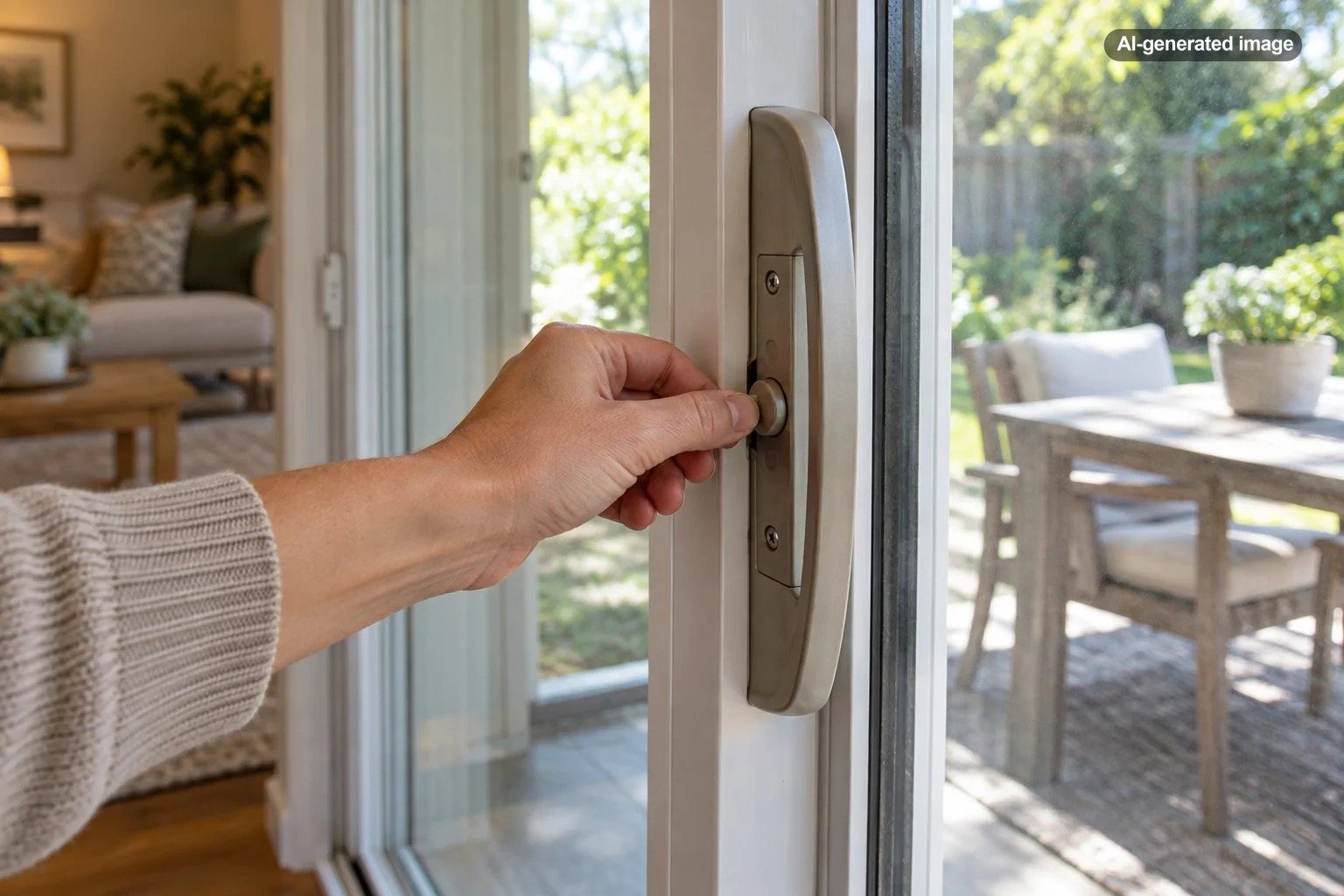
A sliding door lock that suddenly becomes hard to use often has a simpler cause than a failed lock. The moving door panel may have shifted slightly, debris may be affecting how it rolls, or the latch and its receiver may no longer line up cleanly. The important clue is whether the lock operates normally when the door is open but becomes stiff only after the door is closed.
Do not force a stubborn thumbturn, handle, or key. Extra pressure can damage the lock hardware without correcting the alignment problem that is creating the resistance.
Why a sliding door lock becomes difficult to operate
A sliding patio door depends on several parts working together. Rollers support the moving panel, the track guides it, and the lock must meet a receiver or strike at the correct height and depth. A relatively small change in any of those relationships can make the locking action feel surprisingly stiff.
Manufacturers such as Andersen and Pella specifically identify panel alignment, roller position, track debris, and lock or strike adjustment as potential causes of difficult operation. That is why troubleshooting the entire door movement is usually more useful than concentrating on the lock handle alone.
The door panel may be slightly out of alignment
Close the sliding panel slowly and look at the vertical gap between its edge and the frame. Ideally, that gap should appear reasonably even from top to bottom. If the panel approaches the jamb at an angle, the latch may enter its receiver too high, too low, or at the wrong angle.
Roller adjustment can affect that relationship. On doors designed with adjustable rollers, changing roller height can square the moving panel with the frame. The correct adjustment method varies considerably by manufacturer and door series, so use the instructions for your exact door rather than assuming every adjustment screw works the same way.
Dirt in the track can affect more than sliding effort
A dirty track may seem unrelated to the lock, but accumulated grit, pet hair, construction debris, or other material can interfere with smooth panel movement. If the door does not arrive at the jamb in its normal position, the latch can become harder to engage.
Start with simple cleaning. Vacuum loose debris and wipe accessible track surfaces without forcing tools into concealed mechanisms. If the door still drags, the issue may involve roller adjustment, roller wear, track damage, or another condition that cleaning alone cannot correct.
Use this simple troubleshooting order
What to do
- Test the lock with the door open. Operate the thumbturn or handle gently without the latch engaging the frame.
- Clean the track. Remove obvious dirt and debris that could prevent the panel from reaching its normal closed position.
- Close the door slowly. Notice whether you have to lift, push, pull, or otherwise reposition the panel before the lock will operate.
- Check the panel gap. Look for an obvious difference between the gap at the top and bottom of the closing edge.
- Observe the latch and receiver. Without putting fingers near moving hardware, look for signs that the latch approaches the receiver too high, low, or sideways.
- Consult the door instructions before adjusting hardware. Roller, keeper, strike, and lock adjustments differ by product.
This sequence separates a problem inside the lock from a problem created by the rest of the door. It also keeps you from making unnecessary adjustments before checking easier causes.
Signs the rollers or panel position may be responsible
Pay attention to how the entire door feels, not merely the lock. A panel that has become noticeably harder to slide, needs to be lifted to close, rubs along part of its travel, or meets the jamb unevenly deserves inspection before you alter the lock hardware.
Adjustable rollers are common on sliding patio doors, but access locations and adjustment directions are model-specific. Pella documentation, for example, describes certain doors in which roller adjustment is used to make the movable panel parallel with the side of the frame, while Andersen likewise directs homeowners to check the gap between the operating panel and jamb when diagnosing alignment.
If the door is very large or heavy, avoid removing the panel casually. Sliding glass panels can be difficult to control, and the safest next step may be professional service rather than turning a small lock problem into a damaged door or an injury risk.
When the strike or receiver is the problem
If the door slides well and closes squarely but the lock still binds at the final moment, the receiver may need attention. Depending on the door, this component may be called a strike, keeper, or latch receiver.
Some manufacturers provide adjustment procedures that move the receiver so the lock hook or latch engages correctly. This should be treated as a precise adjustment, not an invitation to enlarge holes, bend hardware, or force the locking mechanism. Marking an existing position before making an approved adjustment can also make it easier to return to the starting point if the change does not help.
A sliding door lock should secure the door without requiring you to wrestle the panel into position first.
Could the lock mechanism itself be worn?
Yes. If the lock remains stiff when the door is completely open and nothing is engaging the frame, the problem is more likely to be within the handle, lock, key cylinder, or related hardware. Damage, looseness, corrosion, or internal wear can all justify closer inspection.
A useful distinction is consistency. Alignment problems often change depending on how firmly the door is closed or whether you lift or push the panel. A failing lock mechanism may feel rough or resistant regardless of panel position.
If screws are visibly loose, follow the manufacturer’s instructions for your hardware. If the mechanism appears damaged or requires disassembly beyond routine owner maintenance, replacement or professional repair may be the cleaner option.
What not to do with a stubborn sliding door lock
- Do not repeatedly force the handle or thumbturn against heavy resistance.
- Do not assume every visible screw is an adjustment screw.
- Do not bend the latch or strike to make the parts meet.
- Do not remove a heavy glass panel unless you have the equipment and experience to handle it safely.
- Do not make security-related modifications that prevent the door from closing or locking as designed.
- Do not apply a lubricant simply because the lock feels stiff without first checking the manufacturer’s care instructions for the specific component.
Some patio door systems have specific maintenance restrictions for tracks or hardware. Using the wrong lubricant or altering parts without understanding their function can create a second problem instead of solving the first.
How to reduce future lock problems
Keep the sliding track reasonably clean and pay attention when the door begins requiring more effort than usual. Early changes in sliding resistance can precede obvious locking trouble because the moving panel and lock alignment are connected.
Also avoid treating the lock as the tool that pulls a poorly positioned door into place. If you regularly have to lift the handle, shove the panel inward, or lean against the door before locking it, investigate the alignment instead. A properly functioning system should bring the latch and receiver together naturally.
For doors in exposed locations, periodically inspect accessible hardware for looseness, deterioration, or corrosion. Coastal environments can be particularly demanding on exterior hardware, but maintenance recommendations differ by product and material, so the door manufacturer’s current care guidance should take priority.
Frequently asked questions
Why does my sliding door lock work when the door is open but not when it is closed?
That pattern strongly suggests an alignment issue. The latch may not be meeting its receiver correctly because of panel position, roller adjustment, debris, or movement of the strike or receiver.
Can a dirty sliding door track make the lock hard to turn?
Indirectly, yes. Debris can interfere with smooth panel movement and prevent the door from reaching its proper closed position, which can leave the lock and receiver misaligned.
Should I adjust the sliding door rollers myself?
Some manufacturers provide owner-accessible roller adjustment procedures, but the method is specific to the door. Identify the manufacturer and model or series and follow its instructions. For a very heavy panel, damaged track, or uncertain installation, professional service is the safer choice.
When should a sliding door lock be replaced?
Replacement becomes more likely when the lock is difficult to operate even with the door open, hardware is damaged, the mechanism no longer engages reliably after alignment is corrected, or the manufacturer identifies replacement as the appropriate remedy.