Why Does My AC Vent Make a Popping or Ticking Sound?
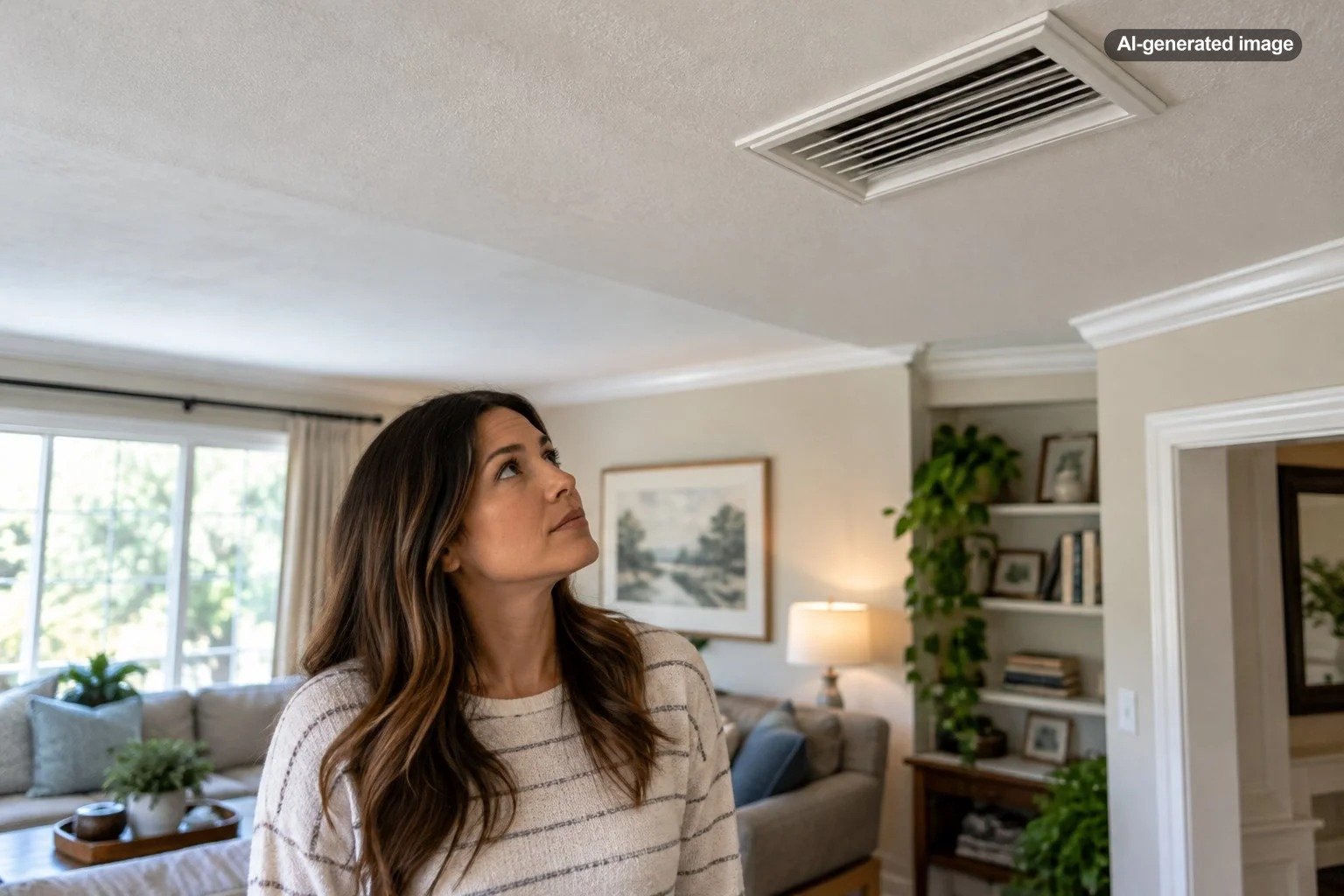
Your air conditioner switches on, cool air begins flowing, and a few seconds later, you hear a pop from the ceiling. Perhaps it sounds like someone lightly tapping a metal pan. Or maybe a faint ticking continues after the system shuts off. When an otherwise quiet room develops its own little percussion section, it is reasonable to wonder whether something is wrong.
An AC vent commonly makes popping or ticking sounds because metal ductwork expands and contracts as temperatures change. Air pressure can also cause flexible metal duct panels to shift, while a loose vent cover or moving damper may produce clicking or rattling. These noises are not automatically signs of equipment failure, particularly when they occur briefly at the beginning or end of a cooling cycle.
The important clues are when the noise happens, exactly where it comes from, and whether the air conditioner is otherwise cooling normally. Understanding those details can help you distinguish an ordinary ductwork sound from a problem that deserves professional attention.
1. Metal Ductwork Expands and Contracts as It Changes Temperature
One of the most common explanations for an AC vent making a ticking sound is thermal expansion and contraction. Many residential duct systems contain galvanized sheet metal, which changes dimensions slightly as its temperature rises or falls.
When your air conditioner begins sending cool air through a warmer duct, the metal gradually cools and contracts. As the system stops and the surrounding materials warm again, the process reverses. The dimensional changes are usually small, but connected panels, seams, fasteners, and support points can briefly resist movement before shifting.
That sudden movement can produce a distinct tick, snap, or pop. The sound may seem to come directly from a ceiling register even when its actual source is a metal duct concealed several feet away.
What thermal movement usually sounds like
- A few individual ticks shortly after the cooling system starts.
- Light popping sounds as the ductwork begins cooling.
- Occasional ticking after the blower stops.
- Similar sounds during heating cycles when the same ductwork carries warm air.
Temperature-related noises are generally less concerning when they are brief, predictable, and unaccompanied by changes in comfort or airflow. However, unusually loud or increasingly frequent popping should not automatically be dismissed as normal expansion.
2. Air Pressure Can Make Metal Duct Panels Pop
Temperature changes are not the only reason metal ductwork moves. The blower inside your HVAC system creates pressure differences that push conditioned air through the supply ducts and draw return air back toward the equipment.
Some sheet-metal duct surfaces flex slightly as these pressures change. A relatively broad, unsupported panel may shift inward or outward with an audible pop. The effect is sometimes described as oil canning because the metal behaves somewhat like the flexible bottom of an old-fashioned oil can.
Imagine hearing one sharp pop immediately after the blower starts and another when it stops. That pattern can suggest pressure-related panel movement rather than a slow series of temperature-related ticks.
Excessive pressure can make the problem more noticeable. Possible contributing factors include restricted filters, obstructed return openings, poorly sized ductwork, and duct configurations that create unnecessary resistance to airflow.
3. A Loose Register or Vent Cover May Be Ticking
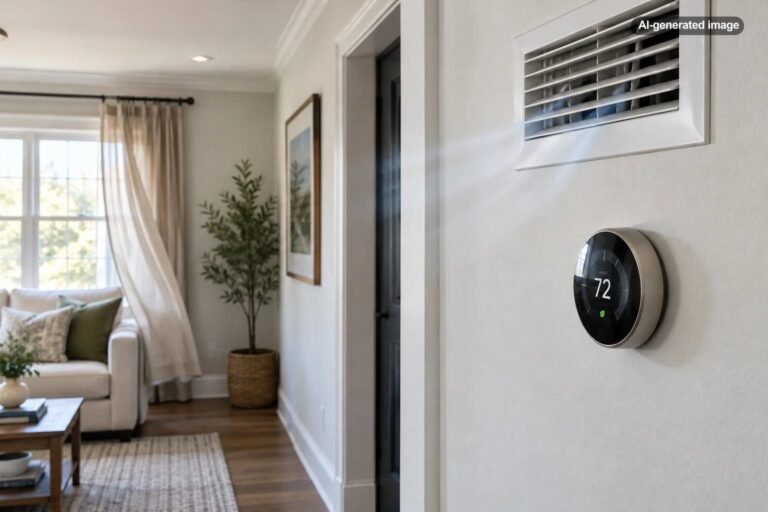
Sometimes the simplest explanation is right at the visible opening. A ceiling, wall, or floor register may have a slightly loose screw, a poorly seated frame, or adjustable louvers that vibrate when the blower operates.
Changes in airflow can also cause lightweight components to move against one another. This may produce repeated clicking, buzzing, or rattling that sounds different from the isolated pops associated with sheet-metal movement.
A register-related noise is especially plausible when the sound appears concentrated at one opening and continues while air is flowing. It may also change when the adjustable louvers move.
What to check at the register
With the system switched off, inspect the visible vent cover for loose or missing fasteners, noticeable movement, and louvers that do not stay in position. If the cover is designed to be removable, follow the manufacturer’s guidance and avoid disturbing any surrounding materials.
A properly fitted register should sit securely without being bent or forced against an uneven surface. If a screw is loose, gently securing it may resolve a simple rattle. Avoid overtightening fasteners, especially on plastic covers or thin metal frames.
Do not insert tools deep into the duct, reach toward moving equipment, or dismantle an inaccessible connection simply to chase a noise.
4. Restricted Airflow May Make Existing Duct Noises Louder
A system that cannot move air freely may develop greater pressure differences across portions of its ductwork. The resulting movement can amplify existing pops and rattles.
Common airflow restrictions include:
- A dirty air filter: Dust accumulation can increase resistance to airflow.
- Blocked return grilles: Furniture, stored items, or other obstructions can interfere with air returning to the system.
- Closed supply registers: Closing multiple vents can change system airflow and pressure.
- Compressed flexible ductwork: Sharp bends or crushed sections can restrict air movement.
- Undersized ductwork: A duct system that was not designed for the equipment’s airflow requirements may operate with excessive resistance.
A dirty filter does not directly make metal click. Rather, it may contribute to operating conditions that encourage duct movement or noise.
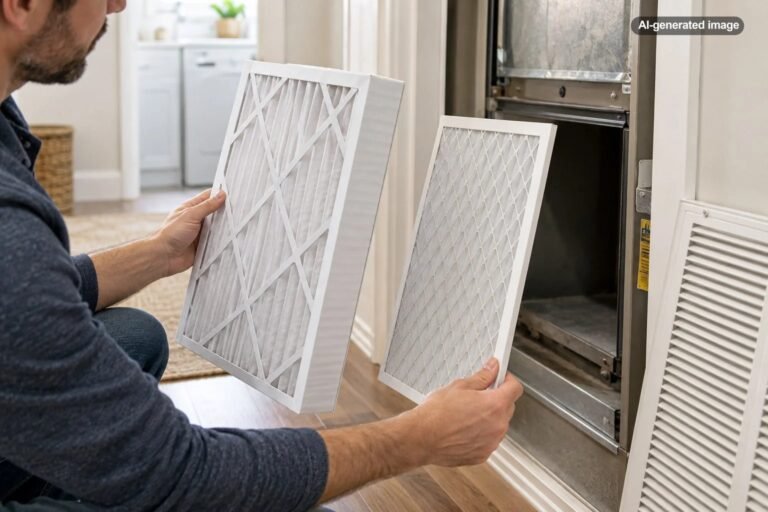
Check the filter against the equipment manufacturer’s instructions, and replace or clean it when appropriate. Use the specified filter size and a compatible filtration rating. A more restrictive filter is not necessarily an improvement if the system cannot accommodate it.
Also make sure accessible supply and return openings are unobstructed. Avoid closing vents throughout the house as a noise-control strategy unless the system was designed and balanced for that arrangement.
5. Duct Supports, Dampers, and Connections Can Also Make Noise
Not every clicking sound originates from the sheet metal itself. Ductwork is assembled from multiple sections, fittings, supports, and sometimes internal airflow-control dampers.
If a duct section has insufficient support, it may move slightly when the blower starts. Metal joints can transmit vibration into framing or other nearby materials. An adjustable damper or its linkage may also move or rattle as airflow changes.
In systems equipped with motorized zoning dampers, clicking may coincide with a commanded change in airflow direction. A brief operating sound can be expected in some equipment, but repeated, unusually loud, or continuous clicking may justify inspection.
The location matters. A sound coming from a visible ceiling register has a different diagnostic path from a sound originating near the air handler, electrical controls, or refrigerant components. Do not assume that every clicking sound heard through a vent actually comes from the duct.
How to Tell What Your AC Vent Noise Probably Means
The timing and character of the sound are often more useful than its volume alone. The following comparison offers clues, not a definitive diagnosis.
| Sound pattern | Possible explanation | Useful next step |
|---|---|---|
| Light ticks after cooling starts | Thermal contraction of ductwork | Watch for a consistent, brief pattern |
| Single pop when blower starts or stops | Sheet-metal pressure movement | Check for obvious airflow restrictions |
| Rapid rattling while air flows | Loose register, grille, or duct connection | Inspect accessible cover fasteners |
| Repeated clicking near equipment | Control, damper, or mechanical component | Arrange equipment inspection if persistent |
| Loud popping with weak airflow | Possible duct restriction or pressure problem | Request professional airflow evaluation |
| Noise with smoke, burning odor, or sparking | Potentially hazardous malfunction | Stop operation and seek appropriate urgent help |
One important distinction is whether the sound happens once per operating cycle or repeats continuously. A few ticks as temperatures change may be entirely different from rhythmic clicking that lasts throughout a cooling cycle.
A Simple Way to Narrow Down the Noise
You do not need to open equipment panels or investigate hidden ductwork to collect useful information. A short observation sequence can make the next step much clearer.
What to do
- Identify the timing. Notice whether the sound occurs before airflow begins, immediately when the blower starts, several minutes into cooling, or after shutdown.
- Locate the loudest area. Listen from normal room positions near different registers and the equipment area without removing protective covers.
- Check the air filter. Follow the manufacturer’s instructions to determine whether cleaning or replacement is needed.
- Clear visible obstructions. Move furniture and other items away from supply and return grilles.
- Inspect accessible registers. With the system off, look for loose fasteners, poorly seated covers, or visibly damaged louvers.
- Observe system performance. Note whether rooms cool normally, airflow feels consistent, and the system operates without unexpected shutdowns.
- Record the noise. A short audio or video recording, along with the time it occurs, can help a technician investigate an intermittent problem.
Do not repeatedly force the system to start and stop in quick succession to reproduce the noise. Instead, listen during ordinary thermostat-controlled cycles.
If you live in an apartment or condo, limit inspection to controls, filters, and registers you are authorized to access. Concealed ductwork and shared mechanical systems should be evaluated through building management or an appropriate service professional.
When Is an AC Vent Popping Sound a Problem?
A quiet tick at the end of a cooling cycle is not the same as a sudden loud bang accompanied by a loss of cooling. The surrounding symptoms determine how urgently the issue needs attention.
A qualified HVAC technician can assess duct pressure, equipment airflow, filter restrictions, register sizing, support conditions, and connections. Measurements are especially useful because an apparently noisy vent may be a symptom of a broader air distribution problem.
A technician may recommend securing a loose fitting, adjusting a supported duct section, correcting an airflow restriction, or addressing a design problem. The appropriate repair depends on identifying the source rather than simply muffling the sound.
Can You Make the Popping Stop Completely?
Sometimes, but not always. Small temperature-related movements are inherent to materials that heat and cool during normal operation. Eliminating every faint tick may not be realistic or necessary.
If the noise comes from a loose register, a straightforward adjustment may help. If a large sheet-metal panel is flexing under pressure, the remedy may involve additional support or a correction to system airflow. These repairs should be evaluated by someone familiar with duct construction and HVAC design.
It is tempting to wedge foam into an opening, tape over a noisy grille, or close the vent entirely. These approaches can create new problems by obstructing airflow, concealing a defect, or introducing unsuitable materials into the air distribution system.
Duct sealing is another area where the details matter. ENERGY STAR recommends appropriate duct-sealing materials, such as mastic or suitable metal tape, rather than ordinary cloth-backed duct tape for lasting repairs. However, sealing a joint will not necessarily resolve thermal expansion or pressure-related popping.
Likewise, adding insulation can help control heat transfer and condensation where appropriate, but insulation should not be treated as a guaranteed cure for mechanical movement. The cause must guide the repair.
Why a Vent May Start Popping Even If It Never Did Before
A new noise does not always mean something has broken. Changes in outdoor conditions, indoor temperatures, operating schedules, and airflow can make existing duct movement more noticeable.
For example, a duct running through a hot attic may experience a larger temperature change when cooling begins during especially warm weather. A newly installed filter with a different resistance to airflow may change pressure conditions. Recently adjusted registers, new equipment, or modifications to duct connections can also alter how sound travels through the system.
The distinction is not whether the noise is new by itself, but whether it is changing, intensifying, or appearing alongside other symptoms.
Frequently Asked Questions
Is it normal for an AC vent to tick after the air conditioner turns off?
Occasional ticking after shutdown can result from ductwork returning toward the surrounding temperature. If the sound is brief and cooling performance remains normal, it is often less concerning than persistent mechanical noise. Repeated loud clicking or other unusual symptoms merit inspection.
Why does my AC vent pop only at night?
The sound may be easier to hear when the house is quiet. Nighttime changes in temperatures and cooling schedules can also affect duct movement. The fact that a sound occurs at night does not establish its cause, so consider whether it coincides with the blower starting or stopping.
Can a dirty AC filter cause ductwork to pop?
Indirectly, yes. A dirty filter can restrict airflow and contribute to pressure changes that make some duct panels flex or existing noises more noticeable. Replacing a dirty filter may help when restriction is involved, but it will not fix every popping sound.
Should I replace a noisy AC vent cover?
Only when the cover itself is responsible or visibly damaged. If the noise is transmitted from concealed ductwork, replacing the register may do little. Inspect its fit and fasteners before assuming a new cover is needed.
Can duct popping damage my air conditioner?
Minor thermal movement does not necessarily indicate damage to the cooling equipment. However, popping caused by excessive duct pressure or airflow restrictions may accompany conditions that affect comfort and system performance. A technician can determine whether the sound reflects a larger problem.
The Bottom Line
When an AC vent makes a popping or ticking sound, start with the simplest explanations: metal changing temperature, a duct panel flexing as air pressure changes, or a loose register reacting to airflow. A few predictable sounds at the beginning or end of a cycle are often less concerning than continuous rattling, loud recurring bangs, or noises accompanied by poor cooling.
Check accessible filters and registers, observe the timing, and pay attention to how the system performs. If the noise is worsening or accompanied by other symptoms, professional evaluation can distinguish harmless duct movement from an airflow or equipment problem. The goal is not necessarily a perfectly silent house, but a cooling system that operates reliably and comfortably.
Sources & Further Reading
- ENERGY STAR: Duct Sealing – Guidance on duct leakage, airflow problems, and appropriate sealing methods.
- ENERGY STAR: Hire a Professional Contractor for Duct Improvement Projects – Recommended professional evaluation of duct connections, airflow balance, and damaged ductwork.
- ENERGY STAR: When Is It Time to Replace? – Warning signs involving noisy cooling systems, undersized ducts, and equipment problems.
- ENERGY STAR: HVAC Quality Installation – The importance of proper sizing, airflow, and duct evaluation.
- U.S. Department of Energy: HVAC Duct Terminal Sizing – How grille sizing and air distribution design influence noise and comfort.
- Carrier: What Is Ductwork? – Overview of duct materials, maintenance, airflow restrictions, and unusual duct noises.