How Often Should You Clean an Unused Guest Bathroom?
An unused guest bathroom generally needs a light cleaning every two to four weeks and a more thorough cleaning every one to three months, even when nobody has used it. The exact schedule depends on dust, humidity, ventilation, and whether the room contains a shower or bathtub. A bathroom that sits empty does not necessarily stay clean, but it usually requires considerably less attention than one used every day.
The goal is not to scrub an untouched bathroom every weekend. It is to prevent small problems such as dust buildup, stale odors, moisture accumulation, and neglected plumbing from becoming unpleasant surprises when guests arrive.
Why Does an Unused Bathroom Still Get Dirty?
Even behind a closed door, a guest bathroom is part of the household environment. Dust settles on countertops, toilet lids, shelves, light fixtures, and floors. Air movement can carry lint, pollen, and other small particles into the room.
Bathrooms also contain plumbing fixtures and materials that respond to moisture. A shower enclosure may collect condensation when indoor humidity is high, even if nobody has showered there. A slowly dripping faucet can leave mineral deposits, while a minor leak inside a vanity may go unnoticed because the cabinet is rarely opened.
Stored towels and bath mats can also absorb odors or humidity. In a dry room, they may remain fresh for an extended period. In a damp room, leaving them untouched for months is less appealing.
There is another practical consideration: a guest bathroom often remains closed until shortly before someone visits. That makes regular inspections particularly useful because small maintenance issues otherwise have plenty of time to develop without attracting attention.
A Practical Cleaning Schedule for an Unused Guest Bathroom
There is no universal cleaning interval established specifically for bathrooms that nobody uses. The following schedule is a reasonable household-maintenance starting point, not a mandatory sanitation standard.
| Frequency | Recommended tasks |
|---|---|
| Weekly | Check for odors, leaks, moisture, and visible dirt. Inspect plumbing fixtures and the area around the toilet. |
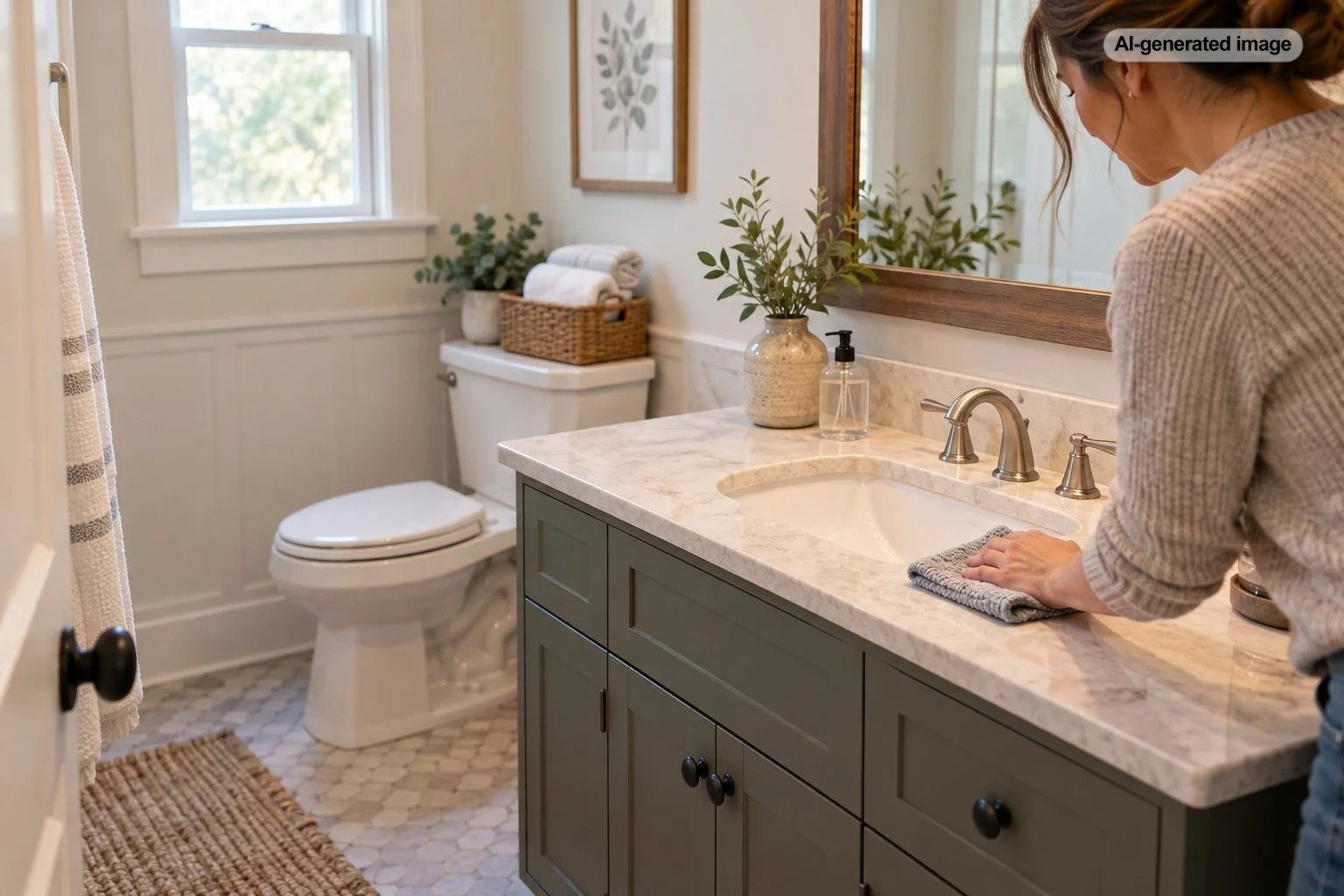
| Every 2-4 weeks | Dust surfaces, wipe the sink and counter, clean the toilet, check the mirror, and sweep or vacuum the floor. |
| Every 1-3 months | Clean the shower or tub, wash the floor, wipe fixtures and baseboards, inspect grout and caulk, and refresh stored linens as needed. |
| Before guests arrive | Clean frequently touched surfaces, inspect the toilet and sink, provide fresh towels, replenish supplies, and check for odors. |
| After guests leave | Clean used fixtures and surfaces, wash used towels and bath mats, remove trash, and dry the room thoroughly. |
A bathroom with persistent humidity, frequent dust accumulation, or occasional household use may need cleaning more often. Conversely, a climate-controlled bathroom that stays consistently dry may require very little work between its scheduled inspections.
Which Bathroom Surfaces Need the Most Attention?
The toilet
The toilet deserves regular inspection even when it receives little use. Dust settles on the lid, tank, and exterior surfaces, while mineral deposits or discoloration may develop in the bowl depending on water conditions.
During a routine cleaning, use an appropriate toilet cleaner for the bowl and a surface-compatible cleaner for the seat, lid, tank, handle, and exterior. Pay attention to the floor around the base, where dust and moisture can be easy to overlook.
Occasionally flushing the toilet during your inspection also provides an opportunity to notice abnormal filling, leaks, or changes in the water level. If the bowl repeatedly loses water or an unusual odor persists, investigate the plumbing concern rather than assuming additional cleaning will solve it.
The sink and countertop
Guest sinks often accumulate more dust than actual soap residue. A soft cloth and a suitable mild cleaner are generally sufficient for routine maintenance.
Check around the faucet base and drain opening for mineral deposits, discoloration, or signs of dripping. Open the vanity cabinet periodically to look for dampness, stains, or musty odors that could indicate a leak.
Choose cleaning products appropriate for the countertop material. Natural stone, certain metals, and specialty finishes may be damaged by acidic or abrasive cleaners.
The shower or bathtub
An unused shower generally does not develop the same quantity of soap scum as a regularly used one. Nevertheless, it may collect dust, condensation, and mineral deposits.
Inspect tile joints, grout, caulk, glass, and the area around the drain. If everything is dry and clean, a periodic gentle wash may be sufficient. If there is visible moisture or recurring discoloration, deal with the moisture source instead of simply increasing the amount of cleaner.
For showers with glass doors, check the tracks and lower edges where water can collect. For bathtubs with curtains, make sure the curtain and liner are clean and fully dry before leaving the room unused again.
Floors, baseboards, and ventilation grilles
Bathroom floors collect dust, hair, lint, and particles carried in from nearby rooms. Sweep or vacuum before using a floor cleaner appropriate for the surface.
Baseboards, cabinet edges, and ventilation grilles can be included in the deeper cleaning rotation. Dust buildup around a ventilation grille does not automatically indicate a serious problem, but keeping accessible surfaces clean helps maintain the room’s appearance.
Should You Run the Water in a Bathroom Nobody Uses?
Yes, periodic fixture checks are sensible. When a bathroom remains unused for an extended period, water in plumbing traps may gradually evaporate. Those traps normally hold water that helps block sewer gases from entering the room.
Running water briefly in the sink, shower, or bathtub and flushing the toilet during a regular inspection can help maintain water in the fixture traps. A weekly check is a practical starting point for a seldom-used bathroom, although evaporation varies with temperature, humidity, airflow, and plumbing design.
For a shower or tub with a drain, make sure water actually reaches the drain rather than merely wetting surrounding surfaces. Allow splashed water to dry afterward.
Do not automatically assume that every unpleasant bathroom odor comes from a dry trap. A persistent sewer smell, recurring gurgling, leaks, or a toilet that will not maintain its normal bowl water level may justify an inspection by a qualified plumber.
How Often Should You Replace or Wash Guest Towels?
Clean, completely dry towels stored in a closed linen cabinet generally stay fresher than towels hanging in an exposed bathroom. For a bathroom that remains unused for weeks, consider keeping guest towels folded in a dry storage space until they are needed.
If decorative towels remain hanging, inspect them for dust, dampness, and odors during your routine cleaning. There is no need to wash a genuinely clean, properly stored towel every week simply because time has passed. However, washing exposed towels before visitors arrive can be a thoughtful precaution, particularly when they have been hanging for months.
After guests use the bathroom, wash the used towels according to their care labels and dry them completely before storing them again.
Affiliate disclosure: CraneManor.com may earn a commission when you purchase through links on this page. This does not affect the price you pay. Learn more.
A consistent collection of guest linens can simplify preparation. For example, a four-pack of cotton bath towels offers a straightforward way to keep matching towels available, although the right quantity depends on how often visitors stay and how much storage space you have.
Keep spare toilet paper, hand soap, and a clean hand towel available as well. A neatly stocked room feels welcoming without requiring a collection of unnecessary decorative accessories.
How to Keep an Unused Bathroom From Smelling Musty
A closed bathroom can develop a stale smell for several reasons, including poor air circulation, damp textiles, hidden leaks, or moisture that remains trapped after occasional use.
The U.S. Environmental Protection Agency emphasizes moisture control as the central strategy for preventing indoor mold growth. Cleaning is helpful, but repeated dampness requires attention to ventilation, leaks, or other moisture sources.
When outdoor conditions are appropriate, allowing fresh air into the room may help. If the bathroom has a working exhaust fan, use it when moisture is present, especially after a shower or wet cleaning. An exhaust fan should vent to the outdoors, not into an attic or another enclosed space.
Do not leave damp towels, bath mats, or shower curtains in a closed room. If the bathroom is consistently humid, consider monitoring indoor humidity and addressing the cause instead of relying on fragrance products to mask the smell.
A Simple 15-Minute Guest Bathroom Refresh
For a bathroom that is already in good condition, routine cleaning can be brief. The following sequence helps cover the most visible and useful tasks without turning a lightly used room into an unnecessary deep-cleaning project.
What to do
- Open the room, check for unusual odors, and inspect around fixtures for moisture or leaks.
- Dust the counter, shelves, toilet tank, and other exposed surfaces.
- Clean the toilet bowl and wipe the toilet exterior using appropriate cleaning products.
- Wipe the sink and faucet, checking the drain and surrounding countertop.
- Polish the mirror if needed and remove dust from accessible fixtures.
- Sweep or vacuum the floor, then spot-clean or mop as necessary.
- Check the sink, shower or tub, and toilet plumbing during the visit.
- Replace damp or dusty textiles, confirm supplies are stocked, and leave surfaces dry.
Fifteen minutes is an illustrative target, not a guarantee. Larger bathrooms, delicate finishes, or noticeable buildup will require more time. Cleaning products should always be used according to their labels, and different cleaning chemicals should never be mixed.
Do You Need to Disinfect an Unused Guest Bathroom?
Not necessarily. Routine cleaning and disinfection serve different purposes.
According to the Centers for Disease Control and Prevention, ordinary cleaning with soap or detergent generally removes most harmful germs from household surfaces. Additional disinfection may be appropriate when someone has been sick or a household member faces increased health risks.
For a bathroom nobody has entered for several weeks, routine dusting and cleaning are usually more useful than repeatedly applying disinfectants to already clean surfaces.
Before and after a guest visit, concentrate on frequently touched areas such as faucet handles, the toilet flush handle, the toilet seat, light switches, and doorknobs. When disinfection is appropriate, first clean the surface and then follow the disinfectant manufacturer’s instructions, including required contact time and ventilation.
Common Mistakes That Make Guest Bathrooms Harder to Maintain
Leaving damp linens on display
Towels and bath mats that are not completely dry can develop unpleasant odors while the bathroom sits unused. Store clean, dry linens in a ventilated, moisture-free location.
Using strong cleaners on every surface
A stronger product is not always a better product. Abrasive powders, acidic cleaners, and aggressive scrubbing can damage certain countertop finishes, metal fixtures, and protective coatings. Match the cleaner to the material and the actual type of soil.
Keeping the room permanently closed without inspections
A closed door can keep household traffic out, but it also makes small problems easier to miss. The more useful habit is opening the room regularly to check its condition.
Covering up odors instead of identifying them
Room sprays and scented accessories may improve the atmosphere temporarily, but they cannot fix a plumbing leak, moisture problem, or dry drain trap. Identify the source before adding fragrance.
Doing a complete deep clean immediately before every visit
When a room is maintained consistently, much of the preparation can be limited to fresh linens, clean fixtures, stocked supplies, and a quick inspection. More intensive cleaning is best reserved for actual buildup or the regular deeper-cleaning schedule.
When Should You Clean More Frequently?
A two-to-four-week routine works best when the bathroom stays dry, receives little traffic, and has functioning plumbing and ventilation. Some homes benefit from a shorter interval.
- Humid climates: Inspect more often for condensation, damp textiles, and discoloration around grout or caulk.
- Partially used bathrooms: If family members regularly use the toilet or sink, clean those fixtures according to actual use rather than treating the room as completely unused.
- Bathrooms near busy hallways: More foot traffic may mean additional dust and floor cleaning.
- Older plumbing: Frequent checks can make it easier to notice slow leaks, drainage changes, or water around fixture connections.
- Long periods without visitors: Prioritize regular condition checks and occasional cleaning instead of waiting until the next guest arrives.
Guest Bathroom Cleaning FAQs
Can you leave a guest bathroom uncleaned for several months?
A clean, dry bathroom may show very little visible buildup after several months, but going that long without inspecting it is not ideal. Regular checks help identify plumbing leaks, moisture, and odors before they become larger problems.
Should you keep the guest bathroom door open or closed?
Either can work, depending on the room and the home’s airflow. The important considerations are adequate ventilation, low moisture, and regular inspection. Leaving a door open does not substitute for an effective exhaust system when the room is damp.
Do guest bathroom floors need mopping every week?
Usually not when the bathroom is genuinely unused and the floor remains clean. Sweep or vacuum during routine cleaning, then mop when dust, footprints, spills, or other visible buildup make it necessary.
Should you clean the bathroom again after guests leave?
Yes. Once guests use the bathroom, it is no longer an unused space. Clean the used toilet, sink, and other relevant surfaces, wash used linens, remove trash, and let wet areas dry completely before returning to the lighter maintenance schedule.
The Best Routine Is the One That Prevents Surprises
An unused guest bathroom does not need the same cleaning schedule as the main family bathroom. In most homes, a weekly inspection, a light cleaning every two to four weeks, and a deeper cleaning every one to three months provide a sensible framework.
Adjust the schedule for actual conditions rather than following the calendar blindly. A dry, dust-free room may need very little attention, while persistent humidity or plumbing concerns should be addressed promptly. When guests arrive, fresh towels, clean fixtures, and a pleasant, well-maintained room matter much more than how recently every surface received a deep scrub.
Sources & Further Reading
- Centers for Disease Control and Prevention: When and How to Clean and Disinfect Your Home – Guidance on routine household cleaning, disinfection, surface care, and laundering.
- U.S. Environmental Protection Agency: A Brief Guide to Mold, Moisture and Your Home – Information about moisture control, ventilation, and recognizing mold concerns.
- U.S. Environmental Protection Agency: Remodeling Your Home and Indoor Air Quality – Guidance on bathroom ventilation and the importance of exhausting moisture outdoors.