Can Fire Glass Get Wet?
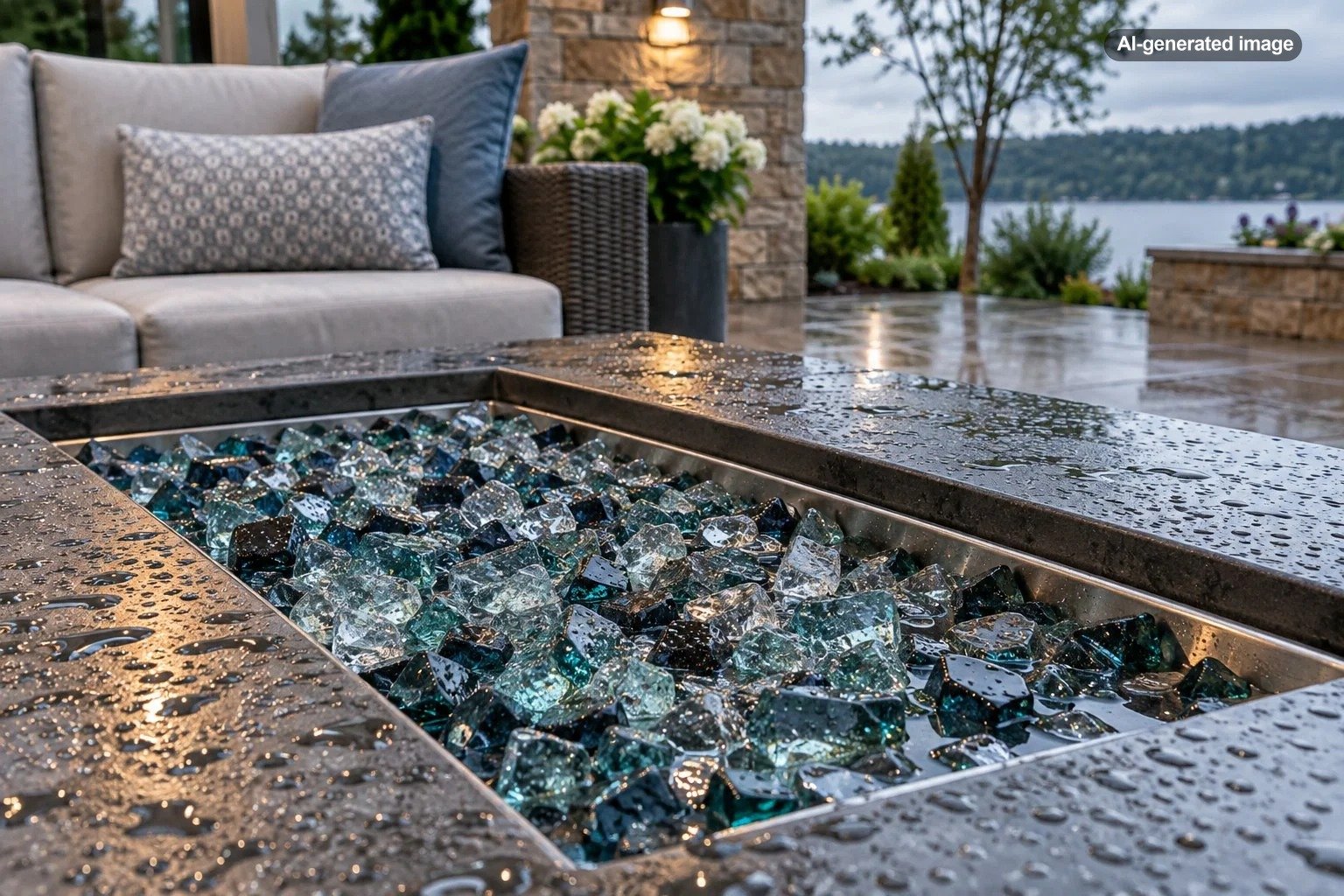
Yes, fire glass can get wet. Rain, routine rinsing, and ordinary outdoor moisture generally do not mean the glass itself is ruined. In fact, American Fire Glass instructs users to rinse its fire glass before installation and notes that water can be used to remove dust. The more important question is what happens before you light the fire feature again.
Fire glass and the equipment underneath it should be allowed to dry appropriately before operation, especially after heavy rain or water has collected in the fire pit. Moisture trapped around fire media, burners, pans, ignition components, or inside the enclosure can create operational and safety concerns. Your specific fire pit or fireplace manual should always take precedence over general advice.
Why fire glass can tolerate water
Purpose-made fire glass is designed as decorative media for compatible gas fire features. Water touching the surface does not automatically make that media unusable. American Fire Glass, for example, tells users to rinse fire glass to remove manufacturing dust, dry it on a towel, and even sprinkle installed glass with water when cleaning it.
That is an important distinction because homeowners sometimes assume that a rain shower means an outdoor fire pit must be emptied and refilled. Usually, the larger concern is not whether the glass has been touched by water. It is whether moisture has remained trapped where it should not be.
There is also a difference between approved fire glass and random decorative materials. A gas fire feature should use only media approved for that appliance. Ordinary gravel, river stones, landscape glass, or other materials are not interchangeable with fire-rated media simply because they look similar.
Why wet fire glass should still be treated carefully
Water becomes more important once heat enters the picture. Manufacturer guidance for gas fire features warns against moisture-retaining media because heated moisture can turn to steam and cause material to fracture unexpectedly. HPC Fire also notes that fire glass can retain moisture and recommends covering a fire pit when it is not being used.
That does not mean properly rated fire glass will inevitably crack whenever it gets rained on. It means there is little benefit in rushing to ignite a visibly wet fire pit. Allowing the media and fire feature to dry is a simple precaution, particularly when water has pooled rather than merely dampened the surface.
The issue is less about a raindrop on the glass and more about where water can collect, how long it remains there, and what happens when the burner is lit.
Drainage underneath the glass matters just as much
An outdoor gas fire pit is a small system, not simply a bowl filled with colorful glass. Beneath the decorative layer may be a burner, burner pan, ignition equipment, gas connections, and an enclosure that all need to function as designed.
HPC Fire emphasizes drainage as a key part of outdoor fire-pit construction. Its guidance describes systems in which water can move through weep holes in the burner and pan and then escape the enclosure through a floor drain or appropriately placed openings. The goal is to prevent water and moisture from accumulating inside the fire pit.
This is why repeatedly finding a substantial puddle under the fire glass deserves attention. Removing water from the top without correcting poor drainage may address the symptom while leaving the underlying problem untouched.
What to do after your fire glass gets wet
- Leave the burner off while you inspect the fire feature.
- Check whether the glass is merely damp or whether water has pooled in the burner pan or enclosure.
- Confirm that drains, weep holes, and other manufacturer-provided drainage paths are unobstructed.
- Allow the media and affected components to dry before lighting the unit.
- Check the owner’s manual for any model-specific instructions after rain, cleaning, flooding, or prolonged moisture exposure.
- If ignition components have been submerged, drainage is not working, or the unit behaves abnormally, stop and have the fire feature evaluated by a qualified professional.
Should you cover an outdoor fire pit?
A compatible cover can be useful because it reduces the amount of rain, debris, and prolonged moisture reaching the fire feature. HPC specifically notes that covering a fire pit becomes important with fire glass because the media can retain moisture.
A cover is not a substitute for drainage, however. Outdoor fire features may still encounter wind-driven rain, condensation, humidity, or water around the enclosure. A well-designed installation should manage water rather than depend solely on keeping every drop out.
Use only a cover that is appropriate for the fire feature, and never cover equipment that has not cooled as required by its manufacturer. If your manual provides instructions for covering or seasonal storage, follow those rather than applying a generic routine.
What about washing dirty fire glass?
Cleaning with water can be appropriate for some fire glass. American Fire Glass specifically instructs users to rinse its product before installation and describes water as an option for removing dust. That does not establish one cleaning procedure for every brand or every fire appliance, so check the instructions supplied with your media and burner system.
If removable glass needs cleaning, wait until the fire feature is completely cool. Handle the pieces carefully because broken or irregular glass can have sharp edges. Avoid dumping debris into burner openings or changing the required media arrangement when you put the glass back.
After cleaning, allow the media to dry before operating the fire feature. This is especially worthwhile when glass has been soaked rather than lightly rinsed.
Do not change the media depth just to help it dry
It may seem reasonable to spread fire glass differently after rain, but media placement affects how some burners operate. Manufacturer requirements vary substantially. American Fire Glass gives particular installation guidance for its products, while an HPC manual for one fire-pit system warns that excessive glass over the burner can affect operation, particularly with propane.
That variation is exactly why generic rules such as adding two inches of glass or barely covering the burner should not be applied to every fire pit. Restore the media to the depth and position specified for your particular burner system.
Rain is normal; chronic standing water is not
An outdoor fire pit occasionally getting rained on is very different from an enclosure that remains full of water after every storm. If the fire glass stays damp for long periods or you continually find water below the burner, investigate drainage and the installation rather than focusing only on drying the decorative media.
For an existing installation, avoid drilling holes, modifying gas components, or altering the enclosure based on a generic online diagram. Drainage, ventilation, burner construction, fuel type, and enclosure design work together, and changes can affect safe operation. Consult the appliance documentation or a qualified gas-fire-feature professional when the original installation does not appear to manage water correctly.
Frequently asked questions
Do I need to replace fire glass after it rains?
Normally, rain alone does not mean approved fire glass must be replaced. Let the feature dry and inspect it according to the manufacturer’s instructions before operation. Replace media that is physically damaged or otherwise deemed unsuitable under the product instructions.
Can I hose off fire glass?
Some manufacturers permit rinsing fire glass with water, but cleaning instructions vary. If you remove the glass for washing, handle it cautiously and let it dry before returning the fire feature to service.
Can I light a fire pit immediately after rain?
It is better to inspect the pit first and allow wet media and components to dry. Do not operate the unit when water has pooled around the burner, controls, ignition components, or inside the enclosure.
Why does my fire pit hold water under the glass?
Possible explanations include blocked or inadequate drainage, water entering faster than it can escape, or an enclosure design that allows moisture to accumulate. Because outdoor gas fire features have model-specific installation requirements, persistent standing water should be evaluated against the manufacturer’s documentation.
Is all decorative glass safe in a fire pit?
No. Use only glass or other media specifically approved for your fire feature. Decorative landscape glass and unrelated household glass should not be substituted for fire-rated media.