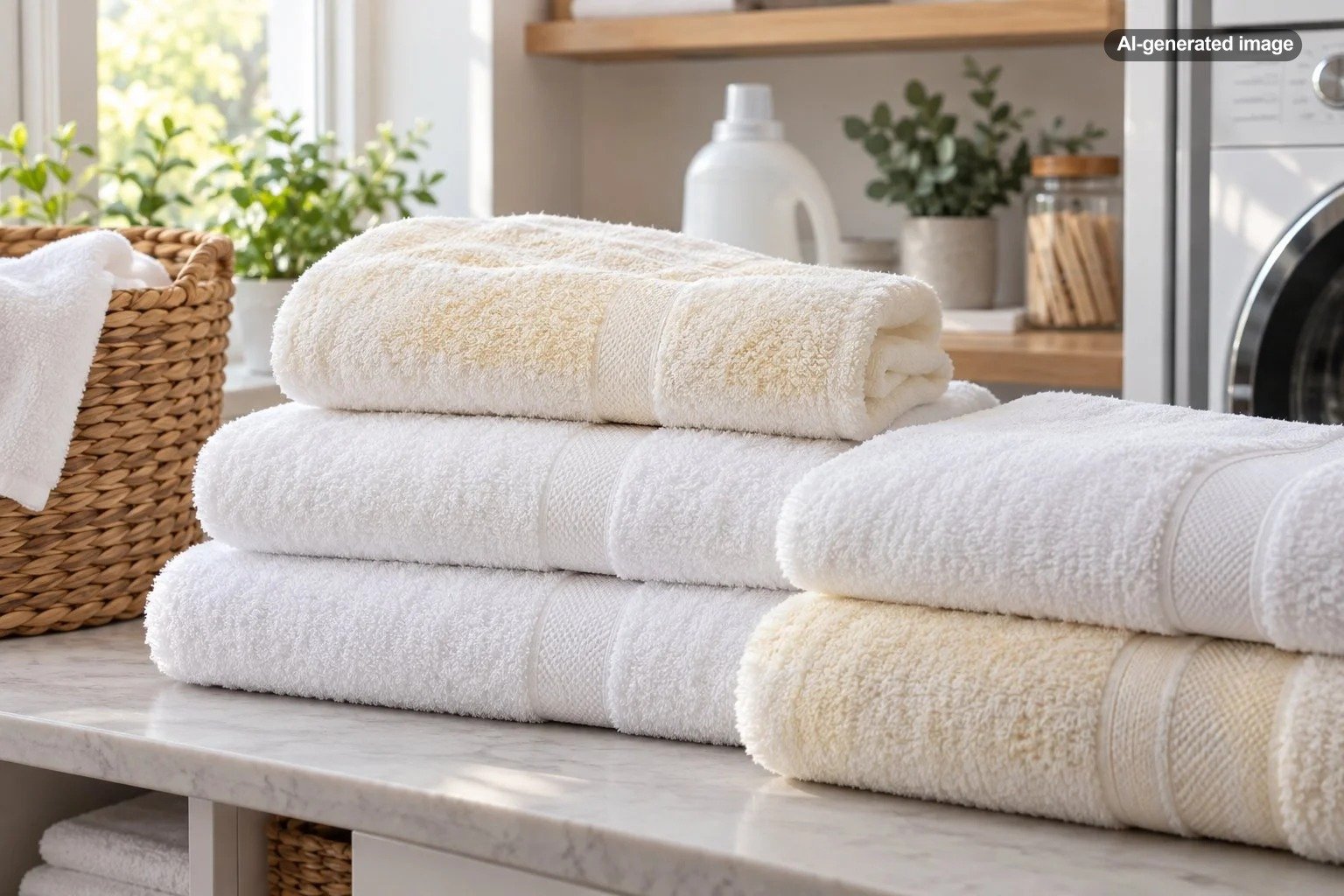
Why Do White Towels Turn Yellow?
White towels usually turn yellow because body oils, skin care products, detergent residue, or minerals gradually accumulate in their fibers. The discoloration can also come from improper bleaching, insufficient washing, or contact with iron in household water. A towel that looked perfectly white when it was new may slowly develop a cream-colored cast, even when it is washed regularly. Fortunately, many common causes are manageable once you identify what is making the fabric look yellow.
The important distinction is whether your towels are holding onto removable residue or have experienced actual fabric discoloration. Those problems can look similar, but they do not always respond to the same laundry treatment. Before reaching for more bleach or replacing an entire stack of towels, it helps to look at where the yellowing appears and when it started.
The Most Common Reasons White Towels Turn Yellow
1. Body oils and skin care products accumulate in the fibers
Every time you dry your skin, some natural oils and traces of personal care products can transfer onto the towel. Even freshly showered skin may carry moisturizer, conditioner, body oil, sunscreen, or other residue. These substances can cling to cotton fibers, particularly when washing does not fully remove them.
Over time, accumulated body soil can create a dull yellow or beige appearance. The discoloration may be more noticeable on hand towels, face towels, and washcloths that regularly encounter lotions, facial oils, or cosmetics.
This type of yellowing is often gradual rather than dramatic. If a towel looks slightly less white after several weeks of normal use, body soil is one reasonable explanation.
2. Your detergent is not removing enough soil
Using too little detergent can leave behind oils and dirt that eventually discolor fabric. Washing heavily used towels in water that is too cool for effective cleaning can contribute to the same problem.
However, using excessive detergent is not an automatic solution. When the amount exceeds what the washer can effectively rinse away, residue may remain in the fabric. The goal is an appropriate detergent dose for the load size, soil level, water hardness, and washing machine.
An enzyme-containing laundry detergent can be helpful for body soil, provided it is suitable for the towel material and used according to its directions.
3. Fabric softener is leaving a coating
Conventional liquid fabric softeners can deposit conditioning ingredients on textile fibers. Although this may initially make towels feel softer, repeated buildup can interfere with absorbency and make thorough cleaning more difficult.
Softener residue does not necessarily create a bright yellow stain by itself. Instead, it may contribute to a cycle in which soils become harder to remove and towels gradually lose their fresh appearance.
If your white towels feel unusually slick, waxy, or less absorbent, consider temporarily eliminating fabric softener while you troubleshoot.
4. Hard water is interfering with washing
Hard water contains elevated levels of dissolved minerals, particularly calcium and magnesium. These minerals can reduce cleaning efficiency and contribute to deposits on fabrics. Towels may become stiff, dull, or difficult to rinse thoroughly.
Hardness minerals alone are not necessarily the cause of a distinctly yellow stain. When towels develop yellow-brown or rusty discoloration, iron or manganese in the water may be a more specific explanation.
If your home also has mineral deposits around faucets, stiff laundry, or recurring rusty discoloration, water quality deserves attention.
5. Chlorine bleach is being used incorrectly
Chlorine bleach can whiten suitable white cotton fabrics when used correctly. However, too much bleach, an overly concentrated solution, excessive soaking, or application to an incompatible fiber can cause discoloration or damage.
Some towels contain decorative threads, special finishes, or fiber blends that are not appropriate for chlorine bleach. A white appearance does not automatically mean the entire towel is bleach-safe.
Bleach-related yellowing may appear after a particular wash rather than developing gradually. Some chemical discoloration can be permanent, which is why the care label matters more than the towel’s color.
6. Cosmetics and household products are transferring stains
Not every yellow towel has a laundry problem. Individual patches can come from contact with makeup, facial products, hair products, or cleaning substances. Some product residues become more visible after laundering or exposure to heat.
Consider where the yellowing occurs. A face towel with discoloration concentrated in one corner suggests a different cause than a bath towel that has become uniformly cream-colored.
How to Tell What Is Making Your Towels Yellow
Before treating the entire load, compare an affected towel with another white towel that has been washed less frequently. Look at the distribution of the discoloration, the fabric texture, and any recent changes in your laundry routine.
| What you notice | Possible explanation | Best first step |
|---|---|---|
| Gradual, even yellowing | Body oils or incomplete soil removal | Rewash with appropriate detergent |
| Waxy texture and reduced absorbency | Fabric softener or laundry residue | Omit softener and check detergent dosing |
| Stiff towels with a dull appearance | Hard water or mineral residue | Check water hardness and detergent suitability |
| Yellowing immediately after bleaching | Bleach incompatibility or misuse | Stop bleaching and inspect care labels |
| Rust-colored spots on several towels | Iron or manganese in the water | Investigate water quality before retreating |
| Localized yellow patches | Cosmetics, lotions, or other contact stains | Pretreat the affected area |
These patterns are clues, not definitive tests. More than one factor may be involved, especially when older towels have accumulated different kinds of residue over time.
How to Whiten Yellow Towels Without Damaging Them
The safest approach is to begin with ordinary cleaning and move toward more intensive stain treatments only when necessary. Repeatedly increasing the amount of bleach is rarely a useful first strategy.
What to do
- Read the towel’s care label. Confirm the recommended water temperature and whether oxygen or chlorine bleach is permitted.
- Separate white towels from colored laundry. Avoid mixing heavily soiled items with towels that need brightening.
- Inspect visible stains. Pretreat areas affected by oils or cosmetics using a suitable laundry detergent or stain remover, following the product directions.
- Wash with the correct detergent amount. Select a full wash cycle appropriate for towels, the soil level, and the fabric.
- Use the warmest water permitted by the care label. Warmer water can improve removal of some oily soils, but excessively hot washing may damage certain finishes or blends.
- Consider an oxygen-based laundry bleach if appropriate. Follow its label for machine washing or presoaking. Do not assume every product or textile permits the same treatment.
- Rinse thoroughly. If detergent residue appears to be a problem, a compatible extra-rinse setting may help.
- Inspect before drying. If substantial staining remains, reassess the cause before exposing the fabric to dryer heat.
When oxygen bleach makes sense
Oxygen-based laundry bleach is generally a gentler whitening option than chlorine bleach. It can be useful for maintaining the appearance of washable white towels and treating certain organic stains when the product and towel labels permit it.
Its effectiveness depends on the formula, water conditions, soil type, and treatment instructions. It may not reverse discoloration caused by damaged fibers or inappropriate chemical exposure.
A controlled, label-directed soak may be worth trying for persistent body soil. Avoid improvising stronger concentrations or leaving towels submerged indefinitely.
When chlorine bleach is appropriate
Chlorine bleach is an option for towels specifically labeled as compatible with it. Use the amount, dispensing method, and treatment time recommended by the bleach manufacturer and washing machine instructions.
Never pour concentrated chlorine bleach directly onto towels. Do not mix chlorine bleach with vinegar, ammonia, acids, or other cleaning chemicals. Dangerous gases can result from incompatible combinations.
If yellowing first appeared after a bleach treatment, avoid repeating that treatment while investigating the cause.
Does Vinegar Help Remove Yellowing From White Towels?
White vinegar is often suggested as a universal laundry remedy, but its usefulness depends on what is causing the discoloration. An acidic treatment may help with certain mineral or detergent-related deposits; it is not a reliable substitute for detergent when the main problem is body oil.
It also does not reverse all types of fabric damage or permanent chemical yellowing.
Do not automatically add vinegar to every towel load or combine it with other laundry additives. Consult your washing machine instructions before using acidic products, especially in dispensers. Most importantly, never use vinegar together with chlorine bleach.
For general towel yellowing, correcting detergent dosage and washing conditions is a more sensible starting point than experimenting with multiple household chemicals.
Why Do White Towels Sometimes Turn Yellow After Washing?
When towels look noticeably yellower immediately after laundry day, the timing can narrow the possible causes.
If the change happened after introducing bleach: Check for incompatible fiber blends, excessive concentrations, or incorrect dispensing.
If several items changed color together: Investigate water quality, sorting, and the products used in that particular load.
If the towels feel coated or unusually stiff: Review detergent dosing, fabric softener use, and rinsing performance.
If only one towel developed patches: Consider a localized product stain or prior exposure to a cleaning chemical.
How to Keep White Towels From Turning Yellow Again
Once the discoloration has improved, the most effective prevention strategy is a consistent laundry routine. White towels need proper cleaning, thorough drying, and enough room in the washer to release accumulated soil.
Wash towels before soil has time to build up
For ordinary bath towel use, washing after approximately three to five uses is a reasonable general guideline. Towels that remain damp, develop an odor, or encounter substantial makeup or product residue may need washing sooner.
Hang towels fully open between uses rather than leaving them bunched on a hook or in a pile. Adequate drying helps keep them fresh until the next wash.
Avoid overcrowding the washer
Thick cotton towels absorb substantial water and take up considerable space during washing. When the drum is overloaded, detergent and rinse water may not circulate effectively.
Follow the washer manufacturer’s loading guidance and allow towels enough room to move. A properly sized load is usually more useful than adding extra detergent to an overfilled machine.
Be selective with fabric softener
If you enjoy exceptionally soft towels, consider whether your current softener is affecting their absorbency. Skipping liquid fabric softener may help prevent a coating from accumulating.
Correct drying practices can also make a difference. Avoid repeatedly overheating or overdrying towels, which may contribute to a harsher feel and premature wear.
Keep white towels separate when practical
Washing white towels with similarly colored, compatible laundry reduces the possibility of dye transfer and soil redeposition from darker or heavily soiled fabrics.
There is no need to create a separate wash load for one small towel every time. Instead, group suitable white linens together when you have enough for an appropriately sized load.
Pay attention to changes in your water
If yellowing consistently reappears despite a good washing routine, consider whether mineral content or iron is contributing. Your water utility or an appropriate water testing service may help identify the issue.
A laundry-compatible water softening product may improve detergent performance in hard water, but treatment for iron or manganese requires a different evaluation. Do not assume that every mineral-related stain has the same solution.
A simple white towel care checklist
- Check fabric care labels before using whitening products.
- Wash towels regularly and allow them to dry between uses.
- Use the detergent amount appropriate for your machine and water.
- Avoid routinely overcrowding the washer.
- Limit products that leave unnecessary coatings on fabric.
- Address makeup, lotion, and oil stains promptly.
- Investigate recurring rusty discoloration rather than repeatedly bleaching it.
Can Yellow Towels Become White Again?
Sometimes they can. Yellowing caused primarily by removable body soil or laundering residue may respond well to a properly adjusted wash routine and a compatible stain treatment.
Mineral-related discoloration may require a different treatment, while yellowing caused by chemical changes to the fabric or damaged fibers can be difficult or impossible to reverse.
Improvement may also be partial. A towel can become significantly cleaner without regaining the exact bright-white appearance it had when new.
It helps to judge the result by more than color. If the towel is clean, absorbent, structurally sound, and free of persistent odors, mild discoloration may be largely cosmetic.
When Is It Better to Replace Yellowed Towels?
Yellowing alone is not necessarily a reason to discard a towel. However, replacement becomes more reasonable when the fabric is also thinning, fraying, permanently stained, or no longer performing well after appropriate cleaning.
A towel that has become rough and poorly absorbent may not be worth repeated intensive treatments, especially if its fibers are already deteriorating. On the other hand, a structurally sound towel with a slightly warm ivory cast can still be useful for everyday bathing, cleaning, or household tasks.
Affiliate disclosure: CraneManor.com may earn a commission when you purchase through links on this page. This does not affect the price you pay. Learn more.
If you prefer a coordinated appearance in a guest bathroom, choosing a matching set can make linen replacement simpler. For example, a four-pack of cotton bath towels is one option to consider when refreshing worn linens rather than repeatedly treating fabric that has reached the end of its useful life.
Frequently Asked Questions
Why are my white towels yellow even though I wash them regularly?
Regular washing does not always remove every trace of oil, cosmetics, or other residue. Insufficient detergent, poorly matched wash settings, overcrowded loads, and hard water can reduce cleaning effectiveness. Review your laundry process before assuming the towels are permanently discolored.
Does hot water make white towels yellow?
Hot water does not automatically turn suitable white cotton towels yellow. In fact, warmer water can improve removal of certain soils. Problems arise when washing temperatures exceed the fabric’s care recommendations or when stains and residues remain untreated. Use the warmest temperature permitted for the specific towel.
Why do white towels turn yellow in storage?
Towels stored with residual oils, laundry products, or other soils may develop more noticeable discoloration over time. Poor ventilation and unsuitable storage conditions can also contribute to freshness problems. Make sure towels are thoroughly clean and completely dry before storing them.
Can baking soda whiten yellow towels?
Baking soda may help with certain laundry conditions, but it is not a universal whitening treatment. It will not reliably remove every oil stain, mineral deposit, or chemically altered yellow patch. A suitable detergent and a fabric-compatible whitening product are more targeted choices for substantial discoloration.
Why do only some of my white towels turn yellow?
Differences in towel use, fabric composition, washing history, and exposure to personal care products can create uneven results. A face towel used to remove cosmetics may collect more oily residue than a bath towel used only after showering. Different fibers and finishes may also respond differently to bleaching and laundering.
The Bottom Line
White towels most often develop a yellow cast because ordinary soils are not being completely removed or because laundering conditions allow residue to accumulate. Body oils, personal care products, detergent issues, and hard water are good starting points for investigation. Bleach misuse and metals in the water deserve particular attention when discoloration appears suddenly.
Begin with the simplest corrections: inspect the care labels, adjust detergent use, wash towels in appropriately sized loads, and avoid unnecessary fabric coatings. If those changes do not help, use the pattern and timing of the yellowing to decide whether a targeted stain treatment or water quality investigation makes more sense.
A white towel does not have to remain brilliantly white forever to be useful. The better goal is fabric that stays clean, absorbent, comfortable, and in good condition through many ordinary laundry cycles.
Sources & Further Reading
- American Cleaning Institute: Laundering Problems & Solutions – Causes and treatments for yellowing, body soil buildup, detergent residue, and mineral-related stains.
- American Cleaning Institute: Laundry Basics – Guidance on sorting, detergent use, water hardness, towel care, and laundering practices.
- Clorox: Why Does Bleach Turn White Clothes Yellow? – Guidance on bleach-related yellowing, incompatible fibers, and proper bleach use.
- Clorox: How to Wash & Care for Towels – Towel washing considerations, product residue, and bleaching compatibility.