
What Should Never Be Stored Under the Kitchen Sink?
The cabinet beneath a kitchen sink is convenient, but it is not a neutral storage space. It sits beside plumbing connections, may experience condensation or leaks, and is often within easy reach of children and pets.
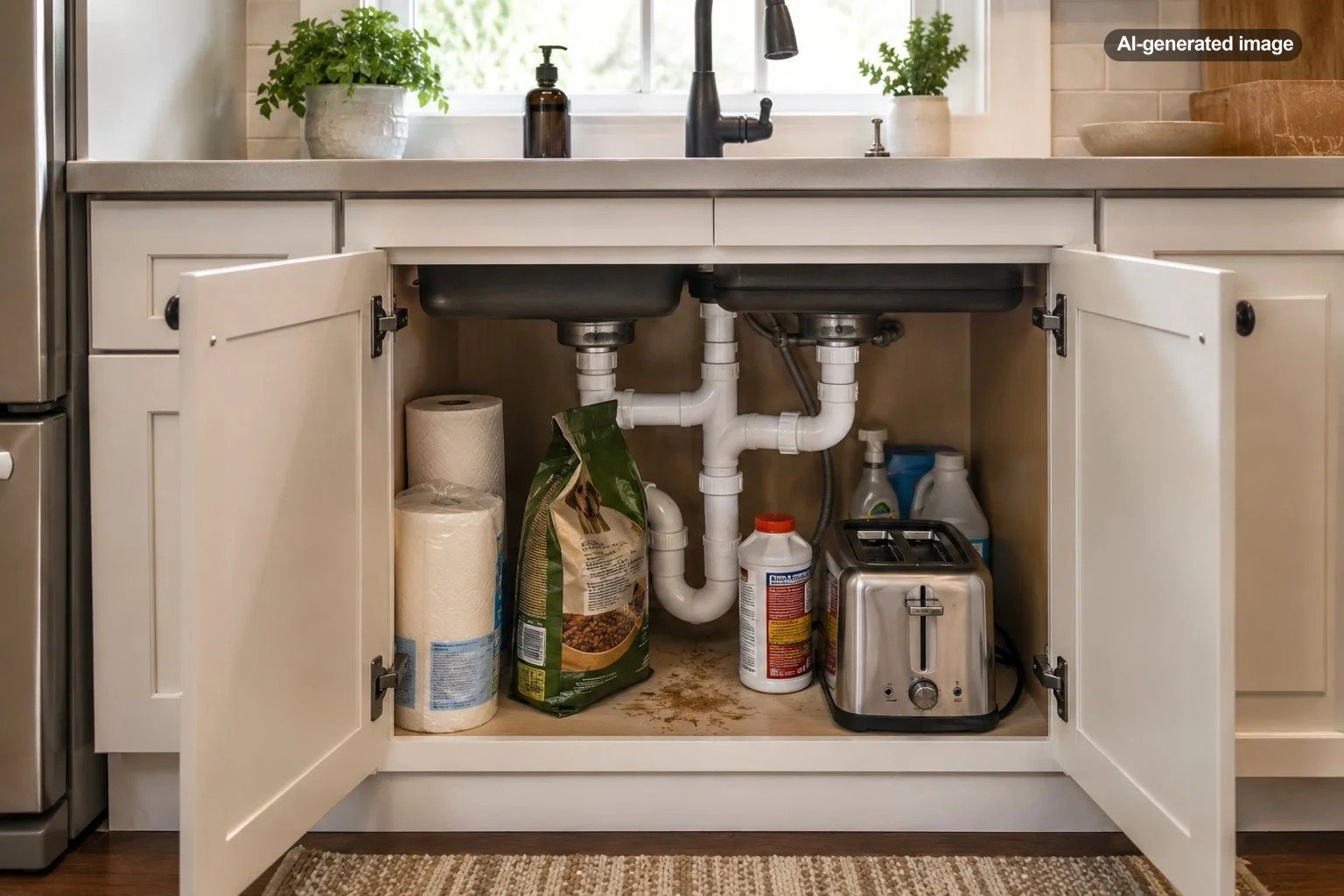
Items that can become dangerous, contaminated, ruined by moisture, or difficult to reach in an emergency should generally be stored elsewhere. That includes medicines, food, paper goods, electrical appliances, flammable products, pesticides, incompatible chemicals, and anything valuable or irreplaceable.
Medicines and personal care products
Prescription drugs, over-the-counter medicines, vitamins, and medicated creams do not belong under the kitchen sink. The cabinet is usually low, accessible, and vulnerable to dampness. It also places medicine beside products that may have similar bottle shapes but entirely different contents.
Store medicine according to its label in a secure location that children, pets, and vulnerable household members cannot access. Avoid assuming that a child-resistant cap makes a low cabinet safe. Packaging is only one layer of protection.
Food, snacks, and pet food
Do not use the sink cabinet as overflow pantry space. Packaged food can be exposed to plumbing leaks, cleaning-product residue, insects, and odors. Cardboard boxes and paper bags are particularly poor barriers against moisture.
Pet food and treats present the same problem. Even sealed bags can be punctured, and an inquisitive animal may learn to open the cabinet. Food is better kept in a pantry or another dry area, separate from household chemicals.
Paper towels, napkins, and paper bags
Paper products absorb moisture quickly. A slow drip from a supply line or drain connection may go unnoticed until an entire stack smells musty or has begun to deteriorate.
Reusable cloths are not ideal there either unless they are clean, completely dry, and protected inside a washable container. Damp sponges and cloths should be allowed to dry with adequate airflow rather than buried in a crowded cabinet.
Small appliances and electrical accessories
Toasters, hand mixers, immersion blenders, extension cords, power strips, chargers, and other electrical items should not be stored beneath plumbing. Even a minor leak can damage them or create an electrical hazard if the item is later plugged in while moisture remains inside.
Choose a dry cabinet away from water connections. Keep appliance cords loosely arranged rather than tightly wrapped around hot or sharp components.
Flammable liquids and combustible materials
Paint thinner, solvents, fuel, lighter fluid, some polishes, aerosol products, and oil-soaked rags should not be kept under a kitchen sink. Their storage requirements vary, and a warm, enclosed cabinet near household activity is rarely the right default.
Follow each product label. Keep flammable materials away from heat, sparks, flames, and incompatible products. Oily rags require particular care because some drying oils can generate heat as they cure. Do not toss used oily rags into a heap beneath the sink.
Pesticides and concentrated pest-control products
Insecticides, rodent-control products, concentrated garden chemicals, and similar pesticides should not be casually mixed into a bin of everyday kitchen cleaners. Their labels contain product-specific storage and disposal directions that should take priority over general organizing advice.
Keep pesticides in their original containers with labels intact. Store them securely away from food, animal supplies, children, and pets. Never transfer a pesticide into a beverage bottle, food jar, or decorative container.
Loose batteries and temperature-sensitive devices
Loose batteries can corrode in a damp environment, and exposed terminals may contact metal objects. Battery-powered flashlights, sensors, and emergency devices may also be forgotten behind pipes and cleaning bottles.
Store batteries in their original packaging or a purpose-made case in a dry, moderate environment. Keep emergency equipment where it can be found promptly rather than behind an overflowing cabinet door.
Fire extinguishers that are difficult to reach
A fire extinguisher should not be buried behind trash bags, pipes, or cleaning products. Emergency equipment is useful only when it is visible, accessible, appropriate for the potential fire, and maintained according to its instructions.
If the under-sink cabinet is the proposed location, consider whether a leak could corrode the extinguisher, whether the cabinet might be blocked during a fire, and whether every responsible adult can reach it quickly. A nearby, clearly visible mounting location may be more practical.
Strong cleaners that could leak or be mixed accidentally
Not every cleaner is automatically unsuitable for an under-sink cabinet. Dish soap and a limited number of frequently used kitchen products are commonly kept there. The problem begins when the space becomes a chemical catchall.
Bleach products, ammonia-based cleaners, acids, drain openers, oven cleaners, and other strong formulations should never be combined, decanted, or stored in ways that encourage accidental mixing. Products that leak can contaminate neighboring containers, damage cabinet finishes, and expose anyone reaching inside.
Read every label and retain the original packaging. Do not place different products into one unlabeled spray bottle, even when both are marketed as cleaners. A decorative bottle is not worth losing the directions, hazard information, and ingredient identification printed on the original container.
Valuables, documents, and irreplaceable items
Spare keys, warranties, appliance manuals, photographs, candles, keepsakes, and important documents are sometimes placed under the sink simply because the cabinet has room. A plumbing leak can destroy them before the problem becomes visible from outside.
Store documents and sentimental items in a dry location above floor level. Digital copies can provide additional protection for records that would be difficult to replace.
How to decide what may stay
A useful under-sink cabinet contains fewer items than most people expect. Suitable contents are generally limited to kitchen-related products that tolerate the environment, remain in sound original containers, and can be reached without disturbing the plumbing.
Before you decide
- Check the product label for storage instructions.
- Ask whether a plumbing leak would ruin the item or make it hazardous.
- Consider whether children, pets, or vulnerable adults can open the cabinet.
- Keep food and food-contact supplies separate from chemicals.
- Reject any container that is leaking, corroded, swollen, cracked, or missing its label.
- Make sure shutoff valves and plumbing connections remain visible and reachable.
A safer way to organize the cabinet
What to do
- Empty the cabinet and inspect the base, pipes, valves, drain fittings, and disposal connections for moisture or damage.
- Discard unwanted products according to their labels and local disposal guidance. Do not pour products together.
- Move food, medicine, electrical items, paper goods, pesticides, flammables, and valuables to more appropriate locations.
- Place the few remaining products upright in washable, chemical-resistant trays that can contain minor drips.
- Group products by purpose without removing their original labels.
- Install an appropriate cabinet lock when access by children or pets is a concern.
- Leave enough open space to notice leaks and reach plumbing shutoffs promptly.
A waterproof or water-resistant cabinet liner can make minor leaks easier to spot and clean, but it is not a substitute for repairing plumbing. If the cabinet repeatedly becomes wet, smells musty, shows swelling, or has visible microbial growth, address the moisture source rather than reorganizing around it.
The best under-sink system is not the one that holds the most; it is the one that lets you see a leak, reach a valve, and identify every product immediately.
Frequently asked questions
Can bleach be stored under the kitchen sink?
Follow the bottle’s storage directions. In a home with children, pets, frequent leaks, or an unsecured cabinet, another locked and suitable location is usually preferable. Keep bleach in its original container and never store it where it may leak onto or be confused with other products.
Is a childproof lock enough for cleaning supplies?
A lock is one useful safeguard, not a complete storage plan. Containers must still be sealed, labeled, upright, compatible with the location, and inspected for damage.
Can unopened products stay under the sink?
An unopened seal does not protect paper packaging from water or make an unsuitable product safe for a low cabinet. Evaluate the item by its contents, label directions, packaging, and the household’s access risks.
Should trash bags be stored under the sink?
A small working roll can be reasonable if it stays dry and does not obstruct plumbing. Large backup boxes are better stored elsewhere so the cabinet remains easy to inspect.
What should I do with an unidentified cleaner?
Do not smell it, mix it, or test it on a surface. Keep people and pets away from the container and contact the appropriate local household hazardous-waste or poison-control resource for guidance.