Should You Cover a Fire Pit After Every Use?
Yes, in most cases it is a good idea to cover an outdoor fire pit after every use, but only after the fire is completely extinguished and the unit has fully cooled. A cover can reduce exposure to rain, leaves, pollen, bird debris, insects, and other outdoor mess while helping slow cosmetic weathering and corrosion. What you should never do is treat the cover as part of the extinguishing process or place it over hot embers, warm components, or a fire that might still be smoldering.
The exact routine depends on whether you have a wood-burning, propane, natural-gas, or portable fire pit, as well as what the manufacturer says about cooling, storage, drainage, and weather protection. The safest habit is simple: finish the fire properly, let everything cool, clean up when appropriate, and then cover the unit.
Why covering a fire pit is usually worth the effort
A fire pit spends most of its life sitting unused outdoors. That makes routine exposure, rather than the occasional evening fire, one of the biggest practical maintenance concerns.
Rainwater can collect in bowls, burner pans, seams, fastener recesses, and decorative media. Leaves and pine needles can settle around burners. Pollen and dust create a film that turns muddy when wet. Insects may also find protected openings surprisingly inviting. A fitted outdoor cover reduces how much of this reaches the fire pit in the first place.
Covering is especially useful for metal fire pits because repeated moisture exposure can encourage surface rust or deterioration of susceptible finishes. Stainless steel, coated steel, cast iron, copper, aluminum, masonry, and composite surrounds all react differently to outdoor exposure, so the manufacturer’s care instructions should take priority over a generic rule.
A fire pit cover is weather protection, not a fire-extinguishing tool.
Wait until the fire pit is completely out and cool
This is the important part. The U.S. Fire Administration advises homeowners to turn off or put out fires before leaving the backyard and recommends using fire pits outdoors away from the home and other combustible materials. Its outdoor-fire guidance also recommends a metal screen over wood-burning fires to help contain sparks. U.S. Fire Administration outdoor fire safety guidance provides additional precautions.
For a wood-burning fire pit, visible flames disappearing does not necessarily mean the fire is finished. Coals and ash can retain heat, and material buried below the surface may continue smoldering. Do not throw a fabric or vinyl cover over the bowl simply because the evening is over.
For propane or natural-gas fire pits, shut the unit down according to its instructions and allow burners, lava rock, fire glass, metal surfaces, lids, and nearby components to cool. Decorative media can remain hot after the flame is gone.
A practical after-use routine for wood-burning fire pits
Wood-burning pits deserve extra attention because extinguished-looking coals may remain hot. Follow the fire pit manufacturer’s instructions for extinguishing and ash removal, particularly if the unit has a special liner, finish, grate, or drainage design.
What to do
- Stop adding wood well before you expect to leave the area.
- Allow the fire to burn down under supervision.
- Extinguish the remaining fire completely using the method recommended for your fire pit.
- Confirm that there is no remaining flame, glowing material, or smoldering debris.
- Allow the fire pit and its contents to cool fully.
- Remove cooled ash when appropriate for the design and maintenance schedule.
- Once the unit is cool and reasonably dry, install its fitted cover.
The U.S. Fire Administration recommends keeping fire pits at least 10 feet from the home or anything that can burn and putting out fires before leaving the backyard. Local restrictions, wildfire conditions, and manufacturer requirements may call for additional precautions.
What about propane and natural-gas fire pits?
Gas fire pits eliminate ash, but they still benefit from protection against weather and debris. Leaves, dirt, standing water, and insects around the burner area can complicate maintenance and may interfere with components depending on the design.
After use, turn the appliance off according to its manufacturer instructions. Some propane systems may also call for closing the fuel-cylinder valve when the unit is not in use. Do not assume every system has the same shutdown or storage procedure, particularly built-in natural-gas installations.
Once the unit has fully cooled, a compatible cover can keep the burner area cleaner between uses. If the fire pit includes a hard lid and a separate fabric weather cover, use each component according to the manufacturer’s instructions rather than assuming they are interchangeable.
Should a fire pit be covered if rain is expected?
If the fire pit is already cold, covering it before rain is generally sensible. Preventing unnecessary water accumulation is easier than repeatedly drying and cleaning a saturated fire pit.
However, do not rush to cover a recently used pit simply because rain is approaching. Safety comes before weather protection. If the fire pit remains hot, deal with extinguishment and cooling according to the manufacturer’s instructions and keep people away from the area as needed.
A cover also does not solve poor drainage. If rainwater routinely pools beneath the cover or collects inside the appliance, inspect the drainage arrangement and check the owner’s manual. Trapping persistent moisture under a poorly ventilated cover can be counterproductive.
Choosing and using the right cover
The best cover is normally one intended for the dimensions and configuration of your fire pit. It should stay secure enough to resist ordinary wind without being stretched so tightly that installation becomes a wrestling match.
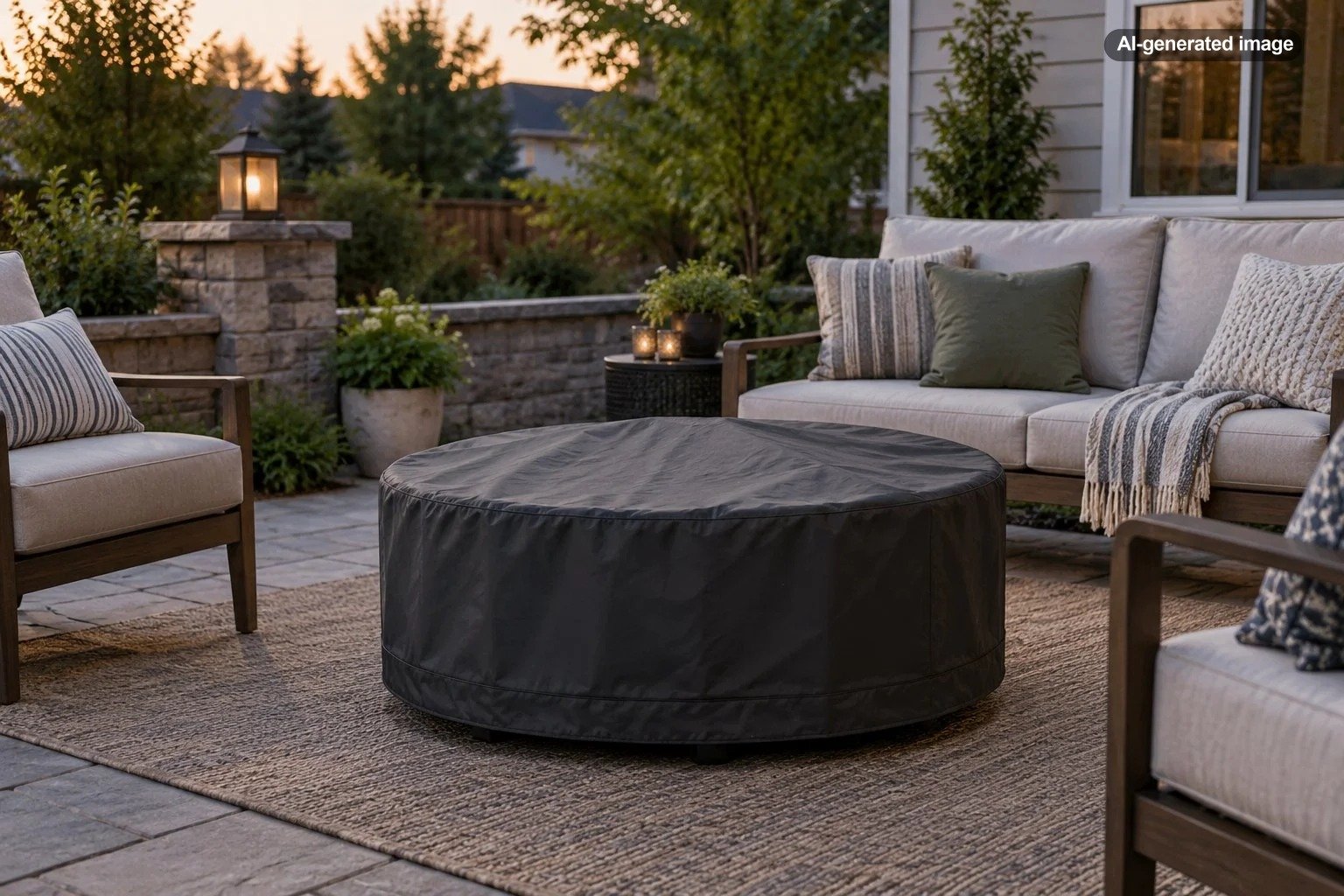
Look for a design that accounts for the fire pit’s shape, height, controls, protruding components, and ventilation needs. A fitted cover is generally more manageable than an oversized tarp, which can collect water in folds, flap in wind, and create an untidy patio centerpiece.
Before you decide
- Check the fire pit manual for approved covering and storage instructions.
- Measure the full width, depth, and height of the unit rather than only the fire bowl.
- Make sure the cover does not have to rest against components that may remain warm.
- Choose a secure fit suitable for the exposure level of your patio or yard.
- Allow a wet fire pit or wet cover to dry when practical before long-term storage.
- Inspect the cover periodically for tears, brittle areas, failed seams, or loose restraints.
Situations where covering becomes especially useful
A cover earns its keep quickly under trees, where leaves, seed pods, pollen, and bird debris can accumulate. It is also valuable on uncovered patios that receive frequent rain or strong sun.
Coastal environments can be particularly demanding on outdoor metal furnishings because of moisture and airborne salt. Covering alone cannot make a material immune to corrosion, but limiting exposure and following the manufacturer’s cleaning guidance can be part of a sensible care routine.
Seasonal homes and rarely used patios are another strong case for regular covering. A fire pit that sits untouched for several weeks has plenty of time to collect debris, so protecting it immediately after the previous use reduces the cleanup waiting for you next time.
Do not forget the area around the fire pit
Good fire-pit care is not only about preserving the appliance. The surrounding area matters whenever open flame is involved. Keep combustible clutter away from the pit and follow manufacturer instructions for clearances and placement. The U.S. Fire Administration advises using fire pits at least 10 feet from the home or anything that can burn.
The Consumer Product Safety Commission also advises having a hose or fire extinguisher nearby when using a backyard fire pit and warns against using gasoline or adding inappropriate liquid fuel to start or restart a fire. CPSC fuel and backyard fire-pit safety guidance explains the danger of flame jetting and other liquid-fuel hazards.
Be especially cautious with alcohol-fueled tabletop fire products. CPSC has issued safety warnings and recalls involving certain liquid-fuel tabletop fire pits because spilled or pooled fuel and flame jetting can cause severe fires and burns. Follow current CPSC guidance for the particular product you own rather than treating these appliances like conventional wood or gas fire pits.
Frequently asked questions
Can I cover a fire pit while the coals are still warm?
No. Wait until the fire is completely extinguished and the fire pit, coals, ash, and surrounding components have cooled sufficiently for the manufacturer’s approved cover. Warm-looking ash can conceal hotter material underneath.
Should I cover a fire pit in winter?
Usually, yes, if the fire pit is designed to remain outdoors. A proper cover can reduce exposure to rain, snow, leaves, and debris. Some portable models may be better stored in a protected location, so check their manuals for seasonal-storage instructions.
Can a cover prevent all rust?
No. A cover can reduce direct exposure, but corrosion depends on the fire pit’s materials, finish, climate, drainage, maintenance, and storage conditions. Inspect metal surfaces periodically and follow the manufacturer’s cleaning and finish-care recommendations.
Should I cover a built-in fire pit?
Often, yes, particularly if the burner assembly or interior basin is exposed to rain and debris. Built-in systems vary widely, however, so use a cover or lid compatible with the appliance and follow its installation and maintenance documentation.
Is it bad to leave a fire pit uncovered?
Occasional exposure is not automatically a problem for an outdoor-rated fire pit, but routinely leaving it uncovered can mean more water, dirt, organic debris, and weathering to manage. Once the unit is fully extinguished and cool, covering it is a simple way to reduce that exposure.
The sensible rule: extinguish, cool, then cover
For most outdoor fire pits, covering after every use is a useful maintenance habit. It keeps the appliance cleaner, limits unnecessary weather exposure, and can make the next gathering easier to prepare for.
Just keep the order straight. The fire must be fully extinguished first, and the fire pit must be allowed to cool before a weather cover goes on. Follow the manufacturer’s instructions for your particular fuel type, materials, burner system, and cover, and treat fire safety as more important than protecting the finish from one evening of rain.