
Are Smart Thermostats Helpful for Seasonal Residents?
Yes, smart thermostats can be particularly helpful for seasonal residents. Their biggest advantage is not that they magically make an HVAC system more efficient, but that they give an absent homeowner more control over temperature settings, schedules, and, depending on the model and setup, useful system information from a distance.
That can matter when a home sits unoccupied for weeks or months. A seasonal resident may want one temperature strategy while away, another shortly before returning, and the ability to check settings without asking a neighbor to walk over to the thermostat. The catch is that a smart thermostat is only one part of the home’s HVAC strategy: compatibility, reliable power, internet access, equipment condition, and appropriate seasonal preparation still matter.
Why seasonal homes are a good use case
Traditional thermostats work perfectly well when someone is standing in front of them. Seasonal residents have a different problem: they may be hundreds or thousands of miles away when the weather changes, travel plans shift, or a previously sensible temperature setting no longer fits the situation.
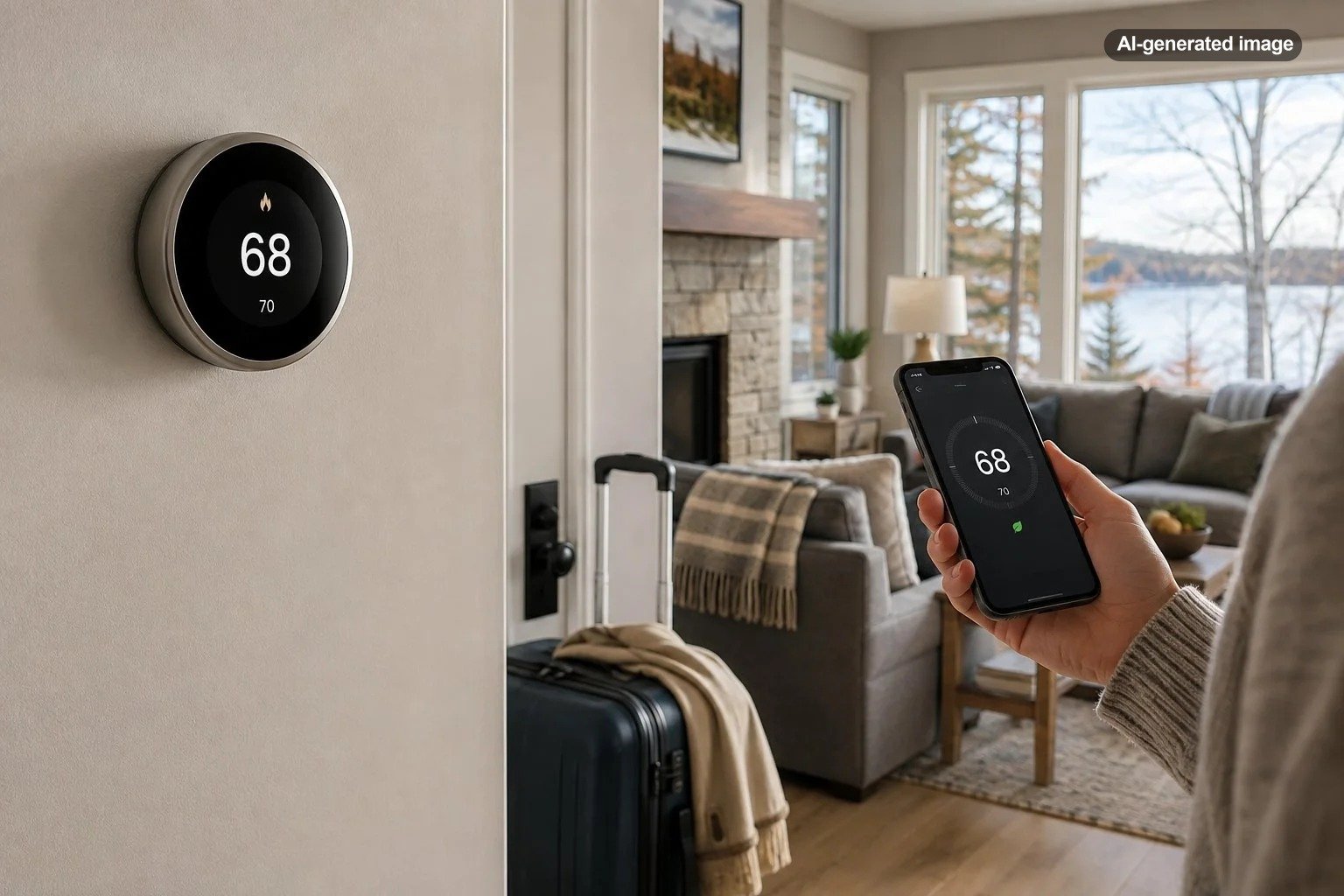
ENERGY STAR notes that Wi-Fi-enabled smart thermostats can allow homeowners to control heating and cooling remotely through a smartphone. That basic capability is especially relevant to part-time residences because it separates thermostat control from physical presence.
For example, a homeowner leaving a warm-weather property for several months might establish an away schedule rather than maintaining the same comfort setting used during occupancy. Before the return trip, the homeowner can adjust a compatible system remotely so the house is closer to the desired temperature upon arrival.
Remote control is more valuable than clever automation
Smart thermostats are often marketed around automation, learning features, energy insights, geofencing, and scheduling. Those features can be useful, but seasonal residents should begin with a simpler question: can the thermostat reliably let me see and change the home’s temperature when I am away?
That is the practical feature most likely to earn its keep in a second home. ENERGY STAR describes remote temperature control as a common smart-thermostat function, while the U.S. Department of Energy recommends thermostat setbacks when a house is unoccupied as one way to reduce unnecessary heating or cooling.
Scheduling also helps when occupancy follows a predictable calendar. If visits are irregular, however, remote manual control may be more useful than an elaborate weekly schedule. A seasonal property does not necessarily behave like a primary residence with the same wake, work, evening, and sleep pattern every day.
Advantages
- Temperature settings can be changed without being physically present.
- Schedules can reflect occupied and unoccupied periods.
- The home can be brought closer to a comfortable temperature before arrival.
- Some systems provide additional operating information or notifications, depending on the thermostat and HVAC setup.
Tradeoffs
- Remote features depend on power, connectivity, accounts, apps, and supporting services.
- Not every thermostat works with every HVAC system or wiring configuration.
- A thermostat cannot correct neglected equipment, duct problems, moisture problems, plumbing risks, or other home-maintenance issues.
- Automated settings still require sensible choices for the property, climate, season, and mechanical system.
Compatibility should come before convenience
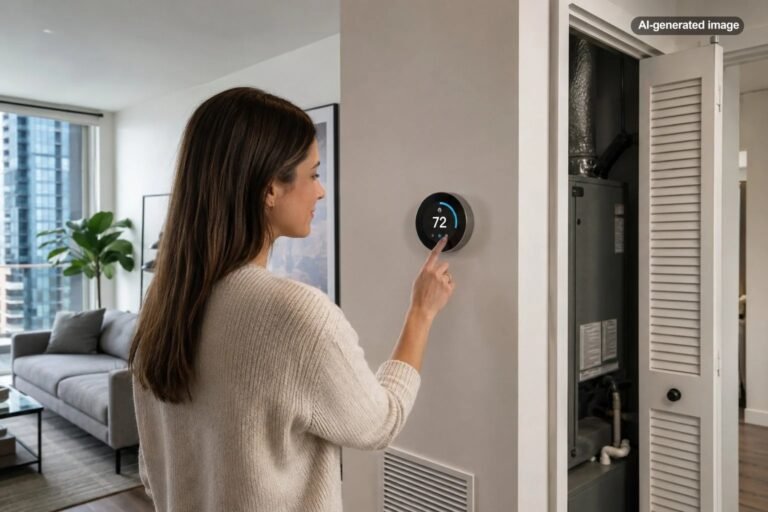
A smart thermostat should not be purchased on the assumption that every modern-looking HVAC system will accept it. Thermostat wiring and equipment controls vary, and some systems require additional components or professional evaluation.
Google’s Nest documentation, for example, directs homeowners to check their existing thermostat wiring and system type before determining whether a Nest thermostat is compatible. That is an important reminder for seasonal properties, where HVAC systems may be older, zoned, heat-pump based, or configured differently from the owner’s primary residence.
Affiliate disclosure: CraneManor.com may earn a commission when you purchase through links on this page. This does not affect the price you pay. Learn more.
One current option is the Google Nest Thermostat, sold as a thermostat that can be adjusted remotely. The important step is to verify that the particular HVAC system and wiring are compatible before purchasing or installing it rather than assuming that a smart thermostat is universally interchangeable.
Do not confuse remote visibility with home protection
For an occasionally occupied home, it is tempting to treat a connected thermostat as a kind of mechanical caretaker. That gives it too much credit. The thermostat tells compatible HVAC equipment when to heat or cool; it does not inspect condensate drains, discover a plumbing leak, clear a blocked air filter, repair a failed compressor, or verify that every room is responding as expected.
This distinction becomes especially important in climates where prolonged heat, humidity, or freezing weather can create additional concerns. Appropriate temperature and moisture-management strategies vary by house, HVAC design, season, local conditions, and whether other systems have been winterized or prepared for extended vacancy.
A seasonal resident should therefore view remote thermostat access as one layer of a broader property plan. Regular HVAC maintenance, appropriate preparation before a long absence, dependable internet service if remote access is important, and a trusted local person or property professional who can investigate an abnormal situation may all be more important than adding another automation feature.
The most valuable smart-home feature in an empty house is often not automation, but the ability to notice a change and respond intelligently.
What should seasonal residents look for?
The best thermostat for a full-time residence is not automatically the best one for a seasonal home. Prioritize the functions that remain useful when nobody is there.
Before you decide
- HVAC compatibility: Confirm the thermostat supports the home’s equipment and wiring.
- Reliable remote access: Make sure the thermostat can be controlled through the service and device you realistically plan to use while traveling.
- Simple scheduling: Look for schedules that can accommodate long away periods without becoming cumbersome.
- Clear status information: Understand what temperature, equipment, or notification information the particular model actually provides.
- Internet resilience: Consider what happens to normal thermostat operation if the home’s internet connection goes down.
- Household fit: Account for pets, plants, sensitive furnishings, plumbing, humidity concerns, and other conditions that may affect suitable temperature settings.
Should you change settings while the house is empty?
In many homes, maintaining the exact same comfort temperature used during occupancy is unnecessary. The Department of Energy recommends thermostat setbacks when occupants are asleep or away as an energy-saving strategy, and programmable or smart thermostats can make those changes easier.
Seasonal residents, however, should resist copying a generic temperature from the internet. The appropriate setting depends on the building, climate, HVAC system, time of year, plumbing and moisture considerations, and anything in the home that requires a particular environment. In a cold climate, preparation for freezing conditions involves more than choosing a thermostat number. In a hot or humid climate, simply shutting cooling equipment off for a long absence may create different concerns.
If the property has unusual mechanical equipment, recurring moisture issues, freeze exposure, or a history of HVAC problems, a qualified local HVAC professional can help establish an away strategy appropriate to that specific home.
When a smart thermostat may not be worth it
A smart thermostat is not essential merely because a residence is seasonal. If the property has unreliable internet, an incompatible HVAC system, or an existing building-management arrangement that already provides remote temperature control, replacing a functional thermostat may add complexity without solving a meaningful problem.
It may also be a lower priority if someone checks the home frequently in person and the HVAC settings rarely change. Conversely, the farther away the owner lives and the more variable the travel schedule, the more practical remote access tends to become.
The bottom line
For many seasonal residents, a smart thermostat is a sensible piece of home infrastructure. The strongest case is straightforward: it lets a homeowner manage compatible heating and cooling settings from a distance, adapt to changing travel plans, and use occupied and unoccupied schedules without being physically present.
Choose one for those practical capabilities rather than for promises of effortless savings. Verify HVAC compatibility, understand what happens during internet or power interruptions, establish sensible seasonal settings for the actual property, and keep regular maintenance and local backup arrangements in place. With those expectations, a smart thermostat can make a part-time home considerably easier to manage.
FAQ
Can I control a smart thermostat while I am in another state?
Many Wi-Fi-enabled smart thermostats support remote control through a smartphone or other connected device when the thermostat, home internet connection, account, and supporting service are functioning. Check the specific model’s documentation before relying on that capability.
Will a smart thermostat keep a vacant home safe from freezing?
A thermostat can control compatible heating equipment, but it should not be treated as a complete freeze-protection plan. Plumbing preparation, equipment condition, power availability, insulation, local weather, and other property-specific factors matter. Homes exposed to freezing conditions may require additional seasonal preparation.
Does a smart thermostat automatically lower energy bills?
No particular savings should be assumed. Energy use depends on the house, climate, HVAC equipment, temperature settings, occupancy, and how the thermostat is configured. Smart scheduling and remote control can make it easier to avoid unnecessary heating or cooling, but the result varies by household.
Is professional installation always required?
Not necessarily, but compatibility and wiring should be checked before installation. Some systems or wiring arrangements are more complex than others. When the existing controls are unusual or the homeowner is uncertain about the HVAC configuration, a qualified professional is the safer choice.