
What Should You Unplug Before a Hurricane?
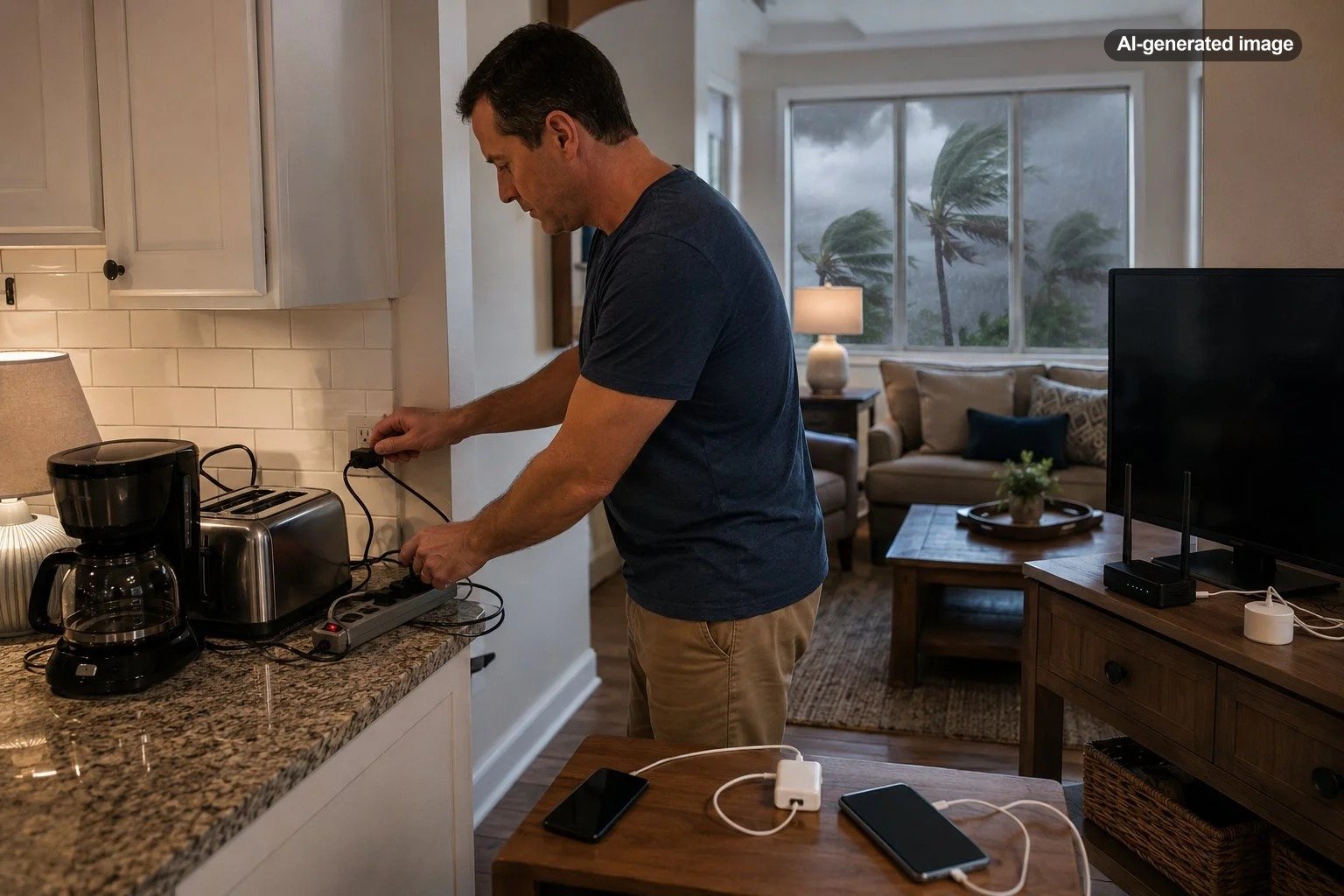
Before a hurricane, unplug nonessential electronics and plug-in appliances that you will not need during the storm, especially devices that could be damaged by a power surge when electricity fails or returns. Think televisions, desktop computers, monitors, gaming systems, printers, countertop appliances, chargers, lamps, and similar equipment. Keep essential devices powered long enough to charge batteries and complete your storm preparations, then disconnect what you can safely do without.
What you should unplug first
Start with sensitive electronics and items that serve no useful purpose during the storm. FEMA’s Ready.gov power-outage guidance advises unplugging appliances, equipment, and electronics to help avoid damage from electrical surges. That makes the easiest pre-storm targets the devices you can live without for the next several hours or days.
- Televisions and entertainment equipment: Unplug TVs, streaming boxes, soundbars, receivers, game consoles, and similar equipment.
- Computers and office equipment: Shut down desktop computers normally, then unplug computers, monitors, printers, docks, and powered accessories.
- Small kitchen appliances: Disconnect coffee makers, toasters, air fryers, countertop ovens, blenders, mixers, and other appliances that will not be used during the storm.
- Chargers and power adapters: After phones, battery banks, lanterns, and other emergency devices are charged, unplug chargers that are no longer needed.
- Laundry and convenience appliances: If they are ordinary plug-in units and you can reach their plugs safely, disconnect washers, dryers, portable dehumidifiers, portable air conditioners, and similar equipment you will not be using.
Do not yank cords from outlets or move heavy appliances simply to reach a plug. If a plug is behind a refrigerator, range, stacked laundry unit, built-in appliance, or other difficult-to-move equipment, the risk of moving it at the last minute may outweigh the benefit. A hurricane checklist should reduce hazards, not create a new one.
| Item | Practical pre-storm approach | Why |
|---|---|---|
| TVs, computers, gaming gear | Shut down and unplug | Nonessential and vulnerable to surge-related damage |
| Small countertop appliances | Unplug when finished using them | No need to leave them energized during the storm |
| Phone and battery chargers | Charge first, then unplug unused chargers | Preserves emergency communications while reducing unnecessary connected equipment |
| Refrigerator and freezer | Usually keep operating before an outage; keep doors closed if power fails | Cold storage is valuable during an emergency |
| Medical equipment | Follow the user’s emergency power plan and device instructions | Continuity of care matters more than general unplugging advice |
| Hardwired HVAC, water heater, built-ins | Do not treat these like ordinary plug-in devices | They may require breaker-level or professional procedures |
What not to unplug automatically
A blanket rule to unplug everything is too simple. Some equipment is more useful connected until an outage actually occurs, while other equipment should not be disconnected without understanding how it is powered.
Refrigerators and freezers
Before the power goes out, a refrigerator or freezer is doing useful work: keeping food cold. Ready.gov recommends keeping refrigerator and freezer doors closed during an outage. Rather than unplugging cold-storage appliances hours before the storm arrives, keep them operating while utility power is available unless you are evacuating, expect flooding, or receive different instructions from local officials or the appliance manufacturer.
If power has already failed, disconnecting appliances and electronics can reduce exposure to surges when service returns. Reconnection practices can vary by appliance and utility conditions, so avoid assuming that every large appliance should be switched back on the instant lights return.
Medical devices and communications equipment
Do not apply a general unplugging checklist to medical equipment. Ready.gov recommends planning in advance for electrically powered medical devices and for refrigerated medicines. Follow the device manufacturer’s instructions and the emergency plan established for the person using the equipment. Phones and backup batteries should also be charged before the outage, because communication may become harder after the storm.
Hardwired equipment
Central air-conditioning systems, electric water heaters, dishwashers, garbage disposals, some ranges, well pumps, pool equipment, and other home systems may be hardwired or controlled at the electrical panel rather than by a normal plug. Do not improvise electrical work as a storm approaches. If local officials, your utility, or a qualified electrician has given you a specific shutdown procedure for your home, follow that procedure.
If you are evacuating
Evacuation adds another decision: whether the home’s electrical service should remain on. Do not make that choice from a generic internet checklist alone. Follow evacuation instructions from local emergency management and your utility, because flood exposure, home construction, medical needs, security systems, sump or well equipment, and other conditions differ from one property to another.
If officials advise shutting off electricity and it is safe to do so, follow their directions before conditions become dangerous. Never enter standing water to reach a breaker panel, and never attempt a last-minute electrical shutdown once flooding has begun.
What to do when the power goes out
Once electricity fails, keep refrigerator and freezer doors closed as much as possible. Ready.gov also advises unplugging appliances, equipment, and electronics to help avoid damage from electrical surges. Leave one simple light switched on if that helps you recognize when utility power has returned, but keep the rest of your nonessential loads disconnected.
When power returns, avoid reconnecting every major appliance at once. If the home stayed dry and there are no signs of electrical damage, reconnect equipment deliberately rather than rushing. If you see damaged wiring, smell burning, hear unusual electrical sounds, or know that water reached outlets, wiring, breakers, or appliances, stop and have the system evaluated by the appropriate utility representative or qualified professional.
Do not forget generator safety
Unplugging appliances is only one part of hurricane electrical safety. CPSC’s 2026 hurricane-season guidance warns that portable generators create serious carbon monoxide and electrical hazards. A portable generator should never be operated inside a home, garage, basement, crawlspace, shed, or other enclosed area. CPSC advises operating portable generators outside and at least 20 feet from the home, with exhaust directed away from buildings and openings.
Do not connect a portable generator directly to household wiring unless the connection method is designed and installed for that purpose. FEMA warns that improper connections can backfeed power onto utility lines and endanger utility workers and others. Follow the generator manufacturer’s instructions and use properly rated equipment for any direct appliance connections.
Before the weather deteriorates
- Charge phones, battery banks, lanterns, and other emergency electronics.
- Shut down computers correctly before unplugging them.
- Unplug nonessential entertainment, office, and countertop equipment.
- Leave essential cold storage and necessary medical equipment available according to your emergency plan.
- Know which systems are hardwired instead of assuming they have a normal plug.
- Move no appliance that is too heavy or unsafe to access.
- Stop all electrical handling if water reaches the area.
- Follow local evacuation and utility instructions if they call for a broader electrical shutdown.
When should you plug things back in?
Wait until utility power has returned and conditions in the home are dry and stable. Reconnect nonessential equipment gradually. If an appliance, receptacle, power strip, electrical panel, or nearby wiring became wet, do not use it simply because the water has receded.
CPSC advises that wet appliances and electrical components exposed to flooding be evaluated before reuse, and it specifically warns against touching wet appliances that are still connected to power. After a flooded home, electrical safety takes priority over getting the house back to normal quickly.
FAQ
Should I unplug my TV before a hurricane?
Yes, if you can do so safely. A television is nonessential during a power outage and is a straightforward item to disconnect before the storm.
Should I unplug my refrigerator before a hurricane?
Not automatically. Before an outage, keeping the refrigerator and freezer operating helps preserve food. If power fails, Ready.gov advises keeping doors closed and unplugging appliances and electronics to help protect against surges. If you are evacuating or flooding is expected, follow local emergency and utility guidance.
Should I turn off the main breaker before a hurricane?
Do not treat this as a universal hurricane step. Whether a whole-home shutdown is appropriate depends on local instructions, flood risk, the home’s systems, and whether it can be done safely. Never approach the electrical panel while standing in water or when the area is wet.
Is a surge protector enough?
Surge protection can be useful, but Ready.gov still advises unplugging appliances and electronics during an outage to help avoid surge damage. A surge protector should not be treated as permission to leave every nonessential device connected through a hurricane.