Why Does My Front Door Stick Only in Summer?
If your front door glides shut in winter but suddenly needs a shoulder nudge every summer, humidity is one of the most likely explanations. Wood absorbs and releases moisture as surrounding conditions change, so a wood door or wood frame can expand slightly during humid weather. A small seasonal movement may be enough to turn a previously comfortable gap into a rubbing edge.
The important question is not simply whether the door has swollen. You want to determine where it is binding and why, because humidity, loose hinges, paint buildup, weatherstripping, and changes in the frame can create similar symptoms.
Why summer humidity can make a door stick
Wood is hygroscopic, meaning it exchanges moisture with the surrounding air. As its moisture content changes, its dimensions can change slightly as well. The USDA Forest Products Laboratory notes that seasonal moisture changes are more consequential than ordinary daily fluctuations and that humid conditions can produce swelling in wood.
That movement does not need to be dramatic. Exterior doors are fitted with relatively small clearances so they can close securely, seal against weather, and look properly aligned. A subtle increase in the width of a wood door, or movement in its jamb, can therefore create noticeable rubbing.
The effect may be especially obvious after prolonged humid weather, in an entryway with limited air conditioning, or on a door exposed to wind-driven rain. A door that returns to normal when the weather becomes cooler and drier strongly suggests a seasonal moisture component, although it does not rule out other contributing problems.
Find the exact place where the door is sticking
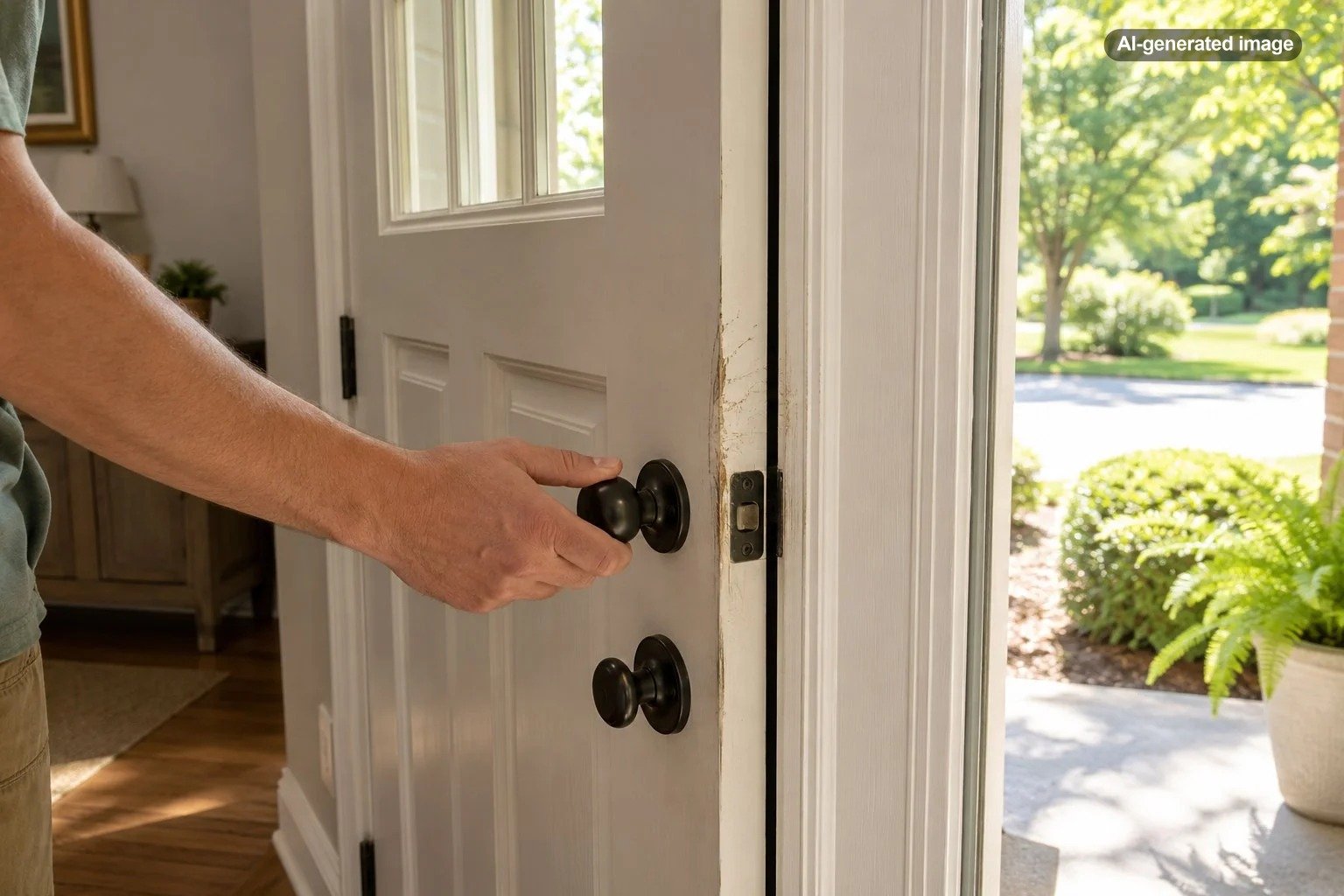
Before reaching for sandpaper, slowly open and close the door several times and watch the gaps around its perimeter. Look for fresh rub marks, shiny paint, scraped finish, compressed weatherstripping, or an area where the gap becomes noticeably tighter.
What to do
- Open and close the door slowly while watching the top, latch side, and hinge side.
- Identify whether the door rubs against the jamb, threshold, weatherstripping, or another piece of trim.
- Check whether the gap around the door looks reasonably even or has become noticeably wedge-shaped.
- Inspect hinge screws for looseness before altering the door itself.
- Note whether the problem changes after several dry days or after especially humid or rainy weather.
Where the door rubs offers useful clues. Binding near the upper latch-side corner can sometimes result from hinge movement or a door that has begun to sag. Rubbing along much of the latch edge may be more consistent with reduced seasonal clearance. Dragging at the bottom can involve the threshold, flooring, weatherstripping, or alignment rather than simple swelling.
Check the hinges before removing wood
One of the easiest mistakes is assuming that every sticky summer door needs to be shaved down. Hinges can loosen gradually as a heavy exterior door is used, and even a small change in position can cause the opposite edge to contact the jamb.
Check visible hinge screws and make sure the hinge leaves are seated properly. If something is clearly loose, correcting that issue may restore the clearance without changing the door. Avoid repeatedly tightening screws that no longer grip properly or improvising structural repairs when the frame itself appears damaged.
Do not overlook paint and weatherstripping
Sometimes the door is not actually swelling enough to contact the wooden jamb. Instead, multiple layers of paint can reduce the original clearance, or aging weatherstripping can shift, bunch, or become excessively compressed.
Look closely at freshly painted edges, especially if the problem began after refinishing the entry. Paint should be fully cured before judging the final fit. Likewise, inspect weatherstripping for sections that have pulled out of position or folded over themselves. Replacing deteriorated weatherstripping can make more sense than trimming an otherwise properly sized door.
Humidity measurements can help confirm the pattern
You do not need laboratory equipment to notice that your house feels humid, but tracking indoor relative humidity can help you determine whether the sticking consistently coincides with higher moisture levels. This can be particularly useful when the problem appears and disappears without obvious rainfall.
Affiliate disclosure: CraneManor.com may earn a commission when you purchase through links on this page. This does not affect the price you pay. Learn more.
A small digital hygrometer can provide a simple temperature and relative-humidity reading for the entryway or nearby room. Think of the number as one clue rather than a diagnosis: indoor humidity can help explain seasonal movement, but it cannot tell you whether a particular door, jamb, hinge, or wall assembly is the actual source of the problem.
When a small adjustment may be reasonable
If the hinges are secure, the frame looks stable, the weatherstripping is properly positioned, and the door has one clearly identified rubbing spot, a modest adjustment may be appropriate. The right approach depends heavily on the door material and finish.
With a solid wood door, careful sanding or planing of a minor high spot is sometimes used to restore clearance. The exposed wood should not simply be left unfinished, because the edge finish helps moderate moisture exchange. Engineered, veneered, fiberglass, steel, and composite doors can have different construction details, so material removal is not automatically appropriate for them.
A sticking door is easier to fix well when you correct the cause of lost clearance rather than simply removing whatever happens to rub.
When the problem may be more than seasonal swelling
A door that sticks a little during the muggiest part of the year is different from a door whose opening is visibly changing. Pay attention to the surrounding wall, trim, threshold, and exterior conditions rather than treating the door as an isolated object.
Moisture intrusion can also be different from ordinary seasonal humidity. If rainwater is reaching unfinished wood, damaged trim, or a deteriorated threshold, the priority is identifying and correcting the water source. Simply sanding the door can disguise the symptom while leaving the moisture problem untouched.
How to reduce the chance of the problem returning
Seasonal wood movement cannot always be eliminated, but good maintenance can keep it from becoming troublesome. Maintain the door’s finish according to the requirements of its material and manufacturer, keep exterior water from collecting around the opening, and repair failing caulk or weather-management components when appropriate.
It also helps to address a sticky door while the problem is still minor. A loose hinge that is ignored for months can create additional rubbing, while repeated forceful closing can damage paint, weatherstripping, hardware, or the latch area.
Before you decide
- Confirm exactly where the door rubs.
- Check hinges and visible fasteners before trimming.
- Inspect weatherstripping and recent paint buildup.
- Compare the problem during humid and dry weather.
- Look for persistent moisture, deterioration, or changing gaps.
- Make permanent alterations conservatively.
Frequently asked questions
Will a swollen door shrink again when the weather changes?
A wood door affected primarily by seasonal humidity may lose some moisture and contract as conditions become drier. How much it changes depends on the material, construction, finish, exposure, and surrounding environment.
Should I sand a door while it is sticking?
Not automatically. First confirm that loose hinges, displaced weatherstripping, paint buildup, or a changing frame are not responsible. If permanent material removal is needed, keep it conservative because seasonal clearance can increase again in drier weather.
Why does my door stick after it rains?
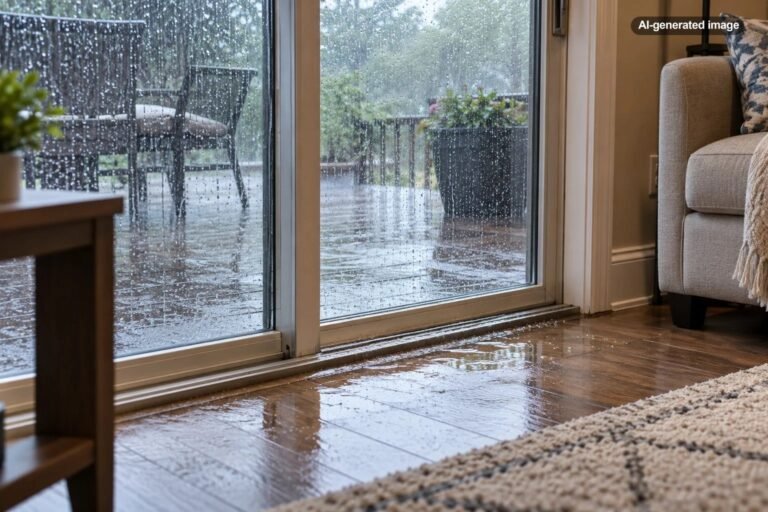
Rainy periods often coincide with higher humidity, which can contribute to wood movement. Direct water exposure around the door can also create problems, so check for leaks, wet trim, damaged finishes, and water collecting near the threshold.
Can air conditioning affect whether a door sticks?
Indoor conditioning can change temperature and relative humidity, so a door between differently conditioned environments may behave differently through the year. It is still important to inspect the door mechanically rather than assuming humidity is the only cause.