Why Does Water Get Under My Sliding Glass Door During Heavy Rain?
Water appearing beneath a sliding glass door during heavy rain usually means the door’s drainage system cannot remove water quickly enough, rain is entering through a worn seal, or water is reaching the threshold from the surrounding patio or exterior wall. Sometimes the problem is as simple as debris blocking a drainage opening. Other times, it points to a poorly installed threshold, damaged weatherstripping, or a drainage problem outside the door.
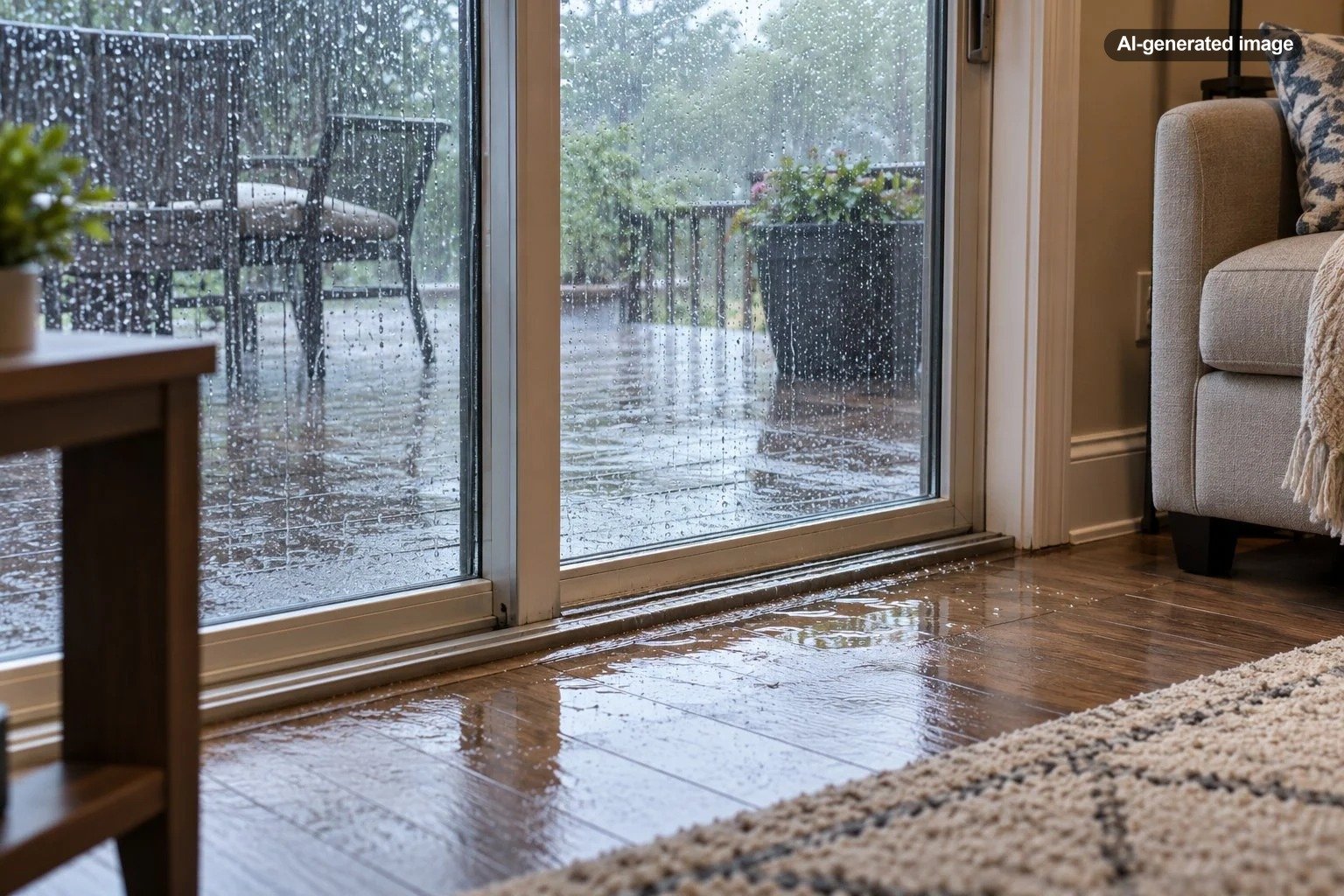
The important distinction is whether water is collecting inside the door’s track or actually crossing onto your interior floor. Many sliding door systems are designed to collect some rainwater in their lower tracks and direct it outdoors. Water reaching flooring, baseboards, or the wall beside the frame deserves closer attention.
Why Heavy Rain Exposes Sliding Door Leaks
A sliding glass door is not simply a glass panel pressed against a waterproof frame. Its operating system includes tracks, rollers, overlapping panels, seals, and drainage pathways. These parts work together to limit water entry while allowing the door to move.
During an ordinary shower, a functioning drainage system may handle the water without any noticeable problem. During heavy or wind-driven rain, however, a much greater amount of water can reach the sill in a short period.
Wind can also push rain against joints and seals that experience relatively little direct exposure on calmer days. Meanwhile, water accumulating on a patio can rise against the outside of the threshold, creating another route for moisture to enter.
That is why a door might remain dry during several light storms and suddenly leak during one intense downpour.
The Most Common Reasons Water Gets Under a Sliding Glass Door
1. Blocked Weep Holes or Drainage Channels
Many sliding door frames have drainage openings, often called weep holes, that allow collected water to escape outdoors. Their exact locations and designs vary by manufacturer and door model.
Over time, dirt, sand, leaves, insects, and other debris can obstruct these openings. When water cannot drain normally, it may accumulate in the track and eventually reach the interior side.
This is particularly worth investigating when water appears first inside the bottom track and only later spills onto the floor.
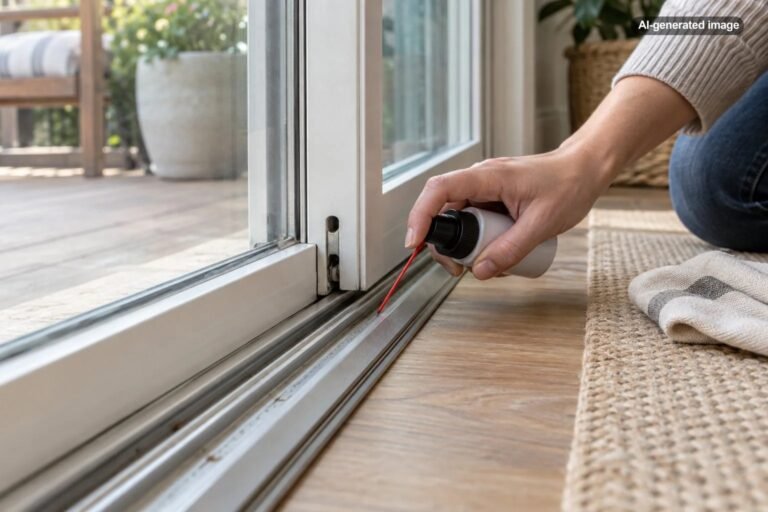
Inspect the accessible drainage openings and gently remove loose debris with a soft brush. Avoid forcing sharp objects into the openings, enlarging holes, or removing factory-installed drainage components.
Be aware that not every opening in a door frame serves the same purpose. Consult the manufacturer’s maintenance instructions before attempting to clear an unfamiliar opening.
2. Worn or Damaged Weatherstripping
Sliding doors typically rely on weatherstripping to reduce air and water movement around their panels. Depending on the design, this may include pile strips, compression seals, or other specialized components.
Weatherstripping can become compressed, displaced, brittle, torn, or detached with age and use. The result may be a small gap that becomes noticeable only when rain strikes the door at a particular angle.
Look for missing material, loose sections, flattened seals, and visible gaps along the vertical meeting edges and lower portions of the panels.
Replacement material should match the door’s requirements. Adding thick generic weatherstripping can interfere with sliding movement, panel alignment, or drainage instead of correcting the problem.
3. Water Pooling Against the Exterior Threshold
Sometimes the door itself is not the main cause. The area immediately outside it may be directing excessive water toward the opening.
A patio with an unsuitable slope, settled pavers, clogged surface drains, or low spots near the threshold can allow rainwater to accumulate against the door.
During a heavy storm, that standing water may reach parts of the assembly that are not intended to remain submerged.
4. A Door Panel That No Longer Closes Evenly
Sliding door panels must align properly with their frames and adjoining panels. Worn rollers, a shifted panel, or problems with the track can prevent the door from seating as intended.
You might notice that the door has become difficult to close, needs extra force to lock, or has an uneven gap along one edge.
Those symptoms do not prove that misalignment is causing the leak, but they are useful clues. A door that cannot close correctly may not compress or contact its seals as designed.
Roller adjustments and panel removal vary considerably between models. Sliding glass panels are heavy, and improper handling can damage the door or cause injury. Have an experienced door technician address significant alignment problems.
5. Failed Flashing or an Improperly Sealed Installation
Water can also enter around the door assembly rather than through the sliding panel itself.
Flashing is part of the system that directs water away from vulnerable openings in the exterior wall. At the bottom of a door opening, properly designed sill flashing and drainage details help prevent water from moving into the surrounding construction.
If these components were omitted, installed incorrectly, damaged, or poorly integrated with the wall’s water-resistive barrier, rainwater may travel behind the frame or beneath the threshold.
This type of leak can be difficult to identify visually because water may emerge several inches away from the point where it entered.
Water appearing from beneath baseboards, around the frame corners, or under adjacent flooring is a reason to investigate the installation rather than assuming the track needs cleaning.
How to Figure Out Where the Water Is Coming From
The most helpful approach is to identify where the water first appears and what conditions make the problem worse. Begin with observations that do not require disassembling the door.
What to check first
- Keep the area safe and dry. Move rugs and nearby belongings, absorb standing water, and avoid electrical equipment or outlets in wet areas.
- Identify the first wet location. Check whether moisture starts inside the track, at a frame corner, across the entire threshold, or beneath the surrounding flooring.
- Inspect the track. Look for leaves, sand, mud, and accumulated dirt that could interfere with drainage.
- Check accessible drainage openings. Remove loose debris gently, following the door manufacturer’s instructions.
- Examine the seals and closure. Look for damaged weatherstripping, uneven gaps, and a door that does not latch normally.
- Observe the exterior during rain from a safe location. Note whether water pools against the threshold, runs down the wall, or approaches the door from the patio.
- Document the pattern. Take photographs of the first wet areas, standing exterior water, and any visible damage to help a repair professional locate the source.
A controlled water test may sometimes help a qualified technician identify an entry point. However, deliberately flooding a door or directing a high-pressure hose at its joints can create damage and produce misleading results. Avoid aggressive testing, especially when water has already reached interior finishes.
What the Location of the Water Can Tell You
| Where water appears | Possible explanation | What to examine |
|---|---|---|
| Standing inside the lower track | Normal collection or restricted drainage | Whether it drains outdoors or crosses the interior edge |
| At the bottom corner of the moving panel | Damaged seal or poor alignment | Weatherstripping, closure, and panel fit |
| Across the threshold during intense rain | Drainage overwhelmed or exterior water buildup | Weep openings, patio slope, and standing water |
| Under flooring or beside the frame | Possible installation or flashing leak | Surrounding wall and sill assembly |
| Only during wind-driven rain | Wind exposure revealing a vulnerable joint | Seals, alignment, drainage, and exterior conditions |
These patterns help narrow the possibilities, but they are not definitive diagnoses. More than one problem can exist at the same time.
Should You Caulk the Bottom of a Leaking Sliding Door?
Not without identifying the source of the leak and understanding the door’s drainage design.
Caulk may appear to be an easy solution when water shows up near the threshold. Unfortunately, sealing the wrong joint can trap water inside the assembly or block an intended drainage path.
That is especially important around weep holes and other manufacturer-designed outlets. These openings are supposed to allow water to escape.
Exterior sealant may be appropriate at certain frame-to-wall joints when specified by the door manufacturer or installation instructions. However, applying caulk indiscriminately across the bottom track, threshold, or exterior frame is not a reliable repair strategy.
What to Do When Water Is Already Coming Inside
If rainwater is crossing onto the interior floor, protecting the surrounding materials is the immediate priority.
Use towels or other absorbent materials to contain the water without blocking exterior drainage openings. Move furniture, rugs, and electronics away from the wet area. If water is near electrical outlets, wiring, or powered equipment, avoid the affected area and obtain appropriate professional assistance.
After the storm, dry accessible flooring and surrounding surfaces promptly. Persistent moisture can damage wood flooring, baseboards, drywall, and materials concealed beneath finishes.
If carpeting, wall cavities, or flooring underlayment have become wet, surface drying may not be enough. A water-damage professional can evaluate whether additional drying or material removal is necessary.
Temporary towels may help contain a small leak during the storm, but they should not become the permanent solution.
When the Leak Needs Professional Attention
Cleaning a dirty track is a reasonable homeowner maintenance task. Diagnosing hidden water intrusion or rebuilding the door’s drainage and flashing system is a different matter.
A door repair specialist may be able to correct worn seals, damaged rollers, or misalignment. A contractor experienced in exterior water intrusion may be more appropriate when the problem involves flashing, wall assemblies, patio elevation, or concealed moisture.
Replacing the entire door is not necessarily required. On the other hand, repeatedly repairing a surface seal will not resolve a defective installation behind the frame.
How to Reduce the Chance of Future Leaks
Sliding doors benefit from simple, consistent maintenance, particularly in homes exposed to wind-driven rain, heavy seasonal storms, or frequent patio debris.
Before the next heavy storm
- Remove sand, leaves, and other debris from accessible door tracks.
- Check manufacturer-identified weep holes for visible blockages.
- Inspect weatherstripping for missing or damaged sections.
- Confirm the door closes and locks without unusual force.
- Keep nearby patio drains and surface drainage paths clear.
- Look for low spots that allow water to accumulate against the threshold.
- Examine surrounding trim and flooring for early moisture damage.
If a door has leaked previously, pay particular attention during the next storm. A small recurring damp spot is worth addressing before it develops into a larger repair.
For households that want an additional warning when water reaches the floor, a simple audible water alarm may be useful as a monitoring aid. It does not stop water intrusion or replace repairs, and it should be positioned where it can detect moisture without obstructing the door.
Affiliate disclosure: CraneManor.com may earn a commission when you purchase through links on this page. This does not affect the price you pay. Learn more.
One option is a set of water leak detectors with local audible alarms. These are intended to sound when water is detected nearby; they do not provide remote phone notifications. Place any detector according to its instructions and remember that an alarm only helps after moisture reaches its sensing area.
Frequently Asked Questions
Is it normal for water to sit in a sliding glass door track?
Some door systems are designed to collect limited rainwater in the sill and drain it outdoors. The important question is whether that water exits properly. Standing water that persists unexpectedly or crosses onto the interior floor may indicate a drainage or sealing problem.
Can wind push rainwater underneath a sliding door?
Yes. Wind-driven rain can increase water exposure and push moisture toward joints and seals. If leakage occurs only when wind blows from a particular direction, that pattern can help identify a vulnerable area, although it does not establish the exact defect.
Why does my sliding door leak only during very heavy rain?
Heavy rain may deliver water faster than a restricted drainage system can remove it. Exterior pooling can also become worse as rainfall intensifies. During storms with strong winds, rain may reach gaps that remain dry under ordinary conditions.
Can a clogged patio drain make a sliding glass door leak?
Yes. A blocked patio drain can allow water to rise against the threshold, increasing the chance that it will enter through an existing gap or overwhelm the door’s water-management system. The exterior drainage problem should be corrected rather than relying solely on a tighter door seal.
Does a leaking sliding glass door need to be replaced?
Not always. Problems involving debris, certain replaceable seals, or door alignment may be repairable. Significant frame deterioration, recurring installation defects, or substantial hidden water damage may call for more extensive work. The appropriate solution depends on where the water is entering and the condition of the assembly.
The Bottom Line
Water coming under a sliding glass door during heavy rain is a symptom, not a diagnosis. Blocked drainage channels, deteriorated weatherstripping, uneven door alignment, patio drainage problems, and faulty flashing can all produce similar puddles on the inside floor.
Begin with the simplest visible checks: clean the track, inspect accessible drainage openings, look for damaged seals, and observe whether water is accumulating outside. Avoid sealing drainage holes or making structural changes without understanding the door’s design.
If water continues entering the home, especially beneath the frame or into nearby flooring and walls, an inspection is the sensible next step. Correcting the actual water pathway is far more effective than repeatedly drying the same puddle.
Sources & Further Reading
- Pella: Owner’s Manual – Manufacturer guidance on sill maintenance, weep-system cleaning, and drainage behavior.
- U.S. Department of Energy: Fully Flashed Window and Door Openings – Guidance on flashing, sill pans, and water management around exterior openings.
- Andersen Windows: MultiGlide Sliding Door Systems – Manufacturer information illustrating different sliding-door sill and drainage configurations.