Do Air Purifiers Help With Dust?
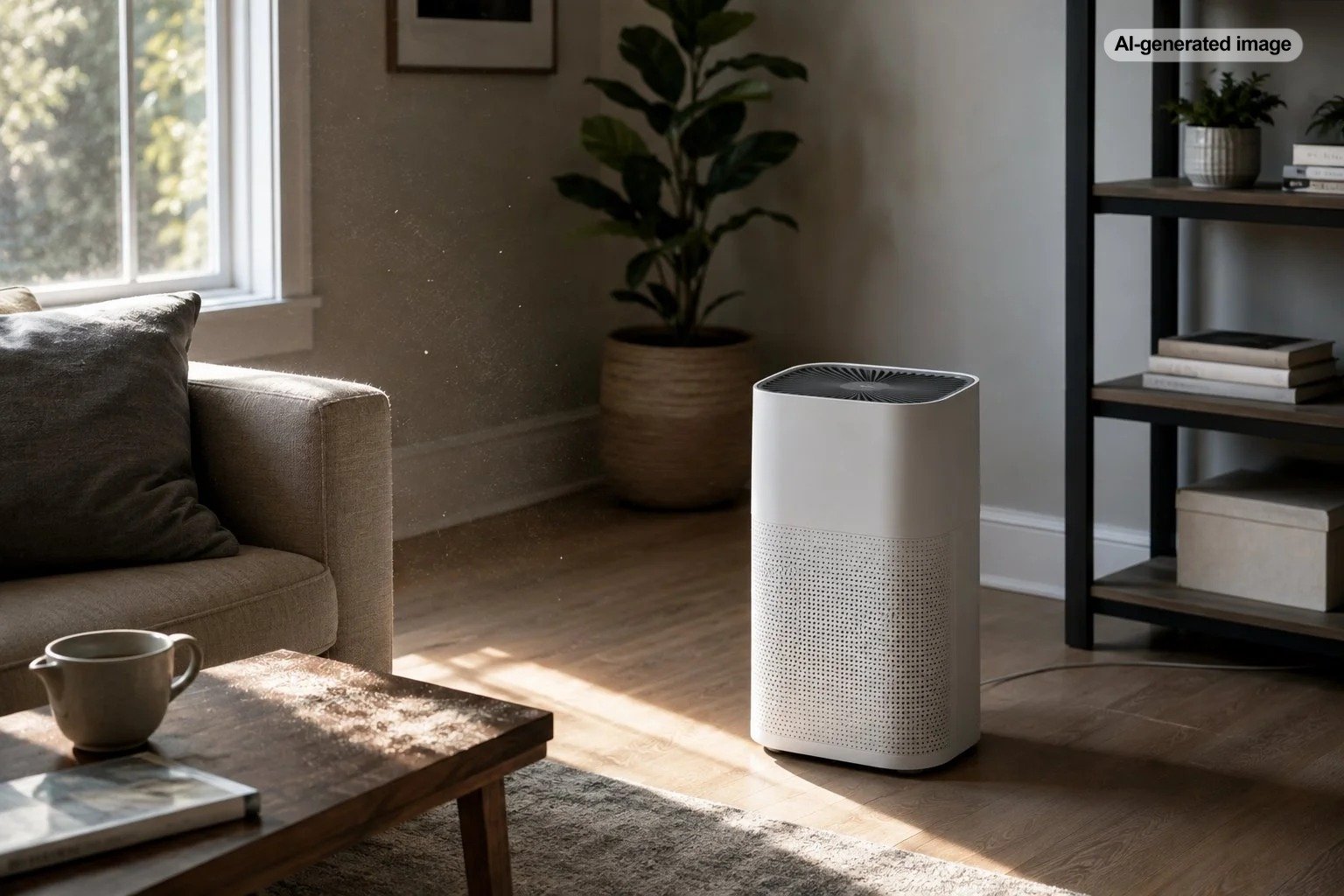
Yes, air purifiers can help with dust, especially the portion that is floating through the air. A well-sized purifier with effective particle filtration continuously pulls air through a filter, capturing many airborne particles before they eventually settle on furniture, floors, shelves, and electronics.
There is an important catch: an air purifier does not eliminate the sources of household dust. Fibers, tracked-in soil, skin flakes, pollen, pet debris, and particles released during everyday activity will continue to enter the room. Think of filtration as one part of dust control, not a replacement for cleaning and source control.
What an air purifier actually does to dust
Dust is not one substance. Household dust is a mixture of particles with different sizes, weights, and sources. Some particles remain suspended in the air long enough to pass through an air purifier. Others settle quickly and may never reach the machine.
Portable air purifiers use a fan to move room air through one or more filters. The U.S. Environmental Protection Agency notes that portable air cleaners can reduce airborne particles, while also emphasizing that no air cleaner removes every pollutant from a home. Particle filtration works best when the purifier moves enough filtered air for the room where it is operating.
This distinction explains why a purifier can be working properly even if you still find dust on a bookshelf. Once a relatively heavy particle has landed, the purifier cannot reach across the room and remove it. It needs that particle to become airborne and travel through the unit.
An air purifier cleans the air that reaches it, not every surface that dust eventually reaches.
Why HEPA filtration is useful for dust
HEPA filters are designed for particle capture. According to the EPA, a HEPA filter can theoretically capture at least 99.97 percent of airborne particles at 0.3 microns, with particles both larger and smaller also captured efficiently under the filter’s test definition.
That does not mean a purifier will remove 99.97 percent of all dust from your room. The filter efficiency describes what happens to particles that actually pass through the filter. Real-world performance also depends on airflow, room size, operating speed, placement, run time, air leakage, and how quickly new particles are introduced.
Pay attention to CADR and room size
When shopping for a purifier primarily for dust, look beyond phrases such as high efficiency or advanced filtration. Clean Air Delivery Rate, commonly abbreviated CADR, is a useful measure of how much filtered air a portable air cleaner delivers for particular particle categories.
The EPA recommends choosing a portable air cleaner with a CADR large enough for the room or area where it will operate. A purifier that is undersized for a large open living space may still capture particles, but it will circulate the room’s air less effectively than a properly sized unit.
Ceiling height matters as well. A 400-square-foot great room with a high vaulted ceiling contains considerably more air than a 400-square-foot bedroom with an ordinary ceiling. Open doorways and connected spaces can also increase the practical workload.
Before you decide
- Match the purifier to the actual room or connected area where it will run.
- Look for meaningful particle filtration, such as HEPA filtration.
- Consider CADR rather than relying only on marketing descriptions.
- Choose a noise level and operating mode you will realistically use for long periods.
- Check how filters are maintained and replaced before buying.
Will an air purifier mean you have to dust less often?
Possibly, but expectations should be modest. Capturing suspended particles before they settle can reduce one pathway by which dust accumulates. In a room with a useful purifier running regularly, some households may notice that surfaces stay cleaner longer.
However, plenty of dust reaches surfaces without spending much time suspended in the middle of the room. Walking across carpet, making a bed, handling textiles, opening doors, grooming pets, and simply occupying a room can continually redistribute particles. Dust also collects in places with little airflow, such as behind furniture, along baseboards, and inside shelving.
A purifier therefore complements physical cleaning. Vacuuming removes settled material from floors and upholstery, while a damp microfiber cloth can pick up dust from hard surfaces rather than simply launching it back into the air.
Where should you put an air purifier for dust?
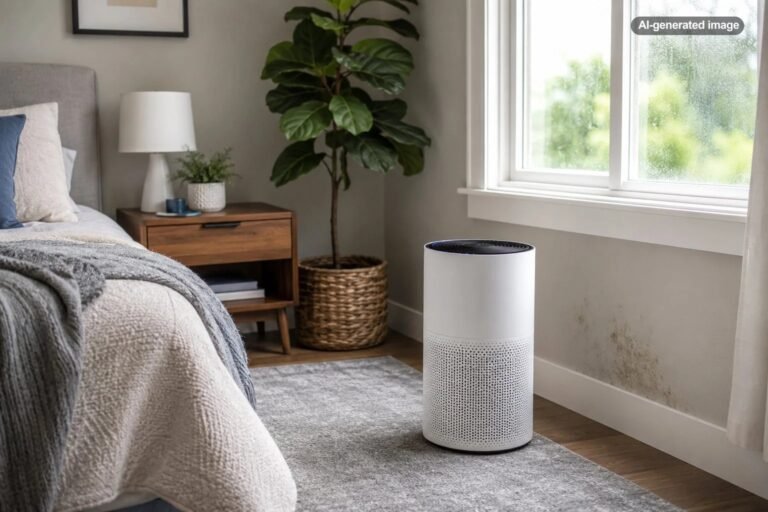
Place the purifier where air can enter and leave the unit without major obstruction. Avoid wedging it tightly behind a sofa, under a table, inside a cabinet, or directly against curtains unless the manufacturer’s instructions specifically allow that arrangement.
For a dust problem concentrated in one room, placing the purifier in that room is generally more useful than expecting one portable unit elsewhere in the house to clean everything. Bedrooms, frequently used living areas, and spaces where pets spend substantial time are common candidates.
If your main problem is visible dust throughout an entire house, also look at the home’s broader sources and filtration. A portable purifier treats the air in its immediate space, while central HVAC filtration can affect air circulated through a ducted system when the system is operating.
Run time matters more than occasional bursts
A purifier only filters meaningful quantities of room air while its fan is moving air through the filters. The EPA notes that longer operating times and higher fan speeds generally increase filtration because more air passes through the cleaner.
That makes a quiet setting you are willing to leave running particularly valuable. Turning a powerful purifier on for a few minutes after noticing dust is less useful than establishing consistent air circulation appropriate for the room.
Affiliate disclosure: CraneManor.com may earn a commission when you purchase through links on this page. This does not affect the price you pay. Learn more.
Automatic operation can make this easier. Some models use particle sensors to change fan speed in response to detected air quality. For example, the supplied Coway Airmega purifier uses a dust sensor for automatic fan-speed adjustment, according to the manufacturer’s documentation.
For any purifier, automatic features are conveniences rather than substitutes for appropriate sizing, good airflow, and routine filter maintenance.
What an air purifier cannot fix
If your home seems unusually dusty, buying a larger purifier is not always the best first response. Excess dust can come from open windows, frequently used exterior doors, pets, deteriorating textiles, renovation activity, poorly controlled outdoor soil, or an HVAC filtration setup that is not effectively capturing circulating particles.
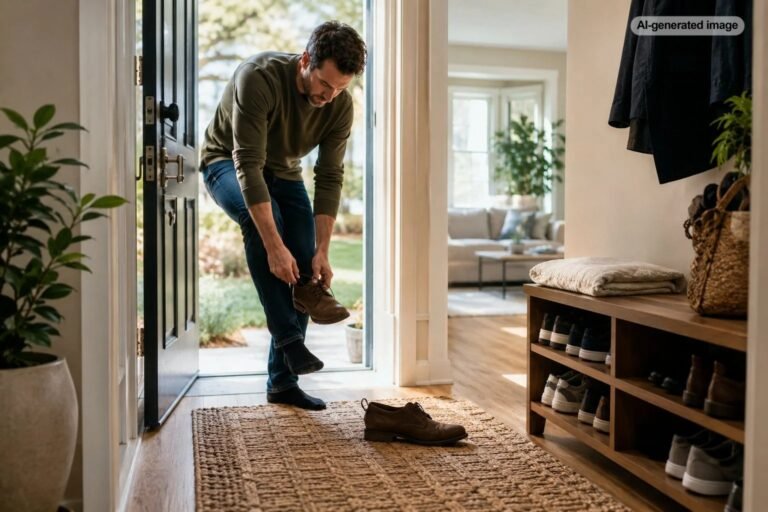
Source control often delivers improvements that filtration alone cannot. Shoes left near the entrance, washable doormats, regular vacuuming with an appropriate vacuum, cleaning fan blades and vents, laundering dusty textiles, and addressing obvious air leaks or renovation debris can reduce the amount of material the purifier has to deal with.
Keep the filters maintained
A loaded filter can reduce performance. Follow the purifier manufacturer’s instructions for cleaning reusable pre-filters and replacing disposable filters rather than assuming every filter follows the same schedule.
Pre-filters are particularly useful for catching larger debris before it reaches the finer filtration stages. If the unit has an exposed intake, inspect it periodically for accumulated lint, pet hair, and dust. Never wash a filter unless its manufacturer specifically identifies it as washable.
What to do
- Identify the room where airborne dust bothers you most.
- Choose a purifier with effective particle filtration and enough clean-air delivery for that space.
- Place it where its intake and exhaust have room to breathe.
- Run it consistently at the highest setting that remains comfortable for everyday use.
- Vacuum, damp-dust, and control obvious dust sources at the same time.
- Maintain each filter according to the manufacturer’s instructions.
Frequently asked questions
Do air purifiers remove dust that is already on furniture?
No. A purifier captures particles that enter its airflow. Dust that has already settled needs to be removed by cleaning unless it becomes airborne again.
Is a bigger air purifier always better for dust?
Not necessarily. A unit should provide enough clean-air delivery for the space without creating unnecessary noise, size, or operating inconvenience. Correct sizing matters more than simply buying the physically largest purifier available.
Should I leave an air purifier running all day?
Longer run times generally increase the amount of air filtered. Whether continuous operation makes sense depends on the unit, room, noise tolerance, energy use, and manufacturer’s instructions. Automatic and lower-speed modes can make extended operation more practical.
Do air purifiers replace HVAC filters?
No. They perform related but different jobs. A portable purifier filters air in a room or area, while an HVAC filter treats air moving through a compatible central system. Neither eliminates the need for routine household cleaning and source control.
The bottom line
Air purifiers do help with dust when the goal is to capture particles that are suspended in the air. The improvement is usually greatest when the purifier has efficient particle filtration, sufficient airflow for the room, sensible placement, long run times, and clean filters.
What a purifier cannot do is stop dust from being created or instantly remove material that has already settled. Pair filtration with vacuuming, damp-dusting, textile care, entryway control, and attention to obvious particle sources. That combination is far more effective than expecting one appliance to wage the entire household dust battle by itself.